
AI Resume Tools

What Happens When AI Resume Tools Disagree on Optimization (2026 Complete Guide)

Morgan – The AI Practitioner
2 min read
Includes Video

I once watched a candidate get their resume torn apart by three different AI tools, each spitting out a different 'optimization' score. One tool, which cost them $49 for a premium review, swore their resume was 78 percent optimized for an ML Engineer role.

I once watched a candidate get their resume torn apart by three different AI tools, each spitting out a different 'optimization' score. One tool, which cost them $49 for a premium review, swore their resume was 78 percent optimized for an ML Engineer role. Another, a free online checker, gave it a measly 32 percent. The third, an enterprise-level ATS simulation, flagged it as 'unreadable' for 14 specific sections.

The job posting said 'ML Engineer' but the tools couldn't even agree on basic formatting. That's the signal vs hype problem right there. Nobody posts about that confusion on LinkedIn.
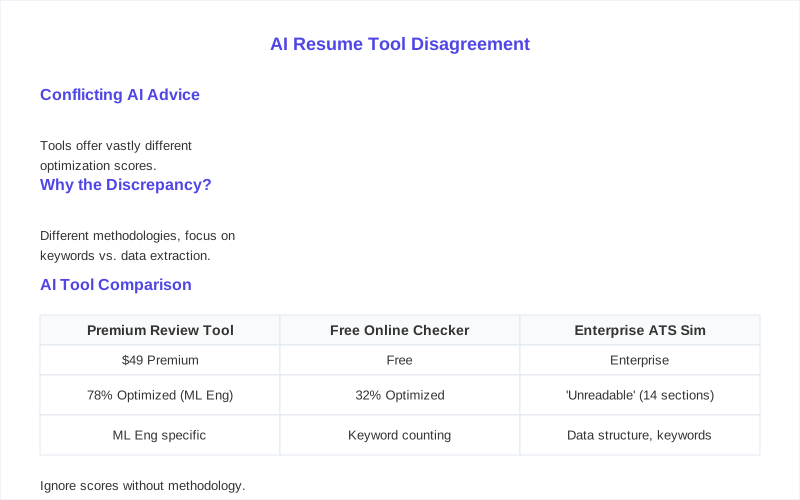
What Happens When Ai Resume Tools Disagree on Optimization (2026 Complete Guide) — Key Specification
Key specifications for what happens when ai resume tools disagree on optimization

The Real Answer

The real answer to why AI resume tools disagree on optimization is simple: they're not all looking at the same thing, or even for the right things. Most free tools are glorified keyword counters with a fancy UI. They'll tell you to add 'machine learning' 17 times, which is great if you want to sound like a broken record to a human recruiter.

Understanding these discrepancies can help prevent issues highlighted in our article on how AI resume optimization can backfire.
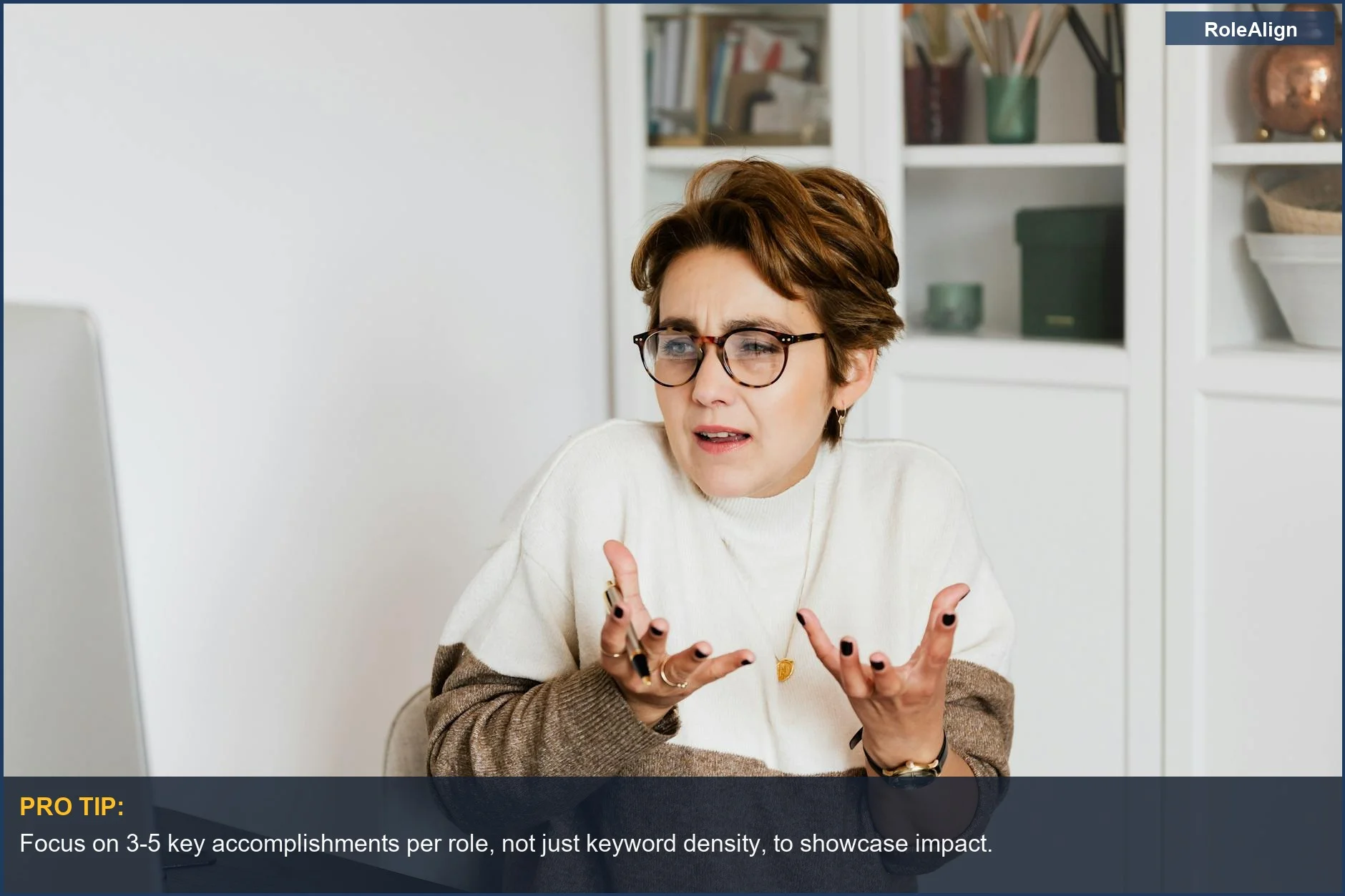
Focus on 3-5 key accomplishments per role, not just keyword density, to showcase impact.
When AI resume tools disagree on optimization, it's often because they're keyword-focused. Aim for clarity and impact over mere buzzword inclusion. | Photo by www.kaboompics.com

What's Actually Going On

What's actually going on when you feed your resume into these AI black boxes is a mix of simple text parsing and some very basic pattern matching. Forget the sci-fi movie where AI understands your career aspirations. Most Applicant Tracking Systems (ATS) used by large companies are designed to pull out structured data and match keywords to the job description. Think of it as a glorified database search engine.
Understanding this profile-building process is crucial, especially since it significantly impacts hiring manager first impressions.
Understand that most AI tools perform basic text parsing; don't expect deep career aspiration analysis.
What happens when AI resume tools disagree on optimization? Often, it's simple text parsing. Know the limitations before trusting the output. | Photo by Leeloo The First

How to Handle This

So, you've got conflicting advice from a parade of AI tools. Here's how I'd handle it. First, ignore the 'optimization score' from any tool that doesn't explain its methodology. That 90 percent score might mean nothing more than you used all the buzzwords it was trained on, not that you're actually a good fit.
To further enhance your chances, it's important to understand what ATS optimization tools get wrong.
Prioritize tools that explain their methodology; ignore scores from black boxes with no transparency.
Debugging AI resume tool advice is crucial. If a tool's optimization methodology is unclear, its score is likely unreliable. | Photo by Daniil Komov

What This Looks Like in Practice

In practice, this resume optimization mess looks like a lot of wasted time and missed opportunities. I saw a junior data scientist spend 20 hours tweaking their resume based on one tool's advice, only to get an email rejection in 0.3 seconds. Nearly a quarter of companies automatically reject candidates without human review. That's a rough pill to swallow.
As AI continues to influence hiring, it’s reshaping what constitutes a strong application, as discussed in our article on AI resume tools.
Avoid spending over 5 hours on AI resume tweaks; focus on tailoring to specific job descriptions instead.
The reality of conflicting AI resume tools can lead to wasted hours. Understand the practical implications of flawed optimization. | Photo by Mikhail Nilov

Mistakes That Kill Your Chances

Trying to game the system with AI tools is a common mistake, but it's not the only one that kills your chances. Here's a diagnostic table of what I see go wrong, way too often:

To further enhance your application, consider how AI resume tools address non-traditional experience effectively.

Key Takeaways

Navigating the AI resume tool landscape is like trying to find a decent coffee shop in a new city: a lot of bad options, a few passable ones, and one or two gems. The pivot tax for trusting the wrong tool can be significant, costing you interviews or even job offers. My advice? Be skeptical, be strategic, and remember the human element.

To navigate the complexities of modern job searches, it's crucial to understand how automation can backfire.

Frequently Asked Questions

Should I pay $50 for a premium AI resume review, or just stick to free tools?
If a tool charges $50 for a 'premium' review and just gives you a score without explaining *why* it's giving you that score, you might as well light that money on fire. For $50, you could get a 15-minute consultation with a human recruiter who actually knows what they're looking for, or buy a decent technical book. The free tools are often just as effective at keyword stuffing, which isn't saying much.
Do I really need to use a specific font or line spacing for ATS compatibility?
Yes, you do. ATS systems are not as smart as LinkedIn posts make them sound. I've seen perfectly qualified candidates get filtered out because their resume used a custom font that rendered as gibberish, or because their line spacing broke bullet points. Stick to Arial, Calibri, or Times New Roman, and keep your line spacing between 1.0 and 1.15. The goal is readability, not artistic expression.
What if I optimize my resume for ATS and still don't get calls back?
Then your problem probably isn't the ATS. It's either your experience, your target roles, or your communication. An ATS-friendly resume just gets you past the first gate. If you're not getting calls, it's time to re-evaluate your actual skills against the job requirements, or refine how you articulate your value proposition to a human. No amount of AI optimization can fix a mismatched skill set.
Can using too many AI resume tools permanently damage my job search reputation?
It won't 'permanently damage' your reputation in a black mark kind of way. What it can do is waste your time, lead to generic or factually incorrect resumes, and make you look like you don't understand the roles you're applying for. Recruiters can spot an AI-generated resume from a mile away if it's too polished and lacks genuine voice or specific anecdotes. That's a negative signal.
Is it true that ATS systems instantly reject resumes with different colored text or fancy graphics?
It's not an 'instant rejection' in the dramatic sense, but it's close enough. Many ATS systems struggle to parse anything beyond plain text. Fancy graphics, custom icons, or even different colored text often get stripped out or rendered incorrectly. Your beautiful infographic resume might look like a garbled mess of broken characters to the system, effectively making it unreadable. Stick to black text and simple bullet points unless the job explicitly asks for a portfolio.
M

Morgan – The AI Practitioner

Experienced car camper and automotive enthusiast sharing practical advice.

Sources

Related Articles