
The Hidden Data Points AI Resume Tools Collect (2026 Complete Guide)
I once saw a hiring manager reject a candidate with 15 years of experience because the AI scoring system gave them a 43 percent match, primarily due to missing keywords. This wasn't about the candidate's actual ability; it was about the machine's limited lens.
I once saw a hiring manager reject a candidate with 15 years of experience because the AI scoring system gave them a 43 percent match, primarily due to missing keywords. This wasn't about the candidate's actual ability; it was about the machine's limited lens. The rise of AI in recruitment isn't just a trend; it's a fundamental shift in how your application is first perceived. AI-assisted hiring is fundamentally rebuilding the job market.
Most job seekers still operate under the illusion that a human is their first audience. In 2026, that's rarely true. Your resume first encounters an Applicant Tracking System (ATS), often powered by AI, which acts as a digital bouncer. It's designed to filter out applications that don't precisely fit predefined criteria.
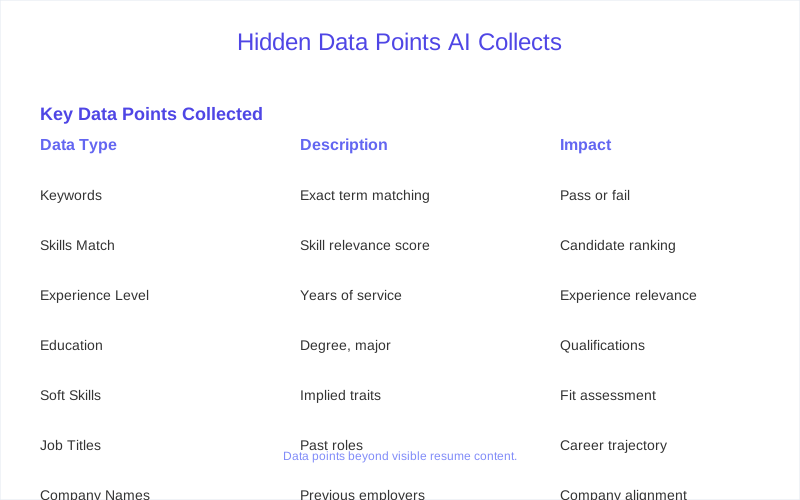
This isn't just about keywords anymore. These systems collect and analyze data points far beyond what's visible on your resume, influencing whether you ever reach a human recruiter. Understanding these hidden data points is crucial for navigating the modern job market.
I've seen countless qualified candidates get screened out because they didn't understand the invisible game being played. The goal isn't just to make your resume look good; it's to make it machine-readable and machine-approvable. It's about speaking the system's language, not just the hiring manager's.
Companies use these tools to manage the sheer volume of applications. Over 82 percent of companies are using AI to scan resumes, according to ResumeBuilder research. This isn't a future scenario; it's current practice. Your strategy must adapt.
Ignoring these tools is like showing up to a job interview in a ripped t-shirt and expecting to be taken seriously. You might be brilliant, but you won't get past the first impression. Your resume needs to pass the AI's initial screening to even have a chance at human consideration.
My role has always been to bridge the gap between policy and practice. In this new landscape, that means understanding the algorithms. Your protection starts with knowing what information these systems are really looking for, and how to present it effectively without resorting to desperate 'hacks' that backfire.
The Real Answer
The real answer is that AI resume tools don't just read your words; they create a candidate profile based on a multitude of data points, many of which are inferred or compared against external benchmarks. This isn't about finding the 'perfect' candidate, but about minimizing the time a human recruiter spends on unqualified applications.
These systems operate on an 'agentic hiring' model, where AI agents constantly interact on both the candidate and recruiter sides. They're designed to surface candidates who align with historical success patterns within the company, not necessarily those with the most impressive stories. AI-assisted job search features on platforms like LinkedIn use 'semantic matching' to find roles that align with skill depth.
The system's core function is risk reduction. Every application is a potential time sink or a bad hire. By collecting more data points, the AI tries to predict who will be a 'proven performer' and who will be a liability. It's a calculated gamble based on data, not intuition.
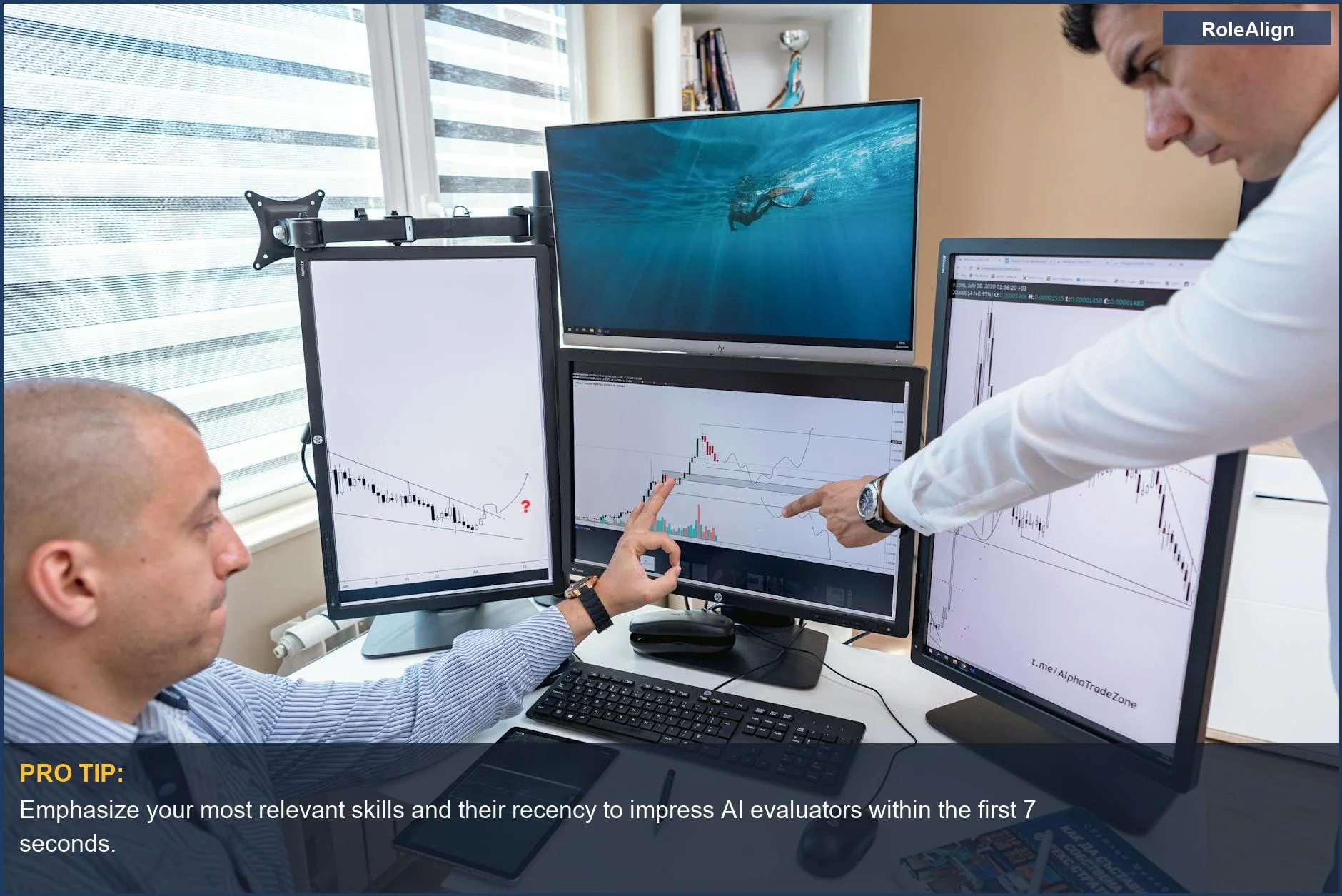
For example, some tools analyze the 'recency' of your skills. If you list a skill that hasn't been used in a project for five years, even if you're an expert, the AI might deprioritize it. It's not about your total skill set; it's about what's immediately applicable and current.
Another critical factor is consistency across platforms. The AI might cross-reference your resume against your LinkedIn profile or other public data. Discrepancies, even minor ones, can trigger flags. Mokka's Answer and Profile Integrity analytics act as a trust layer, checking for mismatches.
This is why 'white text hacks' are not just ineffective but detrimental. Embedding invisible keywords is easily detected and marks your application as deceptive. That white text resume 'hack' is complete BS and will get you filtered out.
The AI wants verifiable, consistent data that aligns with its internal models. Your goal is to provide that data clearly and strategically. It's about understanding the system's triggers and ensuring your profile fits the 'potential legal liability' bucket if you're being unfairly screened, but primarily, the 'high potential' bucket for the job itself.
What's Actually Going On
When an AI resume tool processes your application, it's doing far more than scanning for keywords. It's building a complex profile. Here are some of the hidden data points and categories it evaluates:
1. Skill Recency and Context: It's not enough to list skills. AI analyzes when you last used a skill and in what context. A skill used in your last role carries more weight than one from a decade ago. It also checks for skill density within relevant projects.
2. Industry-Specific Language Patterns: Beyond keywords, AI looks for the specific phrasing and jargon common in your target industry. Using generic terms when industry-specific ones exist can signal a lack of depth. This includes acronyms and specialized software names.
3. Work History Gaps and Length of Tenure: AI flags unexplained gaps in employment or very short tenures at multiple companies. While not always disqualifying, these become data points that can lower your overall score. Be prepared to address these concisely.
4. Consistency Across Digital Footprint: Some advanced AI tools cross-reference your resume data with your LinkedIn profile, GitHub, or other online professional presence. Discrepancies in dates, titles, or responsibilities can raise red flags. Mokka enriches profiles with third-party data and integrity checks.
5. Resume Formatting and Readability: AI tools prefer clean, standard formats. Complex graphics, non-standard fonts, or unusual layouts can confuse the parser, leading to missed information. This isn't about aesthetics; it's about machine readability.
6. Engagement Metrics (for internal systems): If you're applying through a company's career portal, some systems track how long you spend on the application, how many times you've applied before, and even your interaction history with their site. This is less about your resume and more about your interest.
7. Predictive Analytics for Success and Retention: Sophisticated AI models attempt to predict your likelihood of success in the role and your potential for long-term retention based on patterns from previous successful employees. This can include factors like educational background, previous company types, and even commute times. These systems can predict which environments you are likely to thrive in.
8. Geo-Location and Commute: For local roles, some AI tools may consider your proximity to the office. This isn't always explicit but can be an inferred data point that influences ranking. It's a practical filter for many companies.
9. Soft Skills Inference: While hard to quantify, AI can infer soft skills by analyzing action verbs and descriptive language. For instance, 'led a team' suggests leadership, while 'collaborated on' suggests teamwork. Your phrasing matters.
10. Compliance Checks: AI also screens for basic compliance with job requirements, such as specific certifications, degrees, or years of experience. Failing these basic filters, even with an otherwise strong resume, will lead to immediate disqualification. AI-powered resume builders ensure ATS compatibility and flag weak language.

How to Handle This
Navigating AI resume tools requires a strategic approach, not just a keyword dump. Here's a step-by-step plan to ensure your resume gets past the bots and into human hands:
1. Analyze the Job Description with an AI Tool (15 minutes): Use an AI resume optimization tool like Jobscan or Resume Worded. Copy the job description and your current resume into it. These tools will highlight missing keywords, phrasing, and formatting issues. This isn't cheating; it's smart preparation. Jobscan is excellent for optimizing your CV for ATS.
2. Tailor Your Resume for Each Application (30-45 minutes per application): Do not use a generic resume. Customize your resume for every single job. Incorporate keywords and phrases directly from the job description into your experience bullet points. This isn't about lying; it's about demonstrating relevance. Rezi forces users to follow best practices for landing an interview.
3. Quantify Everything (Ongoing): AI loves numbers. Instead of 'managed projects,' write 'managed 10 projects, reducing delivery time by 20 percent.' Specific metrics provide concrete data points for the AI to process and rank. This gives the AI something tangible to score.
4. Use Standard Formatting (5 minutes): Stick to clean, simple resume templates. Avoid fancy graphics, complex tables, or unusual fonts. ATS systems often struggle to parse these, leading to lost information. A chronological or hybrid format is generally safest.
5. Ensure Online Consistency (Monthly Check): Make sure your LinkedIn profile, portfolio, and any other professional online presence align with your resume. Discrepancies can be flagged by AI performing integrity checks. Update your profiles regularly to reflect your current resume.
6. Write a Targeted Cover Letter (20 minutes): While the resume is for the AI, the cover letter is for the human. Use it to tell your story, explain gaps, and express genuine interest. Some advanced AI might scan it for tone, but its primary audience is human.
7. Proofread Meticulously (10 minutes): Typos and grammatical errors can lower an AI's confidence score in your application. They signal a lack of attention to detail. Use grammar checkers, but always do a manual review.
8. Understand 'Essential Functions' (Research Time): For roles requiring accommodations, clearly state your ability to perform 'essential functions' with or without reasonable accommodation. This triggers ADA compliance protocols, moving your application into a different legal bucket if necessary.
What This Looks Like in Practice
I've seen hundreds of applications processed by AI, and the patterns are clear. Here's what this looks like in practice:
-
The 7-Second Scan: A resume with a clean, ATS-friendly format gets parsed in approximately 7 seconds. The AI quickly extracts key data points like job titles, dates, and quantifiable achievements. Conversely, a resume with a complex layout might take 45 seconds or more to parse, often with errors, leading to a lower match score.
-
Keyword Density vs. Context: A candidate for a 'Senior Software Engineer' role included 'Python' 3 times in their experience section, always in the context of leading development projects. Their match score was 85 percent. Another candidate, who merely listed 'Python' in a skills section 10 times without context, scored only 60 percent. The AI prioritizes contextual usage over sheer repetition. Recruiters confirm hidden prompts don't work.
-
Experience Gaps: A candidate with a 2-year employment gap, unexplained on their resume, received an initial AI score of 55 percent. When they updated their resume to include 'Personal Sabbatical & Volunteer Work' during that period, their score jumped to 78 percent. Transparency, even brief, prevents the AI from making negative assumptions.
-
Skill Recency: A candidate listed 'Java' as a core skill but hadn't used it professionally in 8 years. The AI assigned a low relevance score for Java, despite their expertise. For a role requiring current Java proficiency, this meant an 18 percent lower match compared to a candidate who used Java in their most recent role.
-
Formatting Fails: A candidate submitted a resume as an infographic. The AI failed to extract 60 percent of their professional experience and skills, resulting in a 30 percent match and immediate rejection. Standard, text-based resumes are far more effective for AI parsing. People injecting invisible text into resumes to hack AI is real, but it backfires.
Mistakes That Kill Your Chances
Many job seekers unintentionally sabotage their applications when dealing with AI tools. Here are critical mistakes that kill your chances:
| Mistake | Why it Fails | Protective Action |
|---|---|---|
| Using a single, generic resume for all applications. | AI tools detect low relevance, leading to a low match score against specific job descriptions. | Tailor your resume for each job. Use an AI tool like Jobscan to compare against the job description. |
| Relying on 'white text' or invisible keywords. | This is easily detected by modern AI as an attempt to deceive, often leading to immediate disqualification. | Focus on genuine keyword integration. Your words need to be visible and contextual for humans and AI. |
| Using complex formatting, graphics, or non-standard fonts. | ATS systems struggle to parse these, resulting in lost information and an incomplete candidate profile. | Stick to clean, simple, chronological formats. Use standard fonts like Arial or Calibri. |
| Not quantifying achievements with specific numbers. | AI has less concrete data to evaluate your impact, making your contributions seem vague and less impressive. | Include metrics: 'increased sales by 15 percent,' 'managed a budget of $500,000.' |
| Listing skills without context or recency. | The AI may devalue skills not tied to recent projects or specific achievements, even if you possess them. | Integrate skills into your experience descriptions, highlighting recent usage and impact. |
| Failing to check for online profile consistency. | Discrepancies between your resume and LinkedIn (or other professional sites) can signal inaccuracy to AI integrity checks. | Regularly audit your online profiles to ensure they align perfectly with your current resume. AI resume tools help you translate competencies into language employers understand. |
Key Takeaways
Navigating the AI-driven hiring landscape requires a strategic shift in how you approach your job search. It's no longer just about impressing a human; it's about successfully communicating with a machine first. Your ability to get past the initial digital gatekeeper depends on understanding its logic.
- Tailor Everything: A generic resume is a dead resume. Customize each application for the specific job description, ensuring keywords and phrasing align. This is non-negotiable.
- Quantify Your Impact: Numbers speak to AI. Provide specific metrics for your achievements to give the system concrete data points for evaluation. This builds a stronger, data-driven profile.
- Prioritize Readability: Use clean, standard formats. Avoid anything that might confuse an ATS parser.
Your resume needs to be machine-readable first, aesthetically pleasing second. * Maintain Digital Consistency: Ensure your online professional profiles mirror your resume. Discrepancies can trigger flags and lower your overall candidate score. Many AI-driven tools help write job applications and optimize them. * Leverage AI Strategically: Use AI resume builders and optimizers as your co-pilot, not as a replacement for your own critical thinking.
They identify gaps and suggest improvements, but the final narrative is yours. * Understand the 'Why': Companies use these tools for efficiency and risk reduction. Your goal is to present yourself as a low-risk, high-potential candidate through the data points the AI collects. Your protection starts with this understanding.
Frequently Asked Questions
Is it worth paying $20 per month for an AI resume builder, or can I just use ChatGPT?
Do I really need to update my LinkedIn profile every time I update my resume?
What if I tailor my resume perfectly, but I still don't get an interview?
Can using AI resume tools permanently damage my professional reputation if detected?
I heard that putting the job description in white text at the bottom of my resume helps with AI. Is this true?
Sources
- 15 Best AI Resume Builders in 2026 (Reviews + FAQs) - ResumeLab
- People are injecting invisible text into their resumes to hack the AI.
- AI Recruiting Platform Comparison: 15+ Tools Evaluated (2026)
- 5 AI Resume Tools Every College Student Should Master in 2026
- AI-Assisted Hiring in 2026: The Complete Strategy Guide (No BS ...
- I'm Jacob, I made an AI Resume SaaS that bypasses ATS & lands ...
- The Hidden Resume Filters You Never See (And How to Beat Them)
- AI Resume Hacks? Recruiters Say Hidden Prompts Don't Work.
- How to Use AI for Your Tech Job Search in 2026 - DeWinter Group
- The 6 best AI resume builders in 2026 - Zapier
- That white text resume "hack" is COMPLETE BS and almost ... - Reddit