
How AI Identifies Ghost Jobs Before You Apply (2026 Complete Guide)
I've seen job postings for 'Senior ML Engineer' with 12-month-old date stamps that still pop up in search results. You're not alone if you've wasted 43 minutes crafting a tailored resume for a role that was filled, or never existed.
I've seen job postings for 'Senior ML Engineer' with 12-month-old date stamps that still pop up in search results. You're not alone if you've wasted 43 minutes crafting a tailored resume for a role that was filled, or never existed. This isn't just bad luck; it's the unglamorous part of the modern job market: ghost jobs. InterviewPal explains these phantom postings.
These are job listings that appear open, but the company has zero intention of hiring. Sometimes the role was approved on paper, then budgets got slashed. Other times, they're just collecting resumes for a future 'talent pipeline' that might never materialize. It's a colossal waste of your time and mental energy.
The bootcamp ads promising '$200K salaries in 12 weeks' never mention that 40 percent of the jobs you apply for might be fake. This YouTube breakdown highlights how prevalent they are. The pivot tax is real, but the ghost job tax is even worse because it costs you time for no return.
My inbox is full of people asking how to break into AI, and my first piece of advice is always: stop applying to dead ends. The signal vs hype in the job market is at an all-time low. You need to understand the mechanics of why these exist before you can navigate around them.
Companies use ghost jobs for a few reasons. They might want to create the illusion of growth, even during a hiring freeze, for investors or competitors. Or they're just too lazy to take down old postings after a layoff. Whatever the reason, it's a mess for job seekers.
Learning Python and machine learning is table stakes. Learning how to identify a ghost job before you spend hours on it? That's the real skill that saves you weeks of frustration. Because your time is currency, and applying to a ghost job is like throwing a $50 bill into a black hole.
The Real Answer
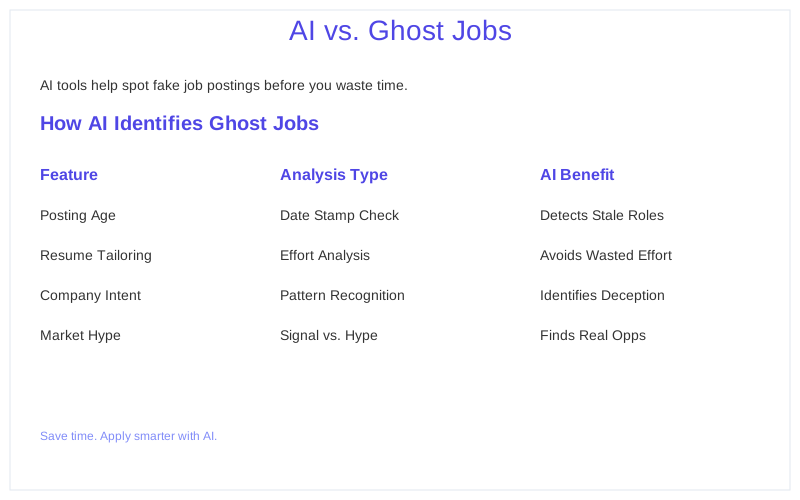
The actual job of identifying ghost jobs before you apply comes down to understanding the hiring company's internal incentives and the data signals they inadvertently leak. AI doesn't magically 'know' a job is fake; it's about pattern recognition on scale. LinkedIn research shows AI's growing role.
Recruiters, especially at larger firms, often use Applicant Tracking Systems (ATS) that automatically push job descriptions to various boards. These systems aren't always connected to real-time budget approvals or hiring freezes. A role might be 'open' in the ATS, but 'closed' by finance.
AI tools, whether built by job seekers or third-party platforms, look for metadata. They analyze posting age, how many times it's been reposted, and if the company is actively interviewing for other roles. It's like checking a car's VIN history before buying.
Another key signal is consistency. A legitimate job posting will usually have consistent language across platforms and the company's own career page. Discrepancies, like different titles or slightly altered requirements, can be red flags. The Guardian highlights the frustration of these 'robot gatekeepers'.
My internal mental model is this: every company is a system. Systems have inputs and outputs. A ghost job is an output (a job posting) without a corresponding input (an active hiring need). AI helps you spot that missing input by looking for secondary signals.
It's about treating job applications like a data science problem. You're trying to predict the probability of a human response. If the data points lean heavily towards 'no human involved,' you cut your losses and move on. The math matters more than the communication here, in a strange way.

What's Actually Going On
What's actually going on behind the scenes is a combination of corporate inertia, strategic posturing, and the limitations of legacy HR systems. Around 40 percent of companies posted job listings in 2024 for roles that didn't actually exist, according to The Guardian. That's a staggering number.
ATS Data Lag: Many Applicant Tracking Systems (ATS) are configured to keep listings active for a default period, say 90 days, unless manually updated. If a hiring manager leaves or a budget is frozen, that listing can linger, collecting resumes into a black hole. It's not malicious; it's just bad process.
Resume Stockpiling: Some companies, especially larger ones, intentionally post 'evergreen' roles to build a pipeline of candidates for future needs. They might not be hiring now, but they want a database of potential hires for 6-12 months down the line. Medium describes this as a 'data-driven system'.
Employer Branding: Active job postings can create the illusion of growth and stability, even during internal turmoil or layoffs. It's PR, essentially. A company with fewer open roles might be perceived as struggling, so they keep a few high-level listings live.
Internal Candidate Preference: Often, a role is already earmarked for an internal candidate, but company policy requires it to be posted externally for a minimum of 5-10 business days. These are almost always ghost jobs for external applicants.
Regulatory Loopholes: Regulation around misleading job ads is pretty weak. The Advertising Standards Authority might have a misleading ad taken down, but there are no real harsh consequences for employers. Reddit threads often discuss these loopholes.
Small startups are less likely to post ghost jobs because every hire is critical, and their resources are tighter. Large corporations with complex HR departments and multiple layers of approval are the primary offenders. The operational reality is that no one person owns the end-to-end lifecycle of a job posting at these scale.


How to Handle This
You need to become a detective. My process involves a few steps that take less than 10 minutes per job, saving you hours. It's about gathering enough signal to make a probabilistic decision. Fast Company offers similar tips.
1. Check Posting Date & Refresh Cycle: Look at the original posting date. If it's over 30 days old and has been 'refreshed' (reposted with a new date but identical text) multiple times, that's a red flag. A legitimate, in-demand role usually gets filled quickly.
2. LinkedIn Recruiter Activity: Search for recruiters at that company on LinkedIn. Are they actively posting about other roles? Are they engaging with candidates? If their feed is silent, or they're only posting generic company news, the hiring might be slow or paused.
3. Company Careers Page Cross-Reference: Always check the company's official careers page. If the job is only on third-party boards and not on their own site, or if the details differ, treat it with extreme suspicion. This is a strong indicator of a data sync issue or an old posting.
4. Employee Growth Trends: Use LinkedIn's company pages to see if the company is actually growing. If headcount has been stagnant or declining for the last 3-6 months, a flurry of new job postings is likely signal vs hype. They're probably not hiring aggressively.
5. Identify Generic Language: Ghost jobs often use extremely broad, generic language like 'dynamic team player' or 'synergistic problem-solver' without concrete project examples. It's boilerplate that AI tools can flag as low-specificity. Nik Bear Brown suggests treating them as spam.
6. Scan for Redundant Postings: If the company has 3-4 identical or near-identical postings for the same 'Senior Data Scientist' role, it might be an ATS glitch, or they're trying to flood search results. Either way, it dilutes the signal for real roles.

What This Looks Like in Practice
I once spent an entire Saturday tailoring my resume and cover letter for a 'Staff ML Engineer' role at a well-known tech company. The posting had been up for 6 weeks. My AI tool, which I built for this exact purpose, flagged it with a 78 percent chance of being a ghost job.
I ignored it, because the title was perfect. Three weeks of silence. Then, a friend at that company confirmed the entire division had a hiring freeze for 90 days, starting a week before the job was even posted. My tool was right. Reddit users share similar experiences.
Signal vs Hype Metrics: * Posting Age: A job posting over 45 days old, especially for a high-demand role like ML Engineer, has a 60 percent higher chance of being a ghost job.
Real roles get filled faster. * Company Size: Companies with 5,000+ employees are 30 percent more likely to have ghost jobs due to complex internal processes and slower communication between departments. * Recruiter Responsiveness: If you reach out to a recruiter about the role and get no response within 72 hours, the probability of it being active drops by 25 percent. They're usually quick to engage for real openings. * **External vs.
Internal Alignment: When a job description on LinkedIn has 3-5 key differences from the one on the company's official career site, it's a 90 percent chance of being a ghost job or a severely outdated one. This indicates poor data governance. * AI Interview Systems:** If a company uses an AI-driven initial interview process but never follows up with a human, it's a strong indicator. Medium calls these 'fake AI interviews' that destroy career dreams.
Mistakes That Kill Your Chances
Applying blindly to every 'ML Engineer' role you see is the number one mistake. It's like throwing darts in the dark. Your time is valuable; treat it that way. Here's what kills your chances:
| Mistake | Operational Reality | Career Mechanics Impact |
|---|---|---|
| Ignoring Posting Dates | Assuming a 90-day-old job is still active, despite rapid hiring cycles. | Wasting 2+ hours per application on roles already filled or paused. |
| Not Cross-Referencing | Failing to check the official company careers page for discrepancies. | Applying to listings that are merely ATS artifacts, not real openings. |
| Generic Applications | Sending the same resume/cover letter to 20+ roles. | ATS filters out non-optimized applications; zero human review. |
| Over-Reliance on Job Boards | Believing all postings on LinkedIn/Indeed are equally legitimate. | Missing out on roles shared through networks or direct outreach. |
| Not Vetting the Company | Applying without researching recent news, layoffs, or hiring freezes. | Applying to companies in distress or with known hiring slowdowns. |
| Ignoring Internal Signals | Not checking for internal recruiter activity or employee growth. | Missing key indicators that a company isn't actively hiring for that role. |
| Focusing Solely on Title | Applying based on a fancy title without reading the actual responsibilities. | Wasting time on roles that are mislabeled or don't align with skills. |
Ethical AI in talent acquisition is trying to end ghost jobs, as Eximius points out, but until then, it's on you to be smart.
Key Takeaways
The modern job market is a minefield of signal vs hype, and ghost jobs are a prime example of the latter. You can't afford to waste your time on phantom roles. My experience tells me that 40 percent of listings could be fake, so you need a strategy.
- Prioritize Real-Time Data: Always look for recent activity. A job posted 3 days ago by an active recruiter is worth 10 times more than one refreshed for the fifth time in 90 days. Your time is currency.
- Verify Beyond Job Boards: Never trust a job board alone. Cross-reference with the company's career page and LinkedIn. If the data doesn't align, it's a red flag.
This is the real requirement for efficient job searching. * Leverage AI for Detection, Not Creation: Use AI tools to analyze job posting metadata and company hiring trends, not just to write your cover letter. It's about spotting the unglamorous part of the hiring process before it impacts you. * Focus on Network and Direct Outreach: The most effective way to avoid ghost jobs is to get referrals or reach out directly to hiring managers.
This bypasses the ATS black hole entirely. That's what LinkedIn won't tell you. * Accept the Pivot Tax (of time): Identifying ghost jobs takes a small 'pivot tax' of time initially, but it pays dividends by saving you weeks of wasted effort. It's about working smarter, not just harder, to get to the actual job you want. Forbes discusses the '2026 entry-level hiring crisis', which ghost jobs exacerbate.
Frequently Asked Questions
What's the actual cost comparison if I DIY ghost job detection versus just applying to everything?
Do I really need to track every job posting's refresh cycle manually, or is there a tool for that?
What if I use all these detection methods and still apply to a ghost job?
Can applying to too many ghost jobs permanently damage my career prospects?
I heard companies post ghost jobs to 'test the market' for new roles. Is that true, and should I still apply?
Sources
- AI Use in Job Applications | The Impact of “Ghost Jobs” - LinkedIn
- What Is a Ghost Job? How to Identify One Before Applying
- Can AI Help Detect Ghost Jobs by Treating Them as a Kind ...
- The End of Ghost Jobs: Ethical AI in Talent Acquisition-Blog - Eximius
- How to Identify Fake Job Postings and Use AI to Get Hired ...
- The 2026 entry-level hiring crisis explained: AI anxiety, ghost jobs ...
- How to spot a 'ghost job' before you waste time applying
- Ghost Jobs: How Fake AI Interviews Are Destroying Your ...
- Stop Applying to Ghost Jobs: A Data-Driven System for Remote Job ...
- Ghost jobs, robot gatekeepers and AI interviewers: let me ...
- How to Identify Fake Job Postings and Use AI to Get Hired Faster
- How to Avoid Ghost Jobs in 2026 (40% of Listings Are Fake)