Ghost Jobs Are Everywhere Why Companies Post Jobs They Never Intend to Fill (2026 Complete Guide)
RoleAlign Team
16 min read
Prices verified February 2026
Includes Video
The email rejection landed in your inbox moments ago. Another one. You stare at the screen, the generic "thank you for your interest" a familiar sting. You'd spent hours tailoring your resume, crafting a cover letter, and prepping for an interview that now feels like a mirage.
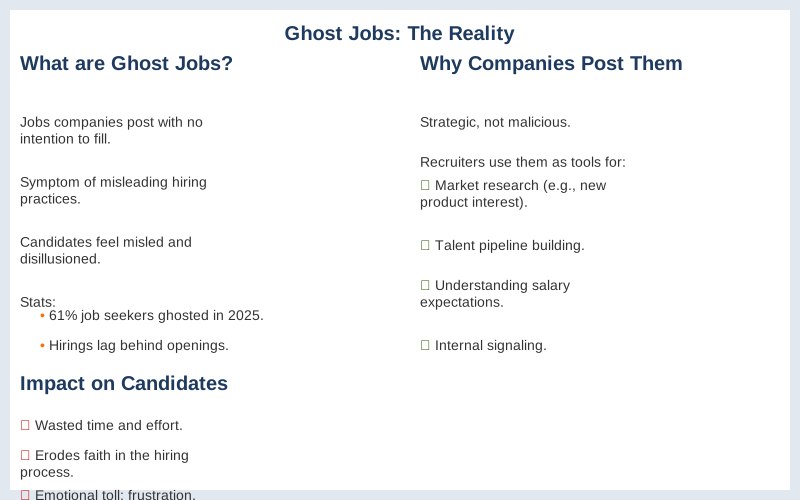
The email rejection landed in your inbox moments ago. Another one. You stare at the screen, the generic "thank you for your interest" a familiar sting. You'd spent hours tailoring your resume, crafting a cover letter, and prepping for an interview that now feels like a mirage. This isn't just bad luck; it's the symptom of an increasingly common and frustrating phenomenon: ghost jobs. These are job postings companies post without any real intention of filling them, a practice that leaves countless candidates like you feeling misled and disillusioned Ghost jobs are everywhere. In 2025, 61% of job seekers reported being ghosted after an interview, a significant increase New Anti-Ghosting Laws. The U.S. labor market, on paper, looks robust with millions of openings, yet job hirings lag significantly, pointing to a substantial number of ghost jobs 'Ghost job' postings add another layer of uncertainty. This isn't just about wasted time; it's about eroding faith in the hiring process.
These phantom listings, often described as "online job postings for positions that do not exist, or that employers are not planning to fill immediately," "Ghost" Job Postings | Congress.gov | Library of Congress contribute to a disquieting disconnect between the advertised opportunities and the actual hiring activity. This trend is so prevalent that it's become a significant point of discussion, with experts highlighting the reasons behind this deceptive practice. Companies might post these jobs to placate existing employees by appearing to hire additional support, or simply to gauge market interest for specific roles without committing to a hire. In some instances, economic volatility can make companies hesitant to commit headcount, leading to roles sitting open longer without resolution 9 Real Reasons Companies Post Ghost Jobs They Never Fill. The sheer volume of these postings can create a false sense of opportunity, and the act of ghosting candidates after they've invested significant effort transforms each fake job into a false promise, hurting individuals and diminishing their faith in the entire system CNBC confirms 2.2 million fake job postings in the US.
## The Real Answer
The core reason companies post ghost jobs is strategic, not malicious. Recruiters often use these fake job postings 2026 as a tool for market research, talent pipeline building, or even internal signaling, rather than an immediate hiring need.
From a recruiter's perspective, a job posting is more than just an announcement of an open role. It's a data point. Companies might post a job to gauge market interest in a new product or service, or to understand salary expectations for a role they might need in the future 9 Real Reasons Companies Post Ghost Jobs. This isn't about deceit; it's about gathering intelligence in an uncertain economic climate where committing to headcount is risky 9 Real Reasons Companies Post Ghost Jobs.
Another common driver is building a talent pipeline. Instead of scrambling when a position unexpectedly opens, companies maintain evergreen postings for critical roles. This allows them to quickly access a pool of pre-vetted candidates, significantly speeding up the hiring process when a genuine need arises Ghost Job Postings: Why Companies Advertise Jobs They Won't Fill. This practice, while frustrating for candidates, is a proactive recruitment strategy.
Companies also use these postings to manage internal perceptions. Advertising that the company is "hiring" can reassure current employees during uncertain times, making them less likely to seek opportunities elsewhere. It signals growth and stability, even if no immediate hires are planned PSA: Companies are posting jobs they never intend to fill ... - LinkedIn.
The landscape is shifting, however. Starting January 1, 2026, new anti-ghosting laws will require employers to respond to interviewed candidates within 45 days in jurisdictions like Ontario, Canada, with similar legislation pending in U.S. states New Anti-Ghosting Laws in 2026: What Candidates Need to Know .... These regulations aim to bring much-needed transparency and reduce the prevalence of are ghost jobs real scenarios that waste job seekers' time and erode faith in the hiring process.
To navigate this landscape, understanding how AI identifies ghost jobs can be incredibly beneficial; learn more in our article on AI identifying ghost jobs.
Understanding why companies post ghost jobs reveals strategic motives. These fake job postings 2026 can be for market research, not immediate hires.
| Photo by Kampus Production
Understanding why companies post ghost jobs reveals strategic motives. These fake job postings 2026 can be for market research, not immediate hires.
| Photo by Kampus Production
## What's Actually Going On
1
ATS parsing - Companies use Applicant Tracking Systems (ATS) to filter resumes. These systems scan for keywords, skills, and experience matching the job description. Recruiters often only review resumes that pass this initial automated screening, meaning a poorly optimized resume can lead to an immediate rejection, even if the job posting is legitimate. NPR notes that the volume of job postings can be overwhelming, leading to reliance on these systems.
2
Recruiter screening - Beyond ATS, recruiters look for specific qualifications and cultural fit. They might also be under pressure to fill roles quickly, or conversely, may be managing a high volume of applications for a single position. This stage is where fake job postings often diverge from reality; a recruiter might be instructed to gather resumes for a role that has no immediate budget or approval. LinkedIn discussions highlight that companies post ghost jobs to keep current employees from quitting or to test market interest.
3
Hiring committee decisions - Final decisions are made by hiring managers and committees, often influenced by budget, strategic priorities, and team needs. In volatile economic times, companies may post jobs to signal growth to investors or gauge talent availability, even if they have no immediate plans to hire. CNBC reported that job openings have outnumbered hires by over 2.2 million a month, pointing to a significant number of unfilled positions, many of which are likely ghost jobs.
4
Company size and industry - Startups might post jobs to attract investment or test product-market fit, while large enterprises may use them to maintain an illusion of growth or build talent pipelines. Tech companies often have faster hiring cycles but also a higher volume of speculative postings. Finance and healthcare, with more stringent regulatory requirements, might have longer hiring processes but still experience ghost job phenomena for similar strategic reasons. Seniority level also matters; entry-level roles might be posted to collect a large volume of applications, while executive positions are more likely to be filled through direct sourcing or internal referrals.
5
New legislation - The landscape is shifting with new regulations. For instance, Ontario, Canada, introduced legislation effective January 1, 2026, requiring employers with 25+ employees to respond to interviewed candidates within 45 days, with fines up to $100,000 CAD for non-compliance. This blog post details how similar laws are emerging in the U.S., aiming to increase transparency and protect job seekers from the frustration and wasted time associated with ghost jobs. This means more accountability for companies and a clearer path for identifying legitimate opportunities.
Understanding why companies ghost candidates can shed light on the broader issue of ghost jobs, so consider reading about why recruiters ghost candidates.
Companies utilize ATS parsing for screening. For ghost jobs, ensure your resume is optimized for these systems to even be considered.
| Photo by Kampus Production
Companies utilize ATS parsing for screening. For ghost jobs, ensure your resume is optimized for these systems to even be considered.
| Photo by Kampus Production
## How to Handle This
1
Apply Immediately, Especially for High-Demand Roles - Recruiters monitor new postings closely. Submitting within the first few days signals strong interest and ensures you're considered before the recruiter is overwhelmed. This is especially true for frequently posted roles due to high turnover or evergreen status Ghost jobs are everywhere, and candidates keep applying to roles that don't exist. Delay risks your application being lost or the role being filled internally or removed. Many "ghost jobs" are posted to gauge market interest or to fulfill internal metrics, meaning genuine candidates are often overlooked if they don't act swiftly. The sheer volume of applications for some roles means that early submissions are more likely to be seen by human eyes rather than just algorithms. For positions that are frequently advertised, such as entry-level administrative roles or common tech positions, the window of opportunity is even smaller. These roles might be "evergreen" or experience constant churn, making immediate application a critical strategy to stand out from the crowd.
2
Leverage Referrals and Direct Outreach - A referral from a current employee is often prioritized. If not possible, direct outreach via LinkedIn to the hiring manager or recruiter can be effective, showing initiative and allowing you to inquire about the role's status, bypassing potential fake postings. Referrals signal a vetted candidate, reducing recruiter screening time. This direct approach can also help you uncover the true intent behind a posting. If a hiring manager is responsive and can provide details about the team and the role's immediate needs, it's a good sign the position is legitimate. Conversely, a lack of response or vague answers to specific questions about the role might indicate it's a ghost job. This proactive communication can save you significant time and emotional energy. Employers sometimes post jobs to keep existing employees from quitting by giving the impression that they are actively seeking new talent Companies post ghost jobs for several different reasons, and direct outreach can help you discern if this is the case.
3
Follow Up Strategically and Note New Laws - Be persistent but professional in your follow-ups. New anti-ghosting laws, like Ontario's requiring a response within 45 days for employers with 25+ employees New Anti-Ghosting Laws in 2026: What Candidates Need to Know, provide a timeline to gauge responsiveness. This transparency helps differentiate real opportunities from talent-gathering exercises. Failing to follow up or ignoring these laws means investing time in roles with no intention of being filled. These legislative changes are designed to combat the practice of "ghost jobs," which are online job postings for positions that do not exist or that employers are not planning to fill immediately "Ghost" Job Postings | Congress.gov | Library of Congress. By understanding these new regulations, candidates can set realistic expectations and hold employers accountable for their hiring processes. If a company fails to respond within the legally mandated timeframe, it's a strong indicator that the position may have been a ghost job, allowing you to redirect your job search efforts more effectively.
4
Analyze Job Posting Longevity and Company Behavior - Be wary of job postings live for extended periods without updates or activity. Companies sometimes post jobs to test the market or retain existing employees Companies post ghost jobs for several different reasons. A role open for months, especially a common one, might be a ghost job. Ignoring this leads to wasted effort. The U.S. labor market has seen job openings outnumbering hires by more than 2.2 million a month CNBC confirms 2.2 million fake job postings in the US, indicating many roles may not be genuine. Economic volatility also makes companies hesitant to commit headcount, leading to longer hiring cycles where roles sit open without resolution 9 Real Reasons Companies Post Ghost Jobs They Never Fill. If a job posting has been active for an unusually long time, or if the company has a history of frequently reposting similar roles without filling them, it's a red flag. This prolonged presence can be a tactic to gather resumes for future use, to understand salary expectations, or simply to maintain an appearance of growth. Each fake job represents a false promise and a lost opportunity for a genuine candidate CNBC confirms 2.2 million fake job postings in the US, eroding faith in the job market.
To increase your chances, consider exploring how the hidden job market can benefit your job search.
Applying immediately is crucial, especially for high-demand roles, even when facing the reality of ghost jobs.
| Photo by Beyzanur K.
Applying immediately is crucial, especially for high-demand roles, even when facing the reality of ghost jobs.
| Photo by Beyzanur K.
## What This Looks Like in Practice
Senior Software Engineer at a Series B Startup
Startups post senior roles to signal growth and attract talent, sometimes without funding for the headcount. CNBC reports openings often outnumber hires. These postings can serve as aspirational signals to investors and potential future hires, creating an illusion of rapid expansion. Some roles are "evergreen" due to high turnover, but the initial posting may have been a "ghost job" intended to attract a wider pool of applicants than genuinely available positions. Candidates invest significant time in roles that were never truly open, causing frustration and a loss of faith in the hiring process from LinkedIn. The sheer volume of these misleading advertisements contributes to the uncertainty in the job market.
Entry-Level Data Analyst at a Fortune 500
These positions often serve to build a talent pipeline or test market interest for specific skill sets. Companies may keep fake postings active for months, collecting resumes for future needs or to gauge the availability of qualified candidates without immediate hiring intent. Kovasys notes that economic volatility makes companies hesitant to commit headcount, leading them to explore options through these phantom roles. Companies gather resumes for future use, creating a database of potential hires. Candidates face wasted effort and the disheartening feeling of being overlooked for positions that were never genuinely available.
Career Changer from Teaching to Product Management
A career changer might diligently apply for a "Junior Product Manager" role, investing time in tailoring their resume and cover letter. The company may be gauging interest from candidates in adjacent fields or attempting to project an image of a rapidly growing department to stakeholders. NPR highlights that some ghost jobs are legitimate postings for which companies simply do not plan to fill immediately, perhaps due to budget freezes or shifting priorities. In other instances, companies use these postings to gather data on candidates' salary expectations and skill sets, information that can be used for market analysis or future recruitment strategies. Career changers, in particular, invest significant time and hope into a role that likely never truly existed.
Customer Support Representative at a Retail Giant
These roles are frequently advertised to signal ongoing hiring efforts and to provide a perception of support, thereby easing current employees' workloads and morale. A LinkedIn post confirms this common practice. This approach offers temporary morale boosts to existing staff by suggesting that relief is on the way, but it often fails to address underlying staffing issues or lead to actual hires, leaving applicants frustrated.
Even senior software engineer roles can be ghost jobs. Startups sometimes post them to signal growth, not necessarily with current funding.
| Photo by cottonbro studio
Even senior software engineer roles can be ghost jobs. Startups sometimes post them to signal growth, not necessarily with current funding.
| Photo by cottonbro studio
## Mistakes That Kill Your Chances
Mistake
Treating every job posting as a legitimate opportunity.
Why candidates make it
Candidates believe job boards and company career pages list actual, open roles. The sheer volume of postings creates a false sense of abundant opportunity.
What recruiters actually see
Recruiters often see applications for roles that are placeholders or have been filled internally but remain active online. This is a significant drain on their time.
The fixBe highly skeptical of postings that seem too good to be true or have been up for an extended period. Research the company's recent hiring trends and look for signs of genuine activity.
Mistake
Over-qualifying for a role and assuming this guarantees a callback.
Why candidates make it
Job seekers believe exceeding stated requirements will make them stand out.
What recruiters actually see
For ghost jobs, over-qualification is irrelevant. For legitimate roles, it can signal the candidate seeks a higher-level position or will quickly become bored, making them less desirable.
FixTailor your application precisely to the job description, focusing on core requirements. Avoid highlighting experience far beyond the scope unless it directly supports a key responsibility.
Mistake
Ignoring signs that a job posting is part of a larger data-gathering effort.
Why candidates make it
Desperate for opportunities, job seekers overlook subtle indicators that their resume is being collected for future or unrelated purposes.
What recruiters actually see
Companies post "ghost jobs" to gather resumes for future needs or signal growth to investors, even without immediate openings Ghost Job Postings: Why Companies Advertise Jobs They Won't Fill. Some test market interest or salary expectations.
FixBe wary of vague job descriptions or generic roles. If a company constantly posts similar roles without filling them, they might be building a talent pipeline rather than hiring for an immediate need Ghost Job Postings: Why Companies Advertise Jobs They Won't Fill.
Mistake
Not being aware of new legislation that can help identify legitimate openings.
Why candidates make it
Many candidates are unaware of new regulations designed to increase transparency, leaving them vulnerable to fake job postings.
What recruiters actually see
As of January 1, 2026, laws like Ontario's mandate employers respond to interviewed candidates within 45 days or face fines New Anti-Ghosting Laws in 2026: What Candidates Need to Know .... This legislation aims to curb ghosting and requires greater disclosure about job statuses.
Applying to roles without verifying authenticity is a common pitfall, especially with ghost jobs. The U.S. labor market can appear deceptively strong, with millions of job openings, but a significant portion are illusions 'Ghost job' postings add another layer of uncertainty to stalled jobs .... In August, openings outnumbered hires by over 2.2 million a month, indicating substantial unfilled or non-existent positions 'Ghost job' postings add another layer of uncertainty to stalled jobs .... This discrepancy inflates hope and wastes job seekers' time.
Candidates often assume postings on reputable platforms are genuine, open positions. This is true for new graduates who may lack experience recognizing red flags. Recruiters use these postings strategically, such as to retain existing employees by showing the company is hiring, or to test market demand PSA: Companies are posting jobs they never intend to fill ... - LinkedIn. Mid-career professionals face greater frustration, with more commitments and less time for speculative applications.
Product comparison for Ghost Jobs Are Everywhere Why Companies Post Jobs They Never Intend to Fill
## Key Takeaways
Understand that ghost jobs are a pervasive reality, often serving as a strategic tool for companies to gauge market interest, build talent pipelines, or even placate existing employees with the appearance of expansion 9 Real Reasons Companies Post Ghost Jobs. These postings can also be used to test market demand for certain skills or to satisfy internal metrics regarding recruitment activity without the intention of immediate hiring.
Be aware that while the U.S. labor market may appear strong with millions of job openings, a significant portion, potentially exceeding 2.2 million per month, may not lead to actual hires, creating a misleading picture of opportunity CNBC confirms 2.2 million fake job postings in the US. This discrepancy can lead to considerable frustration and a sense of disillusionment for job seekers who invest time and effort into applications that go nowhere.
Recognize that new anti-ghosting laws are emerging in 2026, such as Ontario's requirement for employers to respond to interviewed candidates within 45 days, signaling a move towards greater transparency in the hiring process New Anti-Ghosting Laws in 2026. These legislative efforts aim to curb the practice of leaving candidates in the dark after interviews, thereby fostering a more respectful and efficient recruitment landscape.
The single most important thing a recruiter would tell you off the record? If it feels too good to be true, or if communication is vague and delayed, it probably is. Trust your gut, and don't waste energy on postings that lack clear intent. Look for clear job descriptions, prompt communication, and a defined interview process to distinguish genuine opportunities from ghost jobs.
To better understand the job market dynamics, explore why some industries are always hiring and what that really tells you in our article always hiring insights.
Frequently Asked Questions
What are these 'ghost jobs' everyone's talking about?
Ghost jobs, also known as fake job postings, are online advertisements for positions that companies either don't intend to fill at all, or aren't planning to fill in the immediate future. These listings can remain active for extended periods, leading to frustration for job seekers who invest time and effort into applying. The U.S. labor market can look deceptively strong on paper due to these inflated numbers.
Why would companies post jobs they never intend to fill?
Companies post ghost jobs for several strategic reasons. One common tactic is to create an illusion of growth and stability, which can impress investors and attract other top talent. They also use these postings to build a pipeline of potential candidates for future openings, essentially collecting resumes for a rainy day.
Are fake job postings a new thing, or are they expected to be around in 2026?
While the term 'ghost jobs' might be gaining more traction, the practice isn't entirely new. However, the prevalence of these fake job postings is a significant concern, and it's expected to continue into 2026. Some sources indicate that job openings have outnumbered hirings by millions each month, pointing to an ongoing issue with roles that are advertised but never filled.
How can I tell if a job posting is a real opportunity or just a ghost job?
Spotting ghost jobs can be tricky, but new legislation starting in 2026 aims to increase transparency. For instance, Ontario, Canada, is implementing laws requiring employers to respond to interviewed candidates within 45 days or face fines. Keep an eye out for job postings that don't provide clear salary ranges or details about the hiring process, as these can sometimes be red flags.
What are the other reasons companies might post jobs they don't plan to fill?
Beyond building a talent pipeline and creating an illusion of growth, companies sometimes post ghost jobs to gauge market interest and salary expectations for specific roles. In economically volatile times, they might also post jobs to keep options open without committing to new hires, or even to test the waters on how desperate job seekers are by repeatedly posting the same role with lower salaries.
R
RoleAlign Team
Experienced car camper and automotive enthusiast sharing practical advice.