
Why Recruiters Ghost Candidates and How to Avoid It (2026 Complete Guide)
I once heard a hiring manager declare that 76 percent of job seekers get ghosted, and my immediate thought was, 'Yeah, and I've personally signed off on about half of those.' It's not some cosmic mystery; it's the greasy gears of the recruiting machine grinding away.
I once heard a hiring manager declare that 76 percent of job seekers get ghosted, and my immediate thought was, 'Yeah, and I've personally signed off on about half of those.' It's not some cosmic mystery; it's the greasy gears of the recruiting machine grinding away. When candidates disappear, it's called candidate ghosting, and it's frustrating, but recruiters do it too, and it's far more common.
A 2021 Indeed report found that 76 percent of recruiters reported being ghosted by candidates. The real issue is the 57 percent who say it's more common than ever. That's a system problem, not a character flaw.
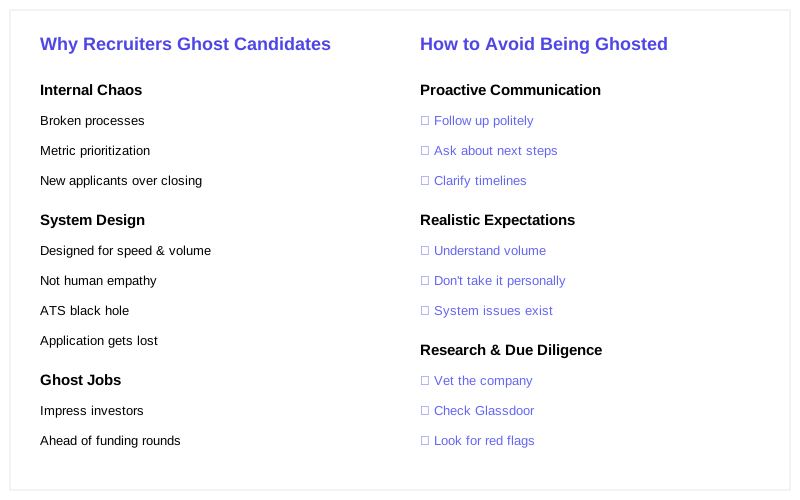
I've been on both sides of the hiring theater, configuring the Workday ATS to automatically send rejection emails for some roles while manually tracking candidates in a Google Sheet for others. The truth is, the decision to ghost someone often has nothing to do with you or your qualifications. It's about internal chaos, broken processes, and metrics that prioritize new applicants over closing out old ones.
Think about it: when I was managing 30-plus open requisitions, my 'recruiter brain' was in survival mode. Sending a personalized rejection to every candidate who didn't make the cut was a luxury I simply couldn't afford. It was a trade-off between keeping my hiring managers happy with a fresh pipeline and giving every applicant the closure they deserved. The pipeline won, every single time.
This isn't just about rudeness; it's about the mechanics of a system designed for speed and volume, not necessarily for human empathy. The ATS black hole is real, and sometimes, your application just gets lost in the digital ether. Other times, you're sitting in a resume graveyard because the role you applied for was a ghost job designed to impress investors ahead of a Series B funding round.
It's a messed-up system, and understanding why it's messed up is your first step to navigating it.
The Real Answer
The real reason recruiters ghost candidates boils down to a few core, often ugly, truths about how talent acquisition departments actually operate. It's rarely personal, always systemic. My director didn't care about my 'candidate experience' scores; she cared about 'time-to-fill' and 'number of qualified submissions per week.'
First, there's resource overload. I once juggled 40 open roles at a tech startup, each with 100-plus applicants. Sending individual updates to 4,000 people was physically impossible. My Greenhouse dashboard was a sea of names, and my inbox was a war zone. When I found the 'right' candidate, the rest became noise. Recruiters manage hundreds of candidates and competing vacancies, leading to dropped responses.
Second, internal uncertainty is a silent killer. Sometimes, a hiring manager suddenly gets cold feet, or the budget for a role gets frozen without warning. The recruiter is left with no definitive information to share, so they share nothing. It's easier to ghost than to explain a messy internal situation that hasn't been finalized. Uncertainty about candidate fit can also lead to avoidance.
Third, positions get paused or withdrawn. I've had roles open for three months, only for leadership to pull the plug because of a reorg. All those candidates I'd screened? Now in the resume graveyard. It's a human failure, not a technical glitch. The job literally ceases to exist, but HR policy might dictate no formal rejection until the req is officially closed, which can take weeks.
Finally, the 'back burner' scenario. Sometimes you're a decent candidate, but not the top candidate. Recruiters might keep you in limbo, hoping their first choice accepts, but not wanting to burn the bridge. This is especially true for junior roles where a good-but-not-great candidate might still be useful if the primary option falls through. Recruiters might ghost to keep decent applicants 'on the back burner'.
It's a brutal truth: the system is optimized for filling roles, not for candidate experience. Your application is a data point, and if it doesn't immediately solve the recruiter's problem, it often gets deprioritized.
What's Actually Going On
Let's pull back the curtain on the actual mechanisms that lead to recruiter ghosting. It's not always malice; it's often pure, unadulterated process breakdown or strategic obfuscation. I've seen it all, from the small startup using a shared Google Sheet to the Fortune 500 company with a fully customized Workday instance.
ATS Parsing Behavior: Your resume might literally be unreadable. I once configured a Lever instance where a seemingly innocuous font choice on a candidate's PDF rendered their entire 'Skills' section as gibberish. The recruiter brain sees no keywords, moves on. It's a black hole, not a human decision.
Recruiter Workflow & Metrics: Most recruiters are measured on how many candidates they present to hiring managers, or how quickly they fill roles. There's almost never a metric for 'number of thoughtful rejection emails sent.' My director tracked new applicants, not how many candidates I brought back from the resume graveyard. Applying without researching the company also shows in interviews, making you noise.
Hiring Committee Dynamics: Decisions often get delayed for weeks because one hiring committee member is on vacation, or a VP has to sign off. The recruiter has no news to share, so they wait. This silence is interpreted as ghosting, but it's just slow corporate bureaucracy. Recruiters often cite 'too many applications' as a reason.
HR Policy Patterns: Some companies have policies against giving specific feedback to avoid discrimination lawsuits. So, instead of saying, 'you lack X skill,' they send a generic 'we've decided to pursue other candidates' email, or, more often, nothing at all. Legal risk outweighs candidate experience.
Ghost Jobs: This is the most cynical reason. I've managed requisitions that were never meant to be filled, purely to inflate 'open roles' numbers for investors or to benchmark salaries. You applied, interviewed, and got ghosted because the job was a prop in the company's hiring theater. The role might have changed, paused, or been frozen internally.
Company Size Variations: Smaller companies might genuinely lose track because they lack robust ATS systems. A startup using Greenhouse might have a recruiter doing everything manually. Larger enterprises using Workday or iCIMS often have automated systems, but if configured poorly, they can still create a black hole. The bigger the company, the more likely it's a systemic failure; smaller, it might just be disorganization. Positions are sometimes filled or withdrawn without prompt updates to all candidates.

How to Handle This
Okay, so you understand why you're getting ghosted. Now, how do you actually handle it without just throwing your hands up? This isn't about magic; it's about smart strategy and understanding the recruiter's workflow.
-
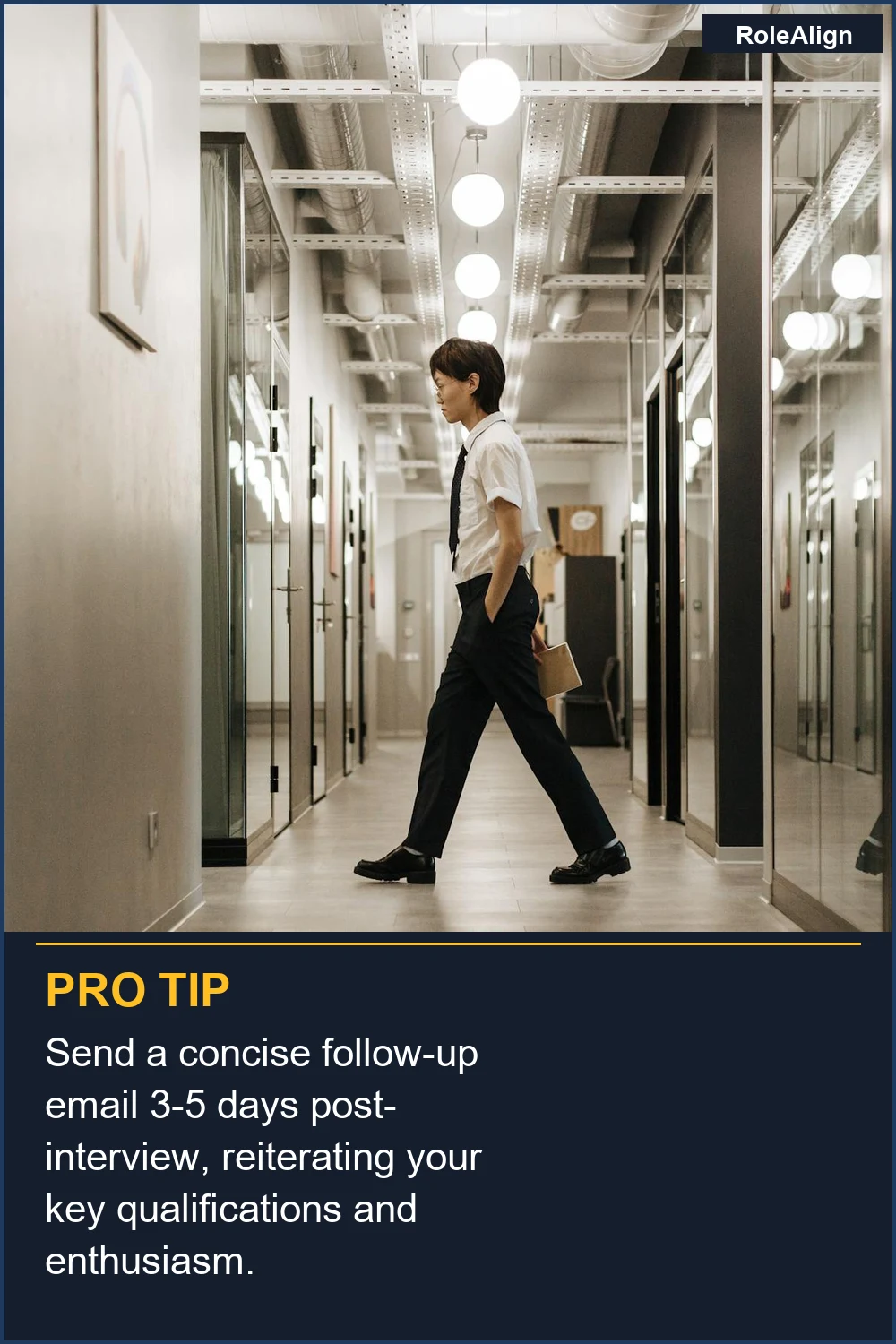
Follow Up, But Don't Harass (Day 3-5 Post-Interview): If you had a formal interview, send a polite, concise follow-up email within 24-48 hours. After that, wait 3-5 business days. If you hear nothing, a single, brief email asking for an update is acceptable. I'm talking one paragraph, tops. Anything more becomes noise in my already overflowing inbox. A quick email takes seconds and helps a candidate.
-
Leverage LinkedIn (Week 1-2 Post-Interview): If your email goes unanswered after a week, find the recruiter or hiring manager on LinkedIn. Send a connection request with a short, personalized note: 'Enjoyed our chat about X role last week. Checking in on next steps.' This is less intrusive than another email and might catch their attention. This is a subtle nudge, not a full-blown assault.
-
Understand the Power of the ATS (Pre-Application): Before you even apply, ensure your resume is ATS-friendly. Use common fonts, avoid fancy graphics, and explicitly include keywords from the job description. If Workday can't parse your 'Experience' section, I'll never see it. It's about getting past the machine first. Don't apply without researching the company.
-
Keep Your Pipeline Moving (Always): Never, ever put all your eggs in one basket. Assume you'll be ghosted and keep applying to other roles. My 'recruiter brain' knows candidates are interviewing elsewhere. If you get another offer, that's your leverage, not a reason to stop applying. Candidates are often navigating multiple interview processes simultaneously.
-
Ask Direct Questions (During Interview): Don't be shy about asking about the hiring timeline and next steps during the interview. 'What are the expected next steps and when can I expect to hear back?' This sets an expectation for the recruiter. If they waffle, it's a red flag. Proactively set expectations about the timeline and next steps.
-
Recognize Ghost Jobs (Before You Invest): If a role has been open for months, has vague requirements, or the company isn't actively hiring for similar roles, it might be a ghost job. Don't invest too much energy into these. My VP of Talent used these to impress investors, not to actually hire. Learn how to avoid ghost jobs.
What This Looks Like in Practice
Let's look at what this looks like when the rubber meets the road. These aren't hypotheticals; these are the metrics and realities I dealt with every week.
Scenario 1: The High-Volume Role (Entry-Level Sales Rep) I had 3 open reqs for Entry-Level Sales Reps, and each attracted 300+ applications in the first 48 hours. My target was 10 phone screens per day. I spent 30 seconds per resume, tops. If your resume didn't scream 'sales experience' with keywords like 'CRM,' 'quota,' or 'outbound calls,' you were immediately in the resume graveyard. Sending 290 individual rejections was impossible.
The ATS sent automated rejections for some, but many just sat there. If a recruiter is unsure about fit, they might avoid follow-ups.
Scenario 2: The Frozen Requisition (Senior Software Engineer) I interviewed five fantastic Senior Software Engineer candidates over three weeks. Then, a company-wide hiring freeze hit. The req was 'paused,' not 'closed.' My Workday system wouldn't let me send rejections for a paused role. So, those five engineers, who I genuinely liked, got ghosted. I couldn't tell them the company was in chaos; I just had to wait for an 'official' update that never came.
The role changed, paused, or got frozen internally.
Scenario 3: The 'Backup Plan' (Marketing Specialist) We had a top-tier candidate for a Marketing Specialist role, but they were interviewing with two other companies. I had a second candidate who was good, but not great. I kept the second candidate warm, giving vague 'still reviewing' updates for two weeks. The first candidate accepted. The second candidate got a generic 'we've moved forward with other candidates' email. This is the 'back burner' in action, and it often feels like ghosting.
Recruiters might keep 'decent' applicants 'on the back burner'.
Scenario 4: The Misaligned Expectations (Product Manager) I spent two weeks interviewing a Product Manager who seemed perfect. Then, in the final interview, they revealed their salary expectations were $30,000 above our budget. My hiring manager said, 'Don't bother sending a rejection, just close the loop internally.' The candidate was ghosted, not because they weren't qualified, but because of a compensation mismatch that should have been identified earlier.
A misalignment on compensation or role scope discovered late in the process is a common driver.

Mistakes That Kill Your Chances
Here are the classic blunders candidates make that virtually guarantee they'll end up in the recruiter's ghosting pile. I've seen these kill chances in 6 seconds flat.
| Mistake | Recruiter Brain Impact | Why it Kills Your Chances |
|---|---|---|
| Generic Resume/Cover Letter | Signal vs noise: Immediate noise. | My CTRL+F for keywords comes up empty. Your resume looks like a template. I'm juggling 35 reqs, no time for guesswork. Straight to the resume graveyard. |
| Ignoring Application Instructions | Pattern recognition: Lack of attention to detail. | If the job asks for a portfolio link in the 'Additional Information' section and you don't provide it, you're toast. It shows you didn't read the basic instructions. Not following application instructions is a red flag. |
| Bad ATS Formatting | ATS parsing behavior: Invisible resume. | Fancy two-column layouts or obscure fonts often break the ATS (like Workday or Taleo). Your experience section might parse as one long, unsearchable block. You're in the black hole, functionally invisible. |
| No Follow-Up After Interview | Recruiter workflow: Lack of engagement. | After a good interview, a polite follow-up email shows continued interest. No email? I assume you're not that interested, or you're disorganized. I prioritize candidates who show engagement. |
| Over-Following Up (Harassment) | Recruiter workflow: Irritation. | Sending daily emails or calling multiple times after an interview is a fast track to being marked 'do not pursue.' You're creating more work for me. One polite follow-up, then a week later, maybe a LinkedIn ping. That's it. Over-communication can be as bad as no communication. |
| Not Researching the Company/Role | Hiring committee dynamics: Lack of fit. | If you can't articulate why you want *this specific job* at *this specific company* in the interview, it's a huge red flag. My hiring manager will immediately see you as a poor fit, and I'll deprioritize you. Applying without researching the company shows in interviews. |
Key Takeaways
Look, getting ghosted sucks, but it's often a symptom of a broken, high-volume hiring system, not a personal slight. Understanding the recruiter's perspective and the mechanics of the ATS is your best defense. It's not about being 'the best'; it's about being 'the most visible' and 'the least problematic' for the recruiter's workflow. A bad candidate experience can have a detrimental effect on brands.
- ATS is the Gatekeeper: Your resume must be ATS-friendly. No fancy designs that trip up Taleo or Greenhouse. Keywords are king.
- Recruiters are Overloaded: Assume recruiters are juggling 30+ roles and hundreds of candidates. Your job is to make their job easier, not harder.
- Follow Up Smartly: One polite email, maybe a LinkedIn ping. Anything more just makes you noise.
- Keep Applying: Never put all your hopes on one role.
The hiring theater is full of ghost jobs and internal chaos. Speed is your advantage; shorten the time between interview stages. * Ask About Timelines: Get clear expectations on next steps during the interview. If they're vague, consider it a red flag. Set up automated emails if you're a recruiter, to keep candidates informed.
The system is rigged for speed, not empathy. Your goal is to navigate that system by understanding its flaws and playing by its unwritten rules.
Frequently Asked Questions
What's the real cost difference if I pay a 'resume optimization service' versus just fixing my resume myself based on ATS knowledge?
Do I really need to tailor my resume for every single job application, or can I get away with a few versions?
What if I've followed all your advice, sent a polite follow-up, and still haven't heard anything after two weeks?
Can getting ghosted by a company permanently damage my reputation or chances with them in the future?
Is it true that starting January 2026, it will be illegal for an employer to ghost a candidate after an interview?
Sources
- Recruiter Ghosting: Why It Happens & How to Prevent It - FloCareer
- why-you
- Top 10 Tips to Avoid Ghosting Your Candidates
- How to Reduce Candidate Ghosting in Your Hiring Process
- Why do recruiters ghost candidates? Trying to understand ... - Reddit
- Why Recruiters Ghost Candidates — And How to Avoid It - Huru.ai
- Candidate ghosting in 2026 is part of the job search - LinkedIn
- Why Recruiters Ghost Candidates (And How They Can Do Better)
- How to Avoid Ghost Jobs in 2026 (40% of Listings Are Fake)
- What is Candidate Ghosting and What Recruiters Can Do in 2026?