
The Art of Asking Insightful Questions During Interviews (2026 Complete Guide)
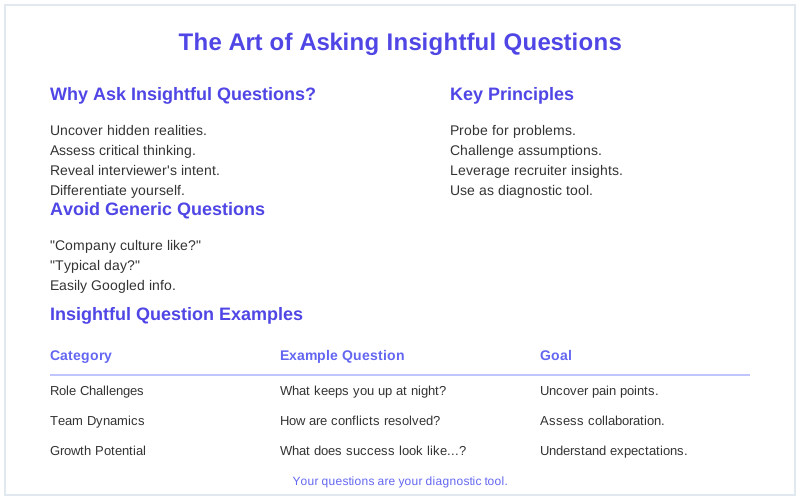
I once saw a candidate blow a $180,000 Staff Engineer offer because their 'insightful questions' were ripped straight from a 2010 blog post. You know the ones: "What's the company culture like?" or "What does a typical day look like?" These aren't insightful; they're table stakes, and frankly, they make my recruiter brain glaze over.
I once saw a candidate blow a $180,000 Staff Engineer offer because their 'insightful questions' were ripped straight from a 2010 blog post. You know the ones: "What's the company culture like?" or "What does a typical day look like?" These aren't insightful; they're table stakes, and frankly, they make my recruiter brain glaze over. The real art of asking questions isn't about sounding smart; it's about forcing the interviewer to reveal something they didn't intend to.
Reddit users often confuse thoughtful questions with generic ones.
Most candidates think they're demonstrating curiosity. What they're actually doing is asking questions that are too broad, too obvious, or easily found on the company's 'About Us' page. I've sat through hundreds of interviews where candidates ask me things I could Google in 15 seconds. That's not signal vs noise; that's just noise.
My job, when I was on the hiring side, was to identify potential problems, not just check boxes. An insightful question from a candidate was a rare gift. It was a chance to see if they could think critically, connect dots, and challenge assumptions. It told me they weren't just rehearsing answers; they were genuinely trying to understand the messy reality of the role.
This isn't about memorizing a list of 'great questions.' It's about understanding the mechanics of a hiring committee and the workflow of a stressed-out recruiter. It's about leveraging your questions to uncover the ghost jobs, the resume graveyard, and the real reasons behind the hiring theater. Your questions are a diagnostic tool, not just a performance.
If you're not using your question time to poke holes, you're wasting a critical opportunity. This is your chance to interview them, to figure out if this is a place where you'll actually thrive, or just another stop on the corporate merry-go-round. Most people miss this entirely, focusing instead on sounding 'professional.'
The Real Answer
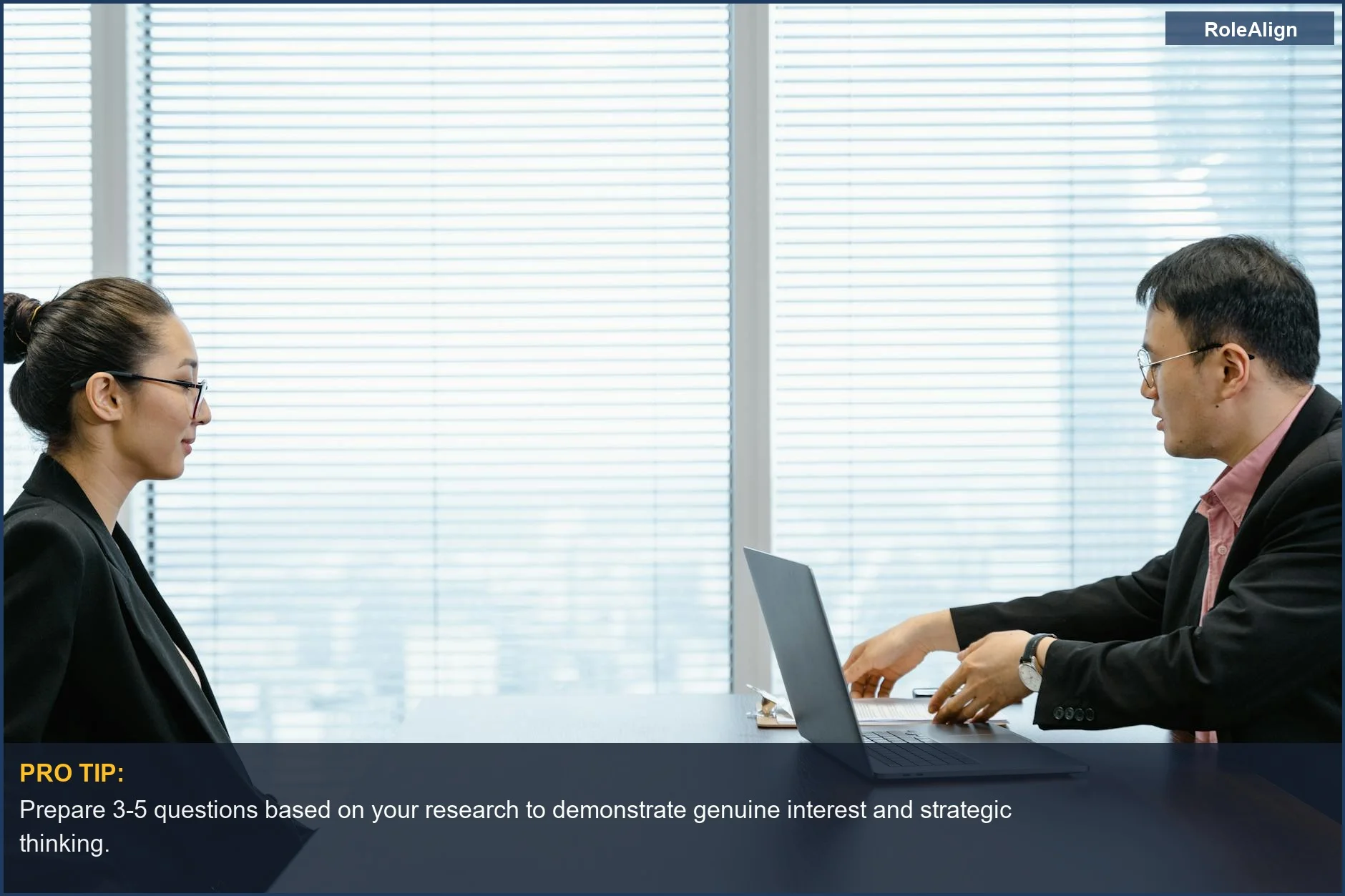
The real answer to asking insightful questions isn't about the questions themselves, but about understanding what the interviewer is actually looking for and what they're incentivized to reveal. Recruiters, especially those juggling 35+ open reqs, are operating on pure pattern recognition, not deep philosophical inquiry. Your goal is to break that pattern. Mastering this art is an ongoing journey.
Think of it this way: every interview slot is a line item on my quarterly metrics report. My VP of Talent wants to see 'candidates processed,' 'interviews conducted,' and 'offers extended.' They don't care about the intellectual depth of your questions. But the hiring manager does.
The hiring manager is looking for someone who can solve their specific, often unspoken, problems. They're not looking for a generalist; they're looking for a specialist who can hit the ground running on a project that's probably already behind schedule. Your questions should reveal that you understand their pain points.
My mental model was always: "What does this candidate really want to know, and what will their question reveal about their priorities?" If you asked about growth opportunities, I'd mentally flag you as ambitious. If you asked about team dynamics, I'd wonder if you'd had bad experiences before. Every question was a data point.
Asking smart questions forces the interviewer out of their script. It makes them think, which makes you memorable. It's not about being clever; it's about being strategic. Harvard Business Review emphasizes a practical framework for five types of questions.
This is your chance to uncover the 'ghost jobs' - roles that exist on paper but have no real intention of being filled - or to gauge the true health of the team. Most candidates just ask to impress; you should be asking to diagnose.

What's Actually Going On
What's actually going on behind the scenes is a complex interplay of ATS mechanics, recruiter KPIs, and hiring committee dynamics. Your questions don't just go into a vacuum; they feed into this system. For instance, in Workday or Greenhouse, I could add a 'Candidate Interview Questions' field to the interview scorecard. This moves beyond generic advice to a strategic arsenal.
If your questions were generic, the interviewer would check a box like 'asked standard questions.' If they were truly insightful, they might type a comment like 'candidate probed into technical debt challenges,' which is gold for the hiring manager.
Company size matters, too. At a 50-person startup using Lever, a hiring manager might remember your specific questions because they're personally invested in every hire. At a 50,000-person enterprise using iCIMS, your interviewer might be a junior manager just trying to fill a slot, and your questions are just another item on their checklist.
Regulatory facts also play a subtle role. Some companies, especially those under OFCCP compliance, have strict interview guidelines. Recruiters are trained to keep interviews consistent to avoid bias. An unexpected, deep question can sometimes throw off an inexperienced interviewer, but it's a risk worth taking to stand out. Asking open questions reveals mindset, not just experience.
My recruiter brain was constantly evaluating 'fit.' Not just cultural fit, but 'problem-fit.' Your questions should demonstrate you understand the actual problems this team faces, not just the idealized job description. If you ask about how they handle legacy code, you're speaking my language.
The hiring committee, typically 3-5 people, will debrief after all interviews. Your specific questions, especially if they sparked a good conversation, will often be brought up. "Remember when Jane asked about our CI/CD pipeline and the challenges with rollbacks? That was sharp." That's how you get remembered, not by asking about vacation policy.

How to Handle This
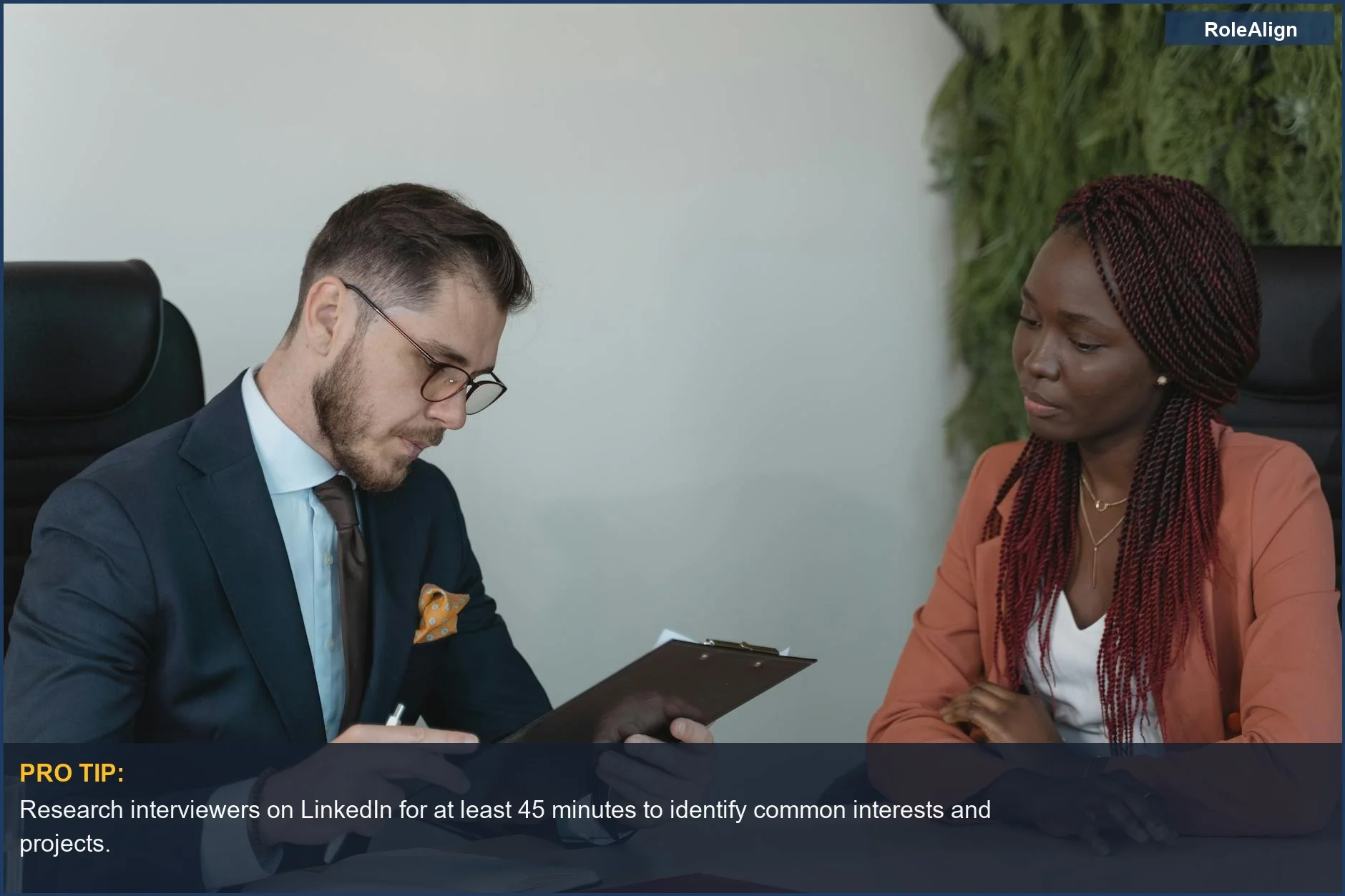
To genuinely handle this, you need a pre-interview strategy that goes beyond memorizing questions. First, spend 45 minutes on LinkedIn. Find out who your interviewers are. What's their background? What projects have they posted about? This isn't stalking; it's intelligence gathering. Proactive and relevant questions are key to engaging in a dialogue.
Next, dissect the job description. Look for the 'unspoken' requirements. If it mentions 'fast-paced environment,' ask about the last time a critical project missed a deadline and what happened. Don't just accept the buzzwords. This reveals signal vs noise.
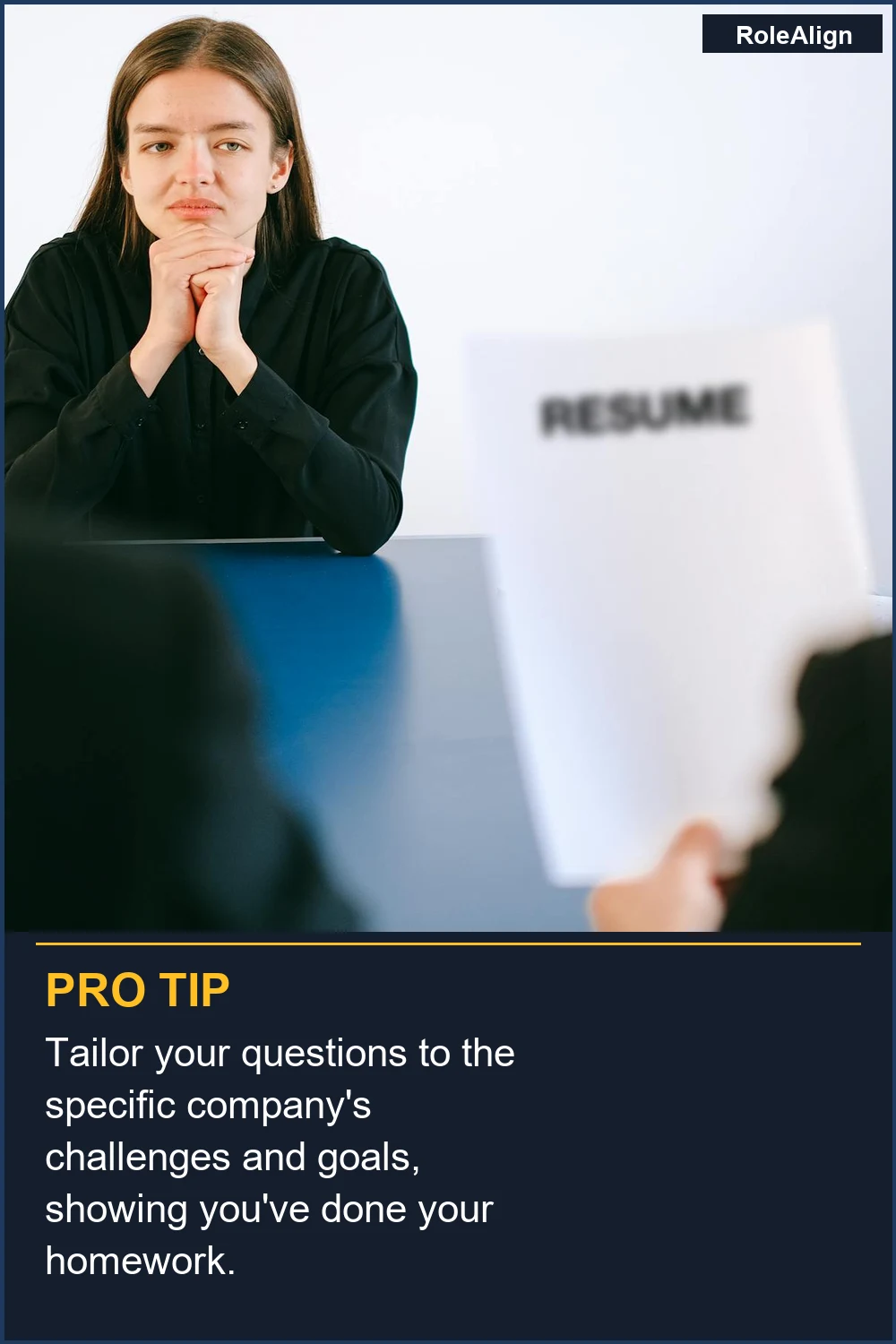
Third, research the company's recent news, SEC filings, or earnings calls. Did they just acquire a smaller company? Ask about integration challenges. Are they struggling in a specific market? Ask about their strategy to regain market share. This shows you're thinking like an owner, not just an applicant.
During the interview, listen more than you talk. Your best questions often emerge from the interviewer's own answers. If they mention a project bottleneck, follow up with, "What's the biggest technical hurdle preventing that bottleneck from being resolved?" This is dynamic questioning, not static.
Don't be afraid to challenge gently. If they say, "We have a very collaborative team," you can ask, "Can you give me an example of a recent disagreement within the team and how it was resolved?" This forces them to go beyond the platitudes and into the messy reality. Genuine interest and critical thinking are demonstrated by asking questions.
Finally, always have one 'killer question' in your back pocket, something specific to the company or role that demonstrates deep understanding. This isn't just a question; it's a mic drop. This is how you differentiate yourself from the resume graveyard.
What This Looks Like in Practice
I remember a candidate for a Senior Product Manager role at a FinTech company asking my hiring manager, "Given the recent regulatory changes around data privacy (referencing GDPR and CCPA), how are you adapting your product roadmap to proactively address compliance risks, rather than reactively patching issues?" My hiring manager's jaw dropped. That question scored the candidate an immediate second interview. This is about understanding company size, tech, and more.
Another example: a Frontend Engineer candidate, after hearing about our stack, asked, "You mentioned using React 16, but React 18 introduced automatic batching and new hooks. What's the timeline for upgrading, and what challenges do you anticipate with that transition given your current component library?" This wasn't just knowledge; it was a demonstration of foresight and an understanding of our potential technical debt.
These questions aren't just about showing off; they're about gauging the company's operational maturity. If they stumble on answering a question about technical debt or regulatory compliance, that's a red flag for you. It's a two-way street. Thoughtful questions demonstrate understanding and desire to learn.
Your questions are metrics for your decision-making. Are they forward-thinking? Are they reactive? Do they have a plan, or are they just winging it? These are the real insights you need to extract.
My recruiter brain would tag candidates who asked these types of questions with notes like 'proactive,' 'strategic thinker,' or 'deep technical insight.' Those tags made them stand out from the hundreds of other profiles in the resume graveyard.

Mistakes That Kill Your Chances
The biggest mistake candidates make is thinking their questions are about them. They're not. They're about you demonstrating your value to the company. Brian from Amazon highlights how to ask the right questions.
Key Takeaways
The art of asking insightful questions during interviews isn't about performing; it's about probing. It's your last chance to turn the interview into a two-way street and extract genuine information from the other side of the hiring table. This guide provides practical guidelines for insightful interviewing.
- Research like a detective: Don't just skim the company website. Dig into news, financials, and LinkedIn profiles to uncover the real challenges and opportunities.
- Focus on 'why' and 'how': Move beyond 'what' questions.
Ask about the rationale behind decisions, the processes for problem-solving, and the anticipated hurdles. * Demonstrate problem-fit: Frame your questions to show you understand the specific pain points of the role and the team, not just the generic job description. * Listen actively: Your best questions will often emerge organically from the conversation, building on what the interviewer has already shared. * Use your questions as a diagnostic tool: Evaluate the answers you receive. Are they transparent? Are they evasive?
This tells you more about the company than any polished presentation.
Don't let your questions fall into the resume graveyard. Make them count. Make them memorable. Make them reveal the truth.
Frequently Asked Questions
I'm interviewing for a data analyst role. Should I ask about the specific SQL version they use, or is that too granular?
What if my interviewer seems annoyed by my 'probing' questions? Does that mean I'm doing it wrong?
I heard asking about 'company culture' is important. Is that a ghost job indicator?
What if I prepare all these questions, but the interviewer talks so much I don't get a chance to ask them?
Is it okay to ask about the interviewer's personal career path or what they enjoy about their job?
Sources
- The Art of Asking Smarter Questions
- The Ultimate 2026 Consulting Interview Prep Guide - Leland
- Smart Interviewing: The Art of Asking the Best Questions - YouTube
- The art of asking meaningful questions: Turning your interview into a ...
- Mastering the Art of Interviews: Ask the Right Questions to Stand Out!
- The Art of the Interview: Crafting Questions that Get Results - LinkedIn
- The Power of Asking Insightful Questions in Interviews - Client Centric
- The art of asking better questions | by Rick Harrison - Medium
- The Art of the Interview: A Guide to Insightful Interviewing
- 9 Essential Interview Questions to Ask Candidates in 2026 - Juicebox