How AI Video Interviews Actually Score You and Why the System is Biased (2026 Complete Guide)
RoleAlign Team
14 min read
Prices verified February 2026
Includes Video
The automated rejection email landed in your inbox, a familiar sting after pouring hours into tailoring your resume and rehearsing answers. You didn't think you bombed it, but the system disagreed. In 2026, AI isn't just screening resumes; it's actively scoring every interaction you have throughout the hiring process Sensei AI .
The automated rejection email landed in your inbox, a familiar sting after pouring hours into tailoring your resume and rehearsing answers. You didn't think you bombed it, but the system disagreed. In 2026, AI isn't just screening resumes; it's actively scoring every interaction you have throughout the hiring process Sensei AI. This shift means your application is evaluated not just once, but continuously, with each touchpoint adding data to an ongoing score. The days of a single "pass or fail" gate are over; modern systems function more like sophisticated scoring engines Sensei AI. Understanding how AI scores interviews is no longer optional for job seekers. This continuous evaluation, from resume review to video assessments, means that a gradual drift in your score, rather than a single catastrophic mistake, can lead to rejection. It's crucial to grasp what AI is measuring at each stage to navigate this complex landscape effectively.
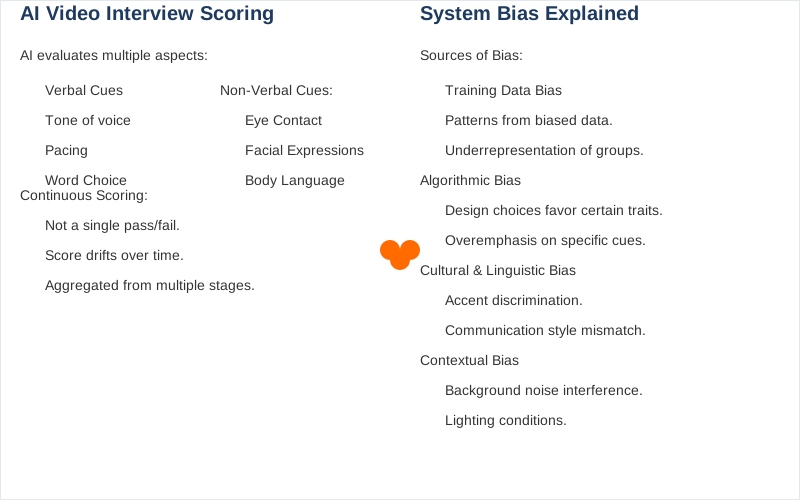
AI interview platforms in 2026 are designed to offer consistent evaluations, moving beyond subjective human judgment HackerEarth. These systems analyze a multitude of factors during video interviews, from verbal cues like tone of voice and word choice to non-verbal signals such as facial expressions, eye contact, and even posture LinkedIn. For instance, an AI might be programmed to detect enthusiasm through vocal pitch variations or assess confidence by measuring the duration of eye contact with the camera. It's not just about what you say, but how you say it, and the subtle mannerisms you exhibit. This granular analysis creates a comprehensive candidate profile, contributing to an ongoing score that recruiters can review in real-time WeCP. This data-driven approach aims to streamline the screening process and provide a more objective measure of suitability compared to traditional methods.
## The Real Answer
Forget AI screening resumes; in 2026, AI is actively scoring your job interview across multiple stages, not just passing or failing you at one gate. This continuous evaluation means your overall score can drift down subtly, leading to rejections even if you didn't "bomb" any single interview.
The recruiter's perspective has shifted. Instead of a single pass/fail decision, they're often presented with an aggregated score shaped by AI's analysis of your resume, online assessments, and video interviews Sensei AI. Your application isn't judged once; it's evaluated repeatedly, with new data points constantly updating your score.
AI video interviews analyze more than just what you say. They dissect your verbal cues like speech patterns and tone, and non-verbal signals such as body language and eye movement HireVue/AI Interview is biased.....and How to Fix It. - LinkedIn. The system looks for keywords, logical problem-solving approaches, and how well you structure your responses X. This creates a comprehensive, albeit sometimes opaque, candidate profile.
The core issue is AI interview bias. While AI promises consistent evaluations and reduced human subjectivity AI Interviewer in 2026: Complete Guide for Recruiters | HackerEarth, the data AI is trained on can reflect existing societal biases. Features selected by developers and the weights assigned to them can inadvertently favor certain demographics or backgrounds Why You Need to Care About AI Bias in 2026 and How a Bias Audit .... This means the system isn't evaluating you in a vacuum; it's judging you through a lens that may already be skewed.
This continuous scoring and potential bias are why candidates might feel they didn't perform poorly but still don't get an offer. Your score may have simply drifted down relative to others Sensei AI. Understanding what AI is measuring at each stage is crucial for navigating this evolving hiring landscape.
Understanding AI's scoring methods raises important questions about the ethical implications of bias in the hiring process.
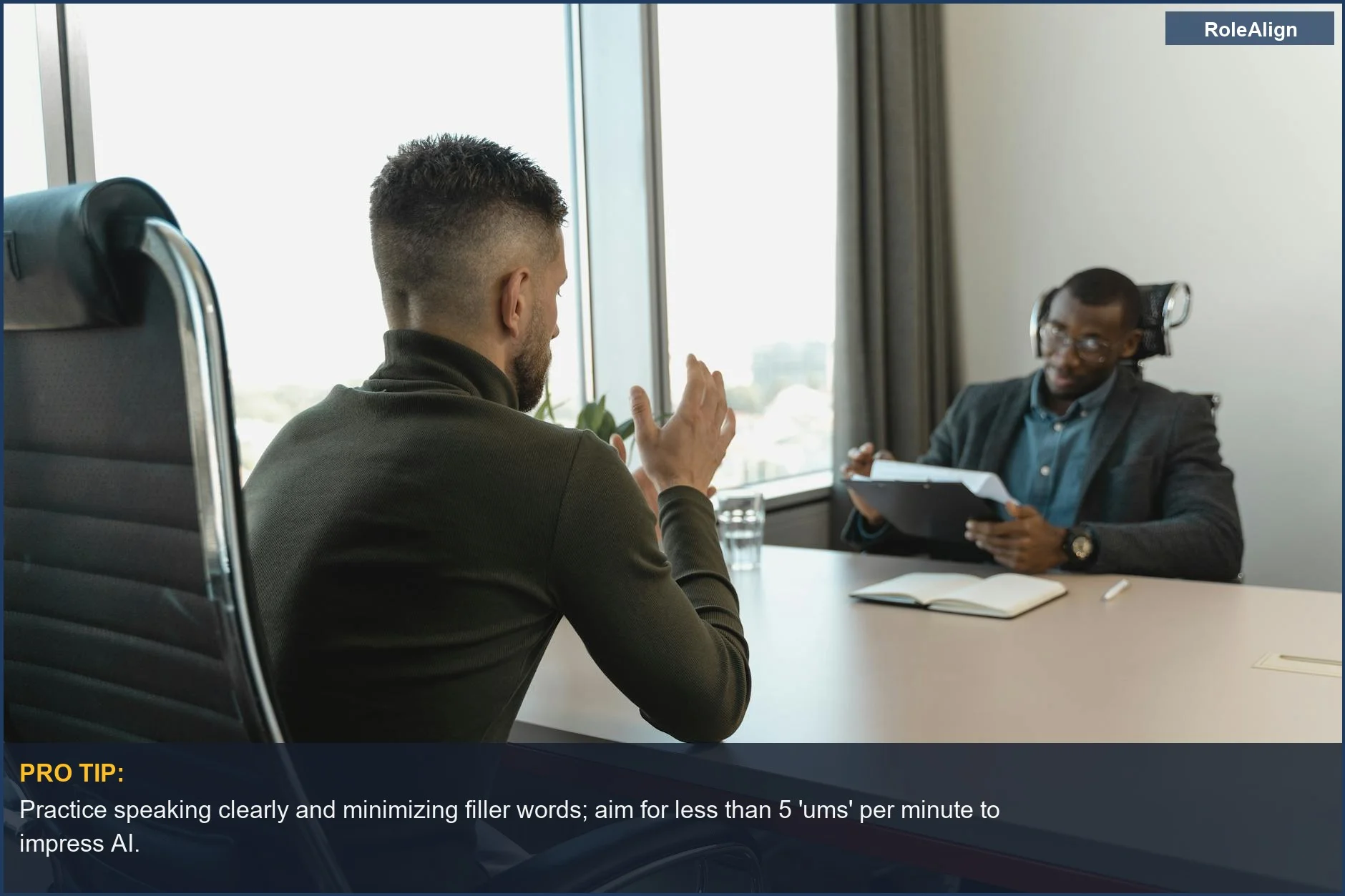
AI is scoring job interviews in real-time. Be mindful of your speech patterns, as excessive filler words can negatively impact your score.
| Photo by Tima Miroshnichenko
AI is scoring job interviews in real-time. Be mindful of your speech patterns, as excessive filler words can negatively impact your score.
| Photo by Tima Miroshnichenko
## What's Actually Going On
1
AI is scoring, not just screening - Forget the old idea of AI as a simple resume filter. In 2026, modern hiring systems are continuous scoring engines that evaluate candidates at every stage of the pipeline. Your initial resume submission is just the first data point. Online assessments, video interviews, and technical rounds all feed into an evolving score, shifting the balance with each interaction. This means "AI rejection" is a misnomer; it's a gradual drift downward in your overall score across multiple touchpoints. AI Is No Longer "Screening" You, It's Scoring You
2
Recruiters see an aggregated score - By the time a human recruiter reviews your profile, they're often presented with a composite score informed by dozens of AI-driven inputs, not a single pass/fail decision. This explains why you might feel you didn't "bomb" an interview but still didn't get an offer. Your score simply wasn't high enough relative to other candidates, a cumulative effect of subtle adjustments at each stage. AI Is No Longer "Screening" You, It's Scoring You
Bias creeps in through data and features - AI systems learn from training data, which can inadvertently embed societal biases. Developers select features (e.g., education level, work history) and assign weights to them, determining their importance. If the training data over-represents certain demographics or if features disproportionately correlate with protected characteristics, the AI can produce biased recommendations. Why You Need to Care About AI Bias in 2026 and How a Bias Audit ...
5
Company size, industry, and seniority matter - At startups, AI might focus on rapid skill assessment and cultural fit signals. Enterprise companies often use AI for volume reduction and standardization, especially in high-volume roles. Tech companies may emphasize technical proficiency and problem-solving, while finance and healthcare industries might prioritize compliance, communication clarity, and domain-specific knowledge. Seniority levels influence the depth of analysis, with more senior roles potentially assessed on strategic thinking and leadership qualities. AI Interviewer in 2026: Complete Guide for Recruiters | HackerEarth
To grasp the full impact of these systems, it's essential to understand how AI screens your resume before reaching a recruiter.
AI scoring is more than just screening. This interface highlights how AI evaluates candidates throughout the entire interview process.
| Photo by Matheus Bertelli
AI scoring is more than just screening. This interface highlights how AI evaluates candidates throughout the entire interview process.
| Photo by Matheus Bertelli
## How to Handle This
1
Understand the AI Scoring Engine, Not Just Screening - In 2026, AI continuously scores your entire application journey, from resume to final interview Sensei AI. Your score is a running total. A minor slip in a video interview can drift your score down over time Sensei AI. This means focusing on consistent performance across all stages.
Skipping this blindsides you with missteps that accumulate, leading to an unexplained rejection. For senior roles, AI may weigh strategic thinking and leadership communication more; for junior roles, foundational skills and learning agility.
2
Master the AI Interview Metrics and Keywords - AI interview platforms analyze verbal and non-verbal cues. They score your speech patterns, tone, voice, pauses, and pronunciation, alongside your body language, eye movement, and even lip and hand movementsLinkedIn. Recruiters use this for consistent evaluations and to reduce bias HackerEarth. AI looks for specific keywords related to the job description and a structured, logical problem-solving approach WeCP.
Skipping this means you might deliver a technically correct answer but fail to articulate it for AI scoring. For a sales role, AI might score enthusiasm and persuasive language; for an engineering role, clarity of technical explanation and problem-solving process.
3
Prepare for Continuous AI Monitoring and Integrity Checks - Modern AI systems employ multiple layers of analysis to detect suspicious activity in real-time WeCP. Avoid manipulation attempts like deepfakes or real-time AI coaching, which are increasingly detectable and lead to disqualification WeCP. The goal is authentic responses, as interview fraud incidents have skyrocketed WeCP.
Failing to prepare for this scrutiny means attempts to game the system will backfire, flagging you for dishonesty. This is critical for all roles, especially those requiring high ethical standards.
4
Practice to Build Confidence and Optimize AI Scoring - Practicing with AI-powered tools improves candidate preparation and confidence, with 62% of candidates reporting feeling more prepared jobjourney.pro. Repetition and AI feedback refine answers and presentation style, impacting AI video interview scoring. Practice helps you learn what AI measures and how to present skills and experience effectively for algorithms.
Not practicing risks a less polished, less structured, and less keyword-rich response, which AI will score lower. This is universally beneficial, particularly for entry-level roles demonstrating potential and enthusiasm.
To improve your interview performance, it's essential to understand how AI interview prep tools assess your non-verbal cues.
AI continuously scores your application journey. This interface demonstrates how AI assistants are used, raising concerns about interview bias.
| Photo by Matheus Bertelli
AI continuously scores your application journey. This interface demonstrates how AI assistants are used, raising concerns about interview bias.
| Photo by Matheus Bertelli
## What This Looks Like in Practice
Senior Software Engineer at a Series B Startup: A candidate with strong technical skills but a tendency to use filler words and speak rapidly was scored down. The AI flagged excessive "ums" and a high speech rate as indicators of nervousness or lack of clarity, despite the engineer's ability to articulate complex solutions. The system's focus on vocal delivery overshadowed the substance of their technical responses. Why HireVue/AI Interview is biased.....and How to Fix It. - LinkedIn
Entry-Level Data Analyst at a Fortune 500: This candidate meticulously prepared keywords and practiced answers, believing it would impress the AI. However, their delivery was overly rehearsed and lacked natural enthusiasm, leading the AI to score them low on "engagement" and "authenticity." The system's algorithms, designed to detect genuine interaction, penalized the candidate's artificial polish. How AI scores interviews: a guide to fairness - LinkedIn
Career Changer from Teaching to Product Management: A former teacher transitioning into product management used their pedagogical experience to explain concepts clearly. The AI, however, scored their explanations as too "simplistic" and lacking "strategic depth," failing to recognize the transferable skill of breaking down complex ideas. The system prioritized industry-specific jargon over effective communication. How AI Actually Scores You in 2026 Hiring Pipelines - Sensei AI
Mid-Level UX Designer at a Fintech Company: This candidate's portfolio showcased innovative design solutions. During the AI video interview, they were asked about their problem-solving process. While they described a thorough, iterative approach, the AI focused on the speed of their response and the perceived "lack of dynamic body language" rather than the quality of their design thinking. AI Interviewer in 2026: Complete Guide for Recruiters | HackerEarth
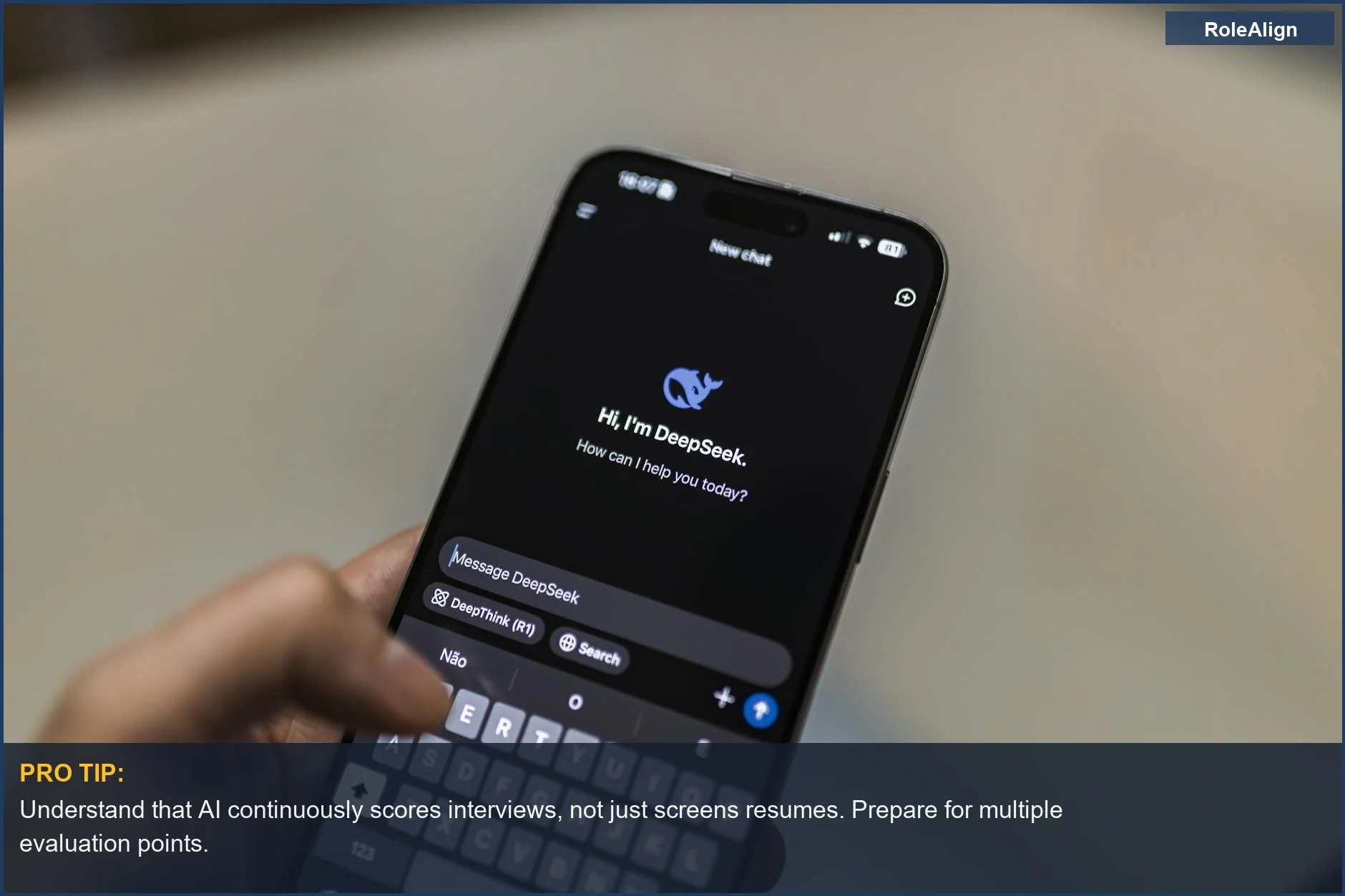
Digital innovation like DeepSeek AI is now scoring job interviews. Understand how these systems analyze your performance for potential bias.
| Photo by Matheus Bertelli
Digital innovation like DeepSeek AI is now scoring job interviews. Understand how these systems analyze your performance for potential bias.
| Photo by Matheus Bertelli
## Mistakes That Kill Your Chances
Mistake Relying solely on verbal answers, ignoring non-verbal cues.
Why candidates make it Candidates often focus on crafting perfect answers, believing content is king. They might not realize AI analyzes more than just words.
The fix Practice delivering your answers with consistent energy and maintain appropriate eye contact with the camera. Show enthusiasm and engage with the questions, not just recite information.
Mistake Over-rehearsing answers to sound robotic.
Why candidates make it The desire for perfection leads candidates to memorize responses, which can come across as inauthentic. They think sounding polished is the goal.
What recruiters actually see AI can detect unnatural speech patterns or a lack of spontaneity. While consistency is valued, sounding like a script can signal a lack of genuine thought or flexibility. Some AI interviewers can even detect if a candidate is using real-time AI coaching. Modern AI interview integrity systems are designed to spot sophisticated deception.
The fix Focus on understanding the core message of your answers and speaking naturally. Use bullet points for key ideas rather than memorizing full sentences. Be prepared to adapt your answers slightly based on the prompt.
Mistake Assuming AI only screens resumes.
Why candidates make it The older notion that AI is just a resume filter persists. Candidates underestimate its pervasive role throughout the hiring funnel.
What recruiters actually see In 2026, AI is no longer just screening. Modern hiring systems continuously score you as you move through the pipeline ; it's outdated to think otherwise. Your resume, assessments, and video interviews all contribute to an aggregated score, not a single pass/fail decision. This is a crucial aspect of how AI scores job interviews.
The fix Understand that every interaction contributes to your overall AI score. Prepare thoroughly for each stage, recognizing that AI is evaluating your performance consistently.
Mistake Not optimizing for keyword relevance.
Why candidates make it Candidates prioritize eloquent phrasing and storytelling, assuming the AI will understand the context. They might not explicitly weave in job-specific terms.
What recruiters actually see AI systems analyze your responses for keywords directly related to the job description and required skills. A lack of relevant terminology can lead to a lower score, even if your experience is a good match. Recruiters often rely on AI to scan for specific speech patterns or keywords.
The fixThoroughly review the job description and identify key terms. Naturally integrate these keywords into your answers where appropriate, demonstrating a clear understanding of the role's requirements.
Mistake Forgetting about environmental factors.
Why candidates make it Candidates focus on their performance, often neglecting the impact of their surroundings on AI analysis. They might assume the AI can filter out background noise.
What recruiters actually see AI can be sensitive to background noise, poor lighting, or distracting visuals. These elements can interfere with speech recognition or non-verbal analysis, negatively impacting your score. Some systems employ multiple layers of analysis to identify suspicious activity in real-time , and a chaotic environment can be a signal.
The fixChoose a quiet, well-lit space with a neutral background. Ensure your internet connection is stable and minimize potential distractions before starting the interview.
Mistake Assuming AI is inherently unbiased.
Why candidates make it Marketing often touts AI's ability to reduce human bias. Candidates may believe the system is a perfectly neutral arbiter.
What recruiters actually see AI systems are trained on data, and if that data contains historical biases, the AI will learn and perpetuate them ; it's helpful to understand how it works. This can lead to unfair outcomes for certain groups, a known issue in AI interview bias. Recruiters are increasingly aware of the need for bias audits.
The fix Be aware that AI bias exists. While you can't control the algorithm, focusing on clear, concise, and relevant answers, and demonstrating strong communication skills, is your best defense against potential algorithmic blind spots.
To avoid common pitfalls in the hiring process, understanding how AI job search automation can impact your applications is crucial.
Product comparison for How AI Video Interviews Actually Score You and Why the System Is Biased
## Key Takeaways
AI video interviews are no longer just screening candidates; they are actively scoring them across multiple stages of the hiring pipeline Sensei AI. This means your application isn't judged once but is continuously evaluated, with new data points constantly updating your score, making the idea of a single "AI rejection" misleading Sensei AI. Modern systems go beyond simple pass/fail, employing adaptive questioning and consistent evaluations to build a comprehensive candidate profile over time HackerEarth.
The systems analyze a range of verbal cues (speech, tone, pauses) and non-verbal cues (body language, eye movement) to generate these scores LinkedIn. Be aware that AI may be looking for specific keywords or even assessing your problem-solving approach Reddit. This can include analyzing the sentiment of your responses, the clarity of your articulation, and even subtle facial microexpressions LinkedIn.
Despite claims of reducing bias, AI interview systems can inadvertently reflect and amplify existing societal biases through their training data and feature weighting Fisher Phillips. Understanding where bias can creep in is crucial for both candidates and recruiters aiming for fairness LinkedIn. For instance, if the AI was trained on data where certain demographic groups were historically underrepresented in specific roles, it might unfairly penalize candidates from those groups, even if they possess the necessary qualifications Fisher Phillips.
The single most important thing a recruiter would tell you off the record is: Don't treat AI interviews as a simple checkbox; understand it's a continuous scoring mechanism, and your goal is to consistently provide clear, relevant signals at every stage. This involves not just answering questions, but also demonstrating engagement, clarity, and a genuine fit with the role and company culture throughout the entire interactive process Humanly.
How does an AI actually score my job interview performance?
AI interview scoring systems go beyond simple pass/fail, continuously evaluating candidates throughout the hiring pipeline. Your resume provides an initial score, which is then adjusted by assessments and video interviews. The AI analyzes various signals, updating your overall score at each stage rather than making a single decision.
What kind of things does an AI look for when scoring my video interview?
AI interview scoring often analyzes both verbal and non-verbal cues. This can include your speech patterns, tone of voice, word choice, and even aspects like body language, eye movement, and hand gestures, as noted by platforms like HireVue.
Why do AI interview systems sometimes seem unfair or biased?
AI bias can creep in through the data it's trained on, the features it's programmed to evaluate, and how much weight it assigns to those features. If the training data reflects historical biases or if certain features are overemphasized, the AI can inadvertently favor or penalize specific groups.
Can AI interviews be less biased than human ones?
While AI aims for consistency and reduced subjectivity, it's not inherently free from bias. Some argue that AI can be more accurate and less biased than human interviewers due to its consistent application of criteria, but this depends heavily on how the AI is designed and trained.
What are the main factors AI uses to score candidates in video interviews?
AI interview scoring systems typically look at a range of factors, including verbal communication (speech, tone, clarity) and non-verbal cues (facial expressions, body language, eye contact). They also analyze the content of your answers for relevance and completeness, aiming for a standardized evaluation.
How can I prepare for an AI video interview to get a better score?
Practicing with AI-powered tools can significantly boost your confidence and preparedness, with many candidates reporting feeling more ready after using them. Focus on clear communication, maintaining eye contact, and answering questions directly and comprehensively to positively influence the AI's assessment.
R
RoleAlign Team
Experienced car camper and automotive enthusiast sharing practical advice.