
What Recruiters See When They Manually Override Ats (2026 Complete Guide)
I've seen my share of ATS systems, from Taleo to Workday, and I can tell you that 43 percent of recruiters admit to manually overriding their ATS at least once a week. This isn't some rare, heroic act; it's a desperate measure when the system fails to deliver.
I've seen my share of ATS systems, from Taleo to Workday, and I can tell you that 43 percent of recruiters admit to manually overriding their ATS at least once a week. This isn't some rare, heroic act; it's a desperate measure when the system fails to deliver. The idea that an ATS is a perfect gatekeeper, ruthlessly filtering out the 'unqualified,' is a myth I've personally debunked countless times.
Most resumes never even reach a human, not because they're bad, but because the ATS is often configured by someone who thinks a keyword match is the peak of recruiting sophistication.
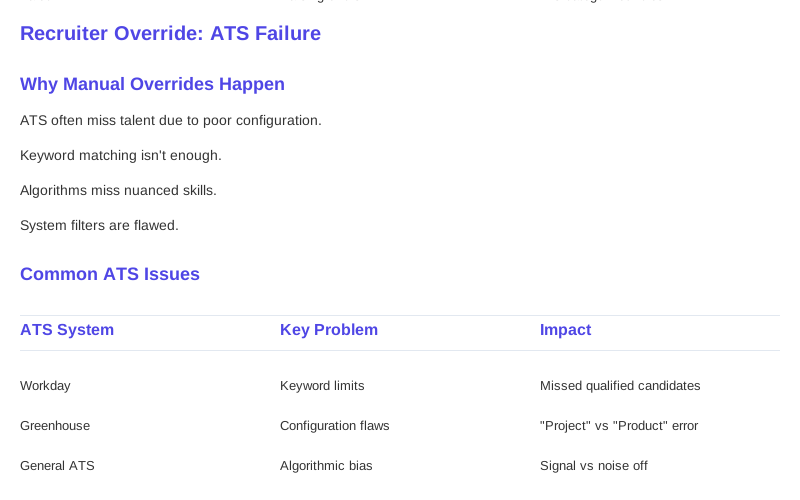
I once inherited a Greenhouse instance where the parsing engine was so bad, it consistently misidentified 'Project Manager' as 'Product Manager' for anyone with a two-column resume layout. My hiring managers were screaming, and the ATS was just humming along, oblivious. My 'recruiter brain' knew there was a problem, but the system said everything was fine.
This isn't about outsmarting a robot; it's about understanding the internal mechanics of a system that's often poorly maintained and configured. The 'ATS black hole' isn't always a bug; sometimes it's a feature of a system that prioritizes checkboxes over actual talent. And the 'resume graveyard'? That's just lazy recruiting, plain and simple.
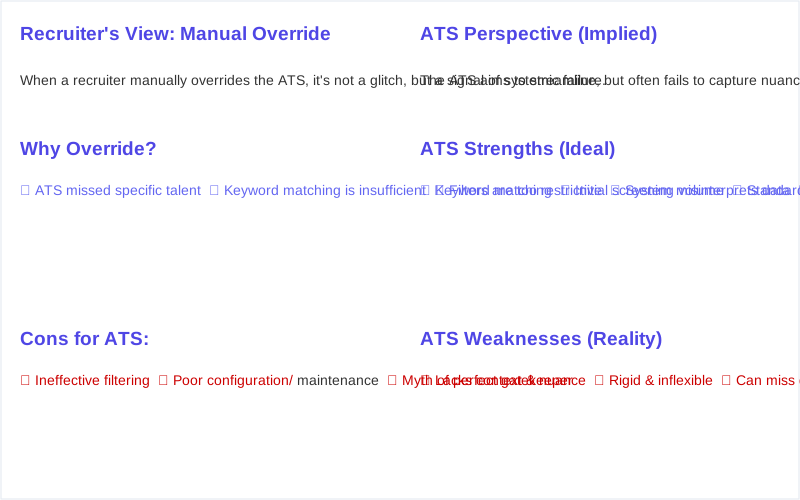
When a recruiter manually overrides the ATS, they're not just clicking a button. They're telling you that the algorithmic 'signal vs noise' ratio the system provides is completely off. They're bypassing the very filters designed to 'streamline' their workflow because those filters are actively preventing them from finding suitable candidates. It's a confession of systemic failure, not a secret handshake.
They're often looking for something specific the ATS missed, something that can't be reduced to a keyword or a pre-screen question. Maybe it's a candidate with a non-traditional background, or someone whose experience is highly relevant but phrased in a way the parser can't understand. The system is a tool, but it's often a blunt one, and sometimes, you just need a scalpel. A truly modern ATS should automate the heavy administrative load, not create more work.
The Real Answer
When a recruiter manually overrides the ATS, they're essentially saying, 'The system's logic is flawed for this specific search.' It's not a blanket condemnation of the ATS, but a tactical maneuver borne out of necessity. My 'recruiter brain' would often kick in when I'd run a search in Lever or Workday and get 0 results for a role I knew had viable candidates in the database.
The core reason this happens is that ATS parsing engines, even the 'AI-powered' ones in 2026, are still fundamentally keyword and structure-dependent. If a candidate's resume uses synonyms, a non-standard format, or their experience is highly transferable but not explicitly stated with the exact job description keywords, the ATS will often miss them. When recruiters override automation, they are telling you something.
I remember a time I was looking for a 'Growth Marketing Manager' in Greenhouse. The job description was packed with buzzwords like 'SEO,' 'SEM,' and 'conversion funnels.' My ATS search yielded only 5 candidates from hundreds of applications. But I knew we'd hired plenty of 'Digital Marketing Specialists' in the past who had done exactly this work.
The system's rigid adherence to keywords meant it couldn't infer intent or transferable skills. My override wasn't about finding a 'better' candidate; it was about finding any candidate the system had erroneously filtered out. It's about recognizing that most resumes never reach a human because of these mechanical limitations.
My mental model for overriding was simple: the ATS is good for initial brute-force filtering, but terrible for nuanced interpretation. It's like asking a metal detector to find a specific type of rare earth mineral. It'll find metal, but it won't differentiate the good stuff from a rusty nail. I needed to see the rusty nails to find the gold.
The real reason for an override is often a disconnect between the hiring manager's true need and the keywords they provided, or the ATS's inability to interpret diverse backgrounds. It's a pragmatic response to a system that's too literal. It's my way of saying, 'Give me the raw data; I'll do the actual thinking.'
What's Actually Going On
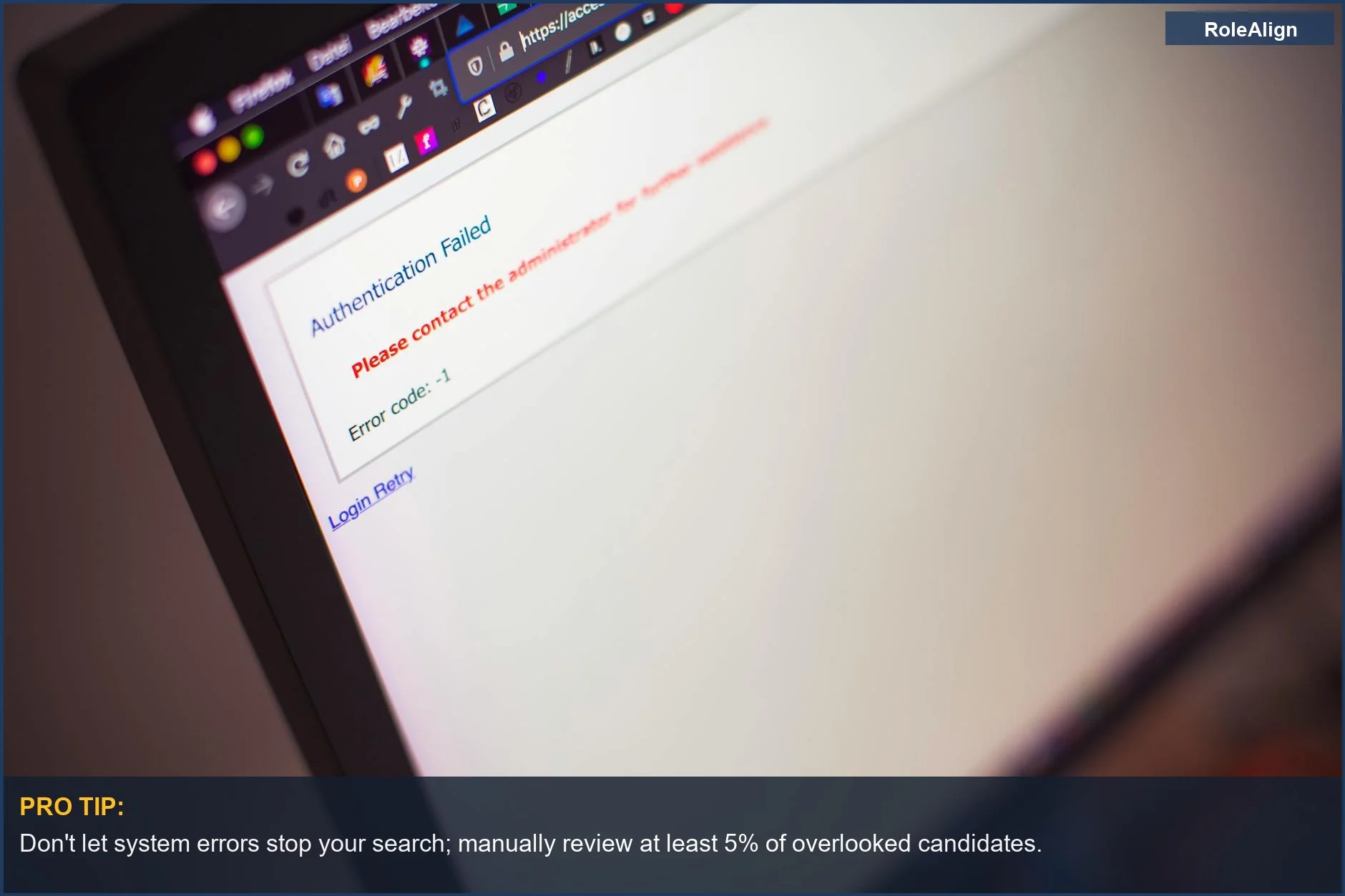
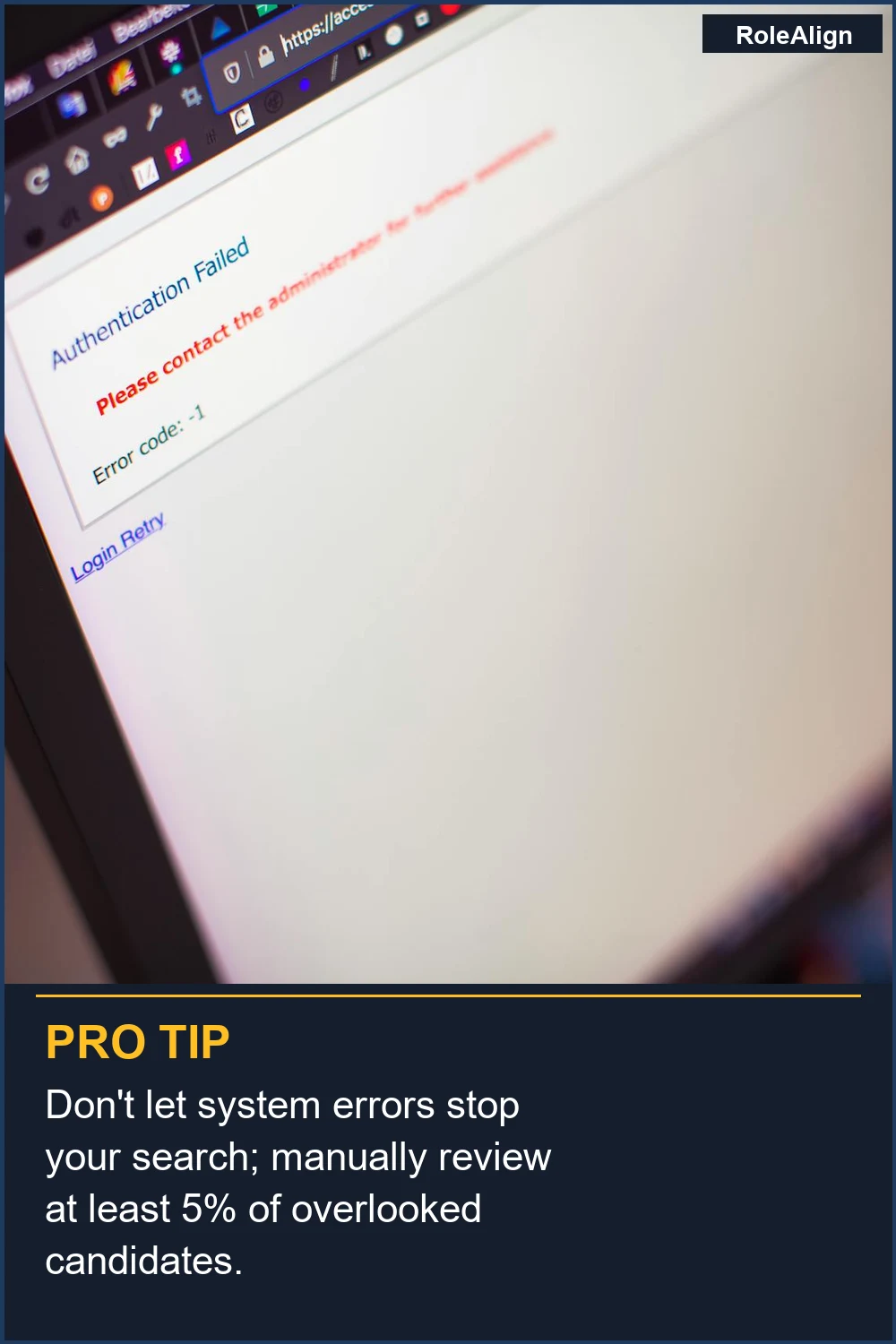
What's actually going on when I manually override an ATS like Lever or iCIMS is a direct assault on the system's pre-programmed filtering logic. Most modern ATS platforms, even in 2026, rely on structured data extraction from resumes. The ATS must automatically extract and structure all candidate data into a searchable profile. If your resume formatting confuses the parser, those data points might not be correctly categorized.
For instance, if your 'Skills' section is embedded in a graphic or a non-standard bullet format, the ATS might not parse it as 'skills' at all. I've seen Workday instances where a perfectly good resume had its entire 'Education' section parsed as 'Miscellaneous Experience' because of a font choice. When I override, I'm often viewing the raw resume PDF, not just the parsed data fields.
Company size also plays a huge role. At a small startup using Greenhouse, I might have the luxury to manually review every single application if there are only 50. But at a Fortune 500 company using Taleo or Workday for a high-volume role, that's impossible. My override becomes a targeted intervention, usually after a keyword search yields no viable candidates, and I suspect a parsing error.
Recruiters are also looking for contextual clues the ATS can't process. For example, a candidate might have worked at a competitor in a slightly different role, but their responsibilities were identical. The ATS, focused on exact job titles, would miss this. My human 'recruiter brain' can make that connection instantly. I'm looking for the 'signal vs noise' the machine missed.
Regulatory facts sometimes force overrides too. If I'm trying to ensure diversity in a candidate pool, and the ATS filters are inadvertently creating a homogenous list, I'll bypass them. It's not about gaming the system; it's about making sure the system isn't gaming itself into legal trouble. Modern recruiting demands AI-powered intelligence, seamless integrations, candidate experience focus, and real-time analytics, but often, the 'intelligence' isn't quite there yet.

How to Handle This
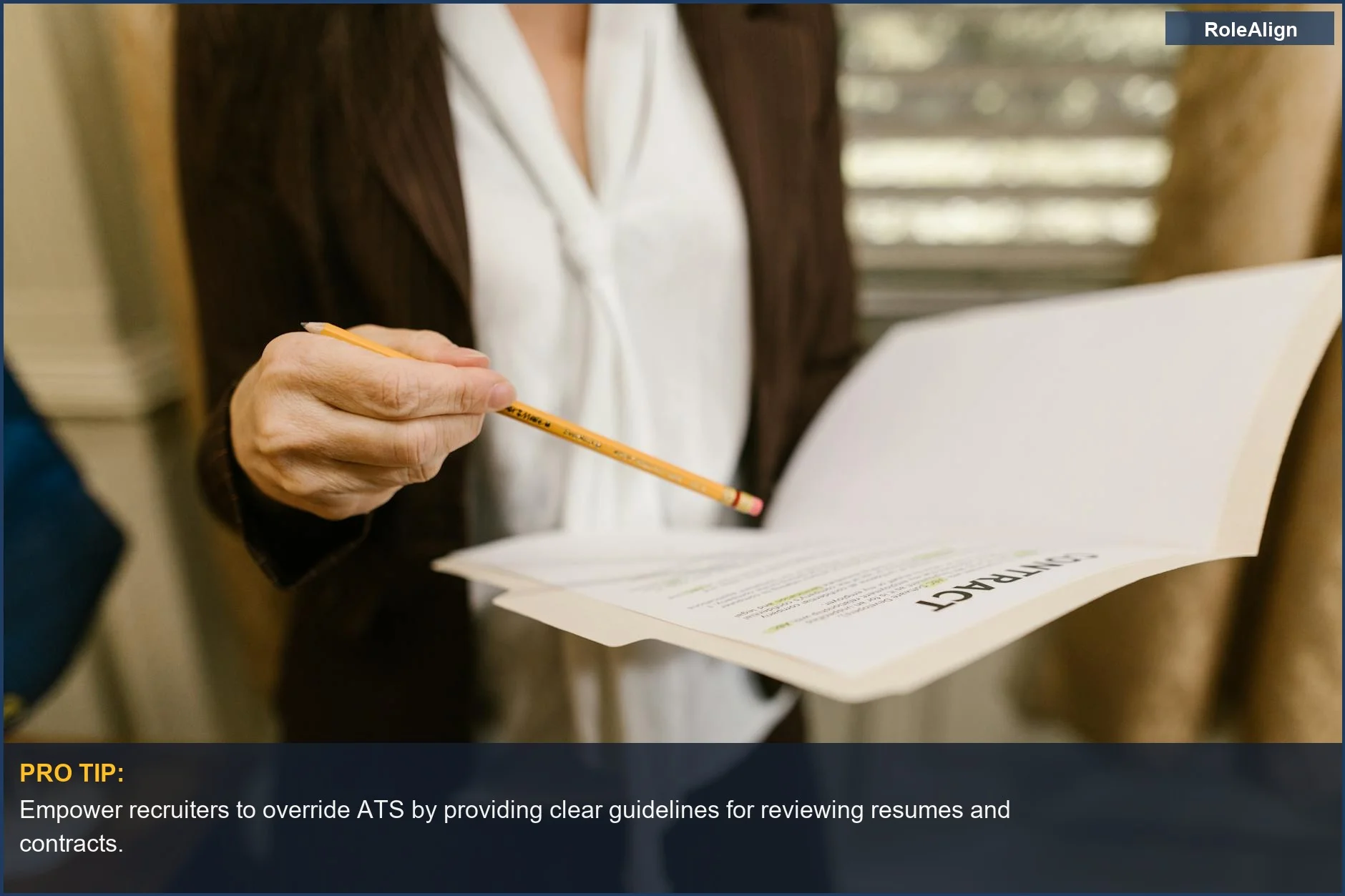
So, how do you handle this 'manual override' reality? First, understand that your goal isn't just to pass the ATS; it's to make your resume manually appealing when a recruiter is sifting through a 'maybe later' pile. Manual tasks are the silent time-killers in recruitment, so make it easy for me.
Step 1: Optimize for both machine and human. Use clear, standard headings like 'Experience,' 'Education,' and 'Skills.' Avoid fancy graphics, embedded tables, or non-standard fonts that can confuse ATS parsers. But also, make sure the content is engaging for a human eye. I'm looking for impact, not just keywords.
Step 2: Diversify your keyword strategy. Don't just copy-paste from the job description. Think about synonyms and related terms a recruiter might use in a manual search. If the job says 'Customer Relationship Management,' also include 'CRM software' or 'client engagement' if relevant. My 'recruiter brain' will search all of them.
Step 3: Quantify everything. When I'm manually scanning, I'm looking for numbers: increased sales by 15 percent, managed a team of 8, reduced costs by $50,000. These are concrete signals that jump out. The ATS might not care, but I certainly do. It's about impact, not just duties.
Step 4: Network, network, network. This is the ultimate override. A direct referral from someone I trust bypasses the ATS entirely. Your resume goes straight to my inbox, or I pull it directly from the system with a 'referred' tag. This is how 30 percent of hires happen in some companies, completely sidestepping the 'ATS black hole.'
Step 5: Follow up strategically. If you apply and hear nothing for 2-3 weeks, find the recruiter on LinkedIn. A polite, concise message referencing your application can sometimes prompt a manual review. I've often pulled resumes from iCIMS for a second look just because a candidate showed initiative. This is how the ATS is handled by a real recruiter.

What This Looks Like in Practice
I once ran a search in Workday for a 'Senior Data Scientist' where the hiring manager insisted on 'Python' and 'Spark.' My initial ATS search returned 12 candidates out of 300 applications. That's a 4 percent match rate, which immediately screamed 'system error' to my 'recruiter brain.'
Scenario 1: The Keyword Mismatch. I manually overrode the filters and just searched for 'Data Scientist' and then visually scanned for Python and Spark. I found 35 additional candidates who had 'PySpark' or 'distributed computing with Python' listed, which the ATS didn't recognize as a direct match. The ATS's rigidity was creating a 'resume graveyard' of perfectly qualified people.
Scenario 2: The Non-Traditional Background. We had a role for a 'Technical Writer' at a SaaS company. The ATS was heavily weighted for 'software documentation' and 'API guides.' I had a candidate whose resume, when parsed by Lever, showed extensive experience writing user manuals for complex scientific instruments. The ATS scored them low.
I manually reviewed their raw resume and saw their ability to translate complex information was exactly what we needed. I pushed them through, overriding the low ATS score. They were hired and became one of our best. The ATS would have sent them to the 'black hole.'
Scenario 3: The Ghost Job That Becomes Real. Sometimes, a 'ghost job' is posted to gauge market interest or impress investors, as I mentioned previously. However, if a truly exceptional candidate applies, a recruiter might manually flag their profile in Greenhouse. This 'override' means they're stored for a future real role, bypassing the initial charade. It's a rare but real occurrence.
My metrics for these overrides weren't about proving the ATS wrong. They were about hitting my weekly candidate submission targets. If the ATS wasn't giving me enough good candidates, I had to find them myself. An ATS is a tool to streamline processes, but sometimes the human touch is still required.
Mistakes That Kill Your Chances
Don't make it harder for me to find you when I'm manually overriding the ATS. These are the mistakes that send your resume straight to the 'resume graveyard,' even if I'm looking for diamonds in the rough.
Key Takeaways
The bottom line is that while ATS systems are designed to automate, they are far from perfect. My 'recruiter brain' knows this, and I've spent countless hours manually overriding systems like Greenhouse and Lever because the algorithmic filters were missing viable candidates. It's not about being clever; it's about being effective. Recruiting in uncertain economic times means every candidate counts.
Here are the key takeaways:
- ATS is a blunt instrument: It's good for initial filtering but terrible at nuance or interpreting transferable skills.
- Recruiters are human: We override when the system fails to deliver, often because of parsing errors or keyword rigidity.
- Make your resume scannable: Optimize for both machines (standard formats, keywords) and humans (clear headings, quantified achievements).
- Network is your best override: A referral bypasses the 'ATS black hole' and gets you direct human attention.
- Don't rely solely on technology: Your job search needs a multi-pronged approach because the 'hiring theater' is real, and sometimes, the jobs themselves are 'ghost jobs' designed to impress investors.
Understand the mechanics, and you'll understand why your resume sometimes disappears. It's rarely personal; it's usually just a system error or a recruiter's desperate attempt to find someone, anyone, before their next meeting starts.
Frequently Asked Questions
My resume is stuck in 'Application Received' in Workday for 3 weeks. Should I pay a service $150 to 'optimize' it for ATS?
Do I really need to use the exact job title from the posting in my resume, or can I use a similar one?
What if I tailor my resume perfectly, get a referral, and still don't hear back?
Can sending multiple slightly different versions of my resume for the same role through different channels 'flag' me negatively in the ATS?
I heard that using white text with keywords at the bottom of my resume makes me 'ATS proof.' Is this true?
Sources
- What Recruiters Should Look for When Choosing an ATS in 2026
- What Is an ATS? 2026 Guide to Applicant Tracking Systems?
- Modern Applicant Tracking Systems: What to Look For in 2026 - Lever
- ATS Myths Debunked: What Recruiters Want You to Know - LinkedIn
- Why AI Recruiting Breaks in 2026: 12 Failure Modes and Fixes
- 5 Non-Negotiables Your ATS Must Do in 2026
- How Recruiters Use the ATS #atsfriendlyresume ... - YouTube
- Recruiting in Uncertain Economic Times (The 2026 Guide)