
The Role of Mentorship in Navigating a Career Transition (2026 Complete Guide)
I once saw a guy spend 43 minutes trying to debug a `KeyError` in a Jupyter notebook that would have been caught in 3 seconds by a proper IDE. He was pivoting into ML from traditional software engineering, and thought 'mentorship' meant someone handing him pre-written solutions.
I once saw a guy spend 43 minutes trying to debug a KeyError in a Jupyter notebook that would have been caught in 3 seconds by a proper IDE. He was pivoting into ML from traditional software engineering, and thought 'mentorship' meant someone handing him pre-written solutions. The actual job, especially during a career transition, is about learning how to think, not just what to type. Nobody posts about the hours spent Googling obscure error messages on LinkedIn.
Mentorship in Career Development is not a magic wand.
The Real Answer
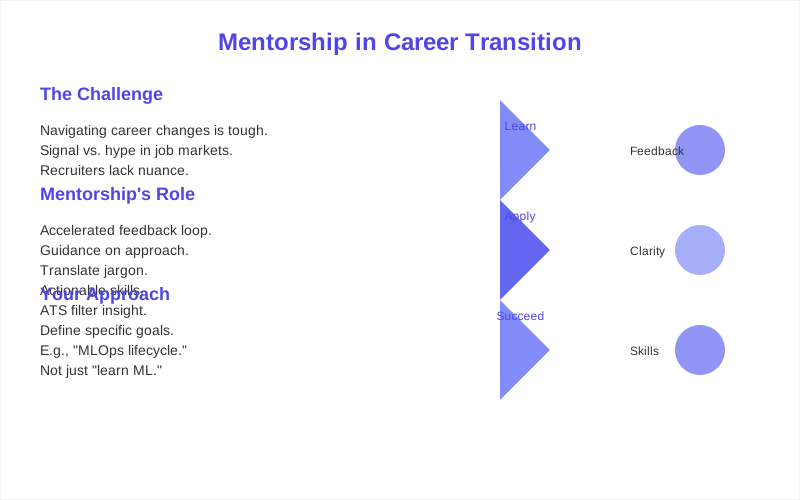
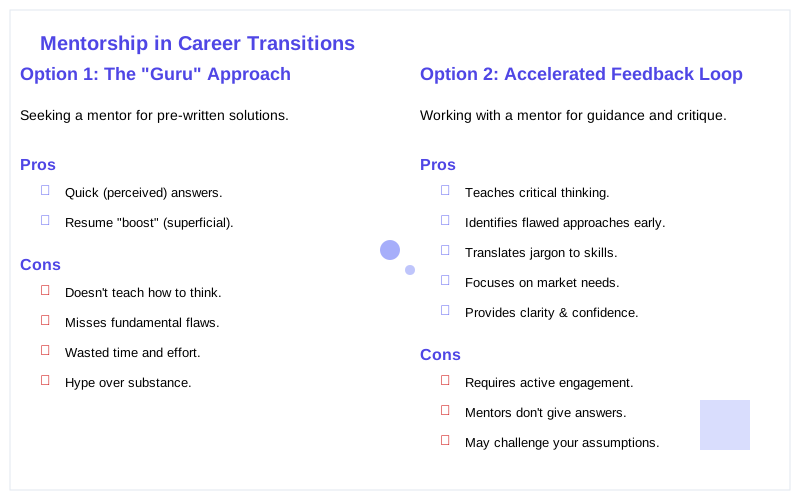
The real answer to navigating career transitions with mentorship isn't about finding a guru who will bless your resume. It's about an accelerated feedback loop. Your mentor isn't there to give you the answers; they're there to tell you if your approach is fundamentally flawed before you waste 6 months on it.
I've seen too many people try to learn ML by building a GAN to generate cat pictures, only to find out no employer cares about that for a production role.


What's Actually Going On
What's actually going on is a signal vs hype problem. The job market for AI/ML is incredibly noisy. Recruiters often don't understand the nuance between a data scientist, an ML engineer, and a research scientist. Mentors play a big role in career changes because they can translate the jargon into actionable skills. They know what ATS filters are actually looking for, not what the bootcamp ad promises.


How to Handle This
Here's how to actually handle this, based on what I've seen work. First, within the first 2 weeks of identifying a potential mentor, define your specific, measurable goals. Don't just say 'learn ML.' Say 'understand the MLOps lifecycle for real-time inference systems.' A mentor can provide clarity, confidence, and direction, but only if you give them something concrete to work with.


What This Looks Like in Practice
What this looks like in practice is less about formal meetings and more about targeted interventions. I had a mentee who was stuck on a project with 80 percent data cleaning and 20 percent model building. His mentor, an experienced ML Engineer, pointed out that his project's value proposition was completely off. Mentorship is one of the most effective ways to accelerate career growth, but only if you listen to the hard truths.
Mistakes That Kill Your Chances
The pivot tax is real, and these mistakes will increase your payment.
Key Takeaways
Mentorship isn't a silver bullet, but it's your best defense against the noise. It bridges the gap between what LinkedIn posts show and what the unglamorous 80 percent of the job actually entails. Get a mentor who's been in the trenches, not just someone who talks a good game. Mentorship aids career transitions by offering guidance, but it's on you to do the heavy lifting.
Frequently Asked Questions
I found a 'Mentorship Program' online for $1,500 that promises job placement. Is that worth it?
Do I really need to find a mentor who works at my dream company?
What if my mentor just tells me things I already know, or gives really generic advice?
Can relying too much on a mentor permanently damage my ability to problem-solve independently?
I heard you should only have one mentor for your entire career. Is that true?
Sources
- The Power of Mentorship in Career Growth - High Profile Staffing
- The Role of Mentorship in Navigating Career Transitions - LinkedIn
- UMGC Career Connection Mentorship Builds Career Confidence
- What Role Does Mentorship Play in Overcoming Challenges During ...
- Mentorship in Career Development: 2026 Guide to Career Success