How to Answer Tell Me About Yourself Without Rambling (2026 Complete Guide)
RoleAlign Team
17 min read
Prices verified February 2026
Includes Video
You just finished a job interview, and the hiring manager's polite but firm "We'll be in touch" hangs in the air. You replay the conversation, cringing at how you launched into your entire work history when they asked, "So, tell me about yourself." You know you blew it by rambling, and now you're staring at your ATS dashboard, wondering how to avoid this pitfall next time.
You just finished a job interview, and the hiring manager's polite but firm "We'll be in touch" hangs in the air. You replay the conversation, cringing at how you launched into your entire work history when they asked, "So, tell me about yourself." You know you blew it by rambling, and now you're staring at your ATS dashboard, wondering how to avoid this pitfall next time. The truth is, this common interview introduction is a critical moment to impress, not an invitation for a personal monologue The Muse. This initial question, often the very first one posed, sets the tone for the entire interview. It's a prime opportunity to make a strong first impression, and a rambling, unfocused answer can quickly derail your chances. Instead of seeing it as a casual chat, view it as your chance to deliver a compelling, concise elevator pitch for yourself.
Interviewers rarely want your life story; they're assessing your professional fit for the role Tufts Alumni and Friends. They are looking for relevant experience, key skills, and how your background aligns with the specific position and company culture. This is your chance to deliver a concise, compelling elevator pitch interview that highlights your most relevant skills and accomplishments. Think of it as a strategic introduction, not a lengthy autobiography. Failing to prepare means risking a disorganized response that leaves the interviewer wondering about your value. Many professionals mistakenly believe this is an open-ended invitation to share personal anecdotes or a chronological work history, but the reality is far more targeted LinkedIn. This guide will equip you with the strategy to confidently answer "tell me about yourself" and set the stage for a successful interview, ensuring you sound natural and focused, not rehearsed InterviewGold. A well-crafted response demonstrates your understanding of the role and your ability to communicate effectively, which are essential qualities in any professional setting.
## The Real Answer
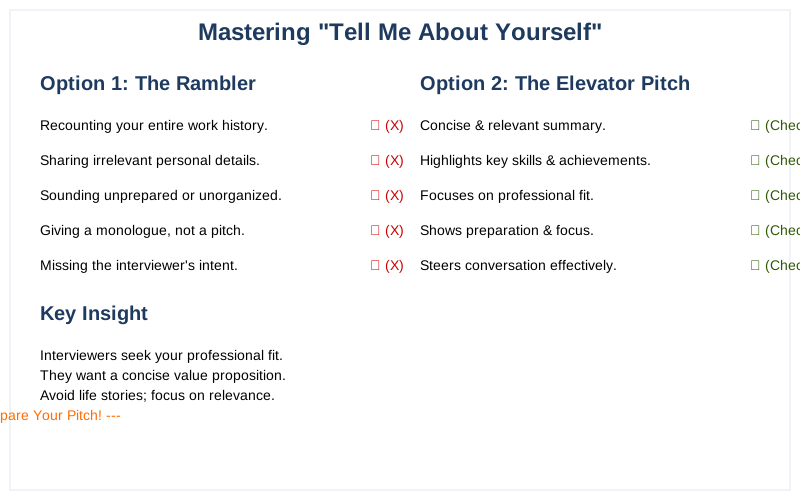
Interviewers ask "Tell me about yourself" not for your life story, but to gauge your professional fit and steer the conversation. They want a concise, relevant summary that highlights your value proposition for the specific role.
Forget the chronological resume recitation or a personal biopic. Recruiters use this question as an icebreaker and a filter How to Answer “Tell Me About Yourself” in an Interview (Examples .... They're assessing your relevant experience, skills, and cultural alignment, not your hobbies or childhood dreams. It's your chance to proactively shape their perception and guide the interview toward your strengths. Recognize that they already have your resume; they're looking for the narrative and the 'why' behind your career path. This is your opportunity to provide context and demonstrate your understanding of their needs, moving beyond the bullet points on paper to a compelling verbal introduction How to Answer “Tell Me About Yourself” Without Rambling - LinkedIn.
The most effective strategy is the Past-Present-Future framework. Start with your current role, highlighting key responsibilities or accomplishments. For instance, you might say, "Currently, I'm a Senior Marketing Manager at XYZ Corp, where I lead a team responsible for developing and executing digital marketing strategies, and I've recently spearheaded a campaign that increased lead generation by 25%." Then, briefly touch upon relevant past experiences that built the foundation for your current expertise. This could involve mentioning previous roles where you honed specific skills, such as, "Prior to this, I spent three years as a Marketing Specialist at ABC Inc., where I gained invaluable experience in SEO and content creation, which directly informs my current approach." Finally, connect this to your future aspirations, specifically how this role aligns with your career goals and how you can contribute to the company's success. For example, "I'm particularly excited about this opportunity at [Company Name] because your focus on [specific company value or project] aligns perfectly with my passion for data-driven marketing and my desire to contribute to innovative solutions in the [industry] sector." This structure provides a logical flow and prevents rambling jobinterviewtools.com.
Keep your answer focused and professional, aiming for a 90-second narrativeHow to Answer the Tell Me About Yourself Interview Question. This timeframe ensures you provide enough detail without overwhelming the interviewer. Practice it aloud to ensure it sounds natural, confident, and avoids sounding rehearsed How to Answer “Tell Me About Yourself” in 2026 - InterviewGold. Tailor this pitch to the specific job description; emphasize the skills and experiences that directly address the employer's needs. For example, if the job emphasizes project management, make sure your "Present" and "Past" sections highlight your project management successes. This is your initial elevator pitch interview, designed to pique their interest and demonstrate you've done your homework and understand where you can add immediate value The Right Way to Answer "Tell Me About Yourself" and Impress Any ....
To master this technique, consider following the 90-second formula for a concise response.
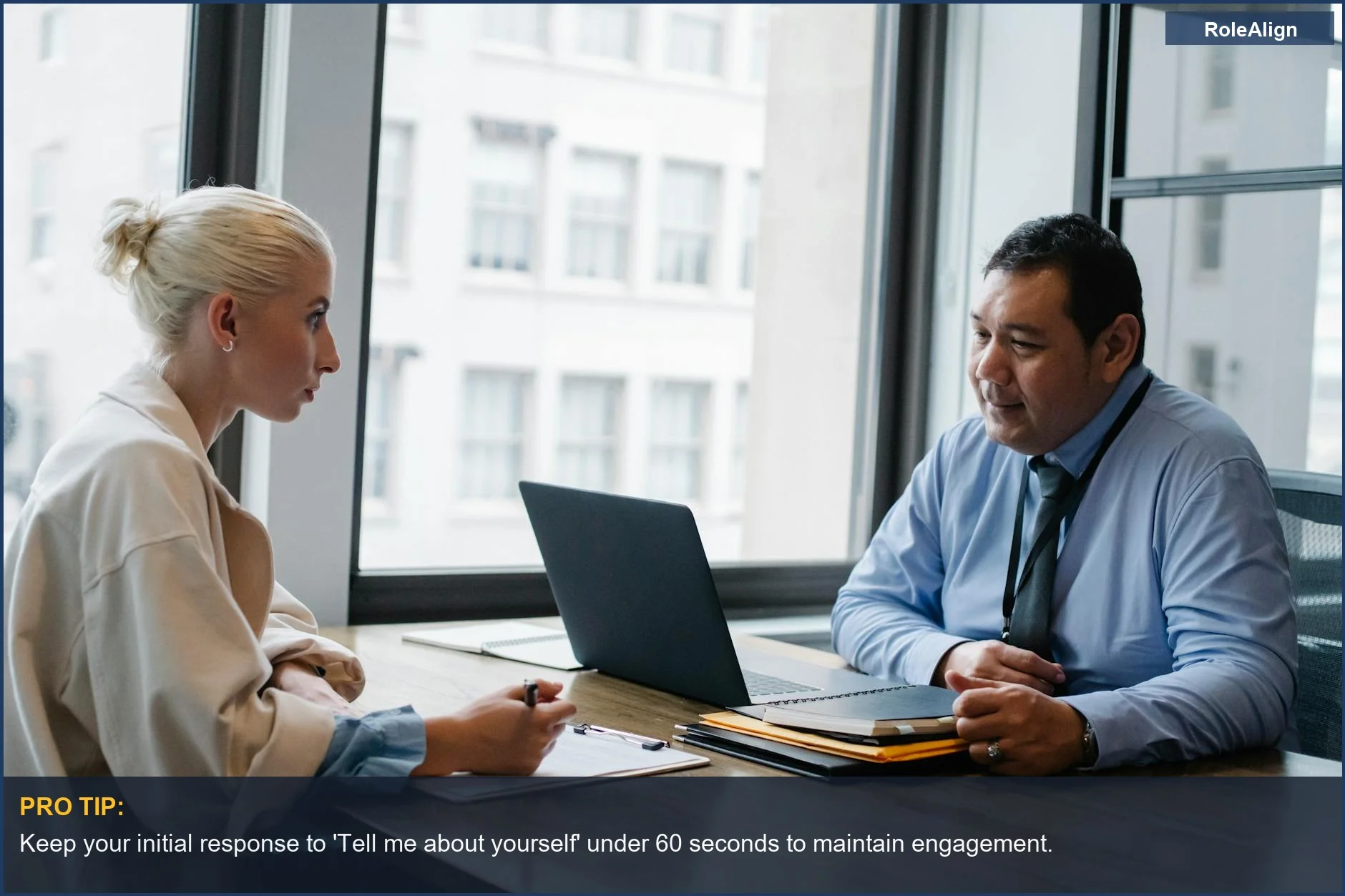
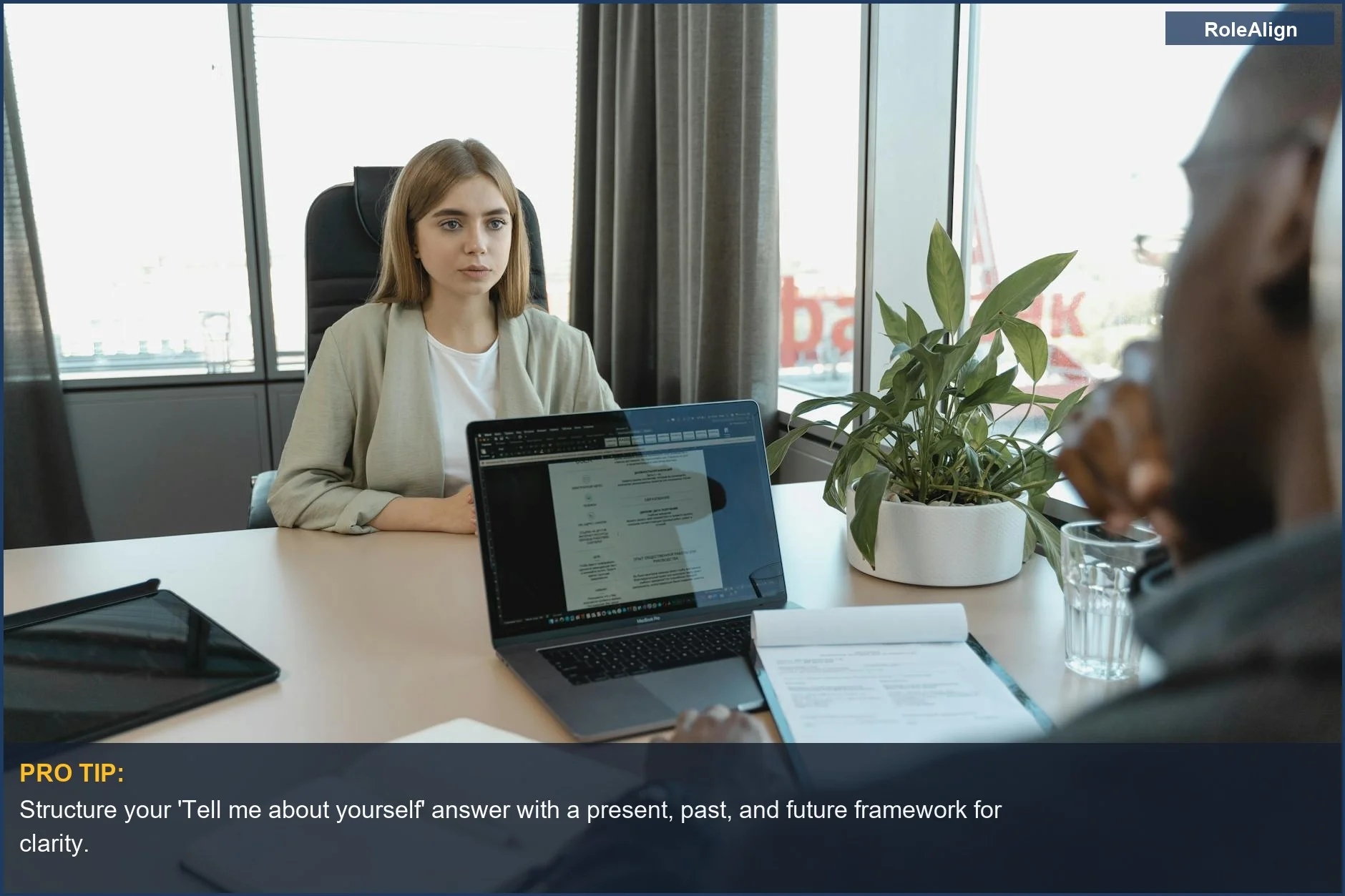
A successful job interview hinges on a strong first impression. Learn how to craft a compelling interview introduction that highlights your key qualifications and enthusiasm for the role.
| Photo by Sora Shimazaki
A successful job interview hinges on a strong first impression. Learn how to craft a compelling interview introduction that highlights your key qualifications and enthusiasm for the role.
| Photo by Sora Shimazaki
## What's Actually Going On
1
Understand the Underlying Mechanics - Recruiters and hiring managers use the "Tell me about yourself" question to gauge your fit beyond the resume. They're assessing your professional narrative, your ability to communicate clearly, and how your experience aligns with their needs. This isn't about your life story; it's about your career trajectory and potential value. Job Interview Tools emphasizes this is about a quick summary of your professional background to determine if you're a fit for the role. They are looking for a concise overview that highlights your most relevant skills and experiences, setting the stage for deeper discussion. This question acts as an initial filter, allowing them to quickly assess if you possess the foundational qualifications they seek. It's an opportunity to showcase your understanding of the role and how your past achievements directly translate into future contributions. Think of it as your elevator pitch for the job.
2
Industry Nuances Drive Expectations - The depth and focus of the expected answer vary significantly by company size, industry, and seniority. At startups, expect a focus on adaptability, passion, and breadth of skills. They want to see that you can wear multiple hats and thrive in a fast-paced, evolving environment. Enterprise environments often look for a more structured career progression and evidence of impacting larger-scale projects. Here, demonstrating a clear path of growth and measurable contributions to significant initiatives is crucial. In tech, demonstrating technical proficiency and problem-solving is key. Highlighting specific technologies you're skilled with and examples of complex problems you've solved is paramount. Finance demands a focus on analytical rigor and risk management, requiring you to showcase your quantitative skills and understanding of financial markets or regulatory frameworks. Healthcare prioritizes patient care, compliance, and collaborative skills, so emphasizing your experience in these areas and your ability to work effectively within a team is vital. For senior roles, the emphasis shifts to leadership, strategic vision, and proven impact on business outcomes. You'll need to demonstrate your ability to guide teams, set direction, and achieve tangible results that move the organization forward. The Muse notes that the question serves to ease into the interview and inform the direction of subsequent questions, highlighting the need for a tailored response. Understanding these industry-specific expectations allows you to tailor your narrative for maximum impact.
3
The "Past-Present-Future" Framework is Your Anchor - This structured approach prevents rambling and ensures a cohesive, impactful introduction. Start with your current role and key responsibilities, highlighting what you're known for now. This anchors the interviewer in your present value proposition. Transition to relevant past experiences that demonstrate skills and accomplishments directly applicable to the role you're interviewing for. This is where you build credibility by showcasing how your history has prepared you for this specific opportunity. Finally, articulate your future aspirations, clearly stating why this specific opportunity is the logical next step and how you can contribute to the company's goals. This demonstrates your enthusiasm and foresight. LinkedIn Pulse advocates for sticking to your professional story and using this framework. It's about weaving a narrative that connects your journey to their needs. For instance, if you're applying for a marketing manager role, your present might focus on your current campaign management successes, your past might highlight your experience in developing successful content strategies, and your future could express your excitement about leveraging those skills to drive growth for their specific product.
4
Screening Processes are Multifaceted - While AI and Applicant Tracking Systems (ATS) parse resumes for keywords, human screeners and hiring managers look for more. They're evaluating your communication style, enthusiasm, and how well your narrative aligns with the job description and company culture. They want to see that you've done your homework and understand their needs. An engaging 90-second narrative is often the goal, as highlighted by Tufts Alumni and Friends. This initial impression is critical for moving forward in the interview process. It's not just about *what* you say, but *how* you say it. Your tone, confidence, and ability to articulate your value proposition clearly and concisely are all being assessed. Think of it as a brief, compelling trailer for your professional capabilities. InterviewGold also stresses the importance of a natural, flowing delivery rather than a memorized speech How to Answer “Tell Me About Yourself” in 2026 - InterviewGold. Practicing your answer out loud ensures it sounds confident and authentic, not rushed or rehearsed. This first impression sets the tone for the rest of the interview.
To further enhance your preparation, it's essential to anticipate common interview questions that could arise during the process.
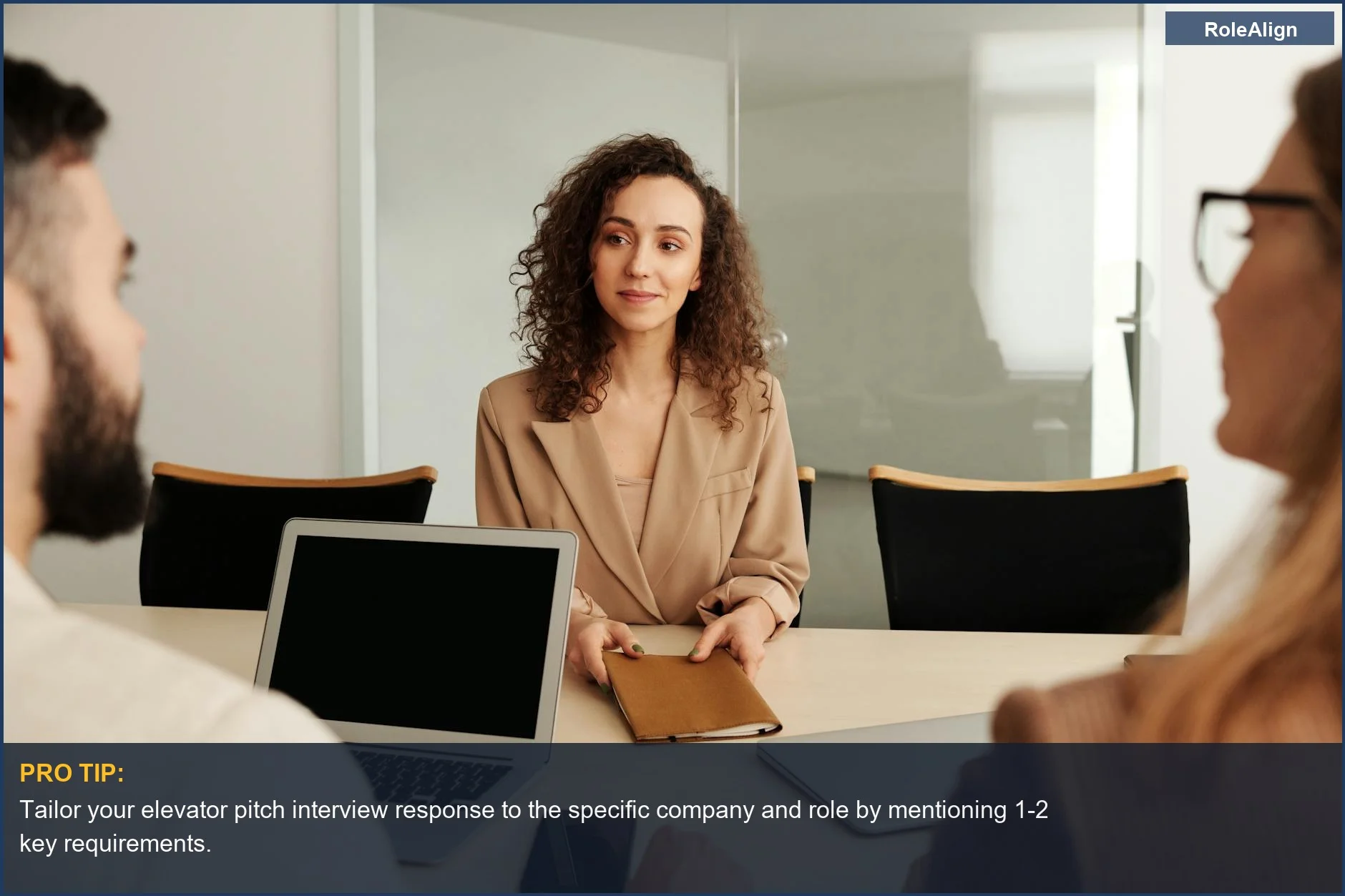
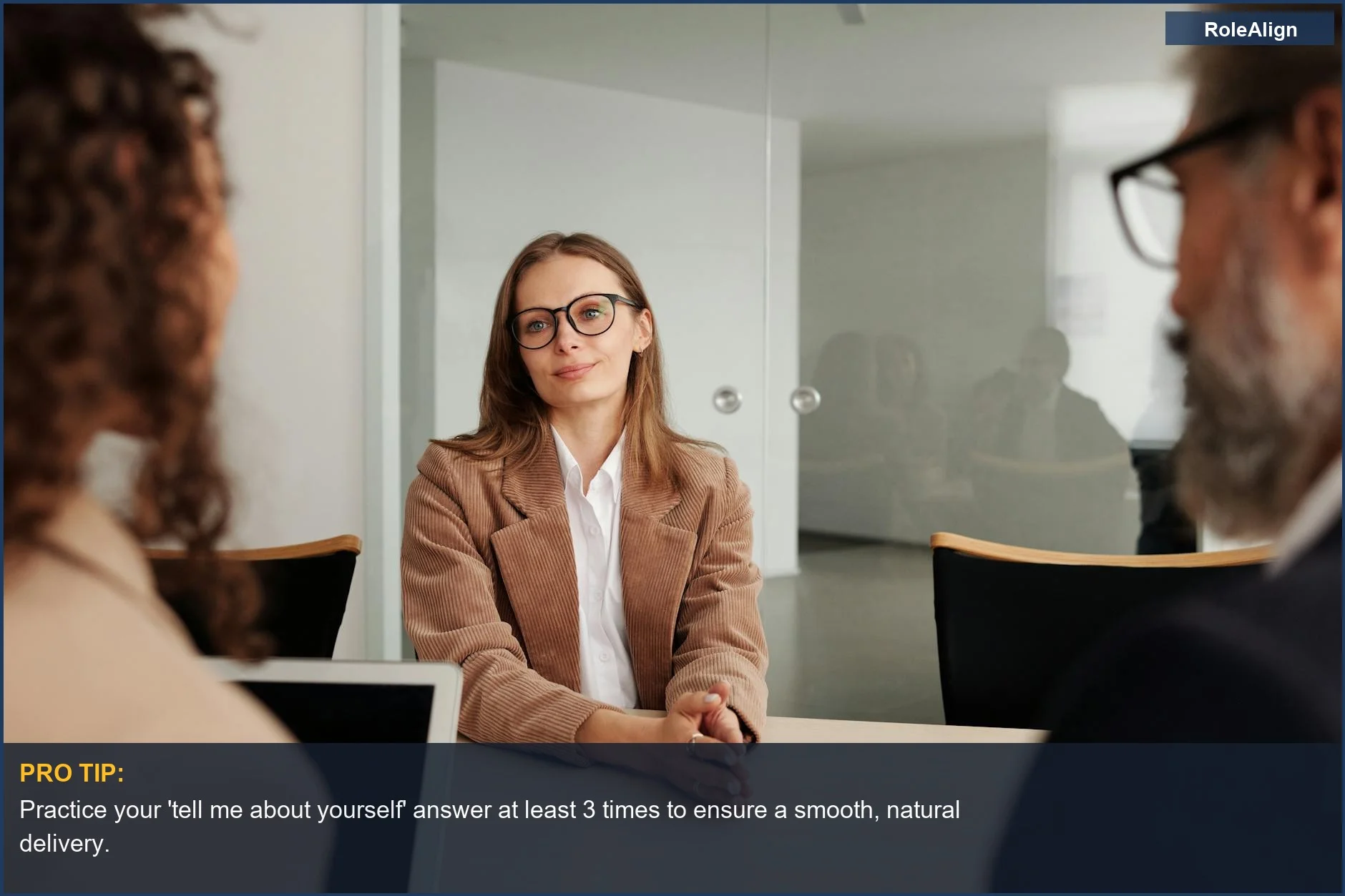
Mastering the 'Tell me about yourself' question is crucial. This professional woman demonstrates confidence, a key element in delivering an impactful elevator pitch interview.
| Photo by Edmond Dantès
Mastering the 'Tell me about yourself' question is crucial. This professional woman demonstrates confidence, a key element in delivering an impactful elevator pitch interview.
| Photo by Edmond Dantès
## How to Handle This
1
Start with your present - Recruiters need to know what you're doing now and how it aligns with their needs. Focus on your current professional role, responsibilities, and a recent, relevant accomplishment. For entry-level roles, highlight a significant project or internship. For senior roles, showcase leadership or strategic impact. jobinterviewtools.com emphasizes this "Present-Past-Future" formula. This initial statement should serve as your value proposition, clearly articulating what you are known for in your current capacity. It's about anchoring the interviewer in your current professional standing and the value you bring. For instance, a marketing manager might say, "Currently, I'm a Marketing Manager at XYZ Corp, where I lead a team of five in developing and executing integrated digital marketing campaigns that have increased lead generation by 25% in the last fiscal year." This immediately establishes your current role, responsibilities, and a quantifiable achievement, directly addressing what the interviewer is looking for.
2
Bridge to relevant past experience - Briefly connect your current situation to the skills and experiences that got you there. This is a curated highlight reel demonstrating how your history makes you a strong candidate for *this specific job*. For a software engineering role, mention key projects using relevant languages or methodologies. If transitioning industries, focus on transferable skills. The Muse highlights this sets the stage for the interview. This segment allows you to showcase the foundational elements that led to your present success. It's not a chronological life story, but a strategic selection of experiences that directly support your candidacy for the role at hand. For example, if the current role was built on previous experience, you might add, "Prior to this, I spent three years as a Digital Marketing Specialist at ABC Company, where I honed my skills in SEO and content strategy, which were instrumental in developing the successful campaign I just mentioned." This connection demonstrates a clear progression and a deliberate building of expertise.
3
Conclude with your future aspirations - Articulate *why* this opportunity is the logical next step. This shows you've researched and are genuinely interested in *their* company and role. Mention how your skills and goals align with the company's mission or team objectives. For example, "I'm excited about this Senior Product Manager role because it offers the opportunity to leverage my experience in AI product strategy to drive innovation in your cutting-edge [specific product area] division." jobinterviewtools.com suggests this formula to avoid rambling. This final part of your answer should clearly convey your enthusiasm for the specific position and organization. It's your opportunity to express how your career trajectory and aspirations align with the company's future. You can say something like, "I'm particularly drawn to [Company Name]'s commitment to [mention a company value or initiative] and believe my experience in [relevant skill] would allow me to contribute significantly to your [specific team or project] goals, making this the ideal next step in my career." This demonstrates foresight and a genuine desire to be part of their success.
4
Tailor by role and industry - A junior data analyst answer differs from a VP of Marketing. For junior roles, focus on academic achievements, internships, and foundational skills. For mid-level, highlight project ownership and team collaboration. For senior roles, emphasize strategic impact, leadership, and business acumen. Industry nuances are critical; a startup might value adaptability, while a large enterprise might prioritize specialized expertise. Filter your narrative through the specific job description and company culture. Tufts Alumni notes the best answer is a well-crafted professional story. This means actively studying the job description and researching the company's values and recent news. For instance, if the role emphasizes innovation, highlight past instances where you've introduced new ideas or processes. If the company culture is known for collaboration, emphasize your teamwork and cross-functional project experience. As LinkedIn suggests, sticking to your professional story and using the Present-Past-Future framework are key to a concise and impactful answer jobinterviewtools.com. Practicing your answer aloud is also crucial to ensure it flows naturally and stays within a reasonable timeframe, avoiding a rushed or memorized delivery jobinterviewtools.com.
This professional job interview highlights the importance of concise communication. Learn to articulate your career journey effectively, making your 'tell me about yourself' a strategic advantage.
| Photo by Tima Miroshnichenko
This professional job interview highlights the importance of concise communication. Learn to articulate your career journey effectively, making your 'tell me about yourself' a strategic advantage.
| Photo by Tima Miroshnichenko
## What This Looks Like in Practice
Senior Software Engineer at a Series B Startup Highlighted a recent project that improved system performance. Briefly touched on a past experience tackling a complex technical challenge. Articulated how this experience aligns with the startup's need for rapid iteration and scalable solutions. Showcased immediate relevance and future potential. This approach adheres to the "Past-Present-Future" framework, grounding the answer in concrete achievements while projecting forward. By focusing on a specific, impactful project, the candidate demonstrates their ability to deliver tangible results in a fast-paced environment, directly addressing the startup's likely priorities. Job Interview Tools
Entry-Level Data Analyst at a Large Tech Company Detailed current analytical projects, emphasizing tools like SQL and Python, and visualization libraries. Connected this to an academic project demonstrating statistical principles. Focused on eagerness to contribute to data-driven decision-making within the company's specific product areas. Highlighted transferable skills, proving value beyond theoretical knowledge. This answer effectively bridges academic learning with practical application, showcasing a foundational understanding and a readiness to apply those skills. By mentioning specific tools and libraries, the candidate provides concrete evidence of their technical proficiency, aligning with the need for practical expertise in a tech company. The Muse
Career Changer from Marketing to Product Management Described immersion in product management principles and coursework. Referenced marketing background, highlighting transferable skills like understanding customer needs and market analysis. Articulated passion for building products and how this role is the ideal next step to apply their combined skill set. Emphasized a deliberate career transition, showing foresight and adaptability. This example demonstrates a strategic pivot, leveraging existing strengths from a previous field to excel in a new one. By articulating a clear rationale for the change and highlighting transferable skills, the candidate presents themselves as a motivated and well-prepared individual, ready to contribute a unique perspective. Tufts Alumni and Friends
Mid-Level UX Designer at a FinTech Firm Led with focus on enhancing user flows for a new mobile banking feature, mentioning Figma and user testing. Discussed redesigning a complex dashboard, leading to a more intuitive user experience. Expressed excitement about contributing to the FinTech space and the firm's mission to simplify financial interactions. This answer showcases a user-centric approach and practical design skills. By detailing specific design tools and methodologies, the candidate provides concrete evidence of their capabilities and their ability to translate user needs into effective solutions. The enthusiasm for the FinTech industry and the firm's mission further strengthens their candidacy. The Muse, Job Interview Tools
Confidence is key when answering 'Tell me about yourself.' This young professional is poised to deliver a focused and relevant response that showcases her potential.
| Photo by Edmond Dantès
Confidence is key when answering 'Tell me about yourself.' This young professional is poised to deliver a focused and relevant response that showcases her potential.
| Photo by Edmond Dantès
## Mistakes That Kill Your Chances
Symptom Rambling about irrelevant personal details or a chronological resume dump.
Signal Interviewer's eyes glaze over, they check their watch, or they interrupt to redirect.
Fix Stick to a past-present-future framework that highlights professional accomplishments and aligns with the job description. Keep it to about 90 seconds. Job Interview Tools emphasizes this structure for a logical flow.
Symptom Giving a generic answer that could apply to any role or company.
Signal Recruiter asks follow-up questions like, "So why *this* company?" or "What specifically about *this* role interests you?"
FixTailor your answer to the specific job and company. Research their mission, values, and recent projects. Mention how your skills and experience directly solve their problems or contribute to their goals. Murray Resources stresses aligning your background with the job description.
Symptom Sounding overly rehearsed or robotic, lacking genuine enthusiasm.
Signal Your delivery is monotone, you use phrases verbatim from a script, or you can't deviate when the interviewer asks a clarifying question.
Fix Practice your answer out loud until it feels natural and confident, not memorized. Focus on conveying authentic passion for your work and the opportunity. InterviewGold notes that your answer should sound calm, confident, and natural.
Symptom For senior candidates, focusing too much on early career details or a laundry list of past responsibilities.
Signal The interviewer looks bored or confused, as they likely already reviewed your extensive resume.
Fix For senior roles, emphasize leadership, strategic impact, and recent, high-level achievements. Frame your past experience through the lens of what you can bring to this *specific* senior leadership role. The Muse advises focusing on your professional story.
Symptom For new grads, focusing solely on academic achievements or lack of extensive work experience.
Signal The interviewer struggles to connect your academic background to the practical demands of the job.
Fix Highlight transferable skills gained from projects, internships, volunteer work, or even challenging coursework. Emphasize your eagerness to learn and your ability to contribute quickly.
Symptom Treating the question as a request for your entire life story or personal interests.
Signal You share details about hobbies, family, or unrelated past jobs that don't connect to the role.
Fix Keep the focus strictly professional. Interviewers want to know about your career journey and how it makes you a fit for *this* job. The Cut reminds candidates to keep their focus professional, not personal.
Product comparison for How to Answer Tell Me About Yourself Without Rambling
## Key Takeaways
Mastering the "Tell me about yourself" question is about delivering a concise, compelling narrative, not a resume recitation. Your goal is to provide a focused introduction that highlights your professional value and sets the stage for the interview How to Answer “Tell Me About Yourself” in an Interview (Examples .... This means tailoring your response to the specific job and company, showcasing how your unique background and skills make you an ideal candidate.
The past-present-future framework is your secret weapon against rambling. Start with your current role and key responsibilities, highlighting your present value proposition and what you are known for right now How to Answer the Tell Me About Yourself Interview Question. Then, transition to relevant past experiences and accomplishments that demonstrate your growth and expertise, and conclude by articulating your future aspirations and how they align with the role and the company's mission jobinterviewtools.com. This structured approach ensures a logical flow and keeps your answer focused.
Practice out loud to ensure your answer flows naturally and confidently, avoiding a rushed or memorized tone How to Answer “Tell Me About Yourself” in 2026 - InterviewGold. Refining your delivery through practice will help you sound polished and genuine. The most important thing a recruiter would tell you off the record? Be authentic and directly connect your story to their needs. This means actively listening to the interviewer and subtly weaving in how your skills and experiences directly address the challenges and opportunities they've presented The Right Way to Answer "Tell Me About Yourself" and Impress Any ....
Understanding how to craft your narrative can help you better showcase what interviewers value beyond just your answers.
Frequently Asked Questions
What's the best way to keep my 'tell me about yourself' answer concise?
Focus on a professional narrative using the past-present-future framework; start with your current role, touch on relevant past experiences, and then connect it to your future aspirations for this specific job. Aim for an answer that's about one minute long to avoid rambling LinkedIn.
How do I tailor my 'tell me about yourself' response to the job?
Interviewers want to see how your professional story aligns with their needs; filter your background through the lens of the specific role and company. Highlight skills and experiences most relevant to the job description to demonstrate your fit Tufts Alumni & Friends.
Should I include personal details in my 'tell me about yourself' introduction?
It's best to keep your answer professional, focusing on your work experience, skills, and accomplishments rather than personal hobbies or life stories. The interviewer is primarily interested in your professional background and how it relates to the job The Muse.
How can I make my 'tell me about yourself' answer sound natural and not rehearsed?
Practice your answer out loud multiple times to ensure it flows smoothly and sounds confident, not memorized. Authenticity is key; aim to paint a vivid yet succinct picture of your professional journey Forbes.
What's the core information interviewers are looking for when they ask 'tell me about yourself'?
They want a quick summary of your professional background, focusing on who you are professionally, what relevant skills and experience you bring, and how you can contribute to their company. It's less about your entire life story and more about your professional value proposition JobInterviewTools.com.
R
RoleAlign Team
Experienced car camper and automotive enthusiast sharing practical advice.