How to Answer What is Your Greatest Weakness (2026 Complete Guide)
RoleAlign Team
15 min read
Prices verified February 2026
Includes Video
You just finished a video interview for that dream role. The recruiter said they'd be in touch. Now, staring at your inbox, you see it: "Thank you for your interest... we've decided to move forward with other candidates." Rejection stings, especially when you thought you nailed it.
You just finished a video interview for that dream role. The recruiter said they'd be in touch. Now, staring at your inbox, you see it: "Thank you for your interest... we've decided to move forward with other candidates." Rejection stings, especially when you thought you nailed it. Perhaps you're prepping for an interview tomorrow, or even considering a career pivot, and the same dreaded question looms: "What is your greatest weakness?" This question is a staple, designed to gauge your self-awareness and how you handle challenges. It's not about finding a fatal flaw, but understanding if you can identify areas for growth and actively address them. Framing your weakness effectively can turn a potential pitfall into a demonstration of your commitment to development. This guide will equip you to tackle the "greatest weakness interview" question with confidence.
The key to a successful answer lies in choosing weaknesses that still communicate strengths, demonstrating a capacity for growth and self-improvement. Interviewers aren't looking for perfection; they're assessing your honesty, self-awareness, and proactivity in addressing areas for development. Instead of focusing on a true Achilles' heel, consider reframing "weakness" as a "challenge" you are actively working to overcome. This linguistic shift can subtly alter the perception of your answer. It's crucial to provide honest answers and admit you have weaknesses, rather than trying to present a disguised strength. Authenticity is paramount, but avoid oversharing or presenting a weakness that is a core requirement of the job. The most effective approach involves sharing a weakness you have either overcome or are actively working to improve, showcasing your commitment to continuous learning and professional development.
Key specifications for How to Answer What Is Your Greatest Weakness
## The Real Answer
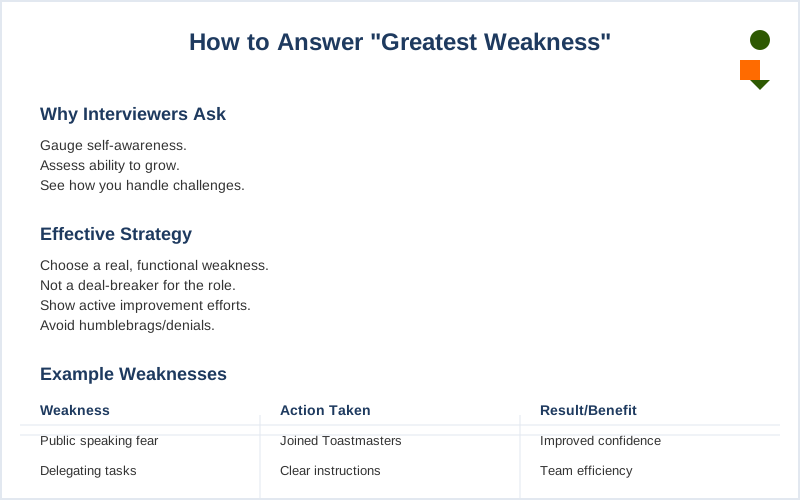
Recruiters ask about your greatest weakness not to trip you up, but to gauge your self-awareness and ability to grow. The real goal is to see if you can identify a genuine area for improvement and, crucially, demonstrate how you're actively working to overcome it.
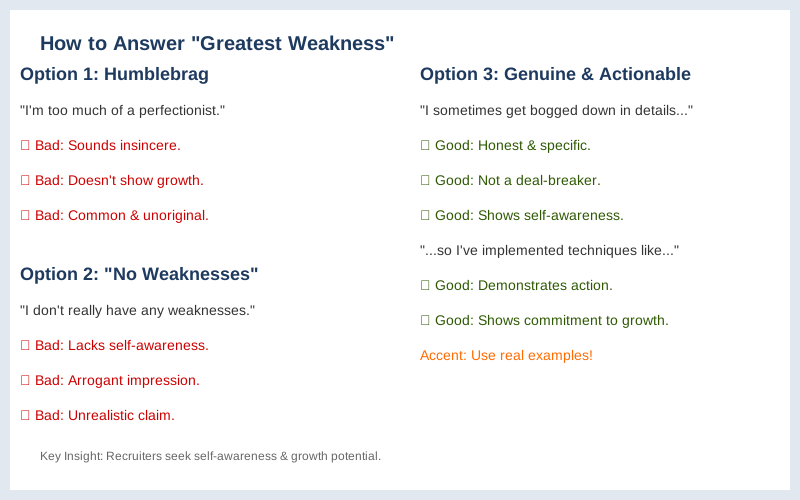
Forget humblebrags or claiming you have no weaknesses; interviewers see right through that. Instead, focus on a real, functional weakness or skill deficiency that isn't a deal-breaker for the role. Think along the lines of public speaking, delegating tasks, or perhaps a tendency to get bogged down in details. The key is that it's something you can actively work on and show progress for, rather than an inherent personality flaw. Deel.com highlights that the best weaknesses are sincere, easy to improve, and not crucial to the core functions of the job.
When discussing your weakness, structure your answer to include:
A clear acknowledgment of the weakness.
A brief explanation of how it has presented a challenge in the past.
Your concrete steps and strategies for actively improving in that area.
Any positive results or progress you've already seen.
This approach transforms a potential negative into a positive by showcasing your proactive problem-solving and commitment to development. As Cultivated Culture points out, it demonstrates that you're not afraid to take action to improve. The interviewer wants to see that you can admit and address your weaknesses effectively, not that you are perfect. Coursera emphasizes that this question assesses your self-awareness and your willingness to improve.
Avoid weaknesses that are critical to the job requirements or that sound like veiled strengths (e.g., "I'm a perfectionist" or "I work too hard"). Instead, choose a skill deficiency that aligns with professional growth and shows you're dedicated to becoming a more well-rounded professional. This is your chance to show you're a candidate who can learn and adapt. Indeed.com stresses that the goal is to use weaknesses that still communicate strengths.
Understanding how interviewers perceive your response can provide valuable insight, so explore what interviewers actually think when you mention your weakness in our article interviewers actually think.
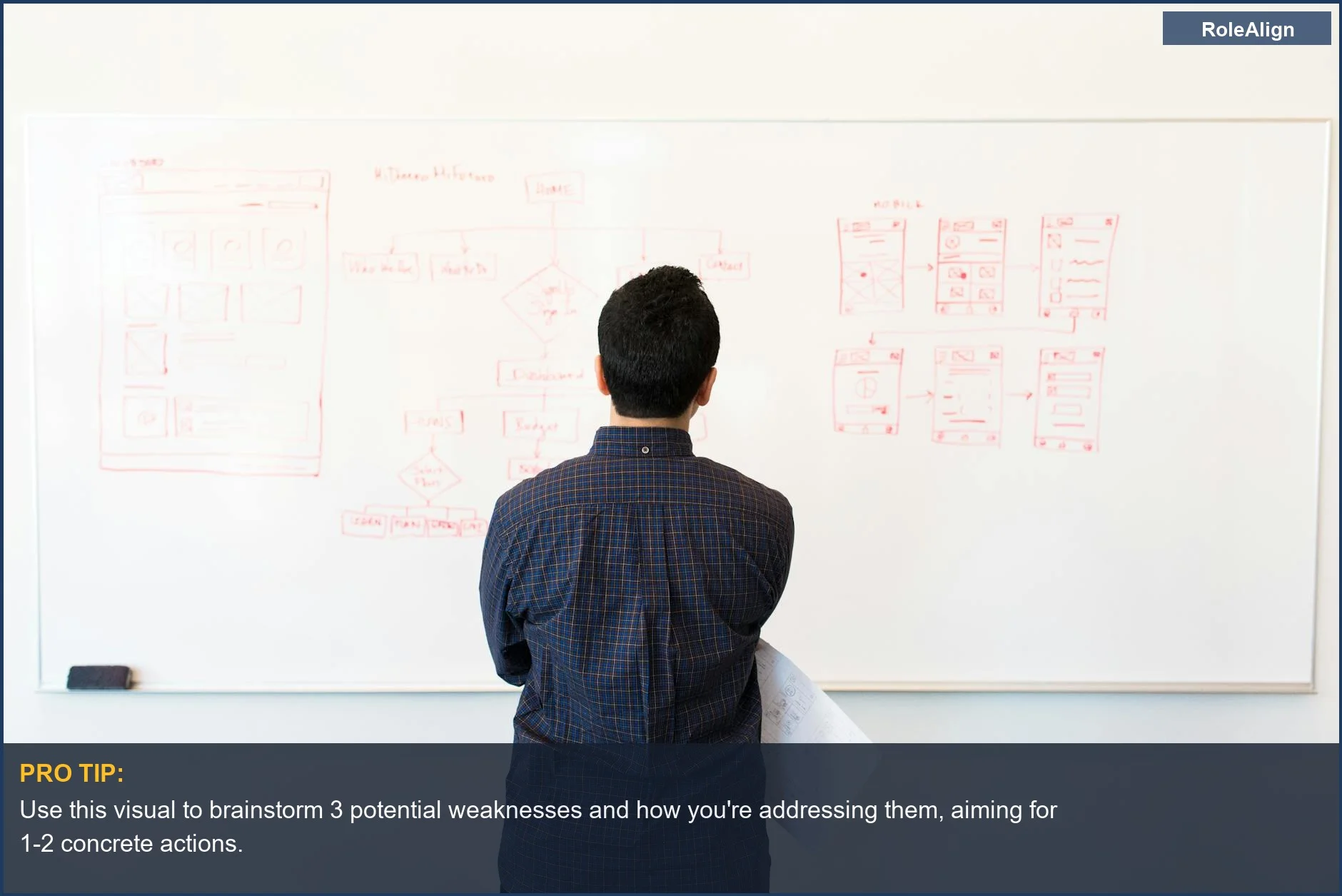
Visualizing your development path is key. Recruiters want to see your self-awareness, especially when discussing your greatest weakness in an interview.
| Photo by Christina Morillo
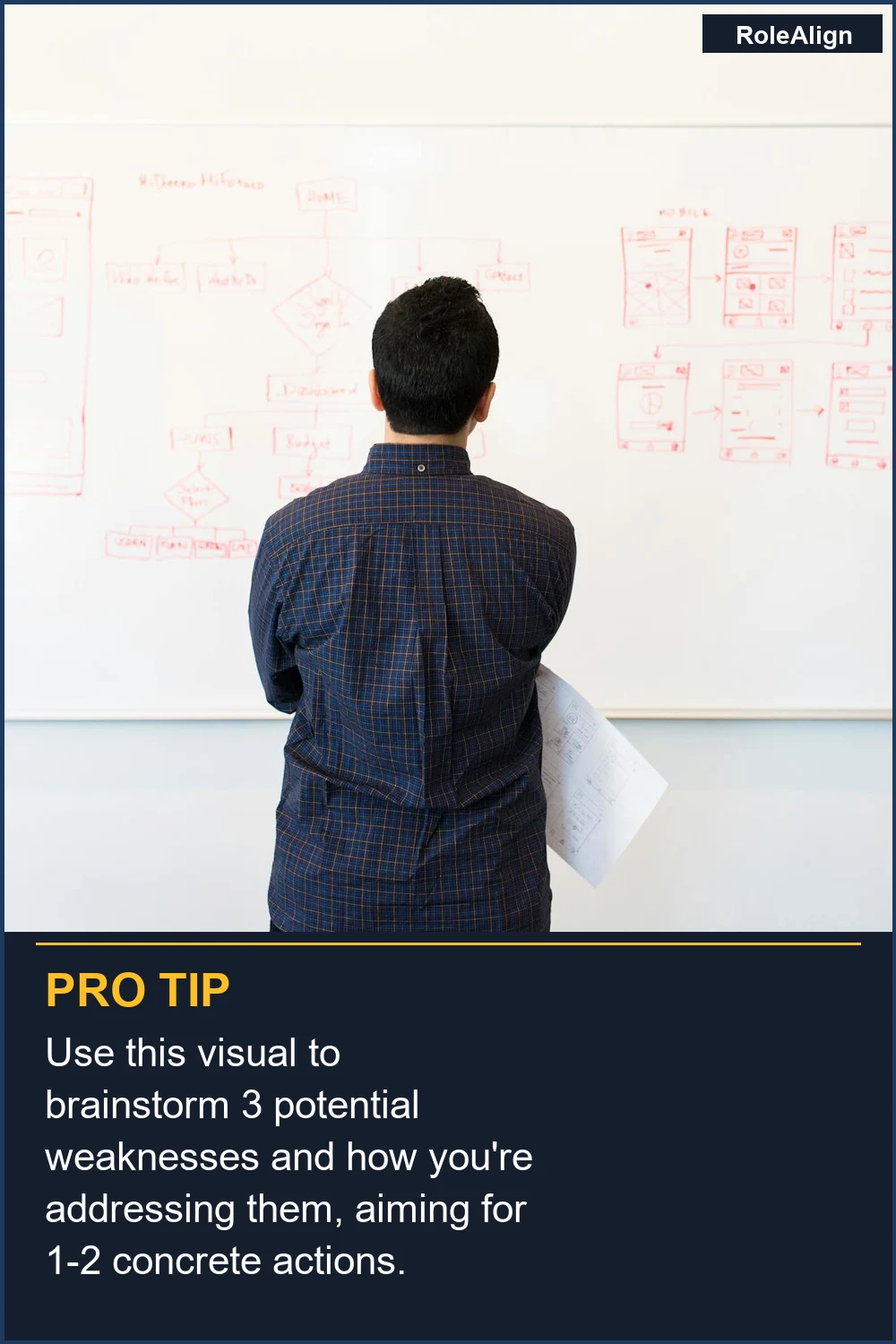
Visualizing your development path is key. Recruiters want to see your self-awareness, especially when discussing your greatest weakness in an interview.
| Photo by Christina Morillo
## What's Actually Going On
1
Recruiters and hiring managers aren't looking for perfect candidates; they're assessing your self-awareness and problem-solving skills. The "greatest weakness" question is a gauge of your ability to identify areas for improvement and your proactive approach to development. Deel.com highlights that recruiters want to know how self-aware you are, which weakness you choose to mention, and how you manage it. This isn't about finding a candidate without flaws, but rather one who understands their limitations and actively works to overcome them. They are looking for a candidate who can reflect on their performance and take constructive steps towards growth. A well-chosen weakness, coupled with a clear plan for improvement, demonstrates maturity and a commitment to professional development, qualities highly valued in any employee. It's an opportunity to showcase your resilience and your ability to learn from experience.
2
Applicant Tracking Systems (ATS) primarily scan for keywords and direct matches to job description requirements. While they don't "understand" your weakness answer, the quality of your response can influence whether a human reviewer proceeds. A well-articulated weakness, framed positively, can differentiate you in the initial screening phase. For instance, if a job requires strong attention to detail, and your ATS scan flags keywords related to "meticulous" or "thorough," your elaborated answer about a past challenge with this area, and how you've implemented systems (like checklists or double-checking procedures) to enhance your meticulousness, could be positively perceived by the human reviewer who eventually sees your application. A generic or poorly phrased weakness might not trigger positive associations, whereas a thoughtful response can highlight your problem-solving approach even at this early stage.
3
Company size and industry shape the emphasis. Startups might value adaptability and a willingness to learn any skill, making a weakness in a highly specialized area less critical. For example, if you're interviewing for a role at a fast-paced startup and mention that you're still developing your expertise in a niche coding language, they might see this as an opportunity for you to learn and grow with the company, especially if you express enthusiasm for acquiring new skills. Enterprises, especially in regulated fields like finance or healthcare, may scrutinize weaknesses more closely, particularly if they relate to compliance or core competencies. In such environments, a weakness related to data security or regulatory adherence would be a significant concern. Tech roles often welcome answers that demonstrate a growth mindset, such as a willingness to embrace new technologies, while finance might prefer a focus on analytical rigor and precision. Harvard Business Review notes that this question, alongside "tell me about yourself" and "why do you want to work here," is a recurring interview staple, underscoring its importance across various organizational contexts.
4
Seniority level also impacts expectations. Junior candidates might be expected to have more skill-based weaknesses, as they are still building their professional toolkit. For instance, a recent graduate might acknowledge that they are still honing their presentation skills or learning to manage multiple projects simultaneously. Senior candidates, however, are assessed on leadership, strategic thinking, and interpersonal skills; a weakness here needs careful framing and evidence of significant self-correction. A senior leader admitting to a past tendency to micromanage, but then detailing how they've learned to delegate effectively and trust their team, demonstrates valuable growth in leadership capabilities. Indeed.com emphasizes that the key is using weaknesses that communicate strengths. This means selecting a weakness that, when discussed with its mitigation strategies, actually highlights positive attributes like self-awareness, a commitment to improvement, and a proactive problem-solving approach.
5
Hiring committees look for honesty, self-awareness, and a proactive approach. They want to see that you can acknowledge a genuine area for improvement without it being a critical flaw for the role. A common mistake is offering a disguised strength or a cliché answer. For example, saying "I'm too much of a perfectionist" or "I work too hard" often comes across as insincere and lacks depth. Instead, focus on a concrete skill or trait you are actively working to improve, demonstrating a commitment to professional growth. An example might be admitting that you sometimes struggle with public speaking, but then detailing how you've joined a Toastmasters group or regularly volunteer to present in internal meetings to build your confidence and skills. Profellow.com advises admitting you have weaknesses, providing honest answers, and not overdoing it. This means selecting a weakness that is genuine but not detrimental to the core functions of the job, and clearly articulating the steps you are taking to address it. Forbes suggests reframing the weakness as a "challenge" to maintain a positive outlook.
Understanding how to address weaknesses can enhance your overall interview strategy, including what interviewers look for beyond just the right answers.
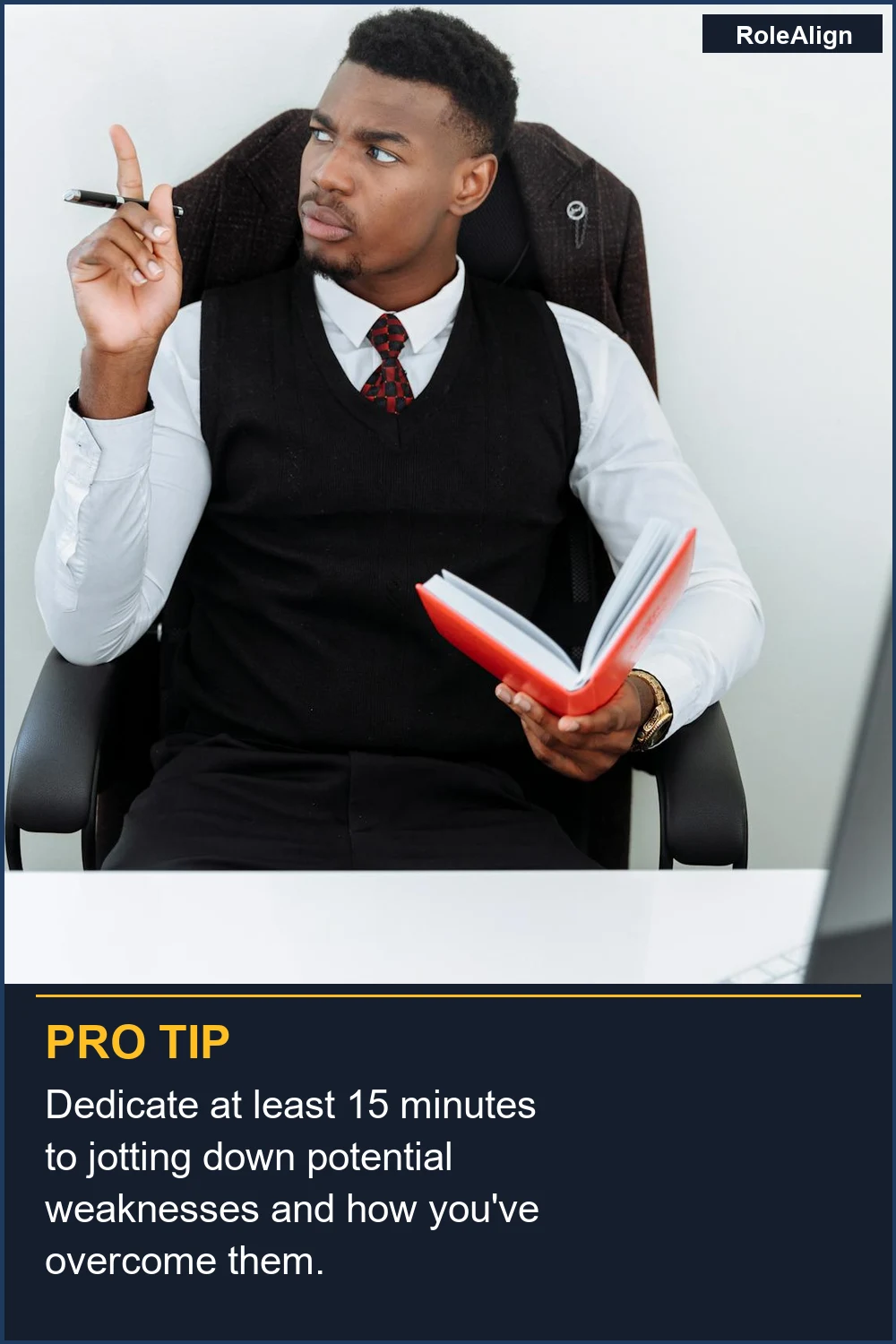
Deep thought leads to insightful answers. Prepare to articulate your weakness interview answer with honesty and a focus on growth.
| Photo by Thirdman
Deep thought leads to insightful answers. Prepare to articulate your weakness interview answer with honesty and a focus on growth.
| Photo by Thirdman
## How to Handle This
1
Identify a genuine weakness, not a veiled strength. Recruiters see through humblebrags like "I'm too much of a perfectionist." Instead, focus on a skill gap or a functional area you're actively developing. This shows self-awareness and a commitment to growth, which is what recruiters are looking for according to Deel Weaknesses for Job Interviews: 8 Example Answers for 2026 - Deel. Skipping this means you'll likely offer a disingenuous answer that reveals a lack of introspection.
2
Frame the weakness with context and action. Explain how this weakness has presented challenges in your professional life, providing a brief, specific example. Then, immediately pivot to the steps you are taking to overcome it. For example, if your weakness is public speaking, detail how you've joined Toastmasters or volunteered for more presentations. This demonstrates a proactive approach to self-improvement, a key indicator for hiring managers 10 Examples of Strengths and Weaknesses for Job Interviews. Failing to show action makes the weakness seem like an insurmountable flaw.
3
Tailor your weakness to the role and industry. A weakness critical for a senior leadership role (e.g., delegating effectively) might be less impactful for an entry-level individual contributor. For technical roles, focus on a skill that's evolving (e.g., staying current with a rapidly changing programming language) rather than a fundamental lack of technical aptitude. For sales, perhaps a tendency to be overly direct when delivering difficult feedback could be framed as a weakness you're working on by focusing on tact. This shows you've researched the job requirements and understand what's essential. Not tailoring your answer suggests you haven't done your homework.
4
Keep it concise and positive. Your answer should be brief, ideally under 60 seconds. The goal is to acknowledge the weakness, show your growth mindset, and move on. Avoid dwelling on the negative aspects or making excuses. Remember, the interviewer wants to see your ability to handle challenges, not to get bogged down in past failures. A well-articulated weakness can actually reinforce your suitability for the role by highlighting your maturity and problem-solving skills forbes.com. A rambling or overly negative response can signal a lack of confidence or poor communication skills.
Teamwork highlights communication. When answering what is your weakness, consider how your interactions can reveal areas for development.
| Photo by Kindel Media
Teamwork highlights communication. When answering what is your weakness, consider how your interactions can reveal areas for development.
| Photo by Kindel Media
## What This Looks Like in Practice
real_scenarios — ## What This Looks Like in Practice
The key to answering "What is your greatest weakness?" effectively is to present a genuine area for development that also subtly highlights your strengths or your commitment to growth Weaknesses for Job Interviews: 10 Example Answers | Indeed.com. It's about framing a challenge as an opportunity for improvement, rather than a disqualifying flaw. This approach demonstrates self-awareness and a proactive attitude towards professional development. Consider these real-world examples:
Senior Software Engineer at a Series B Startup - A tendency to dive deep into complex technical problems can lead to losing sight of project deadlines. Implementing time-boxed coding sessions and daily stand-ups with clear action items improved focus and ensured progress was visible on challenging tasks. This approach transformed a potential pitfall into a demonstration of dedication to problem-solving while actively managing time constraints Weaknesses for Job Interviews: 8 Example Answers for 2026 - Deel. The engineer recognized that while deep dives are valuable, they needed to be balanced with efficient project management techniques.
Entry-Level Data Analyst at a Fortune 500 - Over-reliance on direct instruction when faced with ambiguous data sets or novel analytical tasks can be a struggle. Proactively documenting assumptions and seeking early feedback on analytical approaches reduced back-and-forth and accelerated learning. This shows an initiative to become more independent and a commitment to accuracy, even when guidance is less explicit Weaknesses for Job Interviews: 10 Example Answers | Indeed.com. The analyst learned to leverage their initial uncertainty to build a stronger foundation of understanding.
Career Changer from Teaching to Product Management - An instinct to explain everything in detail can manifest as overly long documents or explanations. Focusing on concise communication, using frameworks like "Jobs to Be Done" to distill user needs into actionable insights, improved efficiency and clarity. This demonstrates an ability to adapt communication styles to different professional contexts and a drive to convey information effectively and efficiently 10 Examples of Strengths and Weaknesses for Job Interviews. The career changer actively sought out methods to streamline their communication, turning a detailed-oriented nature into a strength in clear articulation.
Mid-Level Marketing Manager - Hesitation to delegate tasks, stemming from a desire for high quality, can slow down team output. Identifying tasks for delegation and providing clear instructions empowered team members and freed up time for strategic initiatives, leading to a more productive department. This showcases a growing understanding of leadership, trust in their team, and a focus on optimizing departmental performance through effective resource allocation 3 Ways to Answer "What is Your Greatest Weakness?" in an Interview. The manager transformed a desire for control into an opportunity for team growth and personal development in leadership.
Each of these examples reframes a potential weakness as a challenge that the individual is actively addressing, demonstrating self-awareness, a proactive approach to improvement, and a commitment to professional growth. It’s not about choosing a weakness that is actually a strength, but rather a genuine area for development that you are taking concrete steps to overcome How to Answer 'What Is Your Greatest Weakness' in Interviews - 2026. This strategy allows you to be honest while still making a positive impression on the interviewer.
To further prepare for interviews, explore our insights on common interview questions and how to tackle them effectively.
Personal reflection aids self-discovery. Choosing a specific, manageable weakness for your interview answer shows maturity and a commitment to improvement.
| Photo by Mikhail Nilov
Personal reflection aids self-discovery. Choosing a specific, manageable weakness for your interview answer shows maturity and a commitment to improvement.
| Photo by Mikhail Nilov
## Mistakes That Kill Your Chances
Symptom
Candidates offer a "humblebrag" weakness like "I work too hard" or "I'm a perfectionist."
Signal
Interviewer's raised eyebrow, a polite but unenthusiastic nod.
Fix
Acknowledge a genuine, but not detrimental, skill gap. Frame it as a challenge you're actively addressing, demonstrating self-awareness and a commitment to growth. For example, instead of "perfectionism," consider "difficulty delegating initially" and explain how you've learned to trust and empower team members. Indeed.com emphasizes using weaknesses that still communicate strengths.
Symptom
Candidates pick a weakness critical to the job. A junior developer saying their weakness is "coding speed" or a sales role admitting "difficulty with client interaction."
Signal
The interviewer mentally crosses the candidate off their list.
Fix
Select a weakness relevant to professional development but not a core job requirement. Deel.com suggests choosing a weakness that's sincere and easy to improve but not crucial to the role. For instance, a senior engineer might discuss improving public speaking for presentations, or a project manager might talk about learning to be more concise in initial project proposals.
Symptom
New grads offer vague weaknesses or claim they have none. Senior candidates sound defensive or dismissive.
Signal
A lack of genuine insight or an inability to connect humanly.
Fix
For new grads, acknowledge a skill learned on the job, like managing competing priorities or navigating complex organizational structures, and explain how you're eager to learn. For senior candidates, focus on a skill less relevant with experience or one you've proactively mitigated. MasterClass advises sharing a weakness you have overcome or are working to improve.
Symptom
Candidates list a personality trait as a weakness, like "I'm too honest" or "I'm too passionate."
Signal
Interviewer recognition of a cliché answer lacking substance.
Fix
Focus on a functional weakness or skill deficiency rather than personality. Brendan Reid on LinkedIn suggests functional weaknesses. Instead of "too honest," perhaps "learning to deliver constructive criticism tactfully." Instead of "too passionate," it could be "managing enthusiasm to ensure objectives aren't overlooked."
Symptom
Candidates fail to articulate *how* they are addressing their weakness, stating the problem but offering no solution or progress.
Signal
An answer that feels incomplete and doesn't demonstrate proactivity.
Fix
Always pair your acknowledged weakness with concrete steps you are taking to improve. This might include online courses, seeking mentorship, practicing specific techniques, or actively soliciting feedback. Profellow.com highlights providing honest answers and showing you're working to overcome it.
To present yourself effectively, you might also want to consider how to succinctly answer tell me about yourself.
Product comparison for How to Answer What Is Your Greatest Weakness
## Key Takeaways
The single most important thing a recruiter will tell you off the record? Be honest, but strategic. Acknowledge a genuine weakness, but frame it as a challenge you're actively managing.
Choose a skill-based weakness, not a personality flaw. Instead of "I'm impatient," opt for "I sometimes struggle with delegating tasks because I want to ensure quality." This demonstrates a commitment to high standards while showing you recognize the need for effective team distribution. Deel emphasizes basing weaknesses on hard or soft skills.
Always pair your weakness with a concrete action plan and positive outcome. Detail specific steps you've taken to improve, such as taking a course, seeking mentorship, or implementing new organizational strategies. Cultivated Culture highlights showing how you're working to improve and the results.
Avoid clichés and "humblebrags." Saying "my greatest weakness is I work too hard" or "I'm a perfectionist" comes across as insincere and unoriginal. Interviewers see through these attempts to mask strengths as weaknesses. Indeed.com notes the key is using weaknesses that still communicate strengths.
Ultimately, your answer to "what is your greatest weakness" should showcase your ability to self-reflect and proactively develop. It's an opportunity to demonstrate maturity and a commitment to continuous improvement. Coursera points out that admitting and addressing weaknesses is key.
Understanding these techniques can help you avoid common pitfalls highlighted in our article on interview performance pitfalls.
Frequently Asked Questions
What's the best way to approach the 'greatest weakness' interview question?
The most effective way to answer is to be honest about a genuine area for development, but frame it positively. Choose a weakness that isn't critical to the job's core functions and demonstrate that you're actively working to improve it. This shows self-awareness and a commitment to growth, which employers value.
How do I pick a good weakness to mention in an interview?
Look for a skill or trait that you've identified as a challenge and have concrete steps in place to address. For instance, if you tend to be overly critical of your own work, mention that you've started using a specific feedback framework to help you assess projects more objectively. Avoid clichés like 'I'm a perfectionist' unless you can back it up with a genuine improvement strategy.
Should I talk about a weakness I've already overcome?
Yes, discussing a weakness you've successfully addressed can be very effective. It demonstrates your ability to identify problems, take initiative, and achieve positive outcomes. For example, you could mention a past struggle with public speaking and the workshops or practice you undertook to become more confident presenting.
What kind of weaknesses should I absolutely avoid mentioning?
Steer clear of weaknesses that are fundamental to the job you're applying for, such as poor communication skills for a sales role or a lack of attention to detail for an accounting position. Also, avoid personality traits that could be seen as negative, like being lazy or unmotivated, as these are hard to frame positively.
How much detail should I go into when discussing my greatest weakness?
Keep your explanation concise and focused on the action you're taking. Briefly describe the weakness, explain the impact it had or could have, and then clearly outline the steps you're taking to improve. For example, 'I sometimes struggle with delegating tasks, as I want to ensure everything is done perfectly. To address this, I've been practicing breaking down projects and assigning specific responsibilities, which has improved team efficiency by about 15%.'
R
RoleAlign Team
Experienced car camper and automotive enthusiast sharing practical advice.