How to Follow Up After a Job Interview Without Being Annoying
RoleAlign Team
16 min read
Prices verified February 2026
Includes Video
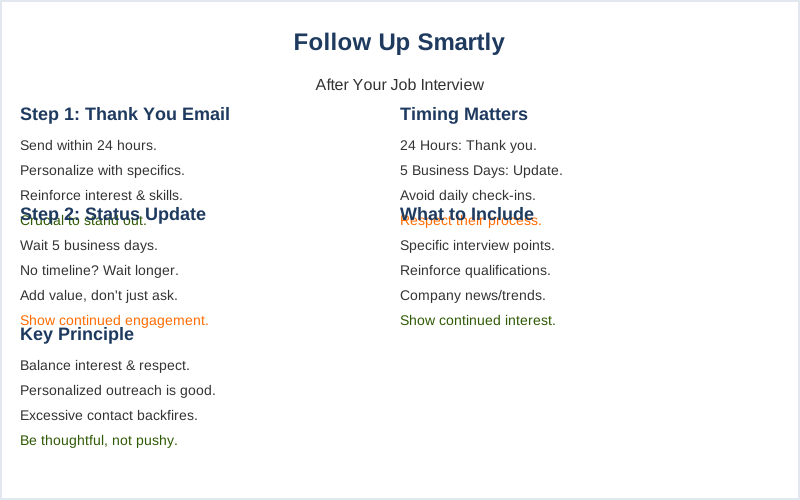
You just finished a great interview, the conversation flowed, and you're feeling confident about the role. Now comes the waiting game. It's easy to fall into the trap of constant checking, but that's a fast track to being labeled "annoying." The key to a successful follow-up after an interview lies in strategic timing and thoughtful communication.
You just finished a great interview, the conversation flowed, and you're feeling confident about the role. Now comes the waiting game. It's easy to fall into the trap of constant checking, but that's a fast track to being labeled "annoying." The key to a successful follow-up after an interview lies in strategic timing and thoughtful communication. This involves not just expressing gratitude but also demonstrating continued interest and adding value.
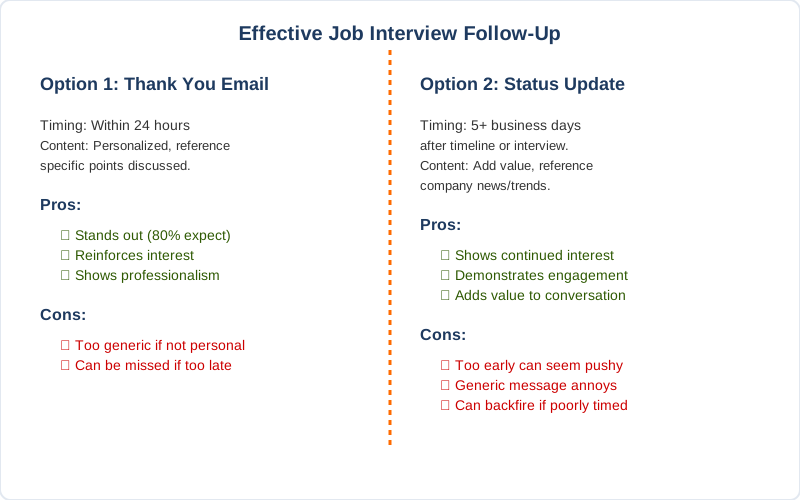
Immediately after the interview, send a personalized thank-you email. This isn't just politeness; it's a crucial step. According to recent career data, 80% of hiring managers expect this within 24 hours, yet only 23% of candidates deliver it, creating a prime opportunity to stand out. This initial email should reference specific points discussed to reinforce your interest and qualifications. For instance, you might mention a particular challenge the team is facing and reiterate how your skills can address it, or recall a shared enthusiasm for a project. Avoid generic subjects like "Thank You"; instead, opt for something clear like "Thank You – [Your Name] – [Position Title]," as suggested by career experts. This immediate outreach sets a professional tone and keeps you top-of-mind.
If you haven't heard back by the timeline they provided, or if no timeline was given, wait at least five business days before sending a status update before following up. Some suggest waiting 10-14 days, but five business days is a good starting point. Avoid generic check-ins; instead, add value by referencing a recent company announcement or industry trend to showcase your continued engagement. For example, you could say, "I saw the recent news about [Company Name]'s expansion into [New Market] and it further solidified my excitement about the potential of this role to contribute to such strategic growth." This demonstrates you're not just waiting, but actively following the company's trajectory. Remember, a well-crafted follow-up email can significantly increase your chances of landing the job by reinforcing your suitability and professionalism.
Key specifications for how to follow up after a job interview without being annoying
## The Real Answer
The core of effective job interview follow-up is striking a balance between demonstrating genuine interest and respecting the hiring manager's process. Recruiters see persistent, personalized outreach as a positive signal, but excessive or generic contact can backfire.
Your first move after any interview is a personalized thank-you email, sent within 24 hours. This isn't just politeness; it's a strategic reinforcement of your qualifications and enthusiasm. Research shows 80% of hiring managers appreciate thoughtful follow-up, yet only 23% of candidates actually send one, creating a significant opportunity to stand out Interview Follow-Up Email: 5 Templates for 2026.
Beyond the initial thank you, limit your follow-up to one or two additional contacts. If you haven't heard back after the initial waiting period, send a brief, polite email referencing your conversation and reiterating your interest. Avoid generic "just checking in" messages. Instead, try to add new value, perhaps by referencing a recent company announcement or industry trend How to Write a Follow Up Email to a Recruiter in 2026. Keep these messages concise, ideally under 150 words for status updates How to Follow Up After an Interview: Email Templates & ....
Respect the stated timeline. If the interviewer said they'd be in touch by Friday, don't reach out on Wednesday. If that deadline passes without word, then it's appropriate to follow up. Understanding what's actually going on behind the scenes - hiring processes can be complex and involve multiple stakeholders - is key to managing your expectations and outreach strategy How To: Follow Up Guide after Interviews - 2025.
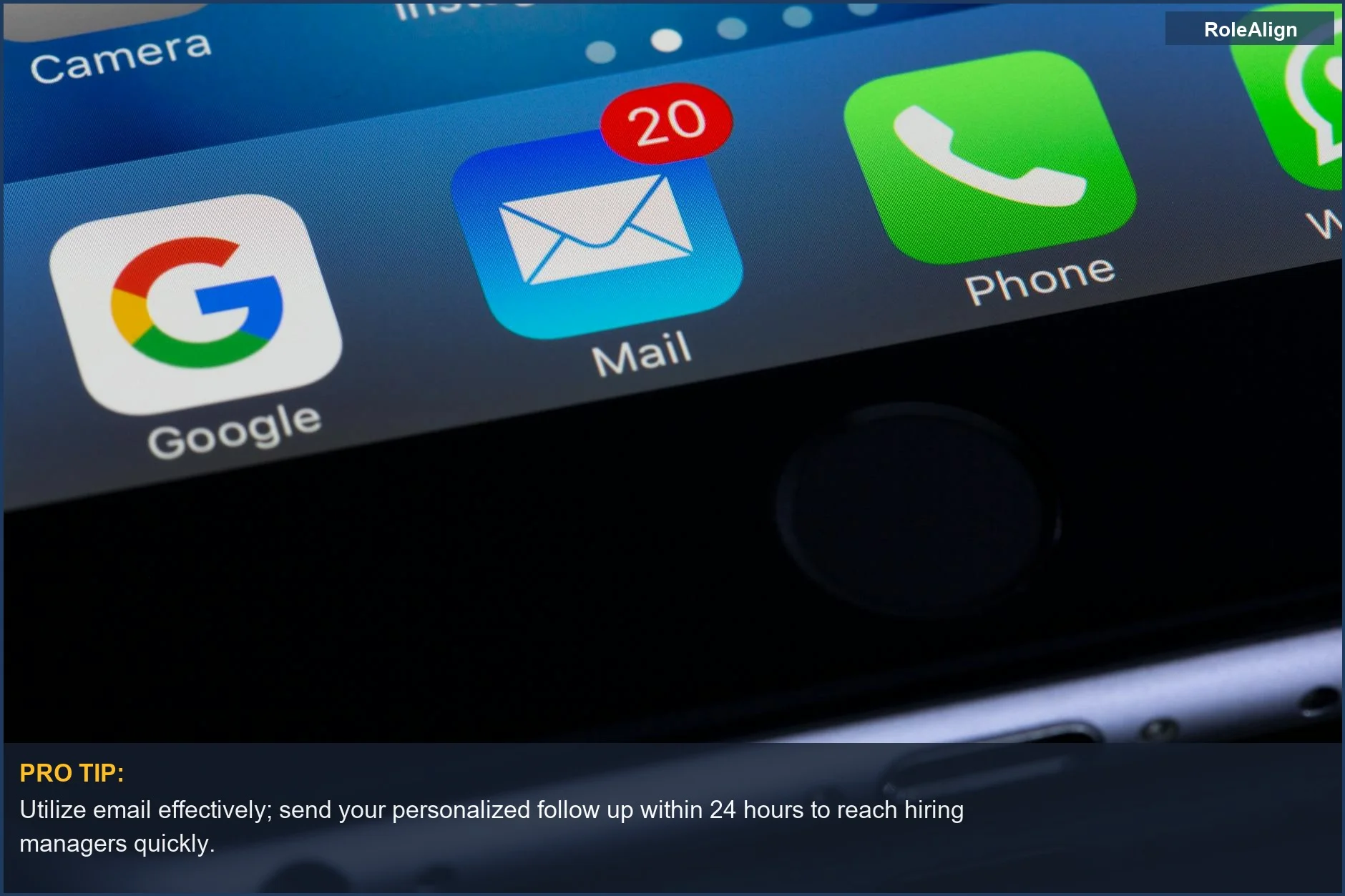
Modern job seekers leverage smartphones for seamless communication. Effectively follow up after your interview to maintain momentum and express continued interest.
| Photo by Tim Samuel
Modern job seekers leverage smartphones for seamless communication. Effectively follow up after your interview to maintain momentum and express continued interest.
| Photo by Tim Samuel
## What's Actually Going On
1
Send a personalized thank-you email within 24 hours. This is non-negotiable. It's your first opportunity to reinforce your interest and professionalism after the interview. Research indicates that 80% of hiring managers expect this, yet only 23% of candidates deliver, creating a significant advantage for those who do. Interview Follow-Up Email: 5 Templates for 2026.
2
Understand the underlying process. While you're waiting, the hiring team is likely engaged in internal discussions, candidate comparisons, and potentially more interviews. For larger enterprises, this can involve multiple layers of HR screening, departmental reviews, and executive approvals, often managed through Applicant Tracking Systems (ATS) that parse resumes for keywords. Smaller startups might have a more fluid, direct decision-making process, but even then, key stakeholders need time to confer. The finance and healthcare industries often have more rigorous, compliance-driven hiring processes, while tech might prioritize immediate feedback and agile decision-making. Seniority level also impacts the timeline, with executive roles typically involving longer evaluation periods.
3
Wait strategically before the first follow-up. Unless a specific timeline was provided during the interview, wait at least 5-7 business days before sending your first status check. Some recommend up to 10-14 days. When to Follow Up After Interview: The Complete Timing Guide. This allows sufficient time for internal deliberations without appearing impatient. Sending a follow-up too soon can be perceived as pushy. When is an appropriate time to check back in with a job?
4
Add value in subsequent follow-ups. If you haven't heard back after the initial waiting period, your next communication shouldn't just be a status inquiry. Instead, connect your follow-up to a recent company announcement, industry trend, or a relevant piece of news that showcases your continued engagement and insight. This demonstrates proactive thinking and keeps you top-of-mind without solely focusing on your own candidacy. How to Write a Follow Up Email to a Recruiter in 2026. Keep these communications concise, ideally under 100 words. How to Write a Follow Up Email to a Recruiter in 2026.
5
Understand the limits of follow-up. A maximum of two follow-up attempts after the initial thank-you is generally advisable. Excessive communication can indeed become annoying and detract from your candidacy. How to Follow Up After an Interview Without Being Annoying. If you still receive no response after these efforts, it's often best to assume the role has been filled or the decision has been made. How To: Follow Up Guide after Interviews - 2025.
Understanding how to make a strong impression in cold emails can also be beneficial when learning how to follow up after an interview.
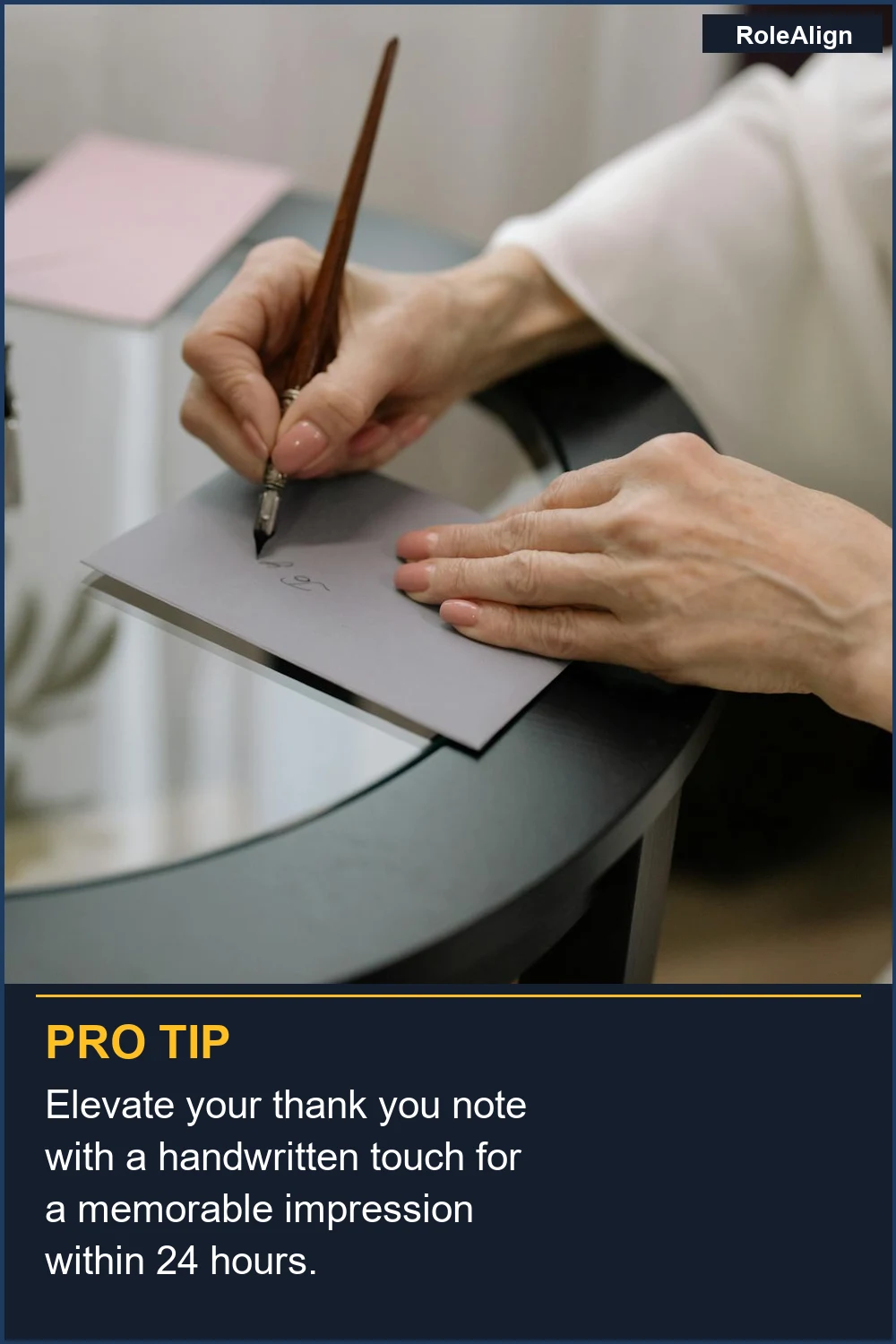
A classic touch in the digital age. Sending a personalized thank you note is a crucial step in your interview follow up strategy.
| Photo by cottonbro studio
A classic touch in the digital age. Sending a personalized thank you note is a crucial step in your interview follow up strategy.
| Photo by cottonbro studio
## How to Handle This
TOPIC: how to follow up after a job interview without being annoying
SECTION: practical_steps — ## How to Handle This
CURRENT CONTENT:
1
Send a personalized thank-you email within 24 hours. Recruiters expect it; 80% of hiring managers appreciate thoughtful follow-up communications How to Follow Up After an Interview: Email Templates & .... It shows you're engaged and professional. Use "Thank You - [Your Name] - [Position Title]" as the subject Interview Follow-Up Email: 5 Templates for 2026. Skipping this misses an opportunity to reinforce your interest and qualifications.
2
Wait 5-7 business days for your first status update, unless a specific timeline was provided. Too soon feels impatient; too late makes you seem uninterested. This timeframe allows recruiters to consolidate feedback. Following up too early can make you appear demanding. Waiting too long risks the role being filled. For senior roles or fast-paced industries, shorten this to 3-5 business days if the interview felt conclusive.
3
Add new value in subsequent follow-ups. If you haven't heard back, offer something new, like a relevant industry article, a company announcement, or a new skill. This demonstrates proactive engagement. 80% of HR managers view follow-ups positively when they add value How to Write a Follow Up Email to a Recruiter in 2026. Repeatedly asking "Any updates?" without new information becomes annoying. Limit yourself to a maximum of two follow-up emails unless otherwise indicated How to Follow Up After an Interview Without Being Annoying.
4
Leverage LinkedIn for specific situations. If your primary contact is active on LinkedIn and you've established a rapport, a concise message can be effective for quick status checks. However, email remains the professional standard. Use LinkedIn cautiously; a poorly worded message can be detrimental. Over-reliance on LinkedIn can make you seem less serious. For executive-level roles or traditional industries, stick to email.
EXPANDED CONTENT:
1
Send a personalized thank-you email within 24 hours. Recruiters expect it; 80% of hiring managers appreciate thoughtful follow-up communications How to Follow Up After an Interview: Email Templates & .... It shows you're engaged and professional. Use "Thank You - [Your Name] - [Position Title]" as the subject Interview Follow-Up Email: 5 Templates for 2026. Skipping this misses an opportunity to reinforce your interest and qualifications. This initial email is your chance to reiterate your enthusiasm for the role and the company. Briefly mention a specific point discussed during the interview that resonated with you, or a skill you possess that directly addresses a need the interviewer mentioned. For instance, if the interviewer highlighted a challenge with a particular project, you could briefly state how your experience in a similar situation could be beneficial. This personal touch goes beyond a generic "thank you" and demonstrates that you were actively listening and are genuinely invested in the opportunity. It's also a good time to correct any minor misstatements you might have made or to add a piece of information you forgot to mention. Keep it concise and error-free. Proofread carefully before sending. This immediate follow-up sets a positive tone for any subsequent communication. Indeed suggests using phrases like "It was a pleasure speaking with you today" to start the email Follow-Up Email After an Interview (Examples and Template).
2
Wait 5-7 business days for your first status update, unless a specific timeline was provided. Too soon feels impatient; too late makes you seem uninterested. This timeframe allows recruiters to consolidate feedback. Following up too early can make you appear demanding. Waiting too long risks the role being filled. For senior roles or fast-paced industries, shorten this to 3-5 business days if the interview felt conclusive. If the interviewer gave you a definitive timeline, such as "We'll be making a decision by the end of next week," then adhere to that schedule. If they said, "We'll be in touch," it's generally best to wait the standard 5-7 business days. This waiting period is crucial; it respects the hiring team's process and avoids appearing overeager. It also gives them ample time to review all candidates and deliberate without feeling pressured. If you haven't heard back by the agreed-upon date or after the standard waiting period, it’s then appropriate to send a polite inquiry. Remember, the goal is to get information, not to pester. LinkedIn also advises waiting for the appropriate amount of time before following up How To Follow Up After a Job Interview in 2026.
3
Add new value in subsequent follow-ups. If you haven't heard back, offer something new, like a relevant industry article, a company announcement, or a new skill. This demonstrates proactive engagement. 80% of HR managers view follow-ups positively when they add value How to Write a Follow Up Email to a Recruiter in 2026. Repeatedly asking "Any updates?" without new information becomes annoying. Limit yourself to a maximum of two follow-up emails unless otherwise indicated How to Follow Up After an Interview Without Being Annoying. Instead of just asking for an update, frame your follow-up around a genuine desire to contribute. For example, you could say, "I saw this article on [relevant topic] and it reminded me of our discussion about [project/challenge]. I thought you might find it interesting." Alternatively, if you've recently acquired a new certification or completed a relevant training program that enhances your qualifications for the role, you can briefly mention it. This shows you're continuously developing and remain keenly interested in the position. It shifts the focus from "Are you ready yet?" to "Here's why I'm still a strong candidate and how I can add value." Coursera suggests that follow-up emails should be concise and highlight your continued interest Follow-Up Emails After an Interview: Scenarios, Samples, ....
4
Leverage LinkedIn for specific situations. If your primary contact is active on LinkedIn and you've established a rapport, a concise message can be effective for quick status checks. However, email remains the professional standard. Use LinkedIn cautiously; a poorly worded message can be detrimental. Over-reliance on LinkedIn can make you seem less serious. For executive-level roles or traditional industries, stick to email. Consider the nature of your interaction with the hiring manager. If your interview was more informal and you connected on LinkedIn during the process, a brief, professional LinkedIn message might be appropriate for a quick check-in. However, if the interview was formal or the industry is more traditional, email is always the safer and more professional choice. A Reddit user suggested calling if it was agreed upon to follow up, as it can show extra commitment process for following up from an interview in December 2025. This highlights that the method of follow-up can also depend on prior agreements and the established communication channels. Always prioritize the communication method the interviewer or recruiter indicated they prefer.
To enhance your follow-up strategy, consider crafting the perfect thank-you email after your interview.
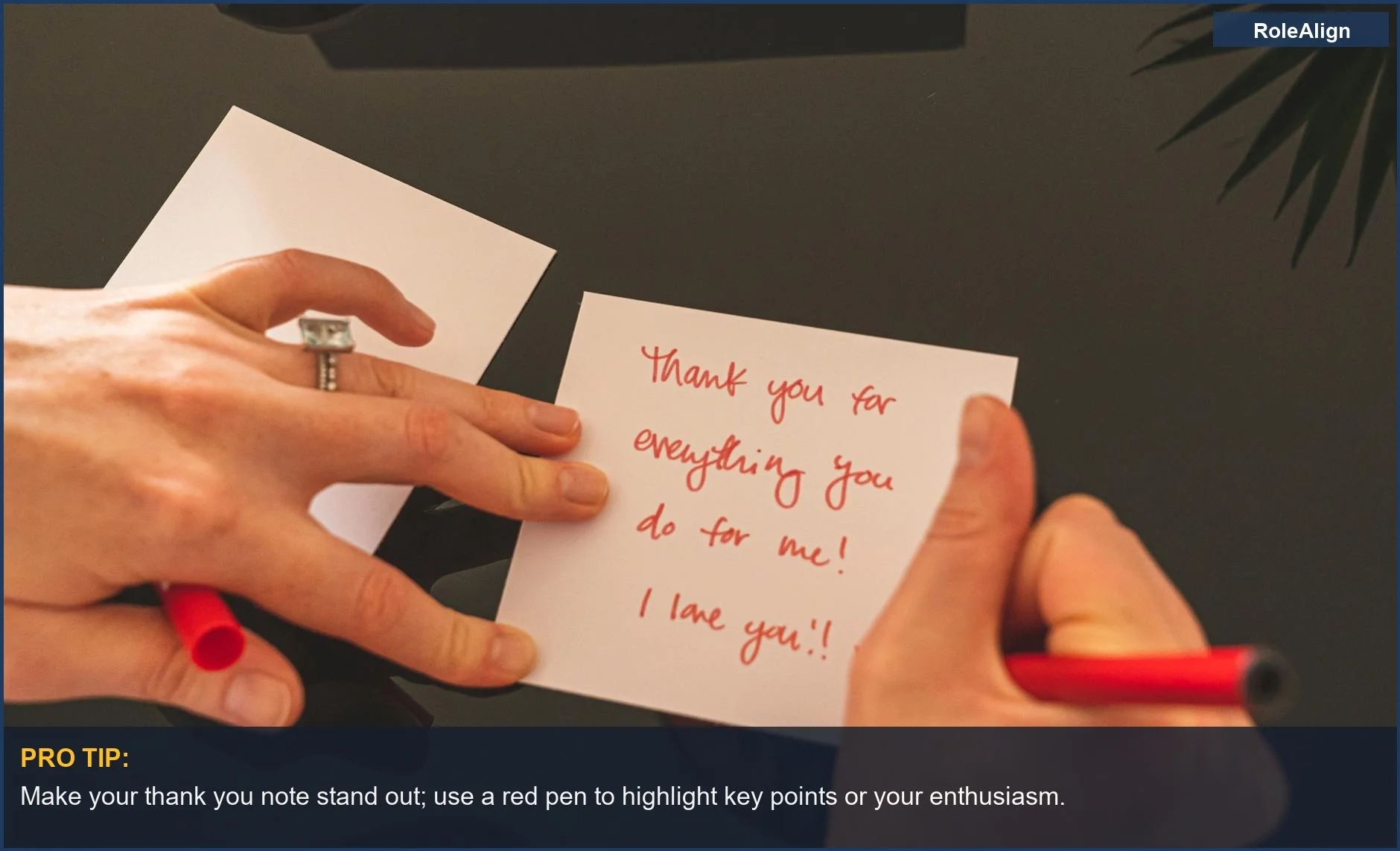
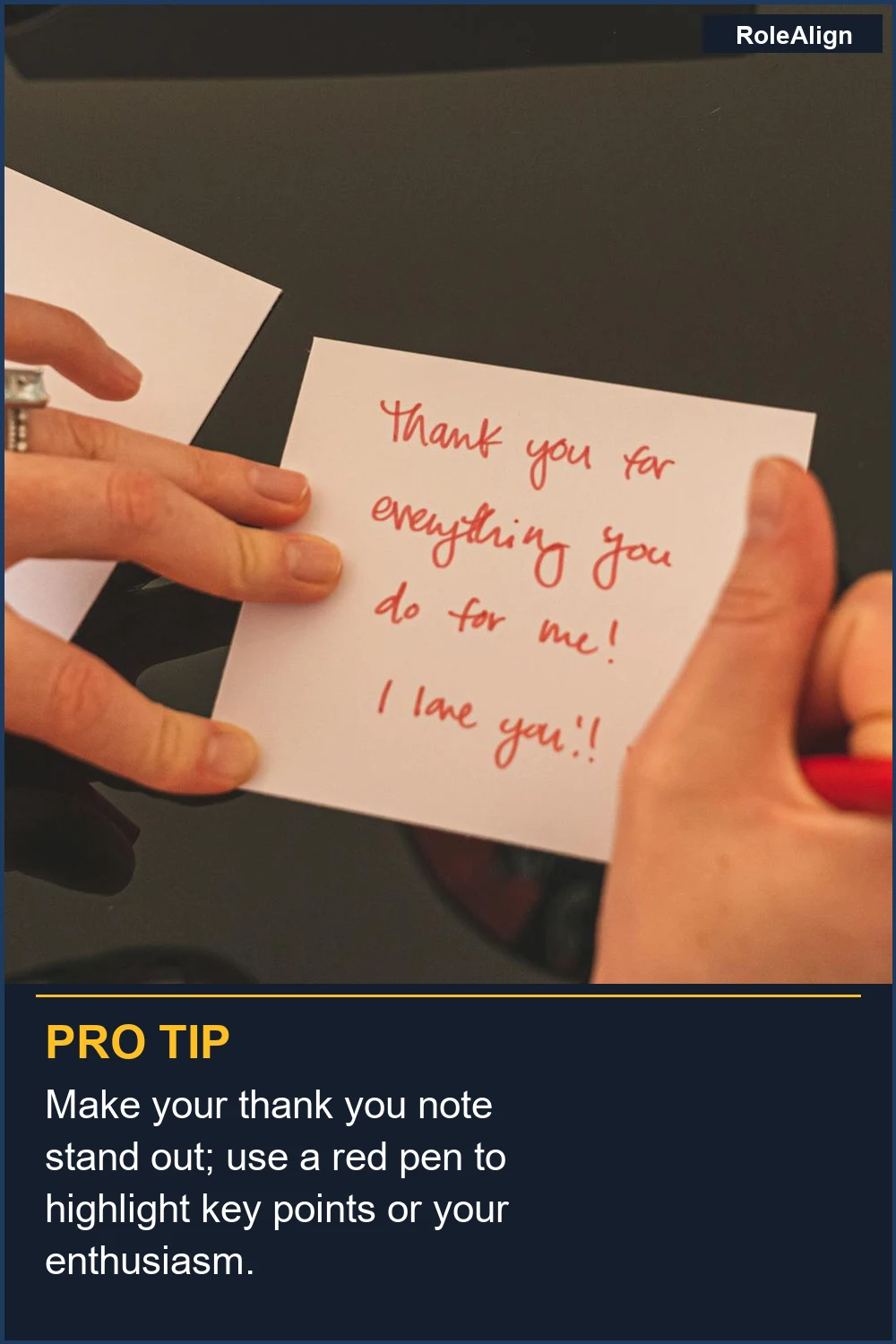
Expressing gratitude with a personal touch. Crafting a heartfelt thank you note is essential for effective interview follow up and shows you care.
| Photo by Castorly Stock
Expressing gratitude with a personal touch. Crafting a heartfelt thank you note is essential for effective interview follow up and shows you care.
| Photo by Castorly Stock
## What This Looks Like in Practice
Immediate Thank You Email. Send a personalized thank-you email within 24 hours of your interview. This reinforces your interest and professionalism, with 80% of hiring managers appreciating this gesture Interview Follow-Up Email: 5 Templates for 2026. Reference specific talking points to make it memorable. A strong subject line, such as "Thank You - [Your Name] - [Position Title]," can also help it stand out from other emails Interview Follow-Up Email: 5 Templates for 2026. Beyond a simple "thank you," this email is an opportunity to briefly reiterate your enthusiasm for the role and mention a specific aspect of the conversation that resonated with you, demonstrating you were engaged and thoughtful.
Strategic Timing for Status Updates. If no timeline was provided during the interview, wait 5-7 business days before sending a follow-up email to inquire about next steps When to Follow Up After Interview: The Complete Timing Guide. If a timeline was given, wait until 1-2 days after that deadline has passed. This shows patience while keeping your application visible. For instance, if the interviewer said they would be in touch by Friday, a follow-up on Monday or Tuesday of the following week is appropriate.
The Two-Touch Rule. After the initial thank you, consider a second follow-up if you haven't heard back within a reasonable period, typically 10 to 14 days after the interview When is an appropriate time to check back in with a job?. Keep this second communication brief and professional, reiterating your enthusiasm for the role. This follow-up can be a simple check-in, asking if there's any further information you can provide that would be helpful in their decision-making process.
Adding New Value. Instead of just asking for an update, try to add new value in your follow-up. This could involve referencing a recent company announcement or an industry trend that aligns with the role How to Write a Follow Up Email to a Recruiter in 2026. This demonstrates proactive engagement and keeps you top-of-mind without appearing pushy. For example, if the company just launched a new product, you could mention how your skills could contribute to its success. Alternatively, if a relevant industry report was released, you could share a key insight that relates to the position you interviewed for. This shows you're not only interested in the job but also in the company's broader success and industry landscape.
To improve your chances of a response, consider sending a thoughtful follow-up email after your interview.
Digital tools are key to a successful job search. Mastering the interview follow up email within 24 hours is a critical step for success.
| Photo by Torsten Dettlaff
Digital tools are key to a successful job search. Mastering the interview follow up email within 24 hours is a critical step for success.
| Photo by Torsten Dettlaff
## Mistakes That Kill Your Chances
Mistake Sending a generic, one-size-fits-all thank you email.
Why candidates make it They think a quick, templated message is enough to show gratitude and interest. It feels efficient when juggling multiple applications.
What recruiters actually see A lack of genuine engagement and attention to detail. This is a missed opportunity to differentiate yourself from other candidates. Recruiters expect a personalized touch; it's a key part of the interview follow-up email process. Personalized openings referencing specific discussion points are crucial.
The fix Always reference specific topics or insights from your conversation. Mentioning a particular project, challenge, or even a shared interest shows you were listening and are genuinely invested. This makes your follow-up email memorable and effective.
Mistake Waiting too long to send a thank you, or following up too frequently.
Why candidates make it Uncertainty about the right timing. Some delay out of fear of seeming pushy, while others, anxious for a response, reach out prematurely.
What recruiters actually see A delayed thank you can make you seem less enthusiastic, while excessive follow-ups can be perceived as desperate or annoying. Knowing when to follow up after an interview is critical. Most hiring managers expect a thank you email within 24 hours after the interview. For status updates, waiting 5-7 business days if no timeline was given is standard practice before a first check-in.
The fix Send a thank you email within 24 hours. If you haven't heard back by the stated deadline, or after 5-7 business days, send a concise follow-up email. Limit yourself to a maximum of two follow-up emails unless otherwise indicated.
Mistake Using a vague or generic subject line.
Why candidates make it They may not realize the importance of the subject line in getting their email opened amidst a busy inbox.
What recruiters actually see Subject lines like "Job Application" or "Following Up" get lost or ignored. A clear, specific subject line is essential for immediate recognition and prioritization. It tells the recruiter exactly who you are and what the email is about, making your follow-up email stand out. A subject like "Thank You: [Position] Interview on [Date]" is much more effective.
The fix Always use a clear and specific subject line, such as "Thank You - [Your Name] - [Position Title]" or "Following Up on [Position] Interview." If possible, reply to the original interview invitation email to keep the thread organized.
Wait appropriately before the first follow-up. Unless a specific timeline was given, aim for 5-7 business days after the interview scientecconsulting.com. Some suggest waiting up to 10-14 days reddit.com.
The single most important thing a recruiter would tell you off the record? Persistence without being a pest. They want to see you're genuinely interested and proactive, but not so much that it becomes a distraction. Show them you're a problem-solver, not a problem.
To enhance your follow-up strategy, understanding when to follow up after submitting an application is crucial.
Frequently Asked Questions
How long should I wait to check in after a job interview?
Generally, it's best to wait about 5-7 business days after your interview before sending a follow-up email, especially if no specific timeline was provided. If the interviewer mentioned a timeframe for their decision, wait until 1-2 days after that deadline has passed. This allows them sufficient time to review candidates without seeming impatient.
What should I include in a follow-up email after an interview?
Your interview follow-up email should be concise and professional, typically under 200 words. Start with a clear subject line like 'Thank You - [Your Name] - [Position Title]' and personalize the opening by referencing a specific topic discussed during your interview. Briefly reiterate your qualifications and enthusiasm for the role to reinforce why you're a strong candidate.
Is it okay to follow up more than once after an interview?
Yes, it's generally acceptable to follow up a second time if you haven't heard back after your initial follow-up, but be strategic. Aim for a maximum of two follow-ups in total. If you haven't received a response after the second attempt, it might be best to assume they are not moving forward at this time.
If I don't hear back after an interview, does that mean I didn't get the job?
Silence after an interview doesn't always mean rejection; there can be many reasons for delays, such as a high volume of candidates or internal hiring process adjustments. However, if you've sent a polite follow-up after waiting the appropriate amount of time (typically 5-7 business days) and still receive no response, it's more likely they've moved on.
Should I send a follow-up by email or call after an interview?
Email is the most common and generally preferred method for interview follow-ups due to its professionalism and documentation. However, if the interviewer specifically suggested a phone call for follow-up or if it was agreed upon during the interview, then a phone call would be appropriate. Always start with email unless otherwise directed.
R
RoleAlign Team
Experienced car camper and automotive enthusiast sharing practical advice.