What Employers Do Not Tell You About Probation Periods (2026 Complete Guide)
RoleAlign Team
14 min read
Prices verified February 2026
Includes Video
You've just received *the* offer. The one you've been chasing for months, involving late nights prepping your resume and countless hours navigating applicant tracking systems (ATS). It's exciting, but then you see it: "This offer is contingent upon successful completion of a 90-day probationary period." Suddenly, that celebratory feeling is tinged with anxiety.
You've just received the offer. The one you've been chasing for months, involving late nights prepping your resume and countless hours navigating applicant tracking systems (ATS). It's exciting, but then you see it: "This offer is contingent upon successful completion of a 90-day probationary period." Suddenly, that celebratory feeling is tinged with anxiety. What does that really mean for you? Employers often present this as a simple assessment phase, a chance for both sides to ensure a good fit Probationary Periods: FAQs & Common Misconceptions | SPARK Blog. However, the reality is far more nuanced, and often, what employers don't explicitly state can have significant implications for your employment rights. This period, typically around 90 days Probationary periods present potential legal pitfalls, so be prepared, isn't just a formality; it's a critical juncture where specific rules apply, and understanding them is paramount, especially with upcoming legislative changes that will impact unfair dismissal rights Probationary periods: What employers need to know about ESA. You need to know your probation period rights before Day One.
While presented as a mutual evaluation, this period often grants employers greater flexibility in terminating employment. Unlike established employees who may benefit from more robust protections against unfair dismissal, those on probation might find their rights more limited. Employers are typically looking for evidence of poor performance, misconduct, or a failure to meet basic job requirements during this time The Employment Probationary Period: 2026 Guide - Factorial. However, the way this "assessment" is conducted and documented can be crucial. Furthermore, employers risk inadvertently creating an implied contract if they explicitly state or imply certain assurances during the probationary phase Probationary periods present potential legal pitfalls, so be prepared. Some handbook policies establishing a "probationary" period could even increase employer liability if they aim to end employment prematurely Avoid Probationary Period in Employee Handbooks - MRA. As legislative landscapes shift, particularly with impending changes to unfair dismissal rights in 2026 Probationary periods: What employers need to know about ESA, understanding the nuances of your probationary employment is more critical than ever. It's not just about proving you're a good fit; it's about knowing the specific protections, or lack thereof, that apply to your situation from the outset.
Key specifications for What Employers Do Not Tell You About Probation Periods
## The Real Answer
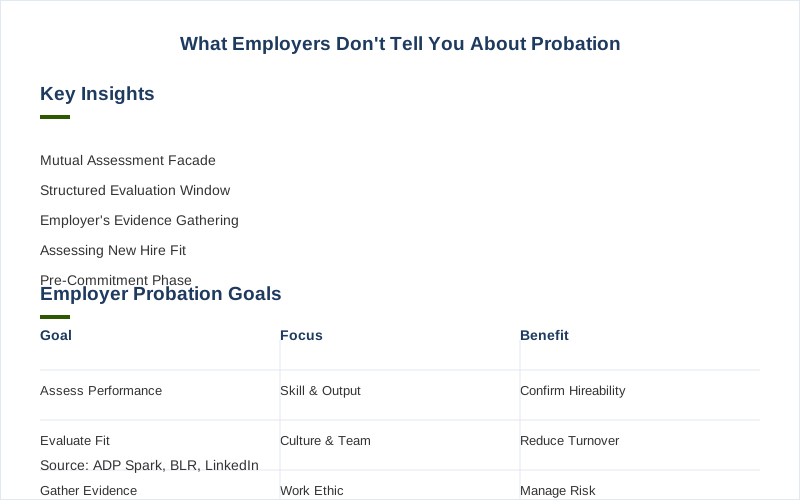
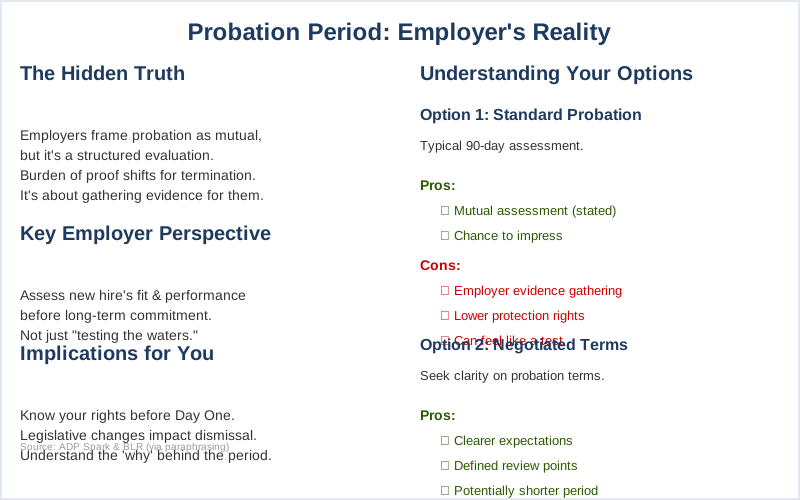
Employers often frame probationary periods as a mutual assessment, but the reality from their side is a structured evaluation window where the burden of proof for termination shifts. While candidates see it as a two-way street, employers view it as a critical, albeit risky, phase to confirm a hire before significant commitment.
The core employer perspective is that a probationary period is primarily a tool to assess a new hire's fit and performance before making a long-term commitment. It's not about "testing the waters" for the employee as much as it is for the employer to gather evidence. While it's true employees can also assess the role, the employer's focus is on mitigating their risk.
Many candidates assume they have zero rights during this time, but this is a dangerous misconception. While employment-at-will states allow termination for almost any reason, employers still run the risk of inadvertently creating an implied contract if not handled carefully Probationary periods present potential legal pitfalls, so be prepared. This means even during a probationary period, a termination can lead to legal disputes if it's perceived as unlawful.
Employers know that to terminate an employee during probation, they generally need to show evidence of poor performance, misconduct, or a failure to meet job expectationsThe Employment Probationary Period: 2026 Guide - Factorial. Simply deciding "they're not a good fit" without documented issues can be problematic. This is why many companies are advised to avoid explicit "probationary period" language in handbooks, as it can increase liability Avoid Probationary Period in Employee Handbooks - MRA.
The common understanding is that a probationary period is a set amount of time, typically around 90 days, for evaluation Probationary periods present potential legal pitfalls, so be prepared. However, what employers don't always communicate is the legal scrutiny they face if a termination during this period is challenged. They are aware that without proper documentation and clear expectations set from day one, they could face claims of unfair dismissal, especially with upcoming legislative changes like the Employment Rights Bill Probationary periods: What employers need to know about ESA. Understanding your probation period rights is crucial.
Navigating your probationary period requires understanding your rights. Many employers don't disclose that proof of poor performance is often needed for termination.
| Photo by Kampus Production
Navigating your probationary period requires understanding your rights. Many employers don't disclose that proof of poor performance is often needed for termination.
| Photo by Kampus Production
## What's Actually Going On
1
The Applicant Tracking System (ATS) is your first hurdle. While not directly involved in the probationary period itself, the ATS determines if your resume even gets seen by human eyes. Recruiters often set keyword filters based on the job description. If your resume lacks terms like "project management," "data analysis," or specific software proficiencies, it might be automatically rejected before a human ever considers your potential fit or probationary period.
2
Recruiters screen for immediate red flags and core competencies. Beyond ATS parsing, recruiters are looking for evidence that you can do the job and haven't been fired for cause in previous roles. They scan for clear career progression, relevant experience, and a history of stability. For tech roles, they might check GitHub profiles; for finance, specific certifications. A probation period rights discussion is irrelevant if you don't pass this initial human screen.
3
Hiring committees weigh cultural fit and long-term potential. Once past the recruiter, the hiring manager and team assess your alignment with the company's values and team dynamics. This is where the "can you be fired during probation period" question becomes more nuanced. They're not just looking at skills but also at your problem-solving approach, communication style, and how you handle feedback - all critical during a trial.
4
Company size and industry significantly alter the process. Startups often have more fluid probationary periods, where a quick assessment of immediate impact is key. Enterprise companies, with more established HR processes, may have stricter guidelines but also more formal feedback mechanisms. In tech, rapid learning is paramount. In finance, adherence to strict regulations is non-negotiable. Healthcare might focus heavily on patient care and compliance.
5
Seniority level impacts the perception of risk. For entry-level roles, the probationary period is a clear assessment of foundational skills and trainability. For senior positions, employers expect a higher degree of autonomy and immediate contribution. The risk for the employer is greater, so they scrutinize leadership potential and strategic thinking more intensely. Employers must show evidence of poor performance, misconduct, or a failure to meet job expectations during this time Factorial.
6
Legal implications are often underestimated. While many believe they have carte blanche to terminate during probation, this isn't always true. Employers can inadvertently create an implied contract if statements or policies suggest guaranteed employment after the period BLR. This is why clearly defining expectations and documenting performance is crucial, even if you're within the typical 90-day window. Knowing your probationary period what to know is vital for both parties.
Understanding how the ATS works can also shed light on background check insights that might affect your job offer.
Reviewing your performance data is crucial when facing a probationary period. Know that you can be fired during probation with little notice if goals aren't met.
| Photo by Tiger Lily
Reviewing your performance data is crucial when facing a probationary period. Know that you can be fired during probation with little notice if goals aren't met.
| Photo by Tiger Lily
## How to Handle This
1
Understand the Employer's Probationary Period Goal - Employers use probation periods primarily to assess if a new hire is a good fit for the role and company cultureProbationary Periods: FAQs & Common Misconceptions | SPARK Blog. They want to confirm performance, behavior, and overall suitability before making a long-term commitment Probationary periods present potential legal pitfalls, so be prepared. Skipping this understanding means you might focus on the wrong things, missing crucial feedback and appearing unaware of their evaluation criteria. This is especially true in high-turnover industries like retail or customer service where rapid adaptation is key.
2
Proactively Seek Feedback and Clarify Expectations Early - Don't wait for formal reviews; schedule informal check-ins within your first two weeks, especially for technical or management roles where complex deliverables are common. Ask specific questions about your progress, any perceived challenges, and how you can better align with team goals. This demonstrates initiative and a commitment to succeeding, which recruiters value as it signals a low-risk hire. If you skip this, you risk misinterpreting feedback or unknowingly heading towards poor performance, increasing your chances of being fired during probation period.
3
Document Everything and Be Aware of Your Probation Period Rights - Keep a record of all feedback, performance reviews, and any significant project contributions. If you feel you're being unfairly evaluated, or if termination seems imminent without clear cause, this documentation is crucial. Many employers mistakenly believe they have absolute power during probation, but laws often require evidence of poor performance or misconductThe Employment Probationary Period: 2026 Guide - Factorial. Failing to document can leave you with no recourse if you're terminated without just cause, especially with upcoming changes to unfair dismissal rights Probationary periods: What employers need to know about ESA.
4
Understand the "Implied Contract" Risk for Employers - Be aware that explicitly stating or implying guaranteed employment after probation can create an implied contract, increasing employer liability if they terminate you Probationary periods present potential legal pitfalls, so be prepared. While you can't leverage this directly to guarantee your job, understanding this legal nuance means employers are often more cautious about terminations than they let on. If you skip this awareness, you might accept dismissive explanations without questioning them, missing an opportunity to advocate for yourself based on potential employer risk. For entry-level positions, this nuance is less pronounced than for senior roles where longer-term commitments are assumed.
Job interviews are key for understanding the employer's perspective on probation. Employers use this time to assess fit, so be prepared to showcase your value.
| Photo by Tima Miroshnichenko
Job interviews are key for understanding the employer's perspective on probation. Employers use this time to assess fit, so be prepared to showcase your value.
| Photo by Tima Miroshnichenko
## What This Looks Like in Practice
Senior Data Scientist at a FinTech Unicorn A candidate excelled in technical interviews and coding challenges, demonstrating strong analytical skills. However, during the initial weeks, they struggled to adapt to the company's proprietary data pipeline and reporting tools, leading to significant delays in project deliverables. Despite extensive onboarding and peer support, the inability to quickly master these specific systems resulted in their departure shortly after the probationary period concluded.
Entry-Level Marketing Coordinator at a Large Retailer This individual showed great enthusiasm and creativity in brainstorming sessions. Their downfall came from a consistent failure to adhere to brand guidelines and submission deadlines for marketing materials. While feedback was provided repeatedly, the pattern of minor but frequent errors persisted, ultimately leading to the termination of their employment during the probationary phase.
Junior Software Engineer at a Health Tech Startup The engineer possessed a solid understanding of core programming concepts and demonstrated a willingness to learn. Unfortunately, they consistently misunderstood the team's agile workflow and struggled with effective communication during daily stand-ups and sprint reviews. This lack of clear communication and integration into the team's collaborative process meant their contributions were often misaligned with project goals, leading to their dismissal before the end of their initial evaluation period.
Product Manager (Career Changer) at a SaaS Company Coming from a non-technical background, this individual brought a fresh perspective and strong user empathy. However, they underestimated the technical complexities involved in product development and often proposed features that were infeasible within the development team's capacity. Despite attempts to bridge the gap with technical leads, the persistent disconnect between product vision and technical reality led to a mutual decision that the role was not the right fit.
Navigating maternity leave can sometimes lead to complex situations, making it crucial to understand termination of employment issues.
Adapting to new systems is vital during probation. This woman's focus illustrates the learning curve, as being fired during probation can occur if adaptation fails.
| Photo by Kampus Production
Adapting to new systems is vital during probation. This woman's focus illustrates the learning curve, as being fired during probation can occur if adaptation fails.
| Photo by Kampus Production
## Mistakes That Kill Your Chances
Mistake Believing the probationary period is a "get out of jail free" card for employers.
Why candidates make it Many candidates assume employers can fire them for any reason during this time, often fueled by anecdotal evidence or outdated information. They might not realize that even during probation, employees still have fundamental rights.
What recruiters actually see Recruiters see a candidate who underestimates the legal complexities of terminations. They worry the candidate might not understand their own rights or the employer's obligations, leading to potential disputes. This lack of awareness can signal a lack of professionalism or thoroughness.
The fixResearch your rights before accepting an offer. Understand that while employers have more leeway, terminations during a probationary period still require justification, especially concerning protected characteristics or potential discrimination. A probationary period is typically a set amount of time-generally 90 days-during which an employer evaluates a new employee's performance, behavior, and overall fit for the position. [Source Name]
Mistake Treating the probationary period as solely an employer's evaluation tool.
Why candidates make it New hires often focus on impressing the employer, overlooking that probation is a two-way street. They might not consider their own needs or whether the role aligns with their career goals.
What recruiters actually see Recruiters notice candidates who are overly deferential or don't ask critical questions about the role, team, or company culture. This can suggest a lack of critical thinking or that the candidate hasn't truly assessed if the job is a good fit for them. They want to see an employee who is actively evaluating the opportunity.
The fixActively assess the fit from your perspective. Use this time to understand if the role, management style, and company culture align with your expectations and career aspirations. Remember, you can also decide the role isn't for you. [Source Name]
Mistake Assuming vague handbook language about probation is harmless.
Why candidates make it Candidates may not scrutinize employee handbooks, or they might believe that "probationary" simply means a short trial period without deeper implications. They don't realize certain wording can inadvertently create contractual obligations for the employer.
What recruiters actually see Recruiters are aware that poorly worded handbook policies, such as using terms like "probationary" and "permanent" employee, can increase employer liability. [Source Name] They look for candidates who understand that clear contract terms are crucial. A handbook policy that establishes a "probationary" period could increase the liability for employers who want to end employment during this time. [Source Name]
The fixScrutinize the employment contract and handbook for clear definitions of the probationary period and its implications. Understand that employers must show evidence of poor performance, misconduct, or a failure to meet job expectations if they wish to terminate during this phase. [Source Name]
Mistake Forgetting about specific rights for different career stages.
Why candidates make it New graduates might feel they have fewer rights due to less experience, while senior hires might assume their track record shields them from scrutiny. Both can underestimate the formal processes involved.
What recruiters actually see Recruiters recognize that while general probation principles apply, the context can shift. For instance, federal regulations regarding probationary periods for initial appointments are evolving, potentially impacting how terminations are handled. [Source Name] They look for candidates who understand these nuances and are prepared for structured feedback and performance reviews, regardless of their career level.
The fixTailor your understanding to your career stage. If you are a new graduate, focus on learning and demonstrating your foundational skills. If you are a senior hire, leverage your experience to proactively identify and address potential challenges, and ensure you understand the employer's performance management framework.
Understanding these mistakes is crucial, especially when considering how they might relate to issues like pay discrimination.
Product comparison for What Employers Do Not Tell You About Probation Periods
## Key Takeaways
Probationary periods are not a legal shield for employers. While often seen as a way to easily terminate new hires, employers still need a documented, legitimate reason such as poor performance, misconduct, or failure to meet job expectations The Employment Probationary Period: 2026 Guide - Factorial. Simply put, you can be fired during probation, but the employer still bears risk if the termination is unjustifiable.
Know your rights on day one. Employees have fundamental employment rights from their first day, regardless of a probationary status. Changes to unfair dismissal rights in 2026 mean it's crucial to understand your probation period rights before you even start Probationary periods: What employers need to know about ESA.
The single most important thing a recruiter would tell you off the record? Document everything. Your performance, your feedback, your achievements - keep a clear record. This isn't just about proving your worth; it's about having evidence to counter any unfair dismissal claims if you're fired during probation period.
Understanding probation periods can also help clarify what constitutes wrongful termination in the workplace.
Frequently Asked Questions
Can an employer fire me for any reason during my probation period?
While employers often feel they have more leeway to terminate employees during probation, this isn't always the case. Even during this initial period, employees are still protected from unlawful discrimination or termination for illegal reasons. If you believe you were fired for an illegal reason, you may still have grounds for a wrongful termination lawsuit.
Does saying 'probation period' mean I'm not a permanent employee even after it ends?
Using terms like 'probationary' and 'permanent' can inadvertently create a perception of guaranteed employment after the initial period. Some companies avoid these terms in their handbooks to prevent implying a contract and maintain employment-at-will status. It's important to understand that the probationary period is a trial, but completing it doesn't automatically grant permanent status unless explicitly stated.
What do employers *not* tell you about probation periods regarding performance reviews?
Employers often don't explicitly state that they should be arranging performance review meetings before your probation period expires. These reviews are crucial for documenting your progress and identifying any issues, which can be important evidence if termination is considered. Failing to conduct these reviews can weaken an employer's position if they decide to end your employment.
Are there any special rights I have when I'm on probation?
While the probationary period is a trial, you still possess fundamental employment rights from day one. These include protection against discrimination and the right to fair treatment. The probationary period itself doesn't negate these basic protections, and employers must still adhere to employment laws.
What's the biggest risk employers take when using probation periods?
A significant risk employers face is inadvertently creating an implied contract through their probation policies. If an employer explicitly states or implies that employment is guaranteed after the probationary period, it could lead to legal challenges if they later decide to terminate the employee. This can create confusion and increase their liability.
R
RoleAlign Team
Experienced car camper and automotive enthusiast sharing practical advice.