Hiring Discrimination

Why Diversity Hiring Programs Don't Always Help (2026 Complete Guide)

RoleAlign Team
14 min read
Prices verified February 2026
Includes Video

You just received another rejection email. Staring at the generic text, you wonder if your resume, meticulously tailored for a role that explicitly asked for diverse candidates, even made it past the initial screening. You're not alone. Despite the widespread adoption of diversity hiring programs, many job seekers and HR professionals alike are questioning their effectiveness, facing the reality that these initiatives don't always help and can even lead to disillusionment .

You just received another rejection email. Staring at the generic text, you wonder if your resume, meticulously tailored for a role that explicitly asked for diverse candidates, even made it past the initial screening. You're not alone. Despite the widespread adoption of diversity hiring programs, many job seekers and HR professionals alike are questioning their effectiveness, facing the reality that these initiatives don't always help and can even lead to disillusionment.

The landscape of diversity, equity, and inclusion (DEI) hiring has become fraught with challenges. Federal executive orders in early 2025, coupled with increasing legal scrutiny, have forced companies to re-evaluate their practices and defend their hiring strategies. While 44% of U.S. workers remain comfortable discussing inclusion efforts, the perception persists that many diversity programs fail to achieve their stated goals. The issue often lies not in a lack of diverse talent, but in the unchanged systems and mindsets that shape hiring processes. This article explores why diversity hiring problems persist and how companies can navigate these complexities.

The promise of diversity hiring is to create more equitable workplaces, but the execution often falls short. Research suggests that simply aiming to increase representation doesn't automatically translate to success; in fact, a study indicated that women and people of color could receive diminished performance and competence ratings when they advocated for hiring more members of their own groups, highlighting a potential backlash or unintended consequence within the process. Furthermore, the focus has shifted from DEI as a purely social cause to a measurable, legally compliant strategy that drives performance and aligns with regulations like Title VII, as emphasized by the EEOC's evolving stance in 2026. Many leaders have learned that a superficial approach to diversity and inclusion carries significant risks by 2026. The fundamental problem is that the underlying systems, structures, and ingrained mindsets that govern hiring often remain unchanged, creating a barrier to genuine inclusion even when diverse talent is available. This article will delve into these persistent issues and explore how companies can move towards more effective and equitable hiring practices that truly foster diversity.
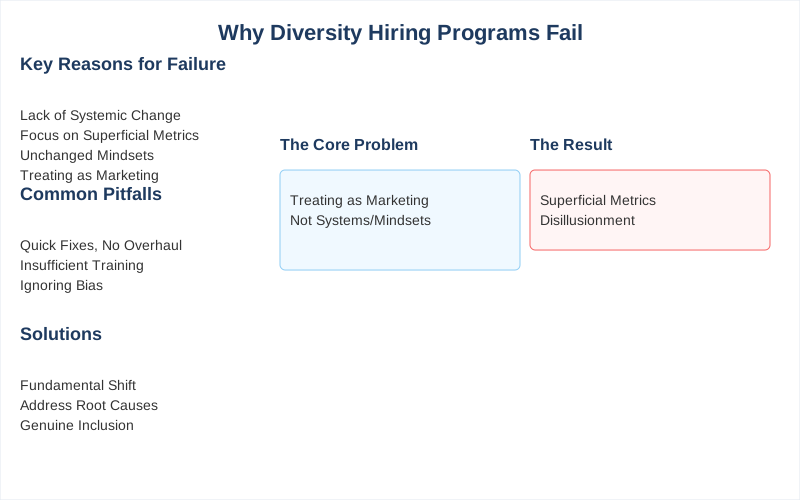
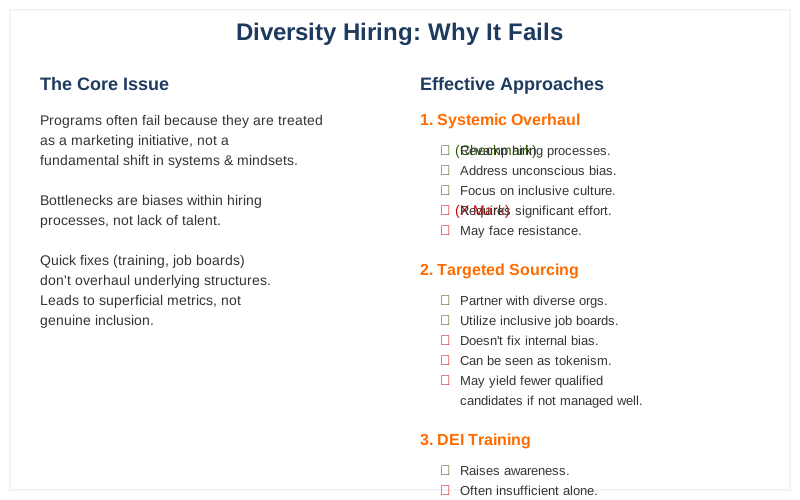
Infographic comparing diversity hiring programs' effectiveness and limitations.
Key specifications for Why Diversity Hiring Programs Don't Always Help

The Real Answer

Diversity hiring programs often fail because companies treat them as a marketing initiative rather than a fundamental shift in systems and mindsets.

Recruiters and HR professionals know the bottleneck isn't a lack of diverse talent, but rather biases within hiring processes. Many organizations implement diversity programs as a quick fix-a few training sessions or posting on niche job boards-without overhauling the underlying structures that perpetuate homogeneity. This leads to superficial diversity metrics but fails to create genuine inclusion, resulting in high turnover. This approach yields diversity programs ineffective outcomes.

Candidates assume diversity programs level the playing field. However, recruiters face deeply embedded human bias in resume screening, interviews, and defining "cultural fit." Even well-intentioned diversity programs falter if hiring managers' mindsets aren't transformed. Managers may resist directives limiting their autonomy, leading to selective application of assessment tools Why Diversity Programs Fail. This disconnect between stated goals and practice drives these issues.

Focusing solely on the number of diverse hires without fostering an inclusive environment creates "fake hiring." Individuals from underrepresented groups are hired but don't feel supported or see growth opportunities, leading them to leave. DEI hiring must be more than a compliance checkbox; it requires cultivating a culture where everyone feels valued and has an equal opportunity to succeed. Shifts in federal policy and EEOC actions in 2025 highlight that organizations must defend their hiring practices more rigorously EEOC's New Approach to DEI: What Employers Must Know in 2026.

The critical insight for recruiters is that true inclusion requires systemic change. Without addressing biases in job descriptions, interview questions, and performance evaluations, diversity initiatives will struggle. The focus must shift from attracting diverse candidates to ensuring they are equitably assessed and retained. This approach is essential for moving beyond traditional diversity programs and building truly inclusive workplaces Why Diversity Recruitment Fails - and How Companies Can Fix It.

Understanding these pitfalls can also shed light on how algorithms discriminate in hiring without detection.
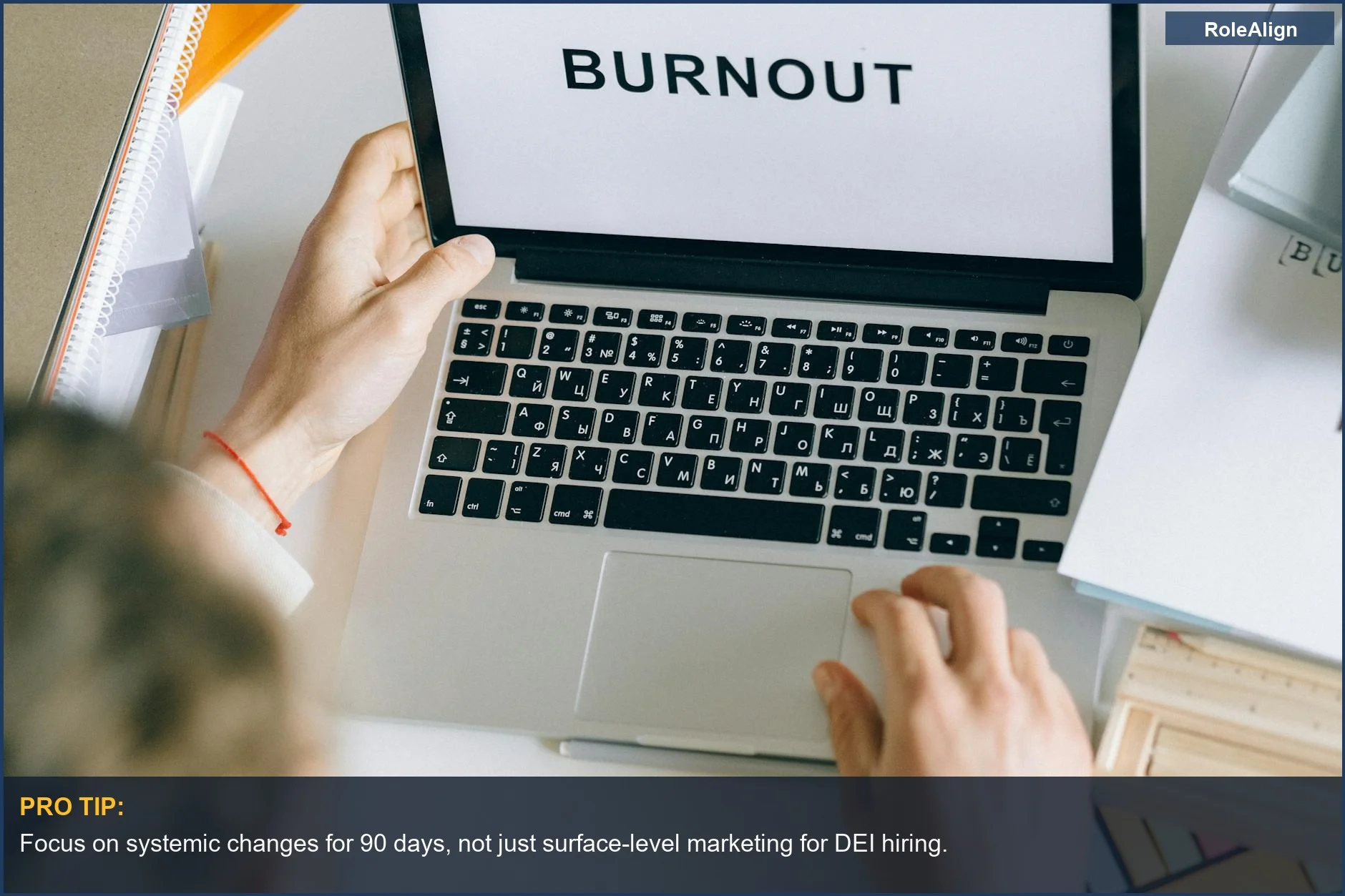
Focus on systemic changes for 90 days, not just surface-level marketing for DEI hiring.
When diversity programs are treated as marketing, burnout can occur. Companies often see diversity hiring problems when initiatives lack deep integration. | Photo by Nataliya Vaitkevich

What's Actually Going On

1
ATS parsing - Applicant Tracking Systems (ATS) parse resumes for keywords and specific experience. If a resume doesn't explicitly match pre-defined criteria, often shaped by historical hiring, candidates can be filtered out before a human sees their application, hindering diversity hiring. This can be particularly problematic for candidates from non-traditional educational backgrounds or those with experience gained through non-standard career paths, as their resumes might not contain the exact phrasing or sequence of experience that the ATS is programmed to recognize. For instance, an ATS might be calibrated to look for "Project Management Professional" when a candidate has extensive, equivalent experience managing complex projects but lacks the formal certification or uses different terminology.
2
Recruiter screening biases - Recruiters, under time constraints, often rely on implicit biases. They may favor candidates who resemble past hires or articulate experience similarly, overlooking qualified candidates from underrepresented backgrounds whose paths or styles differ. This can manifest as a preference for candidates who attended similar universities, worked at comparable companies, or even share similar communication styles. The unconscious tendency to gravitate towards the familiar can inadvertently exclude individuals who possess the necessary skills and potential but present their qualifications in a way that deviates from the established norm.
3
Hiring committee decision-making - Without structured criteria, hiring committee discussions can become subjective, allowing biases to creep in through assessments of "cultural fit" or rapport. Research indicates managers may selectively use tests to justify pre-existing preferences, hindering diversity hiring Why Diversity Programs Fail. For example, a committee might perceive a candidate as not fitting in due to differences in communication style or social interaction, rather than objectively assessing their skills and potential contributions. The concept of "cultural fit" can easily become a proxy for similarity, favoring individuals who are perceived as easier to get along with, which often correlates with shared backgrounds and experiences. This subjective evaluation process undermines the goal of bringing in diverse perspectives and talents.
4
Company size and industry variations - Diversity hiring effectiveness varies by company size and industry. Startups may lack formal tracking, while enterprises can face bureaucracy. Tech's focus on specific skills can overlook transferable abilities. Finance's traditional norms and healthcare's certification emphasis present unique challenges. In smaller organizations, informal networks might dominate hiring, potentially perpetuating existing homogeneity. Larger corporations, while often having more formal diversity initiatives, can get bogged down in complex approval processes or a disconnect between stated diversity goals and actual implementation. Industries with stringent credentialing requirements, like healthcare, might face hurdles in diversifying their workforce if those credentials are not accessible to all demographics.
5
Seniority level impact - At seniority levels, networking and subjective evaluations of leadership style allow biases to influence outcomes. A study found that when initiatives pushed for more underrepresented hires, women and people of color sometimes received diminished ratings, suggesting backlash or biased perception. This phenomenon highlights a potential unconscious resistance to change, where perceived efforts to increase diversity can lead to increased scrutiny or a re-evaluation of existing talent through a lens that subtly disadvantages those from underrepresented groups. The subjective nature of assessing leadership potential and "executive presence" at higher levels makes it particularly susceptible to ingrained biases.
6
Systemic inertia - Many diversity programs fail because underlying systems, structures, and mindsets haven't changed Why Diversity Recruitment Fails - and How Companies Can Fix It. Companies may use outdated job descriptions or treat diversity hiring as marketing. An evolving regulatory landscape forces companies to defend hiring practices, making a legally compliant, performance-driven approach essential, as SHRM notes SHRM. This means that simply implementing a diversity program without fundamentally altering the hiring processes, the organizational culture, and the unconscious biases that permeate decision-making is unlikely to yield significant or sustainable results. The focus must shift from merely ticking boxes to embedding inclusive practices into the very fabric of talent acquisition and management, ensuring that diversity is seen as a driver of performance and innovation, rather than a compliance obligation or a superficial initiative. As the EEOC's stance on DEI evolves, a strategy aligned with Title VII becomes crucial for reducing risk and fostering genuine inclusion EEOC's New Approach to DEI: What Employers Must Know in 2026.
Understanding how ATS function can also shed light on the nuances of age discrimination in hiring.
Implement blind resume reviews for at least 25% of applications to reduce bias.
Conflict arises when diversity programs are ineffective. This image shows the frustration of diverse employees facing systemic issues, not true inclusion. | Photo by Antoni Shkraba Studio

How to Handle This

1
Reframe DEI as a performance driver, not a compliance checkbox - Tie diversity initiatives to measurable outcomes like improved innovation, customer satisfaction, or talent retention. When diversity programs drive better business results, they gain executive buy-in and are more likely to be sustained. I&D Is About Performance, Not Causes - SHRM.

What goes wrong if you skip it: Treating DEI hiring solely as a compliance issue risks superficial efforts that don't change underlying systems, leading to tokenism, high turnover among diverse hires, and the perception that diversity programs are ineffective.

2
Embed inclusive practices into the core hiring workflow, not as an add-on - Integrate inclusive language into job descriptions and train interviewers on unconscious bias. For senior roles, use structured interviews with diverse panels; for entry-level positions, employ blind resume reviews. Why Diversity Recruitment Fails - and How Companies Can Fix It.
What goes wrong if you skip it: Failing to embed inclusion means efforts remain siloed and easily dismissed. Recruiters may feel pressure to meet quotas without genuinely changing sourcing or evaluation, leading to candidates feeling hired for identity rather than skills.

3
Be transparent about the "why" and the "how" to build genuine buy-in - Communicate that inclusivity leverages diverse perspectives to drive innovation and better serve a diverse customer base. For instance, explain to hiring managers how varied user experiences in a product management team lead to more robust product development. Companies with inclusive cultures have 22% lower turnover.

What goes wrong if you skip it: Without clear communication, diversity programs can be perceived as arbitrary mandates, creating resentment and a culture where "diversity hires" are stigmatized, undermining program goals.

4
Continuously measure and adapt based on data, not just sentiment - Track diverse hires' retention rates, promotion velocity, and engagement scores. Analyze feedback from all employees to identify systemic issues. Federal executive orders in early 2025 ended some agency-level diversity programs, forcing companies to defend their practices, making data-driven adaptation crucial. Are DEI Initiatives Effective? Navigating a Transformed Landscape ....

What goes wrong if you skip it: Relying on anecdotal evidence or outdated metrics prevents identification and addressing of root causes for program failure. Without continuous evaluation, DEI hiring efforts stagnate and fail to address underlying systemic biases.


Understanding your rights regarding non-compete agreements can also shed light on how to address issues like pay discrimination.
Set clear, measurable DEI hiring goals tied to business outcomes within the first quarter.
Heated discussions highlight diversity programs' ineffectiveness. Tying DEI to performance, not just compliance, can foster collaboration and innovation. | Photo by Yan Krukau

What This Looks Like in Practice

  • The "Check-the-Box" Approach This occurs when companies treat diversity hiring as a marketing campaign rather than a fundamental cultural shift. They might post on diversity job boards or run a one-off training session, believing this fulfills their obligations. However, this superficial approach fails because the underlying systems and mindsets that shape hiring remain unchanged, leading to diversity programs failing to achieve genuine inclusion.
  • Bias in Evaluation: Senior Software Engineer at a Series B Startup A team actively sought to hire more women engineers. They implemented blind resume reviews and structured interviews. What worked initially was the structured process, reducing some overt bias. However, interviewers still subconsciously favored candidates whose communication styles mirrored their own, a subtle bias that human bias can be seen in every decision. This resulted in a lack of diversity in senior roles despite the initial efforts.
  • Tokenism Leading to Turnover: Entry-Level Data Analyst at a Fortune 500 A large corporation launched a dedicated DEI hiring initiative for entry-level roles. They successfully hired a cohort of individuals from underrepresented backgrounds. The program's success was measured solely by the number of hires. What didn't work was the lack of integration into the broader team culture and insufficient support for these new hires, who often felt isolated or undervalued, contributing to high turnover.
  • Misaligned Goals and Lack of Leadership Buy-in: Career Changer to Product Management at a Tech Firm A company aimed to increase diversity in product management by tapping into career changers with unique backgrounds. They offered specialized bootcamps and recruitment drives. While the program attracted diverse talent, senior leadership viewed it as a separate project rather than a strategic imperative. This lack of consistent support and alignment with business goals meant the initiative struggled to gain traction and demonstrate measurable impact, highlighting I&D is about performance, not causes.
Understanding these practices is crucial, especially when considering what to do if you face discrimination; learn more about reporting hiring discrimination.
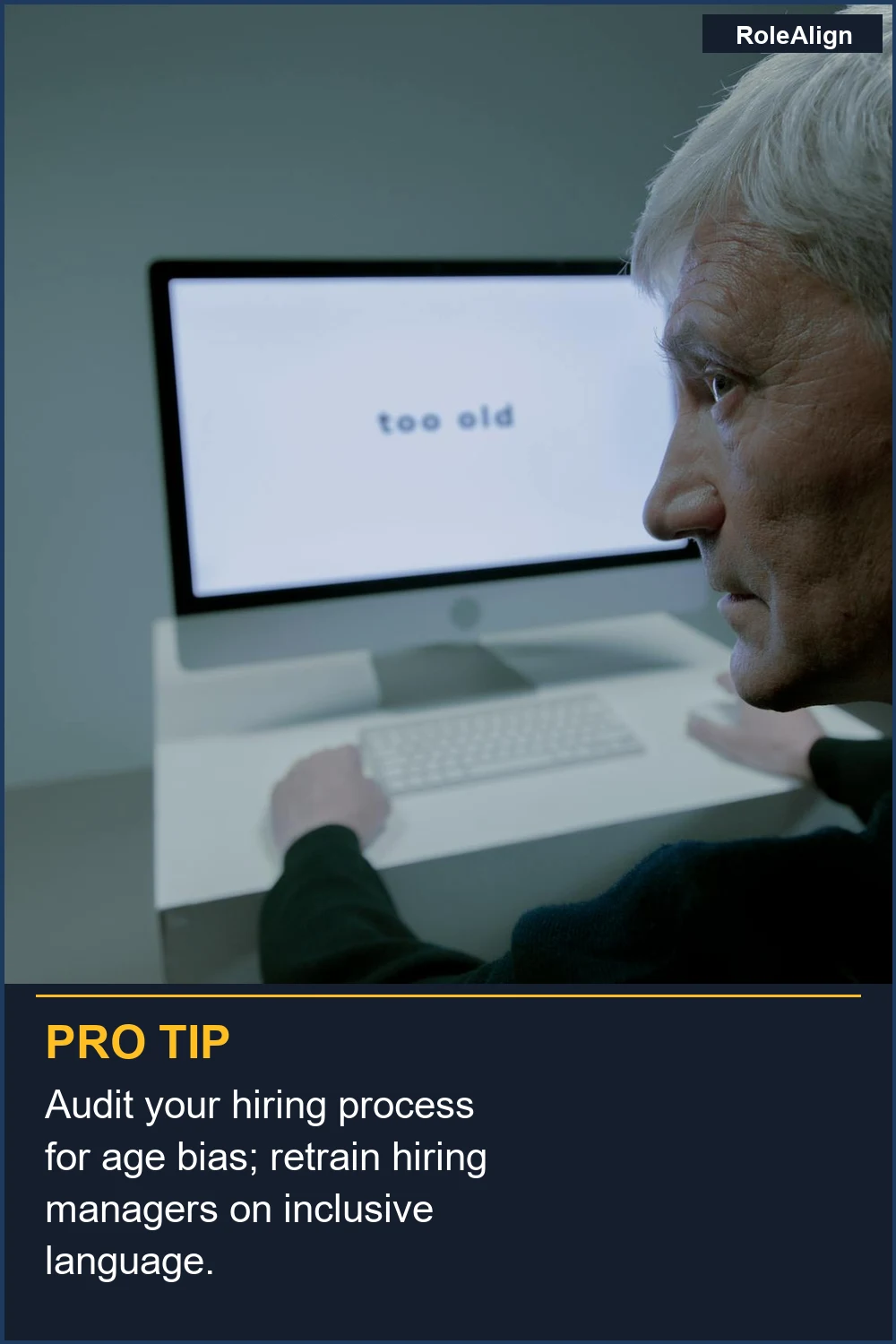
Audit your hiring process for age bias; retrain hiring managers on inclusive language.
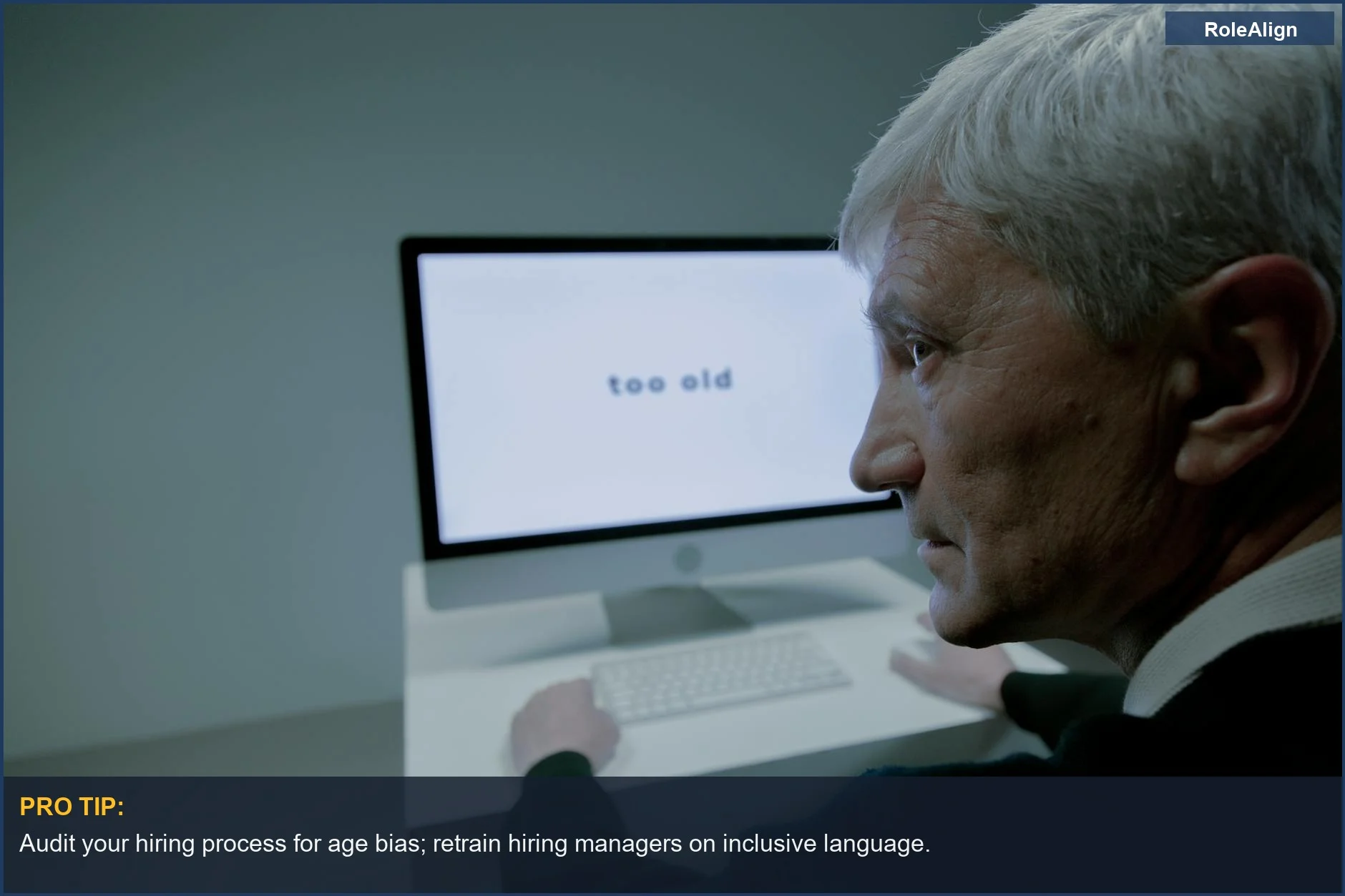
Ageism is a significant diversity hiring problem. This visual emphasizes how older candidates face bias, showing the 'check-the-box' approach failing. | Photo by Ron Lach

Mistakes That Kill Your Chances

Symptom Candidates excessively highlight their involvement in diversity initiatives without clearly articulating their core qualifications for the role.
Signal Resumes and cover letters read like a DEI manifesto, with limited space dedicated to relevant skills and experience.
Fix Focus on demonstrating how your unique background and perspectives contribute to the specific job requirements and company goals. Frame your DEI involvement as a strength that enhances your professional capabilities, not as a substitute for them. diversejobsmatter.co.uk
Symptom Over-reliance on generic diversity statements or affiliations without concrete examples of impact or leadership.
Signal Mentions of DEI groups or initiatives are superficial, lacking specific accomplishments or quantifiable results.
Fix Instead of just listing participation, showcase specific contributions and the positive outcomes. For new grads, this might be leading a student group initiative; for mid-career professionals, it could be implementing a process change. Recruiters look for demonstrated initiative and impact, not just membership. hbr.org
Symptom Candidates assume their membership in an underrepresented group automatically qualifies them for a role, neglecting essential technical skills or experience.
Signal Interview performance lacks depth on role-specific competencies, even when background diversity is evident.
Fix Always prioritize demonstrating mastery of the job's core requirements. While your background is valuable, it's the application of your skills that secures the offer. Companies are increasingly focused on measurable results and performance, not just intent. shrm.org
Symptom Candidates focus heavily on perceived "DEI hiring" quotas or programs, believing this guarantees them a position.
Signal Conversation steers towards company diversity metrics or programs rather than the candidate's direct qualifications for the role.
Fix Understand that successful diversity hiring is about equitable opportunity, not guaranteed placement. Focus on showcasing your qualifications and how you align with the company's needs. The goal is to be the best candidate, not just the most diverse. talenthr.io
Symptom For senior candidates, highlighting past diversity initiatives without demonstrating strategic leadership or business impact can be a pitfall.
Signal Resume emphasizes program management of DEI without clear links to organizational growth, innovation, or financial performance.
Fix Frame your diversity leadership experience through a strategic business lens. Quantify the impact of your initiatives on retention, engagement, or market capture, aligning them with broader organizational objectives. powertofly.com
Understanding these mistakes can shed light on why certain sectors continuously thrive; explore insights in always hiring industries.
Infographic: Pros/Cons of diversity hiring programs.
Product comparison for Why Diversity Hiring Programs Don't Always Help

Key Takeaways

Understanding the limitations of stack ranking can help clarify why working hard alone may not lead to promotions.

Frequently Asked Questions

Why do some diversity hiring programs not achieve their goals?
Many diversity hiring programs falter because the underlying systems, structures, and mindsets within a company haven't fundamentally changed to support genuine inclusion Source. Companies often treat diversity hiring as a short-term marketing campaign rather than a deep cultural transformation, leading to superficial efforts that don't attract or retain diverse talent.
What are common reasons diversity recruitment efforts fall short?
Diversity recruitment often fails because companies focus solely on the number of hires without addressing the workplace culture and employee experience Source. Human bias can also persist in resume screening, interviewing, and judging 'cultural fit', undermining even well-intentioned efforts.
Are diversity programs ineffective if they don't change the company culture?
Yes, diversity programs can be ineffective if they don't lead to a broader cultural transformation. Simply implementing a few initiatives or annual training sessions without altering the core systems and mindsets that shape hiring and inclusion will likely result in a homogenous workforce and high turnover among underrepresented employees Source.
What are the risks of diversity programs that aren't truly inclusive?
Companies face risks when their diversity hiring programs are not genuinely inclusive, potentially leading to 'DEI washing' and legal challenges. Research indicates that when diversity initiatives are not deeply embedded, women and people of color may even receive diminished performance ratings Source. Federal lawsuits challenging DEI programs have become more common.
How can companies improve their DEI hiring practices to avoid common pitfalls?
To improve DEI hiring, companies must move beyond superficial efforts and focus on transforming their systems and mindsets. Embedding inclusion into performance and growth strategies, and demonstrating measurable results like improved retention or engagement, is crucial Source. Addressing unconscious bias in every stage of the hiring process is also essential.

Sources

Related Articles