
How Companies Get Away With Pay Discrimination (2026 Complete Guide)
You just got the rejection email. Another one. You've spent weeks tailoring your resume, networking, and prepping for interviews, only to be met with silence or a polite brush-off. You suspect the salary offered to the person who *did* get the job, or the one you saw posted for a similar role last month, wasn't equitable.
You just got the rejection email. Another one. You've spent weeks tailoring your resume, networking, and prepping for interviews, only to be met with silence or a polite brush-off. You suspect the salary offered to the person who did get the job, or the one you saw posted for a similar role last month, wasn't equitable. This isn't just bad luck; it's often a symptom of how companies get away with pay discrimination.
The landscape is shifting, with 17 states and multiple municipalities now having active pay transparency laws in 2026, affecting an estimated 65% of U.S. employers Pay Transparency Laws by State: 2026 Employer Compliance Guide. These regulations aim to dismantle systemic issues where historical pay discrimination follows workers throughout their careers, perpetuating wage gaps Pay Transparency Laws by State: 2026 Employer Compliance Guide. While these laws require salary disclosures in job postings, many companies still find ways to sidestep true pay equity. The challenge for job seekers and employees alike is understanding these tactics and navigating a system that, despite increased transparency, often still favors employers who are not yet fully prepared for these changes Here's how pay transparency is going in 2026 - Factorial.
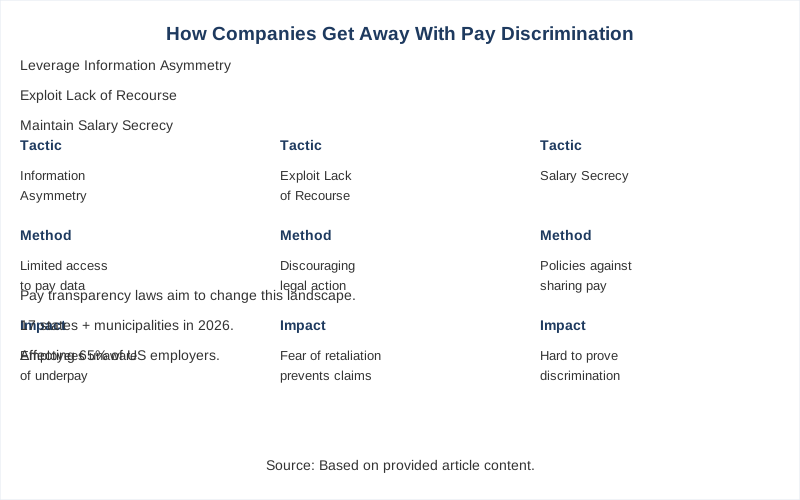
Companies historically get away with pay discrimination by leveraging information asymmetry and exploiting the lack of legal recourse for many employees. The core mechanism is maintaining salary secrecy, which prevents employees from knowing if they are being underpaid relative to their peers or market rates.
The real answer is that salary secrecy is the bedrock upon which many pay discrimination schemes are built. Recruiters often operate with broad salary bands and can leverage a candidate's lack of knowledge about internal pay scales or market value to offer less. Candidates assume their offer is competitive, and without transparency, they have no basis to dispute it. This is particularly effective when companies can point to slightly different, unstated qualifications or experience levels to justify disparities, even when the core work is identical.
Pay transparency laws are changing this landscape, but compliance is still catching up. As of 2026, 17 states and multiple municipalities have active pay transparency laws, with more considering legislation, affecting an estimated 65% of U.S. employers Pay Transparency Laws by State: 2026 Employer Compliance Guide. These laws mandate the disclosure of salary ranges in job postings, forcing employers to be more upfront. This shift is intended to break the cycle where historical pay discrimination follows workers throughout their careers, perpetuating wage gaps Pay Transparency Laws by State: 2026 Employer Compliance Guide.
Beyond job postings, some states are enacting pay data reporting requirements Navigating 2026: Pay Transparency Laws and Employer Obligations. This means companies must not only disclose ranges but also provide detailed pay and demographic data to state agencies. This increased scrutiny makes it harder for companies to hide discriminatory pay practices. However, the effectiveness of these laws hinges on enforcement and employee awareness. Without employees knowing their rights or having the confidence to report discrepancies, companies can still find ways to skirt the rules.
The lack of robust legal enforcement and the difficulty in proving pay discrimination have historically allowed companies to get away with it. While the Equal Pay Act of 1963 requires equal pay for equal work, proving that jobs are substantially equal can be challenging Equal Pay/Compensation Discrimination. Furthermore, many employees fear retaliation if they speak up or pursue legal action. The growing wave of pay transparency legislation is a direct response to these systemic issues, aiming to equip employees with the information needed to identify and challenge salary discrimination.



- The "Negotiation Range" Gambit Companies set artificially low salary ranges, especially for underrepresented groups or career changers. They then claim to offer the top of the range during negotiations, even if the candidate's experience warrants more. Less experienced candidates may not know the role's true market value or feel empowered to push back. This tactic can be particularly effective when combined with vague descriptions of the role's responsibilities, making it harder for candidates to assess if the offered salary truly reflects the scope of work. Reddit
- Obscuring Internal Equity with "Unique" Roles Companies create varied job titles or responsibilities for individuals performing substantially similar work, justifying different pay rates. This strategy avoids direct comparisons and exploits a lack of transparency. Without clear pay scales or internal role banding, employees often can't prove they are doing "equal work" as defined by the Equal Pay Act. The proliferation of specialized, newly created roles can further muddy the waters, making it challenging for employees to find comparable positions within the same organization to benchmark their compensation against. EEOC.gov
- Leveraging Salary History Bans Selectively While many states ban asking for salary history, some companies infer it or use it indirectly. They probe about "expected salary" or "previous compensation structure" to influence offers, perpetuating historical pay discrimination. This can manifest as questions about a candidate's previous total compensation package, including bonuses and benefits, which can still reveal past pay disparities and allow employers to anchor new offers to these lower historical figures, effectively continuing the cycle of unequal pay. Pay Transparency Laws by State: 2026 Employer Compliance Guide.
- The "Lack of Data" Defense in Smaller Jurisdictions Companies in states or municipalities without robust pay transparency laws face less scrutiny and can hide pay disparities. Employees lack the leverage of public salary ranges or mandatory reporting, making it harder to identify or challenge pay discrimination. In these less regulated environments, the absence of laws requiring employers to disclose pay scales for open positions means candidates and current employees have limited visibility into what others in similar roles are earning, making it significantly more difficult to detect and address potential inequities. Pay Transparency Laws by State: 2026 Employer Compliance Guide, Here's how pay transparency is going in 2026.
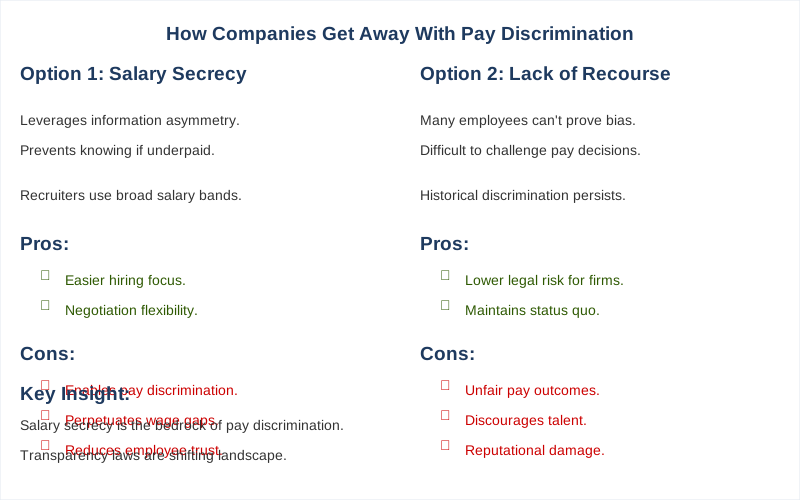
- Companies get away with pay discrimination by leveraging salary secrecy and exploiting a lack of robust enforcement. While laws like the Equal Pay Act of 1963 and various state statutes aim to ensure equal pay for equal work, their effectiveness is often hampered by the difficulty individuals face in proving discrimination and the reluctance of employees to pursue legal action ELI5: How do employers get away with gender-based wage ... - Reddit.
- The expansion of pay transparency laws across 17 states and multiple municipalities by 2026 is a critical countermeasure Pay Transparency Laws by State: 2026 Employer Compliance Guide. These laws compel employers to disclose salary ranges in job postings and internal opportunities, directly challenging the opaque practices that enable salary discrimination Navigating 2026: Pay Transparency Laws and Employer Obligations.
- Many employers remain unprepared for these evolving regulations, despite the clear benefits of fairer compensation practices and closing the gender pay gap Here's how pay transparency is going in 2026. The push for transparency aims to break cycles of historical pay discrimination and ensure employees have equal access to advancement opportunities Pay Transparency Laws by State: 2026 Employer Compliance Guide.
- The single most important thing a recruiter would tell you off the record? Know your worth and don't be afraid to negotiate. Companies can only get away with paying you less if you let them.
Frequently Asked Questions
Why do some companies still manage to pay people differently for the same job?
How do employers avoid paying equally when there are laws about it?
What are the main reasons companies can get away with salary discrimination?
What are the common tactics companies use to maintain a pay gap?
Are there still many companies that don't pay men and women equally for the same work?
Sources
- equal-pay-compensation-discrimination
- factorialhr.com
- equal-pay-compensation-discrimination
- postercompliance.com
- linkedin.com
- navigating-pay-transparency-laws-and-employer-obligations
- ELI5: How do employers get away with gender-based wage ... - Reddit
- Navigating 2026: Pay Transparency Laws and Employer Obligations
- Pay Transparency Laws by State: 2026 Employer Compliance Guide
- Pay Transparency Laws by State: 2026 Employer Compliance Guide
- Here's how pay transparency is going in 2026 - Factorial
- linkedin.com