
When to Follow Up After an Application and When Not to (2026 Complete Guide)
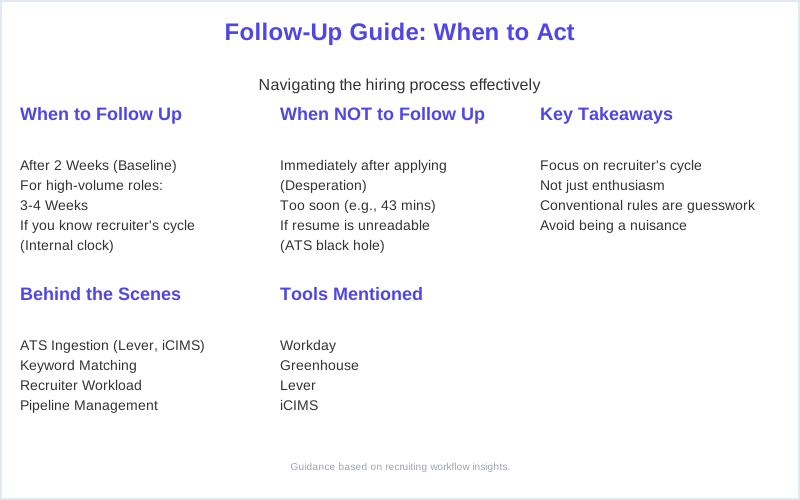
I've seen job seekers wait 43 minutes before sending a follow-up email. Forty-three minutes. That's not persistence; that's desperation, and it screams 'I have no other options.' The whole game around following up after an application is less about your enthusiasm and more about understanding the internal clock of the hiring team, or lack thereof.
I've seen job seekers wait 43 minutes before sending a follow-up email. Forty-three minutes. That's not persistence; that's desperation, and it screams 'I have no other options.' The whole game around following up after an application is less about your enthusiasm and more about understanding the internal clock of the hiring team, or lack thereof.
Most of the conventional wisdom you read online about a '14-day rule' or 'one week after applying' is just guesswork, not based on how actual recruiting workflows function. The 14-Day Rule is a nice idea, but it often misses the mark.
The Real Answer
The real answer to when you should follow up isn't a calendar date; it's a phase of the moon for the recruiter, tied directly to their pipeline management in systems like Workday or Greenhouse. Your application, after hitting 'submit,' lands in a queue. My 'recruiter brain' is usually running on a 2-week cycle to even begin reviewing new applications for an active role. If it's a high-volume role, that could stretch to 3-4 weeks.
Indeed advises waiting two weeks, which is a reasonable baseline for most scenarios.
What's Actually Going On
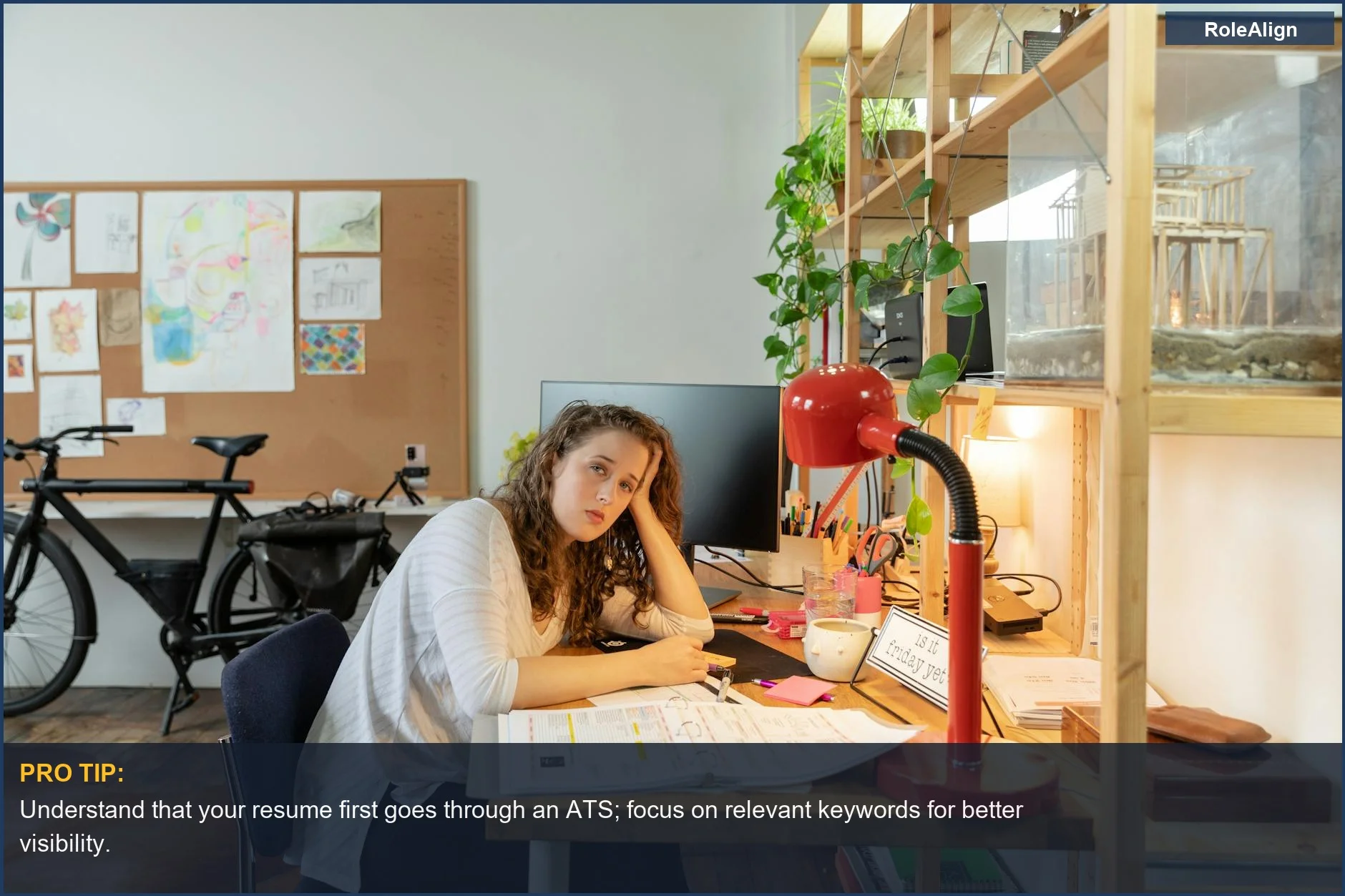
What's actually going on behind the scenes is a messy combination of ATS parsing, recruiter workload, and sometimes, outright hiring theater. When you apply, your resume gets ingested by an ATS like Lever or iCIMS. It's not immediately read by a human. That system is busy indexing keywords and matching against the job description. If your resume is formatted poorly, it could end up in the 'ATS black hole,' functionally invisible.
Hiring managers are busy; they aren't sitting there refreshing the application queue.
How to Handle This
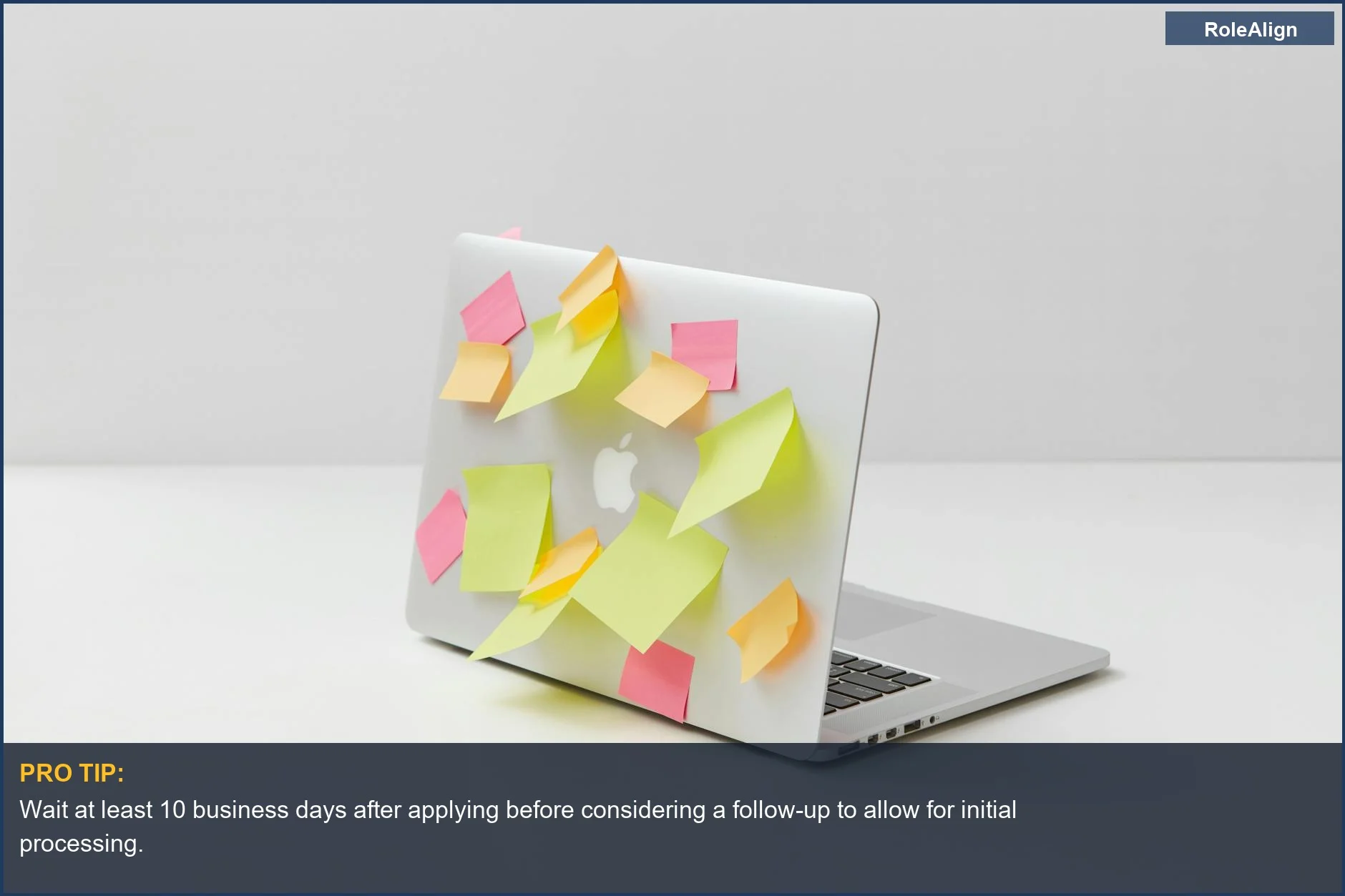
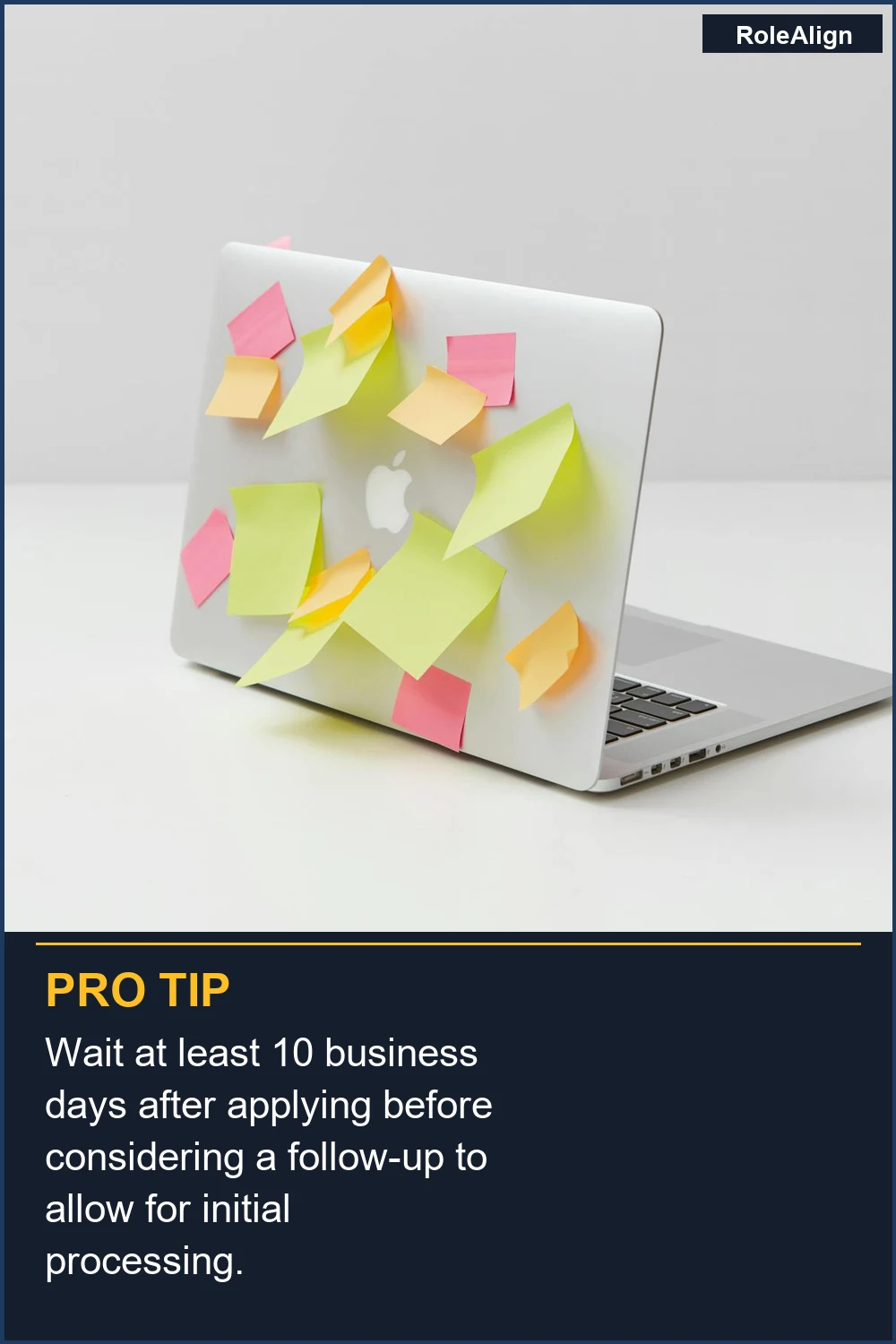
So, how do you handle this without becoming a nuisance or getting lost in the resume graveyard? First, assume a 10-business-day buffer from your application date. This gives the system time to process and the recruiter a chance to do their initial screen. Cardinal Staffing suggests waiting 5 to 10 business days, which aligns with typical recruiter cycles. If you apply on a Friday, don't count the weekend.

What This Looks Like in Practice
Let's look at some real-world examples of how this plays out. If you've applied for a 'Staff Software Engineer' role at a large tech company, expect a 15-20 business day initial review period. They're likely getting 500+ applications, and the first pass is almost entirely automated keyword matching in their Taleo or Workday system. Employbridge highlights that companies often get hundreds of applications, necessitating a more extended review.
Mistakes That Kill Your Chances
| Mistake | Why It Kills Your Chances | Recruiter's Perspective |
|---|---|---|
| Calling the main HR line repeatedly | Shows a lack of understanding of the hiring process; wastes HR's time. | 'They can't even find the right contact. Next!' |
| Following up within 72 hours of applying | You're too early; the application hasn't even been parsed by the ATS yet. | 'This person is impatient and doesn't respect timelines.' |
| Sending generic, untargeted follow-ups | Signals you're just spamming applications, not genuinely interested. | 'Another template. Delete.' |
| Attaching your resume to every follow-up | Unnecessary clutter; the recruiter already has it in their system. | 'Did they forget I already have their resume? Annoying.' |
| Contacting multiple people at the company | Looks desperate and uncoordinated; creates internal confusion. | 'Who is this person trying to reach? What's their deal?' |
| Demanding a status update | Entitled tone; recruiters owe you nothing. | 'I'm not their personal assistant. Back of the line.' |
Waiting at least two weeks after applying is a common recommendation to avoid these pitfalls.
- **Timing is Everything (and Not What You Think):** Don't follow up based on your anxiety. Follow up based on a realistic understanding of recruiter workflow, which is usually 10-15 business days for initial review. Waiting one to two weeks gives the hiring team enough time.
- **Targeted, Not Generic:** If you can't find a specific hiring manager or recruiter to address, your follow-up is probably too early or not worth sending. A generic email to 'Hiring Team' is effectively shouting into the void.
- **Brevity is King:** Your follow-up email should be 3-4 sentences, max. Reiterate interest, mention one key skill, and that's it. My recruiter brain doesn't have time for your life story.
- **Know When to Fold 'Em:** If you've sent one polite follow-up after the appropriate waiting period and still hear nothing after another week, move on. It's not personal; it's a ghost job, a resume graveyard, or you just weren't the signal vs noise they were looking for.
Frequently Asked Questions
I found a job I really want, and I can pay $50 to get a 'premium' follow-up service that guarantees my resume gets seen. Is that worth it?
Should I use a read receipt on my follow-up email to see if they've opened it?
What if I followed up after two weeks, and they replied saying 'we're still reviewing applications' but didn't give a timeline?
Can following up too aggressively permanently blacklist me from a company?
Some advice says to follow up via LinkedIn message instead of email. Is that better?
Sources
- The 14-Day Rule: When to Follow Up on a Job Application (and ...
- The Best Ways to Follow Up After Submitting a Job Application
- FAQ: How and When To Check on an Application for a New Job
- How To Follow Up on a Job Application | Indeed.com
- How to Follow Up on a Job Application: Key Tips to Show Your ...
- Following up on a job application is a key component to ... - Instagram
- Best Ways to Follow Up on a Job Application - Employbridge