Understanding Maternity and Parental Rights: Essential Insights for Employees
RoleAlign Team
11 min read
Includes Video
You just got the email: "We've decided to move forward with other candidates." It stings, especially when you're eyeing roles that offer robust maternity and parental rights. Navigating the job search while planning for or experiencing a new child requires a sharp understanding of your entitlements.
You just got the email: "We've decided to move forward with other candidates." It stings, especially when you're eyeing roles that offer robust maternity and parental rights. Navigating the job search while planning for or experiencing a new child requires a sharp understanding of your entitlements. The landscape of parental leave is complex, varying significantly by state and employer policy, making proactive research crucial Maternity Leave Laws by State (2026): Your Complete Guide - Paycor. Many job seekers focus solely on salary and title, overlooking how critical maternity and parental rights are to long-term career sustainability and well-being. Understanding these rights isn't just about knowing your leave duration; it encompasses protections against discrimination and the ability to take necessary time off without jeopardizing your career trajectory. This knowledge is power, especially when facing an Applicant Tracking System (ATS) that might not flag these nuances, or when preparing for an interview where you need to confidently discuss your needs What to Expect from Your Employer When You're Expecting.
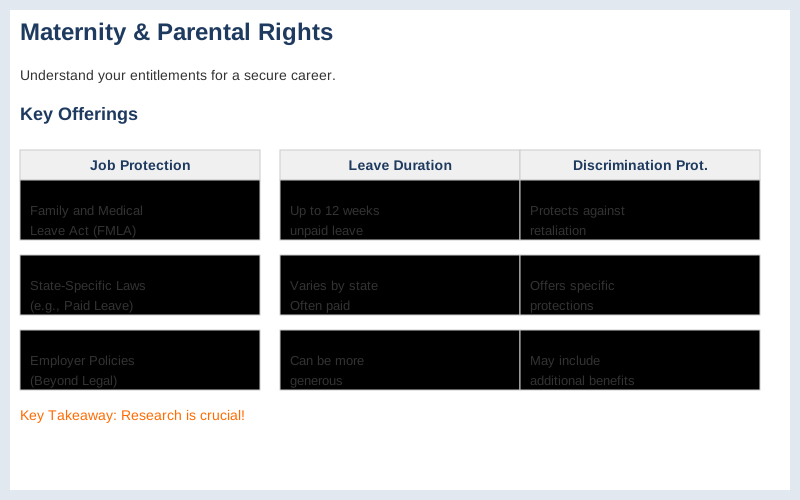
Key specifications for maternity and parental rights
## The Real Answer
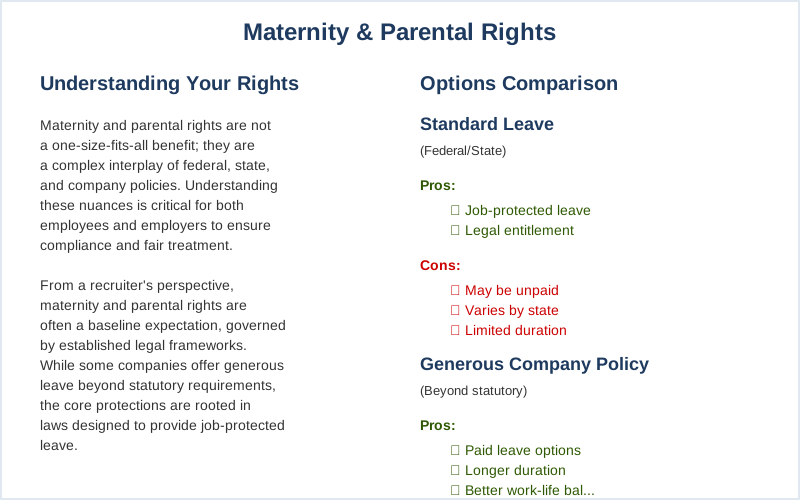
Maternity and parental rights are not a one-size-fits-all benefit; they are a complex interplay of federal, state, and company policies. Understanding these nuances is critical for both employees and employers to ensure compliance and fair treatment.
From a recruiter's perspective, maternity and parental rights are often a baseline expectation, governed by established legal frameworks. While some companies offer generous leave beyond statutory requirements, the core protections are rooted in laws designed to provide job-protected leave for new parents or those experiencing pregnancy-related conditions. It's crucial to recognize that eligibility for these rights hinges on specific criteria, including employer size and employee tenure, so don't assume universal coverage.
The Family and Medical Leave Act (FMLA) is a cornerstone of these protections, offering eligible employees up to a certain amount of unpaid, job-protected leave. However, FMLA is just one piece of the puzzle. State laws and individual company policies can offer additional benefits, sometimes including paid leave or extended durations. For instance, Washington state has several laws that determine leave availability, such as the Washington Family Care Act and Paid Sick Leave, each with its own eligibility requirements Pregnancy & Parental Leave.
When considering maternity and parental rights, always verify your specific situation against applicable laws and your employer's policies. The legal landscape is intricate, with different provisions for pregnancy, paternity, and adoption. Some states offer more comprehensive protections, and understanding these differences is key. For example, the Pregnancy Discrimination Act acts as a minimum standard, meaning employers and states can provide greater protections than federally mandated Parental Leave in the U.S.: Laws, Benefits & Rights Guide.
Remember, these rights are designed to support employees during significant life events. Employers must navigate these regulations carefully to avoid legal pitfalls and foster a supportive work environment. Employees, in turn, must be informed about their entitlements, which often depend on factors like employer size and the length of employment, ensuring they can advocate effectively for their needs.
Understanding the intricacies of maternity and parental rights is key. Many policies offer up to 12 weeks of unpaid leave under FMLA.
| Photo by Alex Green
Understanding the intricacies of maternity and parental rights is key. Many policies offer up to 12 weeks of unpaid leave under FMLA.
| Photo by Alex Green
## What's Actually Going On
1
ATS parsing and recruiter screening are the first gates for your maternity and parental rights information. Forget keyword stuffing; modern Applicant Tracking Systems (ATS) like Greenhouse or Workday look for structured data. Recruiters, pressed for time, scan for specific leave entitlements, duration, and pay continuation. They aren't reading novels; they're ticking boxes.
2
Hiring committees make decisions based on policy and precedent, not just your personal story. They're evaluating risk and compliance. Your maternity and parental leave rights documentation needs to align with their established policies. Anything outside the norm requires senior approval and is often a non-starter unless it's a critical role where they'll bend rules.
3
Company size dramatically impacts leave policies. Startups are often more agile but may lack formal structures, relying on ad-hoc agreements. Enterprise companies have codified policies, often generous but rigid. Tech firms might offer more flexibility and longer paid leaves than traditional finance or healthcare sectors, where regulations can be more stringent. Maternity leave laws vary by state, adding another layer of complexity.
4
Seniority level plays a role. Senior candidates might negotiate more favorable terms due to their value, while entry-level roles are typically bound by standard HR policy. The Family and Medical Leave Act (FMLA) provides a baseline, but actual benefits are often dictated by company policy and state law. For instance, some states offer paid parental leave, while others do not.
5
Recruiters screen for eligibility and adherence to policy. They're checking if you meet the criteria for FMLA or state-specific leave, and if your request aligns with the company's published benefits. A practical guide for employers and employees highlights the need for clarity. They want to see that you understand your rights and that your expectations are grounded in reality.
Understanding your contractual obligations can enhance your view of employee expectations and foster a healthier workplace dynamic.
Planning for parental leave involves personal reflection and strategic communication with your employer, ensuring a smooth transition.
| Photo by Mikhail Nilov
Planning for parental leave involves personal reflection and strategic communication with your employer, ensuring a smooth transition.
| Photo by Mikhail Nilov
## How to Handle This
1
Notify your employer early and in writing - Do this as soon as you know you will need leave, ideally 30 days before your intended start date, or as soon as practicable. This allows them to plan for your absence, whether it's for maternity or parental leave. Recruiters look for proactive communication; it signals professionalism and consideration. Skipping this means you risk your employer not being able to accommodate your leave, potentially leading to strained relationships or even legal issues if notice requirements aren't met. For senior roles, this early notice is even more critical for business continuity planning.
2
Understand your specific rights and benefits - Research federal laws like the Family and Medical Leave Act (FMLA) What to Expect from Your Employer When You're Expecting, state-specific legislation, and your company's internal policies. Some states, like Washington, have multiple laws governing leave Pregnancy & Parental Leave. Recruiters appreciate candidates who are informed; it shows you're prepared and understand the employment landscape. If you skip this, you might miss out on entitled leave, or misunderstand eligibility criteria, leading to disappointment or unmet expectations. This research is crucial regardless of industry, but more complex roles might have unique benefit structures.
3
Document everything and keep records - Save copies of all communication regarding your leave request, approval, and any related policy documents. This is your proof of adherence to procedures. Recruiters value diligence and thoroughness; it translates to how you'd handle other critical work tasks. If you neglect this, you have no recourse if disputes arise or if your employer misremembers details. This is vital for all employees, but especially important in regulated industries where compliance is paramount.
4
Plan your return to work strategy - Discuss with your manager or HR about your transition back, including any potential for flexible arrangements if applicable and appropriate. This shows commitment to your role and helps the employer manage the handover. Recruiters see this as a sign of responsibility and forward-thinking. Failing to plan your return can lead to awkward reintegration, missed opportunities, or the assumption that you are no longer invested in your career. This is particularly relevant for mid-level to senior positions where continuity and leadership are expected.
Proactively notifying your employer about your need for parental leave is a crucial step in securing your rights.
| Photo by Tima Miroshnichenko
Proactively notifying your employer about your need for parental leave is a crucial step in securing your rights.
| Photo by Tima Miroshnichenko
## What This Looks Like in Practice
Senior Software Engineer at a Series B Startup Faced with a partner's extended pregnancy leave, this engineer at a rapidly growing Series B startup utilized their company's generous parental leave policy. Flexibility and open communication with their manager enabled them to coordinate leave for continuous project coverage. The challenge: initial ambiguity regarding shared leave's impact on project timelines and team bandwidth led to last-minute adjustments. Pregnancy & Parental Leave, What to Expect from Your Employer When You're Expecting
Entry-Level Data Analyst at a Fortune 500 This analyst at a large, established firm found their company's standard parental leave benefits limited. While compliant with federal guidelines, paid leave duration was minimal. Proactive documentation and colleague training ensured a smooth handover. The downside: financial strain from unpaid leave beyond the paid period hindered bonding time without significant worry. Parental Leave in the U.S.: Laws, Benefits & Rights Guide
Career Changer from Teaching to Product Management Transitioning to Product Management at a mid-sized tech company, this individual's short tenure meant qualifying for less than a full parental leave cycle despite a solid package. Leveraging transferable project management skills from teaching reassured their new employer of their post-leave commitment. The hurdle: anxiety about re-entry and proving themselves in a new field after an extended absence, even with a supportive manager. Maternity Leave Laws by State (2026): Your Complete Guide - Paycor
Navigating maternity leave can sometimes lead to complex situations, making it crucial to understand termination of employment issues.
Even senior professionals may face challenges; robust parental rights ensure fair treatment and support during family needs.
| Photo by Ron Lach
Even senior professionals may face challenges; robust parental rights ensure fair treatment and support during family needs.
| Photo by Ron Lach
Mistakes That Kill Your Chances
Symptom You only ask about maternity leave, not the full spectrum of parental rights.
Signal Recruiters see a narrow understanding of family leave policies, potentially signaling a lack of awareness about broader parental support structures.
Symptom You assume all parental leave is unpaid or identical across companies.
Signal This indicates a lack of research into state-specific maternity leave laws and company benefits, which can be a significant differentiator.
Symptom You wait until the offer stage to discuss parental leave.
Signal Recruiters view this as a potential deal-breaker discovered too late, suggesting poor planning and a lack of alignment on essential benefits. For senior candidates, this can signal a lack of strategic career management.
Symptom You frame questions about parental leave as solely a personal benefit, not a business consideration.
Signal Recruiters perceive this as a lack of understanding of how family-friendly policies contribute to retention and employee well-being, which are key business metrics. For mid-career candidates, this can seem naive.
Symptom You don't research if you've established legal parentage for all children involved.
Signal For adoption or surrogacy, this oversight can create legal complexities that recruiters and HR departments flag as potential risks. This is particularly critical for non-traditional family structures and can be a red flag for senior candidates expecting a seamless process. Establishing parentage is crucial for all parental leave claims.
Symptom You only consider federal FMLA, ignoring state-specific laws or company policies.
Signal This shows a superficial understanding of the landscape. Many states offer more generous pregnancy and parental leave benefits than FMLA, and companies often have their own enhanced policies. For new grads, it signals a need for more foundational research.
You're leaving significant maternity and parental rights on the table by making these common blunders. Many candidates assume asking about leave benefits is best saved for the final offer stage. This is a mistake. Recruiters use early conversations to gauge alignment on core values and benefits. Bringing up parental leave too late signals you haven't done your homework or, worse, that it's an afterthought. For senior roles, this can be interpreted as a lack of strategic foresight.
Focus on how parental leave policies benefit the employer through retention and employee satisfaction. Frame your questions around how the company supports employees during critical life events. This demonstrates maturity and an understanding of the broader organizational impact. Instead of "How much leave do I get?", try "What is the company's philosophy on supporting employees during parental leave, and what resources are available?"
Many candidates fail to differentiate between maternity leave and broader parental leave. They also overlook state-specific laws that often provide more comprehensive benefits than federal mandates like FMLA. Failing to research your specific state's regulations or your potential employer's internal policies is a critical oversight. This lack of detail can make you appear unprepared, especially for mid-career professionals.
A non-obvious mistake is waiting to establish legal parentage for all children involved, especially in cases of adoption or surrogacy. Without clear legal parentage, accessing parental leave can become a bureaucratic nightmare. Recruiters and HR departments are wary of candidates who haven't sorted out these fundamental legal aspects, as it can signal potential future complications. This is particularly important for senior candidates who may be navigating more complex family structures.
Comparison overview for maternity and parental rights
## Key Takeaways
Know your rights before you need them; don't wait until you're pregnant or adopting. Federal laws like the Family and Medical Leave Act (FMLA) provide job-protected leave, but state laws vary significantly. Understanding these is crucial for navigating maternity and parental rights.
Employers *can* offer more than the legal minimums. The Pregnancy Discrimination Act sets a floor, not a ceiling, meaning companies can provide enhanced benefits to pregnant employees. Don't assume what's offered is standard; check your company's specific policies.
Parentage is key for fathers and non-birth parents. Establishing legal parentage, even without court involvement, ensures you have rights to custody, decision-making, and support from day one. This is non-negotiable for shared parental leave and bonding.
Accommodations are a right, not a favor. Beyond leave, pregnant employees are entitled to reasonable accommodations for limitations or recovery. This isn't a perk; it's a legal protection under various state and federal laws.
The single most important thing a recruiter would tell you off the record? Don't rely solely on HR's initial explanation. Proactively research your specific state and federal maternity and parental rights and have your ducks in a row *before* you announce your pregnancy or adoption. Companies often provide the *minimum* required, and it's your responsibility to know what you're entitled to.
Understanding your maternity and parental rights can also be complemented by knowing about the latest safety regulations in the workplace.
Frequently Asked Questions
What kind of leave do I get if I'm pregnant or have a new baby, and does it depend on where I work?
In the U.S., federal laws like the Family and Medical Leave Act (FMLA) offer job-protected leave, but it only applies to companies with 50 or more employees within a 75-mile radius. Beyond that, state laws really dictate the specifics, with some states offering broader protections or paid leave options. For example, Washington State has five different laws that could apply, covering everything from paid sick leave to a specific Paid Family Medical Leave Program Source Name.
Does the size of my company affect my ability to take time off for a new child?
Absolutely. The Family and Medical Leave Act (FMLA), which provides up to 12 weeks of unpaid, job-protected leave, generally only applies to employers with 50 or more employees within a 75-mile radius. Smaller companies aren't bound by FMLA, so your rights will then depend entirely on state laws and your company's specific policies. Some states have their own family leave laws that might cover smaller employers Source Name.
My employer isn't respecting my leave for my new baby. What's my move?
First, document everything: your request, their response, and any communication. Then, consult your employee handbook and any relevant state labor department resources. If your employer is violating federal laws like FMLA, you can file a complaint with the U.S. Department of Labor. For state-specific issues, you'll need to look into your state's labor laws and potentially seek legal counsel Source Name.
Am I treated differently for leave if I'm a contractor versus a full-time employee?
Generally, yes. Federal protections like FMLA typically only cover 'employees,' which usually excludes independent contractors. While some state laws might offer protections, your rights as a contractor are often significantly more limited than those of a full-time employee. Always clarify your employment status and the associated benefits before accepting a contract role.
How do I bring up my need for leave for a new child without it sounding like I'm demanding or asking for too much?
Start with a clear, written request well in advance, referencing company policy and any applicable laws like FMLA. Frame it around planning for a significant life event and ensuring a smooth transition for your responsibilities. Be prepared to discuss how your work will be covered during your absence and your return-to-work plan; this proactive approach signals professionalism and responsibility.
R
RoleAlign Team
Experienced car camper and automotive enthusiast sharing practical advice.