Understanding Employee Expectations from Employers: What Really Matters in the Workplace
RoleAlign Team
13 min read
Includes Video
You just got that rejection email, the one that feels like a digital slap. Or maybe you're staring at your LinkedIn profile, the job search feeling like an endless uphill battle. You've meticulously crafted your resume, agonizing over keywords to beat the ATS, but the real question is: what are employers *actually* looking for beyond the buzzwords and checkboxes?
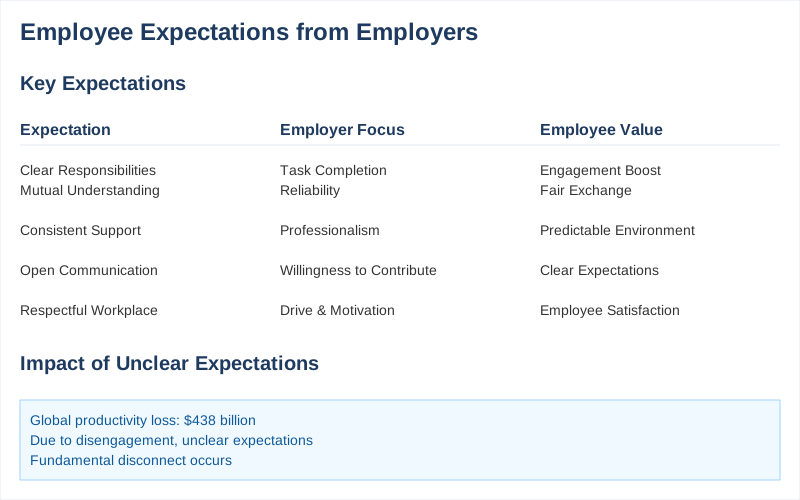
You just got that rejection email, the one that feels like a digital slap. Or maybe you're staring at your LinkedIn profile, the job search feeling like an endless uphill battle. You've meticulously crafted your resume, agonizing over keywords to beat the ATS, but the real question is: what are employers actually looking for beyond the buzzwords and checkboxes? It's not just about ticking boxes on a job description; it's about understanding the unspoken expectations employers hold. While many companies fall short in clearly defining these, making roles and responsibilities clear is one of the simplest - and most powerful - ways to boost engagement. When employees don't always know what's expected, businesses pay. Gallup estimates the global economy lost about $438 billion in lost productivity alone due to disengagement, with a significant chunk stemming from unclear expectations . This isn't about mind-reading; it's about a fundamental disconnect. Many employers expect drive, motivation, collaboration, and respect , but what does that truly look like, and what do you deserve in return?
Key specifications for employee expectations from employers
## The Real Answer
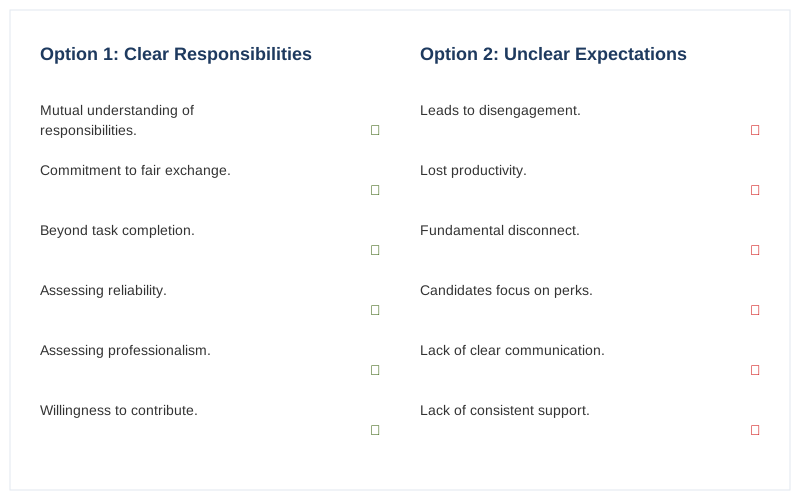
The core of employee expectations from employers boils down to a mutual understanding of responsibilities and a commitment to a fair exchange. Recruiters and hiring managers aren't just looking for task completion; they're assessing reliability, professionalism, and a willingness to contribute beyond the immediate job description.
What employees reasonably expect from employers, and what employers actually prioritize, often diverge. While candidates might focus on flashy perks, the real currency is clear communication, consistent support, and a predictable, respectful work environment.
Employers expect more than just showing up and doing the minimum. They look for drive, motivation, and collaboration skills10 Expectations Employers Have for Employees. This translates to employees who are proactive, willing to learn, and contribute positively to team dynamics.
Setting clear expectations is paramount, yet many companies fail. Gallup reports that only 21 percent of employees worldwide were engaged in 2024, with a significant reason being a lack of clarity on what's expected Setting Clear Expectations for Employees. This lack of clarity costs businesses billions in lost productivity.
Employers are looking for reliability, professionalism, and a growth mindsetBeyond the Job: What Employers Really Expect. This means showing up on time, meeting deadlines, communicating effectively, and demonstrating a commitment to continuous improvement.
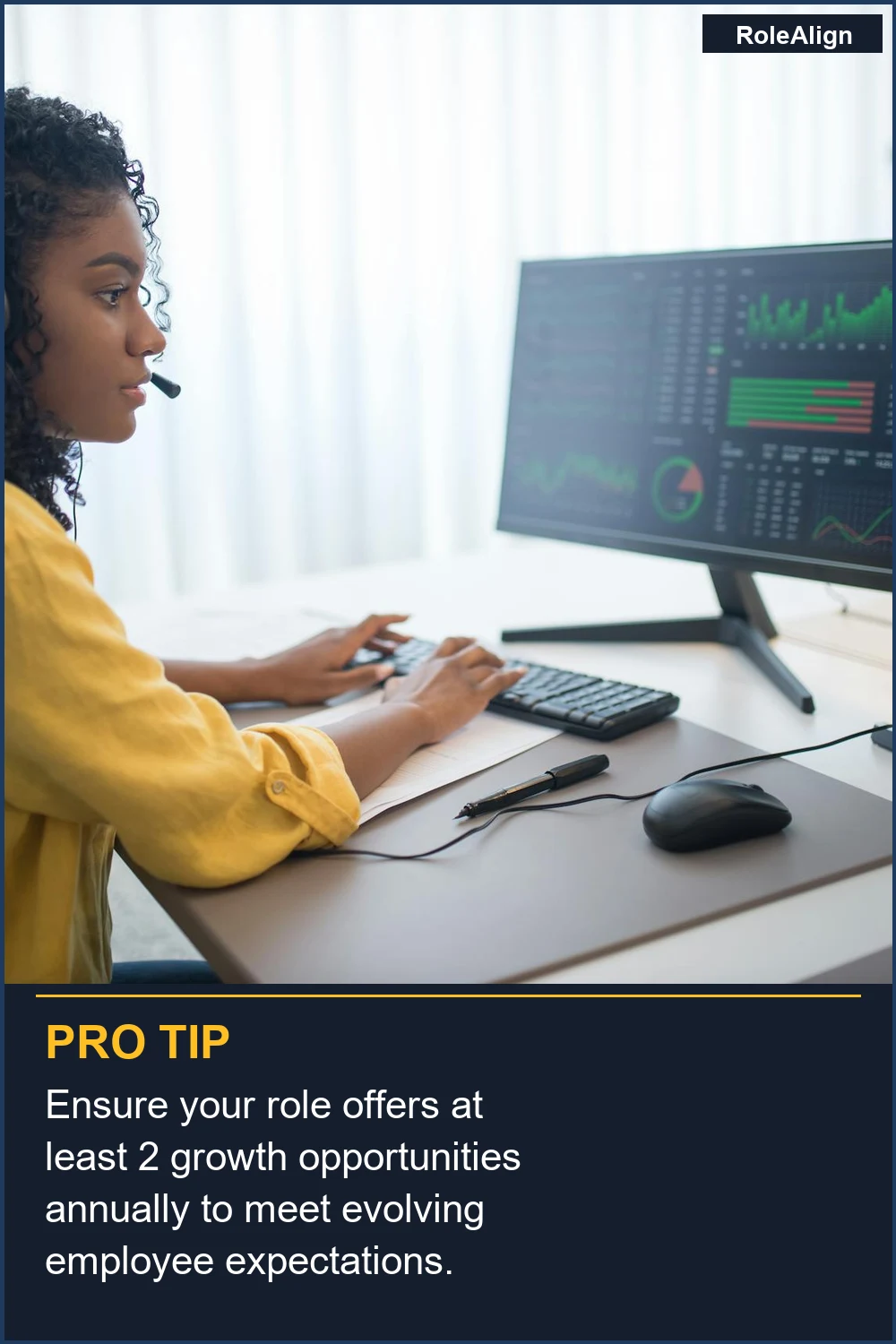
Understanding employee expectations from employers starts with clear responsibilities. This professional demonstrates the focus needed to meet data analysis demands, highlighting the need for clear goals.
| Photo by Kampus Production
Understanding employee expectations from employers starts with clear responsibilities. This professional demonstrates the focus needed to meet data analysis demands, highlighting the need for clear goals.
| Photo by Kampus Production
## What's Actually Going On
1
ATS parsing mechanics - Forget the myth of a human reading your resume initially. Most companies, especially larger enterprises, feed your application into an Applicant Tracking System (ATS). These systems, like Greenhouse or Lever, scan for specific keywords and phrases directly from the job description. If your resume doesn't align with the exact terminology, it might be filtered out before a human ever sees it. This is why tailoring your resume to each role is non-negotiable, not just a suggestion.
2
Recruiter screening priorities - Recruiters are inundated with applications. They spend an average of seconds on each resume, often much less if an ATS has already done a preliminary filter. They're looking for quick hits: relevant experience, quantifiable achievements, and keywords that match the core requirements. Beyond the ATS, they're scanning for red flags like job-hopping or significant skill gaps. Motivation, teamwork, and respect are also on their radar, but they need to see evidence of these in your experience section, not just buzzwords.
3
Hiring committee decisions - Once a candidate passes the recruiter screen, they enter the hiring committee phase. This is where the nuances of employee expectations from employers really come into play. Committees, often composed of the hiring manager, team leads, and peers, evaluate candidates against a broader set of criteria. This includes not just technical skills but also cultural fit, problem-solving ability, and potential for growth. They're asking: "Will this person contribute positively to our team dynamics and company culture?" Clear communication and alignment with team goals are paramount here.
4
Company size and industry impact - Expectations shift dramatically. At a startup, employers often expect extreme flexibility, a "wear many hats" mentality, and a high degree of initiative. They need people who can build from the ground up. In an enterprise environment, expect more defined roles, adherence to process, and a focus on specialized expertise. In tech, rapid learning and adaptability are key. Finance demands meticulousness and regulatory awareness. Healthcare prioritizes patient care, compliance, and empathy.
5
Seniority level dictates expectations - For entry-level roles, employers look for potential, a willingness to learn, and foundational skills. They expect you to be coachable. For mid-level candidates, they want demonstrable impact and increasing autonomy. At the senior and executive levels, the expectation shifts to strategic leadership, vision setting, team development, and significant business outcomes. You're not just doing the job; you're shaping how the job is done and leading others to do it effectively. Clear communication of responsibilities is crucial at all levels, but the scope of those responsibilities changes dramatically with seniority.
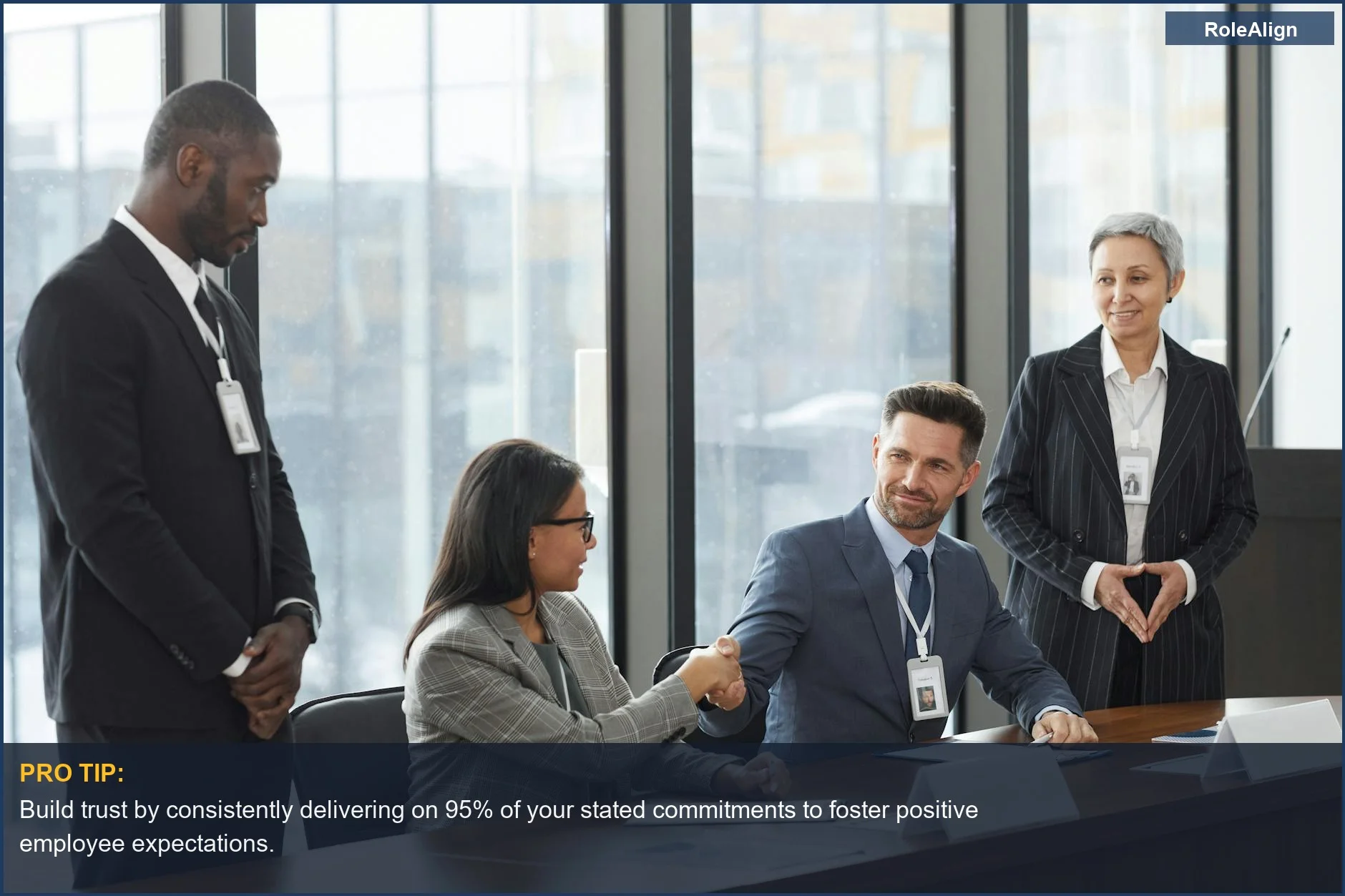
Successful business meetings often lead to positive outcomes, mirroring employee expectations for collaborative environments and strong professional partnerships.
| Photo by Werner Pfennig
Successful business meetings often lead to positive outcomes, mirroring employee expectations for collaborative environments and strong professional partnerships.
| Photo by Werner Pfennig
## How to Handle This
1
Research employer expectations BEFORE applying - Dig into the company's "About Us" page, recent press releases, and employee LinkedIn profiles. Look for stated values, mission statements, and leadership comments on culture or desired traits. This is reconnaissance to understand what they truly value beyond the bullet points.
Why it works (recruiter perspective): Tailoring your resume and cover letter to these expectations shows you've done your homework and are a genuine fit, not just mass-applying. It demonstrates you understand their business context, not just the role's tasks. For senior roles or specialized industries like AI/ML or biotech, this research is non-negotiable; a lack of it signals you don't grasp industry nuances.
What goes wrong if you skip it: You'll submit a generic application that blends in. Recruiters see hundreds, even thousands, of these. Without this upfront research, your application is unlikely to get past initial screening, especially if an Applicant Tracking System (ATS) is configured to flag keyword alignment with company values. You miss the chance to connect with what truly matters to them. Beyond the Job: What Employers Really Expect highlights that employers look for motivation, teamwork, and respect beyond task completion.
2
Leverage employee expectations in your outreach and interviews - Weave those themes into your conversations. A LinkedIn message to a recruiter could state your alignment with their focus on innovation. During an interview, reference how your collaborative approach fits their team-oriented culture. For entry-level roles, focus on eagerness to learn and reliability, as cited in Setting Clear Expectations for Employees. For mid-level or senior roles, emphasize strategic thinking and leadership potential.
Why it works (recruiter perspective): This shows you're not just looking for a paycheck; you're seeking a place where you can thrive based on their stated values and needs. It allows recruiters to quickly assess your cultural fit and potential contribution. Explicitly mentioning how you meet their expectations makes our job easier in advocating for you internally.
What goes wrong if you skip it: You come across as a commodity, interchangeable with other candidates. Your contributions seem transactional, not relational. Recruiters and hiring managers will struggle to see your long-term potential or how you'll integrate with the existing team dynamics. This is particularly damaging in industries where team cohesion and shared vision are paramount, like startups or research-heavy tech firms.
3
Clarify expectations proactively and continuously - During the offer stage, and certainly within the first few weeks, seek clarity on key performance indicators (KPIs), communication cadences, and preferred work styles. Ask about expected response times for internal communications or how performance is measured beyond task completion. Setting Employee Expectations emphasizes that expectations should ideally be created before an employee begins working.
Why it works (recruiter perspective): Clear expectations from the outset prevent misunderstandings and reduce disengagement. Gallup's research indicates unclear expectations contribute to significant lost productivity globally. Proactively seeking this clarity signals you're serious about your role and committed to meeting their standards, a huge win for any manager.
What goes wrong if you skip it: You'll operate under assumptions that may be incorrect, leading to missteps and potential performance issues. This can create friction with your manager and colleagues, potentially resulting in performance reviews that feel unfair because you weren't aware of specific metrics or behaviors being evaluated. It's a direct path to the disengagement Gallup highlighted, impacting both your career and the company's bottom line.
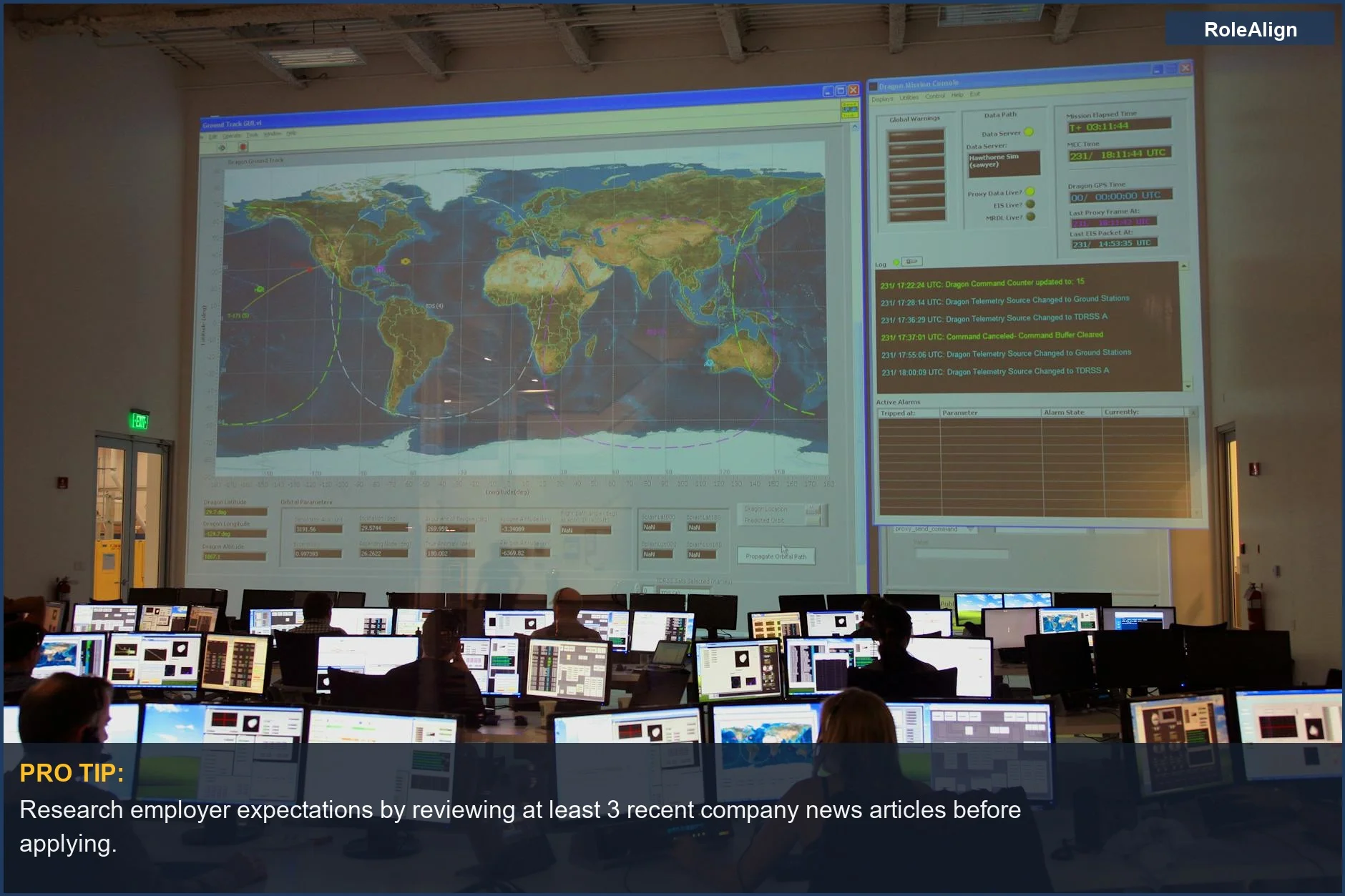
Employees in specialized roles often have unique expectations from employers, such as clear project roadmaps and advanced technology.
| Photo by SpaceX
Employees in specialized roles often have unique expectations from employers, such as clear project roadmaps and advanced technology.
| Photo by SpaceX
## What This Looks Like in Practice
Senior Software Engineer at a Series B Startup
A senior engineer expects clear technical direction and autonomy, not micromanagement. When a startup provides a well-defined roadmap and trusts the engineer to implement solutions, it fosters high engagement. Conversely, projects that constantly shift priorities without clear justification or where senior engineers are bogged down with low-level tasks can lead to frustration and burnout, undermining productivity Setting Clear Expectations for Employees.
Entry-Level Data Analyst at a Fortune 500
This analyst anticipates structured training programs and mentorship to build foundational skills. A company that offers a formal onboarding process, assigns a mentor, and provides access to learning resources sets this role up for success. When expectations are vague, and the analyst is thrown into complex tasks without adequate support or learning opportunities, it can lead to significant performance gaps and a feeling of being overwhelmed Setting Employee Expectations.
Career Changer from Teaching to Product Management
A professional transitioning careers expects transparent communication about the learning curve and support for skill development. A company that acknowledges the transferable skills from teaching, provides opportunities to shadow product managers, and offers constructive feedback on early product initiatives will see this individual thrive. A lack of clarity on how their existing skills translate or an expectation that they will perform at a seasoned level immediately can be demotivating and hinder their integration into the new role Setting Employee Expectations as a Leader: A How-To Guide.
Mid-Level Marketing Specialist at a Mid-Sized Tech Company
This specialist expects defined performance metrics and opportunities for professional growth. When marketing goals are clearly articulated, and there are pathways for advancement or learning new marketing channels, job satisfaction increases. If performance expectations are ambiguous, or opportunities for skill development are scarce, the specialist may feel stagnant and look for roles that offer more development Beyond the Job: What Employers Really Expect.
Technical roles have specific employee expectations from employers, like autonomy and clear direction, especially in cybersecurity fields.
| Photo by Tima Miroshnichenko
Technical roles have specific employee expectations from employers, like autonomy and clear direction, especially in cybersecurity fields.
| Photo by Tima Miroshnichenko
Mistakes That Kill Your Chances
Symptom You focus excessively on what the company owes *you*, rather than what you owe the company.
Signal Your interview questions revolve around benefits, perks, and immediate promotion paths before demonstrating your value.
Fix Shift your mindset. Research what the company needs and how your skills solve their problems. Frame your questions around how you can contribute and grow *within* their objectives. Remember, employers expect drive and motivation from employees.
Symptom You expect your employer to "figure you out" without clear communication.
Signal You're consistently surprised by performance feedback or feel your contributions are overlooked because no one explicitly acknowledged your efforts or needs.
Fix Be proactive. Clearly articulate your needs for training, resources, or support. Don't wait for your manager to guess. Setting clear expectations for employees, including what they can expect from their leaders, is crucial for engagement according to leadership experts.
Symptom You believe "company culture" means the employer must cater to your every whim.
Signal You complain about minor inconveniences, rigid processes, or lack of immediate flexibility, rather than adapting or seeking constructive solutions.
Fix Understand that culture is a two-way street. While employers should provide a respectful environment and fair pay, you also have a responsibility to adapt and contribute positively. Focus on demonstrating your own professionalism and teamwork.
Symptom As a new grad, you expect immediate mentorship and hand-holding for every task.
Signal You frequently ask for explicit instructions on tasks you could likely figure out with some initial research or problem-solving.
Fix Show initiative. Employers expect new hires to have drive and a willingness to learn. Attempt to solve problems independently first, then ask targeted questions. This demonstrates a growth mindset, a key employer expectation beyond just doing your job.
Symptom As a mid-career professional, you expect your employer to automatically know your long-term career aspirations.
Signal You're disappointed when opportunities for advancement or new projects don't align with your unspoken goals.
Fix Have explicit career conversations. Don't assume your manager is a mind-reader. Schedule regular check-ins to discuss your development goals and explore how they can align with company needs. This proactive approach is far more effective than passive expectation.
Symptom As a senior leader, you expect autonomy and minimal oversight, even when new initiatives require collaboration.
Signal You resist sharing progress updates or seeking input from cross-functional teams, leading to silos and missed opportunities.
Fix Recognize that leadership also involves transparency and collaboration. Even at senior levels, clear communication and a willingness to integrate with broader organizational goals are critical. Employers expect team spirit and a positive attitude from all levels to foster a supportive work environment.
Understanding your rights, such as maternity and parental rights, can significantly enhance your workplace expectations.
Comparison overview for employee expectations from employers
## Key Takeaways
Clear expectations are the bedrock of a functional workplace, yet many companies fail spectacularly at setting them. When roles and responsibilities aren't clearly defined, engagement plummets. Gallup reports that only 21 percent of employees worldwide were engaged in 2024, partly because workers don't know what's expected of them Business News Daily. This clarity isn't just about tasks; it's about fostering a culture where everyone understands their contribution.
Employees expect fair treatment, timely pay, and support, including proper training programs Business News Daily. Beyond the basics, they look for respect, opportunities for growth, and a positive work environment Frederick Works. Employers, in turn, often seek motivation, collaboration, and reliability.
The single most important thing a recruiter would tell you off the record? Don't just expect; articulate. If you're an employer, clearly define what you need and what you offer. If you're an employee, proactively seek and confirm these expectations. Mismatched understanding is the silent killer of productivity and job satisfaction.
Key takeaways for understanding employee expectations from employers:
Define roles and responsibilities upfront.
Ensure fair compensation and benefits.
Provide opportunities for professional development and growth.
Foster a supportive and respectful work environment.
Maintain consistent and transparent communication.
To foster a thriving workplace, it's essential to become a workplace culture insider who understands these dynamics.
Frequently Asked Questions
What kind of atmosphere do people actually want at work these days?
Look, most people want a place where they're treated with basic respect, where different backgrounds are actually welcomed (not just lip service), and where you can talk to people without feeling like you're walking on eggshells. This stuff actually fuels better ideas and makes teams click, according to research from places like Gallup. Business News Daily highlights that companies often miss the mark here, and it tanks engagement.
Do job expectations really change depending on the industry you're in?
Absolutely. It's not just about the job title. In hyper-growth tech, you might hear buzzwords about innovation and needing to be agile, often with perks like flexible hours. Meanwhile, in a more traditional finance sector, stability, adherence to strict regulations, and a certain level of formality might be the unspoken priorities. Recruiters in different fields are scanning for different signals, so understand the industry context.
What do most people look for when they think about moving up in their career?
Beyond just a title bump, people want to see a clear path forward - like, 'If I do X, Y, and Z, I can get to the next level.' Mentorship, especially from senior folks who've been there, is huge for guidance, and access to relevant training that actually helps you grow your skills is a non-negotiable for many. UMKC HR points out that setting these expectations upfront is key.
How does being a junior versus a senior employee change what you expect from your boss or company?
When you're starting out, you're often looking for structure - clear onboarding, someone to show you the ropes, and regular feedback. As you gain experience, the game shifts. Senior folks typically want more autonomy, a chance to influence strategy, and to be trusted to deliver without constant micromanagement. Leaders need to adjust their approach accordingly, as Your Thought Partner notes.
What's different about what remote workers want versus people in the office?
Remote teams need rock-solid communication tools and a genuine sense of inclusion, often with more flexibility in when they work. They need to feel connected to decisions, not like they're out of the loop. In-office folks might still value physical perks like decent coffee or comfortable desks, but the core need for connection and clear communication transcends location. FrederickWorks emphasizes that beyond the job, employers want reliability and professionalism, which applies to both groups.
R
RoleAlign Team
Experienced car camper and automotive enthusiast sharing practical advice.