Understanding Employee Benefits and Compensation: What You Need to Know
RoleAlign Team
11 min read
Includes Video
You just got the rejection email. Again. Staring at your LinkedIn feed, you see another recruiter posting for a role you'd be perfect for, but the salary range is buried or absent. This is the frustrating reality: the job search hinges on more than just your skills and experience.
You just got the rejection email. Again. Staring at your LinkedIn feed, you see another recruiter posting for a role you'd be perfect for, but the salary range is buried or absent. This is the frustrating reality: the job search hinges on more than just your skills and experience. It's about understanding the full picture of employee benefits and compensation. While base salary is critical, it's only one piece of the puzzle. Benefits and perks can significantly alter the financial proposition of a role, making one offer far more attractive than another with the same base pay. In fact, employee benefits can account for as much as 31% of total compensation, according to the U.S. Bureau of Labor Statistics Risk Placement Services. Ignoring this can cost you. For employers, getting comp & ben right is vital; these packages, along with related taxes, can represent up to 70% of their operational costs AIHR. When you're prepping for that next interview, or even just updating your resume, know that recruiters and hiring managers are evaluating your potential fit within the entire compensation and benefits structure, not just your ability to perform the core job functions.
Key specifications for employee benefits and compensation
## The Real Answer
Employee benefits and compensation are not just line items on a P&L; they are the fundamental currency of talent acquisition and retention. Recruiters and hiring managers view this package holistically, understanding that a competitive salary alone is rarely enough to secure top performers.
Recruiters see employee benefits and compensation as a strategic tool. It's how they differentiate offers when multiple candidates are equally qualified. Don't assume a slightly higher salary trumps a robust benefits package; employees increasingly weigh non-monetary perks heavily. For instance, while wages and salaries might make up 69% of total compensation, employee benefits account for a significant 31%, according to the U.S. Bureau of Labor Statistics. This means a seemingly smaller salary with superior health insurance, retirement contributions, and paid time off can be a far better financial proposition overall.
Understand that compensation encompasses direct pay (salary, bonuses) and indirect benefits (health insurance, retirement plans, paid time off) AIHR. Recruiters are trained to assess the total package, not just the base salary. Companies use these elements as a bargaining tool to attract and retain talent factorialhr.com. When you're evaluating an offer, look beyond the paycheck to understand the true value of the entire compensation and benefits structure.
Benefits are non-wage compensation provided to employees beyond their regular wages or salaries Connectify HR. This includes everything from medical and life insurance to disability coverage and retirement plans, often referred to as the "big four" in employee benefits factorialhr.com. Recruiters know that a candidate's decision often hinges on these "extras."
A diverse team brainstorms in a modern office, demonstrating how strong employee benefits and compensation packages foster collaboration and productivity.
| Photo by Christina Morillo
A diverse team brainstorms in a modern office, demonstrating how strong employee benefits and compensation packages foster collaboration and productivity.
| Photo by Christina Morillo
## What's Actually Going On
1
ATS Parsing and Recruiter Screening - Applicant Tracking Systems (ATS) are the first gatekeepers. They parse resumes for keywords, exact phrase matches, and specific formatting. Recruiters then spend seconds, not minutes, scanning for these signals. They are looking for a clear match between your resume and the job description, not a novel. Anything that makes parsing difficult - unconventional fonts, tables, or graphics - can get you automatically rejected.
2
Hiring Committee Decisions & Total Compensation - Once past the initial screen, the hiring committee reviews. Here, employee benefits and compensation become critical differentiators. While salary is a major factor, candidates increasingly consider the entire package. Benefits can make up 31% of total compensation, according to the U.S. Bureau of Labor Statistics, making them a significant part of the decision-making process. A Guide to Employee Benefits | Risk Placement Services.
3
Company Size and Industry Nuances - The employee benefits and compensation landscape varies dramatically. Startups often offer equity and more flexible perks, while enterprises provide more structured, comprehensive benefits like robust health insurance and retirement plans. Tech companies might emphasize stock options and cutting-edge wellness programs. Finance often includes generous bonuses and retirement contributions. Healthcare roles may see specialized insurance plans and tuition reimbursement.
4
Seniority Level Impact - At senior levels, compensation becomes more complex, often including performance-based bonuses, stock options, and deferred compensation plans. The emphasis shifts from basic health and retirement to wealth accumulation and long-term incentives. For entry-level roles, the focus is typically on core benefits like health insurance, paid time off, and a competitive base salary.
5
The Value Proposition of Benefits - Overall compensation, including benefits, is the top factor job seekers consider when accepting a new role. Compensation and Benefits: The Complete Guide - AIHR. Companies must understand that compensation and benefits, alongside taxes, can account for up to 70% of business costs. This highlights the strategic importance of offering a competitive package.
6
Beyond Salary: Total Rewards - Recruiters and hiring managers evaluate the entire total rewards package. This includes not just salary but also health insurance, retirement contributions, paid time off, professional development opportunities, and other perks. Understanding the nuances of how these components are valued by candidates is key to attracting and retaining top talent. Benefits 101: Demystifying Your Benefits Package - SHRM.
To fully grasp employee compensation, it's essential to understand what a total compensation package entails.
Colleagues in a conference room discuss project details, underscoring the importance of clear communication regarding employee benefits and compensation.
| Photo by Christina Morillo
Colleagues in a conference room discuss project details, underscoring the importance of clear communication regarding employee benefits and compensation.
| Photo by Christina Morillo
## How to Handle This
1
Understand total compensation - Don't just focus on base salary. Remember that employee benefits, which can make up a significant portion of your overall package, are crucial for your financial well-being and job satisfaction A Guide to Employee Benefits | Risk Placement Services. Recruiters see the entire picture, and a strong benefits package can be a major differentiator. Skipping this means you might overlook a job that's financially better for you overall, even if the base salary seems similar Compensation and Benefits: The Complete Guide - AIHR.
2
Research industry standards before you apply - Know what's typical for your role level and industry. This isn't about demanding the highest numbers, but about understanding the range and identifying companies that offer competitive employee benefits and compensation. Use resources like the U.S. Bureau of Labor Statistics' Employee Benefits Survey EBS Home : U.S. Bureau of Labor Statistics to get a baseline. Recruiters expect candidates to have a realistic understanding of market rates. Not doing this research means you might accept a subpar offer or price yourself out of consideration by asking for too much too soon.
3
Inquire about specific benefits during the interview process - Once you're in the interview stages, ask targeted questions about health insurance, retirement plans (like 401k matches), paid time off, and any other perks. Don't wait until the offer stage. Recruiters want to see that you're thinking strategically about the long-term value of the role, not just the immediate paycheck. They also use this as a gauge for your engagement and seriousness about the position. Failing to ask shows a lack of due diligence and can lead to surprises after you accept the job.
4
Evaluate the entire package holistically - Compensation and benefits are intertwined. A slightly lower base salary might be perfectly acceptable if it's coupled with exceptional health coverage, a generous retirement match, or substantial paid time off. Recruiters know that the total compensation is what truly matters to candidates and to the company's overall investment in talent. Overlooking this holistic view can lead you to accept an offer that looks good on paper but is less valuable in practice.
Coworkers celebrate a successful business idea, illustrating how strong employee benefits and compensation contribute to positive workplace relationships.
| Photo by Andrea Piacquadio
Coworkers celebrate a successful business idea, illustrating how strong employee benefits and compensation contribute to positive workplace relationships.
| Photo by Andrea Piacquadio
## What This Looks Like in Practice
Senior Software Engineer at a Large Tech Company A candidate with extensive experience in AI and ML development applied for a senior role. They received a competitive salary offer, comprehensive health insurance, retirement plan matching, and a generous amount of paid time off. The offer also included stock options, which are a significant part of the total compensation for these roles. This package was attractive due to the combination of base pay and long-term incentives, reflecting the industry standard for senior technical talent. AIHR
Entry-Level Data Analyst at a Publicly Traded Corporation A recent graduate secured an entry-level data analyst position. The compensation included a starting salary and standard benefits such as health insurance and a retirement savings plan with employer contributions. While the base salary was in line with industry expectations for junior roles, the benefits package was considered good, providing a solid foundation for financial and health security. U.S. Bureau of Labor Statistics
Product Manager Transitioning from a Non-Tech Industry An individual with a background in project management from a different sector moved into a product management role at a mid-sized tech firm. Their offer included a solid base salary, health coverage, and a retirement plan. However, it lacked the more substantial equity components common in earlier-stage tech companies. This meant their total compensation was primarily driven by salary and traditional benefits, which was a shift from what they might have expected in a high-growth startup environment. factorialhr.com
Healthcare Professional Seeking Remote Work A nurse practitioner sought a role offering remote flexibility. The offered compensation included a competitive hourly rate, health insurance, and a retirement plan. The key driver for acceptance was the remote work arrangement, which was valued as a significant non-monetary benefit, outweighing slight differences in base pay compared to in-office roles. This highlights how flexible work arrangements can be a powerful component of employee benefits. SHRM
A high-fiving team celebrates success, showcasing how competitive employee compensation and benefits, like ample PTO, drive team achievement.
| Photo by Monstera Production
A high-fiving team celebrates success, showcasing how competitive employee compensation and benefits, like ample PTO, drive team achievement.
| Photo by Monstera Production
## Mistakes That Kill Your Chances
Symptom You treat compensation and benefits as an afterthought, focusing solely on the base salary number.
Signal Your offer is repeatedly rejected for "better packages" even when the base salary is competitive. Recruiters see you as naive about the total value of employment.
FixResearch the company's typical benefit offerings before interviewing. Ask specific questions about health insurance, retirement plans, and paid time off. Remember, benefits often make up a significant portion of the total compensation, with employee benefits constituting 31% of total compensation while wages and salaries make up 69%, according to the U.S. Bureau of Labor Statistics EBS Home : U.S. Bureau of Labor Statistics.
Symptom You ask generic questions about benefits, like "What are the benefits?"
Signal Interviewers give you vague answers and may perceive you as not serious about understanding the full employment picture. This is especially true for senior roles where strategic compensation understanding is expected.
FixAsk targeted questions that demonstrate your understanding of total rewards. For example, inquire about the structure of retirement contributions, the employer's contribution to health insurance premiums, or the availability of professional development stipends. This shows you grasp that compensation and benefits are a comprehensive package Compensation and Benefits: The Complete Guide - AIHR.
Symptom You focus heavily on perks that are nice-to-haves but don't address core benefits.
Signal Recruiters see you prioritizing superficial benefits over essential ones like health insurance or retirement savings. For new grads, this can signal a lack of understanding of long-term financial planning.
FixPrioritize core benefits in your discussions and research. Understand that while perks like free snacks are appreciated, robust health coverage and retirement plans are crucial components of employee benefits Benefits 101: Demystifying Your Benefits Package - SHRM. Companies are aware that compensation, benefits, and related taxes can account for up to 70% of business costs Compensation and Benefits: The Complete Guide - AIHR, so they invest in what truly matters to employees.
Symptom You undervalue the importance of benefits during salary negotiations.
Signal You may end up accepting a role with a higher salary but a significantly worse benefits package, leading to unexpected out-of-pocket expenses later. Recruiters see this as a candidate who doesn't understand the full picture of their earning potential.
FixQuantify the value of benefits for yourself. If a job offers a slightly lower salary but excellent health insurance with low deductibles and a generous retirement match, it could be a better overall financial proposition than a higher salary with poor benefits. This holistic view is key to making informed career decisions Your Guide to Common Employee Benefits Terms - Connectify HR.
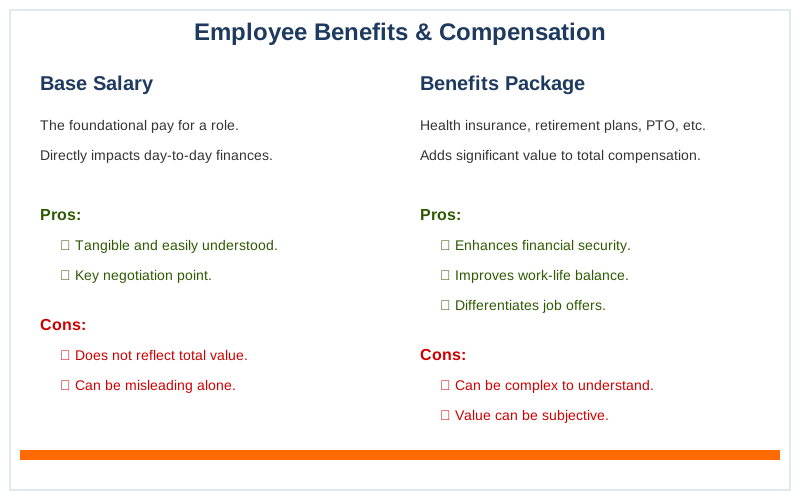
Comparison overview for employee benefits and compensation
## Key Takeaways
Compensation and benefits are your primary negotiation levers beyond base salary. Don't just look at the number; understand the total package. While wages and salaries make up 69% of total compensation, employee benefits account for 31%, according to Risk Placement Services.
A generous benefits package can significantly offset a slightly lower salary, especially when it includes things like robust health insurance, retirement matching, and ample paid time off. Remember, two jobs with the same salary can offer vastly different financial propositions due to these "extras."
Total compensation is the top factor job seekers consider AIHR. However, be aware that compensation, benefits, and taxes can account for up to 70% of business costs, so companies are strategic about them.
Focus on benefits that matter to *you*. Health, disability, life insurance, and retirement plans are standard, but look for unique perks like wellness programs, professional development stipends, or flexible work arrangements. These non-wage components are a crucial part of your overall remuneration Connectify HR.
The single most important thing a recruiter would tell you off the record? Always negotiate the *entire* compensation package, not just the base salary. A recruiter might have flexibility on benefits that they don't have on salary, and that's where you can often gain significant value.
What kind of perks do tech companies usually throw in besides salary?
Tech companies often go big on benefits to snag top talent. Expect comprehensive health, dental, and vision insurance, often with low employee contributions - think $0 premiums for individuals sometimes. Many offer generous 401(k) matching, sometimes 50% up to 6% of your salary, or even profit sharing. You'll also see ample paid time off (PTO), often starting at 3-4 weeks, plus paid holidays and sick days. Some even offer fertility benefits, adoption assistance, or student loan repayment programs.
How do pay and perks differ across different industries?
It's night and day. In high-demand fields like tech or finance, you'll see higher base salaries and more aggressive bonus structures, often 10-20% of base for performance. Healthcare and manufacturing might offer solid health insurance and retirement plans, but the base pay might not be as high. Retail and hospitality often have lower base pay, relying more on hourly wages and perhaps some commission or discounts, with benefits being more standard (like basic health insurance) rather than premium. Remember, the U.S. Bureau of Labor Statistics notes that benefits can make up about 31% of total compensation Source Name, so look beyond just the paycheck.
What should I really think about when I'm trying to negotiate my total pay and benefits?
Don't just fixate on the base salary. Always ask about the bonus structure - is it guaranteed, performance-based, or company-wide? Dig into the 401(k) match: what's the percentage and vesting schedule? Understand the PTO policy: how much do you get initially, and does it increase with tenure? If health insurance is a big deal for you, get specifics on premiums, deductibles, and out-of-pocket maximums. A company might offer a slightly lower base but make up for it with an amazing 401(k) match and better health coverage, making it a better overall deal.
How can a small business compete with the big guys on employee perks?
Small businesses can't always match the big tech firms' stock options or unlimited PTO, but they can get creative. Focus on flexibility: remote work options or flexible hours can be huge drawcards that cost little. Offer a strong health insurance plan, even if it's not the absolute top-tier; a good plan is still a significant perk Source Name. Consider offering professional development stipends for courses or conferences, which shows you're invested in employee growth and can be more impactful than a small cash bonus.
Does working remotely change what companies offer in terms of pay and perks?
Absolutely. Many companies are adjusting pay based on location, so remote workers in lower cost-of-living areas might see a salary adjustment compared to someone in a major tech hub. Benefits like health insurance can also be tricky; some companies offer a national network, while others provide a stipend for you to source your own coverage. Unlimited PTO is also more common in remote-first companies, though it requires discipline to actually take the time off.
R
RoleAlign Team
Experienced car camper and automotive enthusiast sharing practical advice.