How Culture Fit Became the Most Convenient Rejection in Hiring (2026 Complete Guide)
RoleAlign Team
15 min read
Prices verified February 2026
Includes Video
You're staring at the rejection email, the words "not a good culture fit" blurring on the screen. It stings, especially after you poured hours into preparing, researching, and nailing every technical question. This vague feedback, the dreaded culture fit rejection, has become the convenient escape hatch for hiring teams.
You're staring at the rejection email, the words "not a good culture fit" blurring on the screen. It stings, especially after you poured hours into preparing, researching, and nailing every technical question. This vague feedback, the dreaded culture fit rejection, has become the convenient escape hatch for hiring teams. It sounds legitimate, even responsible, on the surface JOIN. But veteran recruiters and industry insiders know it's often a smokescreen.
The uncomfortable truth is that "culture fit" frequently masks unconscious bias rather than reflecting genuine organizational misalignment Deepali Vyas posted on the topic - Culture Fit or Bias - LinkedIn. It's a convenient catch-all, a way to reject candidates without offering specific, actionable feedback. This approach protects homogeneity and allows hiring managers to simply go with a "gut feeling" Optim Careers. The danger is that it can lead to discriminatory hiring practices, excluding qualified individuals who simply don't fit a narrow, often unexamined, mold. This isn't about whether you can do the job; it's about perception and the fear of rocking the boat. In reality, this vague rationale is a breeding ground for bias, potentially excluding candidates based on race, gender, age, or socioeconomic background, as Forbes highlights the danger of creating a biased, discriminatory recruitment process Forbes. Instead of evaluating a candidate's ability to contribute to an evolving culture, the focus shifts to whether they align with a static, often unarticulated, present state. This can stifle innovation and prevent an organization from benefiting from diverse perspectives and experiences, as the myth of cultural fit can hinder the very evolution a company needs to thrive Bonelli. It’s easier to dismiss someone who seems different than to invest in understanding and integrating new viewpoints. The implication is that "culture fit" can be a code word for "not like us," bypassing objective assessment for subjective comfort.
Key specifications for How Culture Fit Became the Most Convenient Rejection in Hiring
## The Real Answer
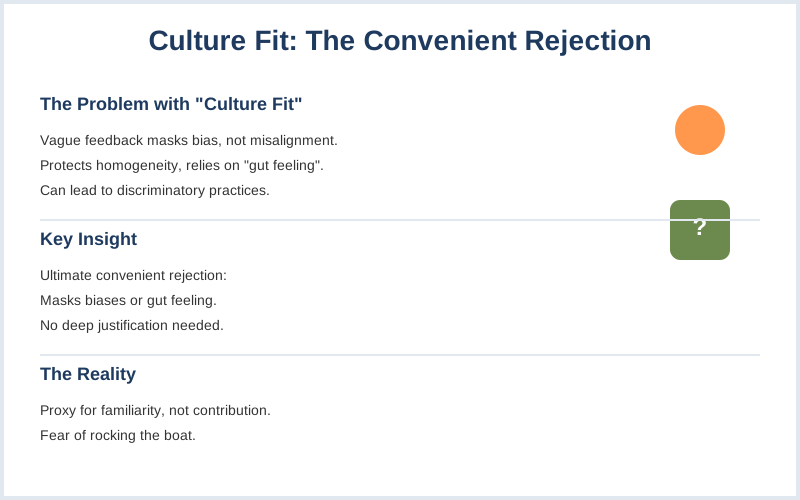
From a recruiter's perspective, "culture fit" has become the ultimate convenient rejection because it's a nebulous term that can mask a multitude of unstated biases or simply a gut feeling, offering a seemingly objective reason without requiring deep justification.
The reality is that "culture fit" is often a proxy for familiarity or a perceived lack of potential friction, rather than a genuine assessment of how a candidate will contribute to organizational growth. Recruiters might use this phrase to avoid difficult conversations about subjective dislikes or to maintain the status quo, effectively shutting down diverse perspectives without explicitly stating it. This is why a "culture fit rejection" frequently masks bias and disproportionately affects certain candidates Deepali Vyas posted on the topic - Culture Fit or Bias - LinkedIn. It's a way to sidestep the uncomfortable truth that the decision might be based on superficial similarities rather than objective qualifications, as highlighted by Forbes, which points out that using "culture fit" can put hiring teams in danger of creating a biased, discriminatory recruitment process Why 'Culture Fit' Is A Hiring Cop Out - Forbes.
What candidates often assume is a thorough evaluation of their alignment with company values is, in practice, frequently a quick check against an interviewer's personal preferences or a desire for homogeneity. The problem isn't that culture doesn't matter, but that the traditional approach to hiring for "culture fit" leads to "cultural photocopying," reinforcing existing patterns and hindering innovation Stop Hiring for Culture Fit (And Start Building Culture that Evolves). This makes it a convenient escape hatch when the real reason for rejection is more nuanced or less defensible. Instead of focusing on how a candidate's unique skills and experiences can enhance the existing culture, the emphasis shifts to whether they "look and sound" like current employees, creating an echo chamber rather than a dynamic environment.
When a recruiter says someone is "not a good culture fit meaning" they can't articulate the specific misalignment. It's a vague shield for decisions that might stem from unconscious bias, age discrimination, or simply a manager's discomfort with someone who doesn't immediately remind them of themselves or their existing team. This often leads to qualified candidates being excluded based on subjective judgments rather than objective performance potential Why 'Culture Fit' is Code for Something Else - Optim Careers. This vague justification can also be a cover for discriminatory practices, as veteran recruiters reveal that "culture fit" rejections can often hide deeper issues like age discrimination Why 'Culture Fit' is Code for Something Else - Optim Careers. The allure of avoiding potential conflict or the discomfort of managing differences leads to a superficial assessment, rather than a true understanding of how an individual can contribute to the organization's long-term success and evolution.
A clean, contemporary workspace symbolizes the modern office environment where 'culture fit' often becomes a convenient rejection, masking underlying biases in hiring.
| Photo by Serpstat
A clean, contemporary workspace symbolizes the modern office environment where 'culture fit' often becomes a convenient rejection, masking underlying biases in hiring.
| Photo by Serpstat
## What's Actually Going On
1
ATS parsing - Applicant Tracking Systems (ATS) are the first gatekeepers. They scan resumes for keywords, often prioritizing those that match the job description verbatim. Anything that doesn't directly align, including nuanced descriptions of soft skills or a candidate's potential to *evolve* a culture, gets filtered out. This early stage can prematurely reject strong candidates before a human ever sees their application. The convenience of "culture fit" as a rejection reason means it's often not even a consideration at this automated stage.
2
Recruiter screening - Recruiters then screen the remaining applications. While they might look for explicit skills, they also make rapid judgments. A "culture fit" rejection frequently masks underlying bias, affecting high-potential candidates. It's easier to say someone wasn't a good fit than to articulate specific, objective reasons, especially when unconscious bias about background, appearance, or communication style plays a role.
3
Hiring committee decisions - For hiring managers and committees, the decision often devolves into subjective "gut feelings." This is where the myth of cultural fit truly festers. Instead of assessing how a candidate could *add* to or *evolve* the culture, they often seek someone who mirrors the existing team. This leads to cultural homogeneity, where innovation stalls because everyone thinks alike.
4
Company size and industry impact - In startups, "culture fit" can be more about raw enthusiasm and willingness to wear multiple hats, often leading to a quick, informal rejection if perceived energy levels don't match. Enterprise companies, with more structured processes, might use "culture fit" as a safer, more formal reason for rejection, especially when navigating complex internal politics. Tech often grapples with this due to a historical emphasis on specific subcultures, while finance and healthcare might lean more on perceived professionalism and adherence to established norms, sometimes masking age bias.
5
Seniority level considerations - At junior levels, "culture fit" often translates to perceived coachability and willingness to learn the company's way. For senior roles, it can become a proxy for leadership style alignment or perceived influence within the existing hierarchy, making a culture fit rejection a way to avoid challenging established power dynamics. The vagueness of "not a good culture fit meaning" allows for these subjective biases to go unchecked, creating a convenient escape hatch for recruiters and hiring managers alike.
Understanding ATS parsing can help candidates avoid common pitfalls, as discussed in our article on interview performance pitfalls.
Dual monitors on a tech desk showcase the sophisticated tools used in modern hiring, where ATS parsing can inadvertently contribute to culture fit bias.
| Photo by Tranmautritam
Dual monitors on a tech desk showcase the sophisticated tools used in modern hiring, where ATS parsing can inadvertently contribute to culture fit bias.
| Photo by Tranmautritam
## How to Handle This
1
Define "culture add" not "culture fit" - Recruiters often use "culture fit" as a shield for bias, a convenient way to reject candidates without clear, objective reasons Optim Careers. Instead, focus on "culture add": what unique perspectives or skills does a candidate bring that will *evolve* the culture, rather than just match it? This shifts the conversation from subjective feelings to tangible contributions, making rejections more defensible and fostering a more diverse, innovative team AlignOrg. Skipping this means you're likely falling into the "cultural photocopying" trap, hiring people who think and act just like existing employees, stifling innovation AlignOrg.
2
Document objective criteria *before* interviews - For every role, establish 3-5 measurable behavioral indicators that align with the company's *evolving* values and the specific demands of the job, not just the interviewer's personal preferences. This means defining what "collaboration" looks like in practice for a senior engineer versus a junior marketer, for example. If you skip this, the "culture fit rejection" becomes entirely subjective, opening the door to unconscious bias and making it impossible to defend your hiring decisions if challenged. This is where "culture fit discrimination" can easily creep in Forbes.
3
Train interviewers on bias and structured interviewing - Conduct mandatory training sessions using platforms like LinkedIn Learning modules on unconscious bias, specifically addressing how "culture fit" can mask age discrimination or other biases Optim Careers. Emphasize using the pre-defined objective criteria for every candidate, regardless of role level or industry. If you don't train, interviewers will default to gut feelings, leading to a "not a good culture fit meaning" that is vague and discriminatory, and interview feedback will remain anecdotal rather than data-driven. This lack of structure is precisely why "culture fit" rejection frequently masks bias LinkedIn.
4
Use structured feedback forms with specific behavioral anchors - After each interview, have the interviewer complete a standardized form that directly assesses the candidate against the pre-defined objective criteria, not general "vibe" assessments. This is crucial for all roles, from entry-level to executive, as bias can affect any level of hire. If you skip this, interview feedback becomes a free-for-all of subjective opinions, making it impossible to aggregate data or provide concrete, actionable feedback to candidates about why they weren't selected. This is where the convenience of "culture fit rejection" truly takes hold Forbes.
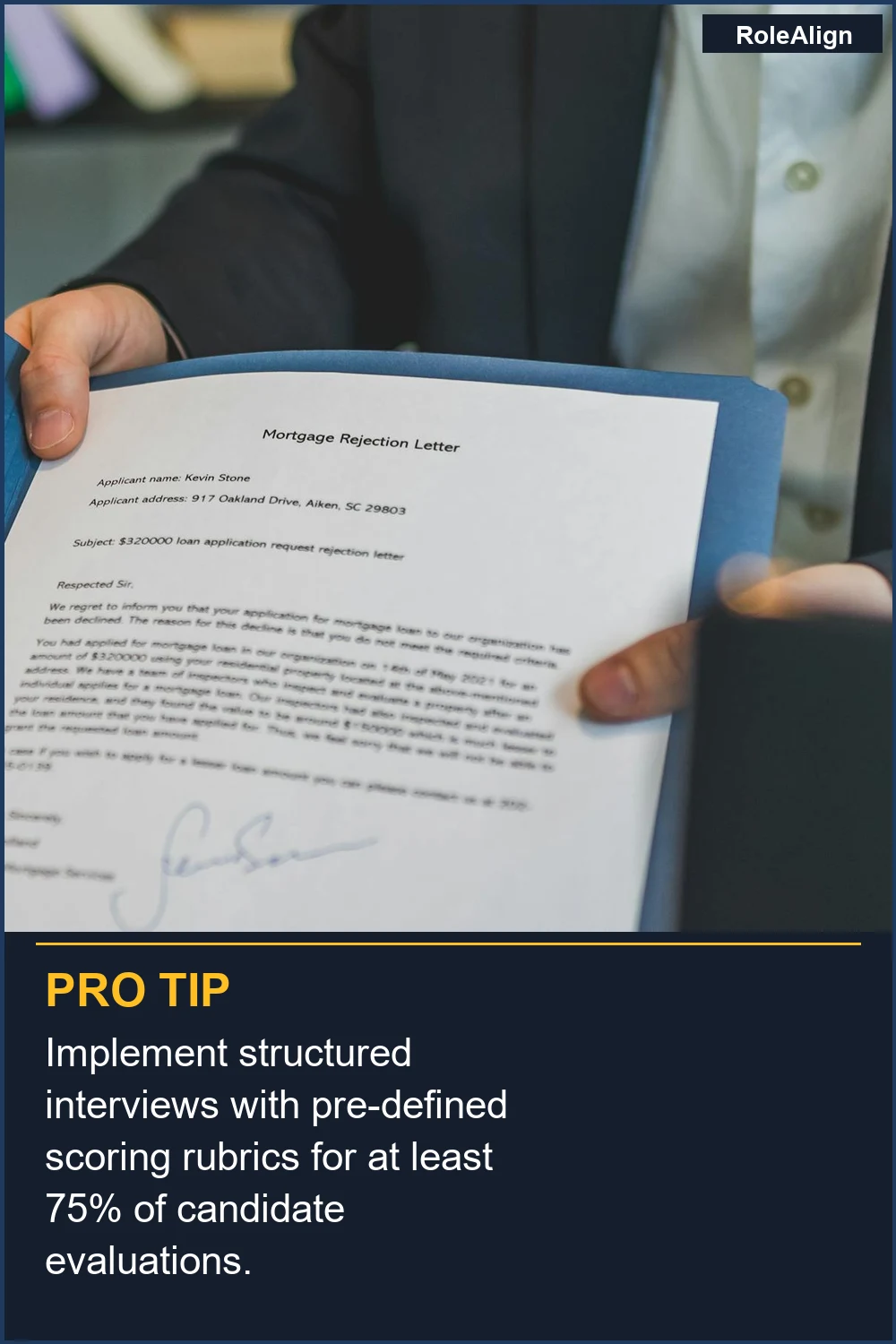
Holding a mortgage rejection letter starkly represents the personal impact of receiving a 'not a good culture fit' dismissal, highlighting potential discrimination.
| Photo by RDNE Stock project
Holding a mortgage rejection letter starkly represents the personal impact of receiving a 'not a good culture fit' dismissal, highlighting potential discrimination.
| Photo by RDNE Stock project
## What This Looks Like in Practice
Senior Software Engineer at a Series B Startup: A candidate with strong technical skills and a portfolio of successful projects was rejected after the final interview. The stated reason was "not a good culture fit." In reality, the hiring manager felt the candidate was too direct and wouldn't "play nice" with the existing, more laid-back team dynamic. This masked a fear of challenging the status quo, a common culture fit rejection.
Entry-Level Data Analyst at a Fortune 500: A recent graduate with excellent analytical abilities and a keen interest in the company's industry was told they lacked "enthusiasm." The interview panel, comprised of individuals with decades of experience, perceived the candidate's measured, data-driven communication style as a lack of energy, rather than a professional demeanor. This illustrates how culture fit bias hiring can penalize different communication styles.
Career Changer from Teaching to Product Management: An educator transitioning into tech, bringing valuable skills in curriculum design, user empathy, and project management, was rejected for a junior product manager role. The feedback cited an inability to "think like a product person." This overlooked the transferable skills and framed a new perspective as a deficit, highlighting how "culture fit" can mask bias, disproportionately affecting those from non-traditional backgrounds.
Mid-Level UX Designer at a Fintech Company: A designer with a proven track record in user research and creating intuitive interfaces was passed over. The hiring manager's feedback was that the candidate was "too academic" and wouldn't thrive in their "fast-paced, scrappy environment." This was a convenient way to reject someone whose methodical approach might have challenged the existing, less structured design process, a classic example of not a good culture fit meaning.
Understanding how visibility impacts recognition in the workplace can provide insight into why diversity hiring programs may also fall short.
A woman analyzing data on a computer screen in a modern office reflects the complex evaluation process, where 'culture fit' can be a vague reason for rejecting skilled candidates.
| Photo by ThisIsEngineering
A woman analyzing data on a computer screen in a modern office reflects the complex evaluation process, where 'culture fit' can be a vague reason for rejecting skilled candidates.
| Photo by ThisIsEngineering
## Mistakes That Kill Your Chances
Symptom Over-emphasizing personality alignment over demonstrable skills.
Signal Candidates are rejected with vague feedback like "just not the right vibe," masking unconscious bias or a desire for homogeneity Why 'Culture Fit' Is A Hiring Cop Out - Forbes. This often becomes a convenient way to dismiss candidates without articulating concrete reasons, thereby avoiding difficult conversations and potential legal challenges. Research suggests that "culture fit" rejections frequently mask bias rather than reflecting genuine organizational misalignment, disproportionately affecting high-potential candidates Deepali Vyas posted on the topic - Culture Fit or Bias - LinkedIn. The danger lies in creating a biased, discriminatory recruitment process Why 'Culture Fit' Is A Hiring Cop Out - Forbes. Instead of assessing true organizational alignment, hiring teams may inadvertently seek out individuals who are simply similar to themselves, stifling diversity of thought and experience. This can also be a way to avoid confronting the need for organizational change, opting instead to maintain the status quo.
Fix Shift focus to behavioral interviews probing role-relevant problem-solving and collaboration, not subjective "likability." Define core values and assess candidates against them, not existing team personalities. This involves preparing specific, situational questions that reveal how a candidate has handled past challenges, worked in teams, and approached problem-solving. For example, instead of asking "Do you think you'd fit in here?", ask "Describe a time you had to collaborate with a difficult colleague to achieve a common goal." This allows for objective evaluation of skills and behaviors directly related to job performance. Furthermore, clearly articulating and measuring against established core values ensures that the assessment is based on the company's foundational principles rather than the subjective preferences of individual interviewers. This approach fosters a more equitable and effective hiring process.
Symptom New grads or junior candidates mimicking established employees.
Signal Candidates parrot company jargon or express inauthentic opinions, signaling a lack of understanding or an attempt to force a fit, perceived as a lack of independent thought Why 'Culture Fit' is Code for Something Else - Optim Careers. Veteran recruiters often reveal that this perceived "culture fit" can hide underlying biases, including age discrimination, as younger candidates may be more prone to adopting the language and style of their potential mentors Why 'Culture Fit' is Code for Something Else - Optim Careers. This can lead to rejecting promising talent who are simply trying to demonstrate their eagerness to learn and integrate. It can also be a sign of a company culture that discourages genuine expression and critical thinking, valuing conformity over innovation.
Fix For early-career candidates, highlight adaptability and a learning mindset. Demonstrate how you can contribute to evolution, not just fit the current state. Showcase curiosity and engagement with diverse perspectives. This means actively seeking out candidates who ask insightful questions, demonstrate a genuine interest in learning, and can articulate their thought process. Instead of penalizing a lack of pre-existing company knowledge, assess their ability to quickly acquire new information and apply it. Encourage them to share their unique perspectives and experiences, framing these as valuable assets that can bring fresh ideas and challenge the status quo, leading to organizational growth and innovation.
Symptom Mid-career professionals overly agreeable or avoiding conflict.
Signal Interviewers may perceive this as lack of critical thinking or inability to challenge the status quo, misinterpreted as not a "good culture fit." This stems from fear of being seen as difficult Deepali Vyas posted on the topic - Culture Fit or Bias - LinkedIn. In reality, seasoned professionals may be consciously choosing to present a collaborative demeanor, especially if they have experienced negative repercussions for expressing dissenting opinions in previous roles. This can be a strategic attempt to navigate a potentially unwelcoming environment, rather than an indication of a lack of independent thought. The "myth of cultural fit" in recruitment interviews can lead to gatekeepers playing multiple roles, inadvertently filtering out valuable candidates who don't conform to a narrow ideal The myth of cultural fit in recruitment job interviews - Bonelli - 2025.
Fix Demonstrate constructive dissent. Share examples of challenging assumptions or proposing alternatives, framing it as commitment to the best outcome, not personal conflict. Encourage candidates to showcase instances where they have provided constructive feedback, debated ideas respectfully, or advocated for a different approach that ultimately benefited the team or project. Frame these situations as evidence of strong problem-solving skills and a commitment to achieving optimal results, rather than as confrontational behavior. This helps to reframe the perception of disagreement from a negative trait to a valuable contribution that drives progress and innovation. Building a culture that evolves requires embracing diverse viewpoints and constructive challenges. Stop Hiring for Culture Fit (And Start Building Culture that Evolves).
Understanding the biases in hiring practices can shed light on how algorithms discriminate without overtly noticeable signs.
The real danger is that "culture fit" becomes synonymous with hiring discrimination, shutting out qualified individuals simply because they don't align with an interviewer's subjective preferences or a company's established clique Is "culture fit" a legitimate reason for rejecting a candidate? - Facebook.
Off the record, the most important thing a recruiter would tell you is this: if you're not a good culture fit, it often means you're not a problem. You might challenge the status quo, and that's what they're afraid of The absolute outrage of the culture fit rejection. : r/recruitinghell.
To foster a thriving workplace, it's essential to become a workplace culture insider who understands these dynamics.
Frequently Asked Questions
Why do hiring managers use 'culture fit' to reject candidates so often?
Using 'culture fit' as a rejection reason has become a convenient way for hiring managers to dismiss candidates without needing to articulate specific skill gaps or performance issues. It often serves as a vague justification when a candidate doesn't align with a manager's personal preferences or existing team dynamics, masking potential bias Source Name.
What does it really mean when a job candidate is told they're 'not a good culture fit'?
When a candidate is told they are 'not a good culture fit,' it can be a polite way of saying their communication style, work habits, or general demeanor didn't seem to align with the existing team or company ethos. However, this reason is frequently used to mask underlying biases, such as age discrimination or a preference for candidates who think and act similarly to current employees Source Name.
How can 'culture fit' lead to bias in hiring?
'Culture fit' can lead to bias because it often relies on subjective judgments and can inadvertently favor candidates who resemble the existing workforce. This can perpetuate homogeneity and exclude qualified individuals who bring diverse perspectives, effectively creating an echo chamber rather than fostering innovation Source Name.
Is rejecting someone for 'culture fit' the same as hiring discrimination?
Rejecting candidates solely based on 'culture fit' can easily become a form of discrimination, as it often masks unconscious biases and personal preferences rather than objective qualifications. This practice puts hiring teams at risk of excluding diverse talent and can lead to unfair hiring decisions Source Name.
What are the downsides of hiring for 'culture fit'?
The primary downside of hiring for 'culture fit' is that it can stifle innovation and organizational growth by favoring candidates who think and act like existing employees, leading to a lack of diverse perspectives. This practice can also be a convenient cover for discriminatory hiring practices Source Name.
R
RoleAlign Team
Experienced car camper and automotive enthusiast sharing practical advice.