
Developing a Unique Personal Brand Narrative for Networking Success (2026 Complete Guide)
I've seen resumes that were functionally identical get two wildly different outcomes, and it almost always came down to the story attached to them. I'm talking about a 40 percent difference in callback rates for candidates with similar experience. The 'personal brand narrative' isn't some fluffy marketing term; it's the mental model recruiters and hiring managers use to categorize you long before they even glance at your resume.
I've seen resumes that were functionally identical get two wildly different outcomes, and it almost always came down to the story attached to them. I'm talking about a 40 percent difference in callback rates for candidates with similar experience. The 'personal brand narrative' isn't some fluffy marketing term; it's the mental model recruiters and hiring managers use to categorize you long before they even glance at your resume.
Savannah Abney on LinkedIn notes how a personal brand humanizes your business, and it's no different for your career.
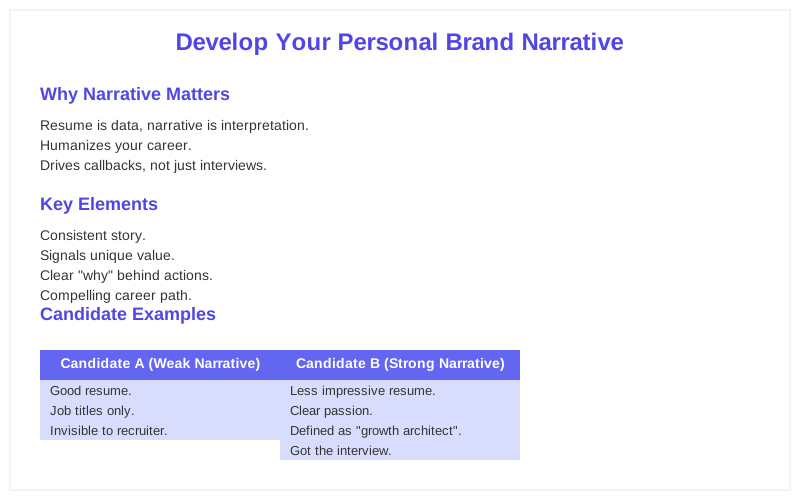
Most people think their resume speaks for itself. It doesn't. Your resume is data. Your personal brand is the interpretation layer that makes that data meaningful. I've sat in countless hiring committee meetings where a candidate with a perfectly good resume was dismissed because their 'story' didn't fit. They were just another name in the system.
I once had a candidate for a Director of Marketing role at a B2B SaaS company who had all the right keywords on her resume. But when I looked at her LinkedIn, it was just a string of job titles. No narrative. No 'why.' She was a strong applicant on paper, but she was invisible to my recruiter brain.
Then there was another candidate for the same role. Less impressive resume, honestly. But her LinkedIn had a clear, consistent narrative about her passion for helping small businesses scale through data-driven marketing. She wasn't just a Director; she was a 'growth architect for SMBs.' She got the interview. That's the power of a narrative.
It's not about being an influencer or getting famous. It's about building a consistent, compelling story that makes sense of your career trajectory and signals your unique value. This isn't just about 'standing out'; it's about giving the human on the other side of the screen a reason to care.
The Real Answer
The real answer behind a compelling personal brand narrative boils down to a recruiter's workflow and the hiring committee's need for a clear 'fit' signal. We don't have time to connect the dots in your career for you. The ATD Blog mentions that your personal brand is your reputation, what people say about you when you're not in the room.
Think about it: my director wasn't paying me to play detective. My job was to quickly match candidates to predefined criteria. If your personal brand narrative didn't immediately align with the role's needs, you became noise in a sea of applications.
For example, if a hiring manager needed a 'growth hacker for early-stage startups,' and your narrative was 'seasoned enterprise marketing leader,' you were instantly a mismatch, even if you had transferable skills. The human element, my recruiter brain, operates on pattern recognition.
Your narrative creates that pattern. It's the shortcut I use to understand your value proposition without having to dig. Without it, you're just another data point in Workday or Greenhouse, easily overlooked.
It's about creating a memorable hook that resonates with the specific problem the company is trying to solve. If your narrative clearly states you're the solution to their problem, you move from the resume graveyard to the interview pile.
What's Actually Going On
What's actually going on when you try to convey your personal brand is a battle against system mechanics and human cognitive biases. First, the ATS. Platforms like Workday or iCIMS are optimized for keywords, not stories. Your 'narrative' doesn't get parsed as a coherent whole; it's broken down into searchable terms. If your narrative isn't keyword-rich, it's functionally invisible. Forbes highlights the importance of helping AI get to know you.
Then there's the recruiter. I'm looking for signal vs noise. A clear, concise narrative acts as a powerful signal, telling me exactly where you fit. Without it, your profile is just more noise. My attention span is about 7 seconds per profile when I'm under pressure.
For smaller companies using Lever or Greenhouse, the lack of a strong narrative can be even more detrimental. These systems often have less sophisticated matching algorithms, relying more heavily on manual review. If your LinkedIn profile doesn't immediately tell a compelling story, you're likely skipped.
Larger enterprises, with their massive applicant pools, often use deeper filtering. A weak narrative means you're not just overlooked by a human, but potentially filtered out by automated stages before a human ever sees you. It's a double whammy.
Ultimately, your personal brand narrative is your defense against being categorized incorrectly by an ATS and against being dismissed by a human recruiter's recruiter brain. It's about controlling the perception, not just listing facts.
How to Handle This
Developing that unique personal brand narrative starts with understanding your value proposition from a hiring manager's perspective, not your own. First, identify your core strengths and how they solve common industry problems. Don't just list 'problem-solving'; explain what problems you solve and for whom.
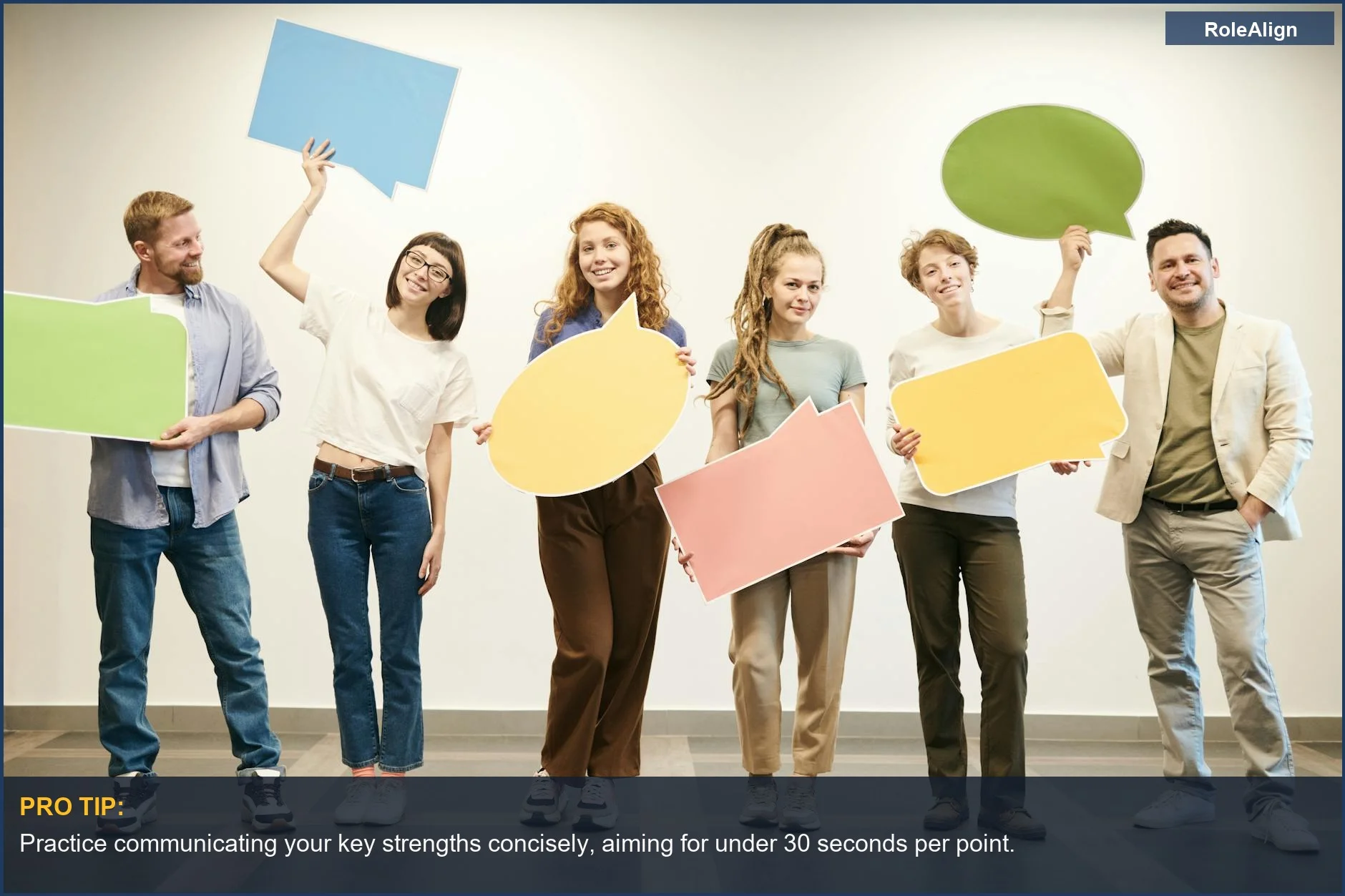
Then, craft a 1-2 sentence 'headline' that encapsulates this. Think of it as your professional elevator pitch. This isn't for your resume objective; it's for your LinkedIn summary and the first thing you say in a networking conversation. Success.com emphasizes that your personal brand creates measurable business outcomes.
If you're stuck, consider a career coach specializing in narrative development. Expect to pay anywhere from $150 to $500 per hour for a good one, with packages often ranging from $1,000 to $3,000 for a few sessions. Ask them for specific examples of narratives they've helped clients craft and how those narratives translated into job offers.
For resume and LinkedIn optimization, a professional writer can help. These services typically cost $300 to $800. Look for someone who understands ATS mechanics and can weave your narrative into keyword-rich bullet points, not just flowery language. Ask them how they ensure ATS compatibility and if they use specific tools to check keyword density.
Your narrative isn't just words; it's the consistent theme across your resume, LinkedIn, and networking conversations. Jill Avery from Harvard Business School highlights that it's about identifying and communicating your points of difference. This consistency is what builds trust and makes you memorable to the recruiter brain.
What This Looks Like in Practice
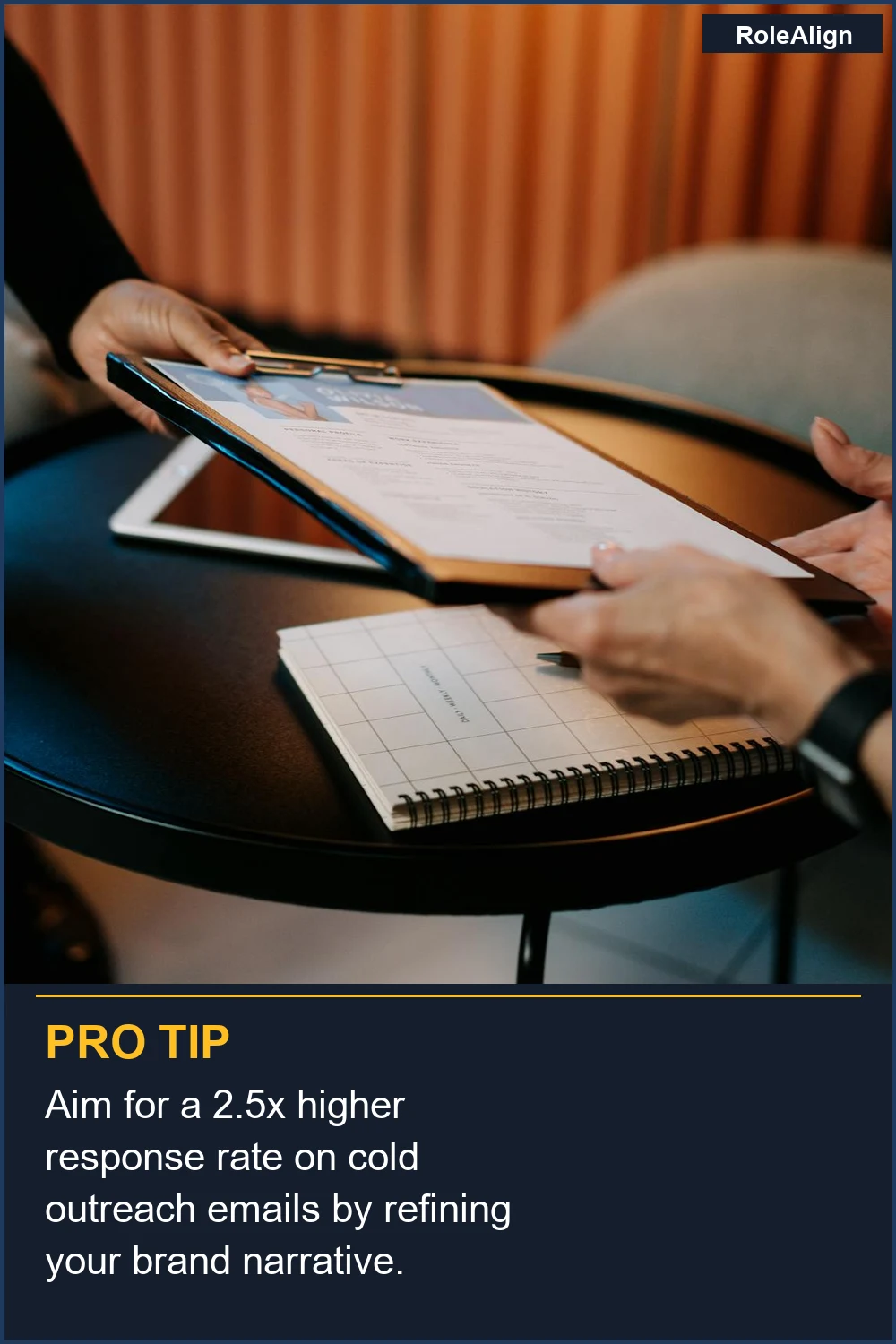
When you have a strong personal brand narrative, the metrics shift in your favor. I've seen candidates with well-defined brands get a 2.5x higher response rate on cold outreach emails to hiring managers. That's a direct impact on your job search efficiency. This YouTube video mentions that monetizing your skills starts with building your brand.
Consider a Senior Software Engineer whose narrative is 'I build scalable, secure microservices for FinTech.' When a FinTech company posts a role, that narrative is an immediate signal. Their LinkedIn profile becomes a magnet, pulling in relevant opportunities.
Another example: a Marketing Manager whose brand is 'driving B2B SaaS growth through data-driven content strategies.' When I'm searching Lever for 'content strategy' and 'SaaS,' their profile pops. More importantly, their narrative tells me why their experience matters.
This isn't about publishing daily on LinkedIn, as some might think. Reddit's ExperiencedDevs community acknowledges personal branding can be within your network. It's about how you present yourself in every interaction, from your resume to your informational interviews. Your narrative primes the audience.
It significantly reduces the chances of falling into the resume graveyard because recruiters are actively searching for your specific value, not just generic skills. It's a targeted approach that saves everyone time.
Mistakes That Kill Your Chances
The quickest way to undermine your personal brand narrative is to ignore the mechanics of how hiring actually works. I've seen candidates make these blunders repeatedly.
| Mistake | Why It Kills Your Chances | Recruiter/ATS Impact |
|---|---|---|
| Vague 'Objective' Statement | Says nothing specific, wastes prime resume real estate. | Ignored by recruiter brain. No keywords for ATS. |
| Inconsistent Messaging | Resume says X, LinkedIn says Y, interview says Z. Creates confusion. | Raises red flags. Signals lack of clarity or focus. |
| Generic Skills Lists | 'Team player,' 'hard worker' - everyone says this. No differentiation. | Noise, not signal. ATS finds keywords but no context. |
| No 'Why' Behind Experience | Just lists job duties, not accomplishments or impact. | Doesn't explain value. Leaves recruiter guessing your contribution. |
| Overly Creative Resume Design | Two-column layouts, graphics, images. | ATS parsing errors (the ATS black hole). Functionally invisible. |
| Ignoring Networking | Believing a strong brand means opportunities magically appear. | Missed opportunities to articulate your narrative directly to decision-makers. |
| Trying to Appeal to Everyone | Broad, general narrative. | Appeals to no one specifically. Becomes more noise. |
These mistakes don't just make you less competitive; they actively work against you. My recruiter brain is looking for reasons to quickly say 'no,' and these give me plenty.
Key Takeaways
Building a personal brand narrative isn't about vanity; it's a strategic imperative in today's job market. It's the difference between being another resume in the resume graveyard and being a candidate who genuinely stands out.
Here are the key takeaways:
- Your personal brand is your reputation, what people say about you when you're not in the room. It's about trust and differentiation, not follower count. Cleverly.co emphasizes this.
- The ATS doesn't understand narrative; it understands keywords. Your story needs to be embedded in searchable terms.
- Recruiters operate on signal vs noise.
A clear narrative is a powerful signal that saves them time and effort. * Investing in a coach or resume writer to help craft and articulate your narrative can yield significant returns in callback rates. * Consistency across all platforms - resume, LinkedIn, and networking - is crucial for reinforcing your brand. * Avoid generic statements and creative resume designs that sabotage ATS parsing or human understanding.
Control your story, or the system will write one for you, and it probably won't be the one you want.
Frequently Asked Questions
I'm thinking of paying $1,500 for a 'personal branding package' from an online guru. Is that worth it, or should I just DIY my LinkedIn?
Do I really need to be posting on LinkedIn 3 times a week to 'build my brand'?
What if my career path is really varied? How do I create one 'narrative' without sounding like I'm making things up?
Can a bad personal brand narrative permanently damage my career prospects?
I heard AI can just write my personal brand for me. Is that true?
Sources
- 5 Ways to Build Your Personal Brand and Achieve More Success in ...
- How to Launch Your Personal Brand in 2026 (Full Course) - YouTube
- How to Build a Profitable Personal Brand in 2026 (Full Guide)
- Networking's Role in Building Your Personal Brand - HBS Online
- Building a personal brand : r/ExperiencedDevs - Reddit
- The 2026 Founder Guide to Personal Branding - LinkedIn
- Build Your Personal Brand in 2026: 8 Steps | Blue Diamond Coach
- How to Build a Personal Brand in 2026: Complete Guide - Expansary
- Building Your Personal Brand with Harvard Professor Jill Avery
- A New Approach to Building Your Personal Brand
- How to Build a Personal Brand That Grows Your Business | SUCCESS
- 12 Personal Branding Actions To Take In 2026 To Grow Your Career