
Decoding the Unspoken Signals From Interviewers During a Panel Interview (2026 Complete Guide)
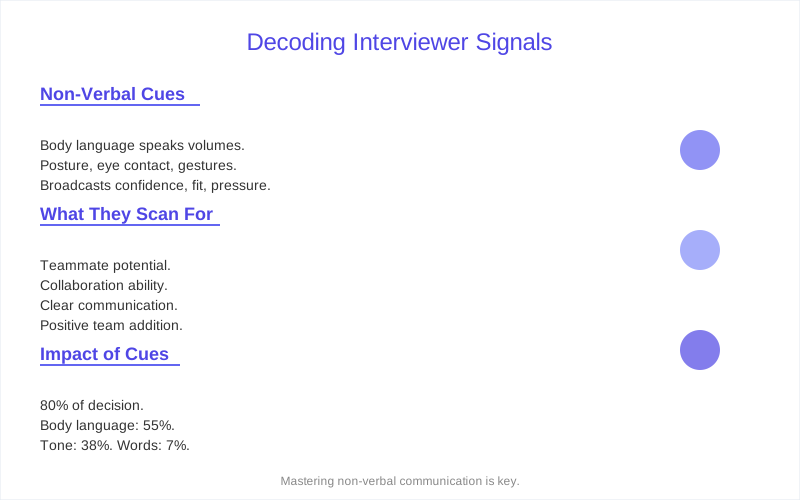
I've sat through 1,200-plus panel interviews from the hiring side, and let me tell you, the unspoken signals are often 80 percent of the decision. While you're busy rattling off your accomplishments, the interviewers are exchanging glances that speak volumes.
I've sat through 1,200-plus panel interviews from the hiring side, and let me tell you, the unspoken signals are often 80 percent of the decision. While you're busy rattling off your accomplishments, the interviewers are exchanging glances that speak volumes. It's not about what you say, it's about what your body is screaming. Your posture, eye contact, and gestures broadcast confidence, cultural fit, and how you handle pressure far more effectively than any rehearsed answer.
This isn't some woo-woo psychology; it's the cold, hard reality of how hiring committees actually make decisions.
My 'recruiter brain' was constantly scanning for these cues. I once had a candidate for a Senior Product Manager role at a FinTech startup who nailed every technical question. But he fidgeted so much, constantly adjusting his glasses and looking at the ceiling, that the hiring manager later told me, "He seems smart, but I don't trust him to present to clients." His words were gold, but his body language was pure noise.
It's a common misconception that interviews are purely about your qualifications. They're not. Especially in fast-paced environments like tech startups, they're sizing you up as a potential teammate. Can you collaborate? Can you communicate clearly when the pressure is on? Will you be a positive addition to the team? Interviewing is both an art and a science, and the non-verbal part is often overlooked.
I've seen countless qualified candidates get passed over because their non-verbal cues sent the wrong message. It's not fair, but it's how the game is played. The classic Mehrabian model, often cited in communication studies, suggests words account for only 7 percent of communication, while tone is 38 percent and body language is a whopping 55 percent. So, while you're focused on your meticulously crafted answers, the interviewers are processing a torrent of silent data.
Your resume gets you the interview. Your answers prove you can do the job. But your body language proves you'll thrive in the role, that you're not just a list of skills but a confident, capable professional. It bridges the gap between your stated qualifications and your perceived competence. Ignore it at your peril.
The Real Answer
The real answer to decoding unspoken signals isn't about mind-reading; it's about understanding the 'recruiter brain' and the hiring committee's underlying anxieties. When I was running a panel interview, my job wasn't just to vet skills; it was to mitigate risk. Every interviewer on that panel had a specific concern they were trying to address, and your non-verbal cues were a direct data stream into those concerns.
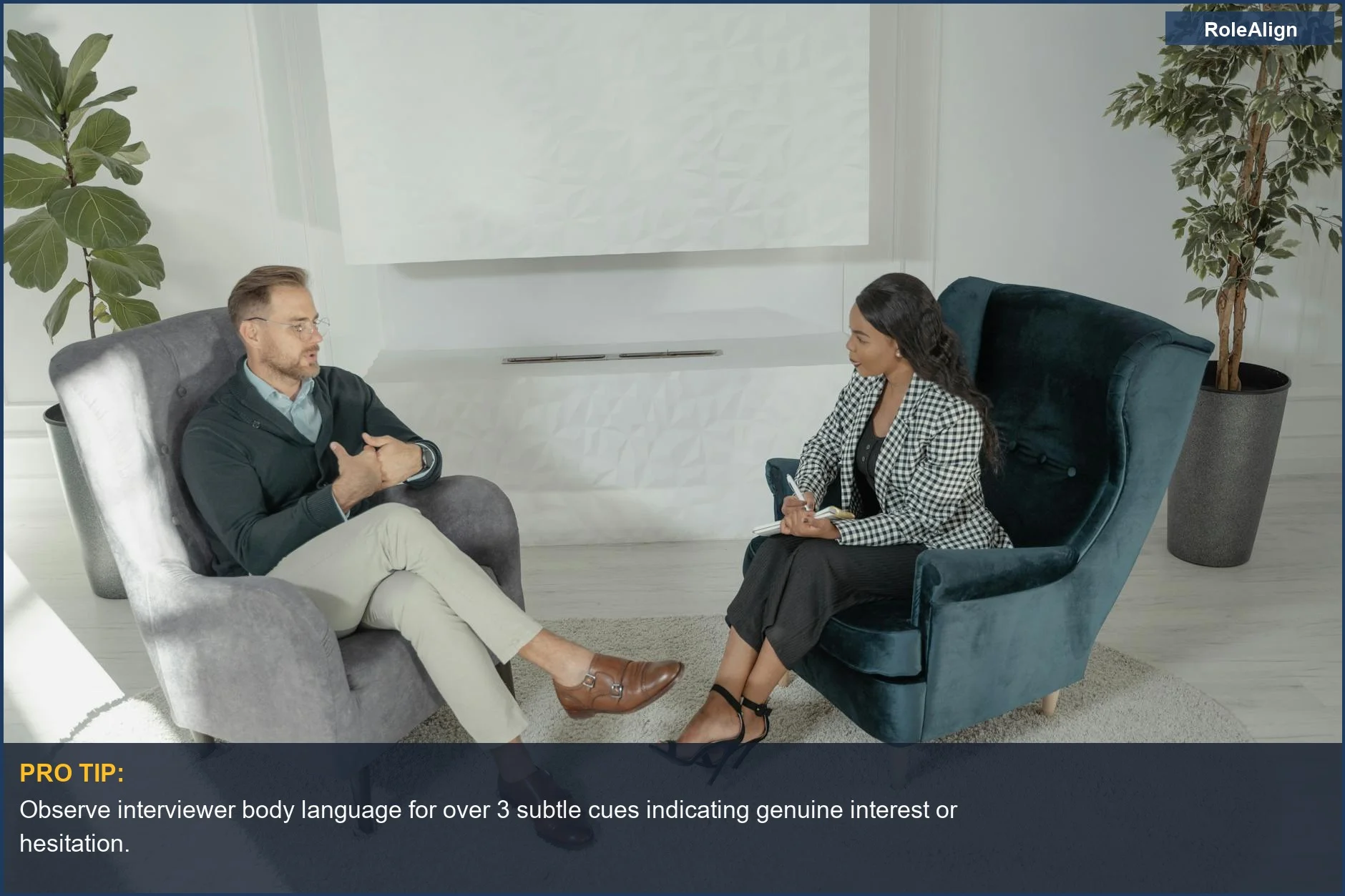
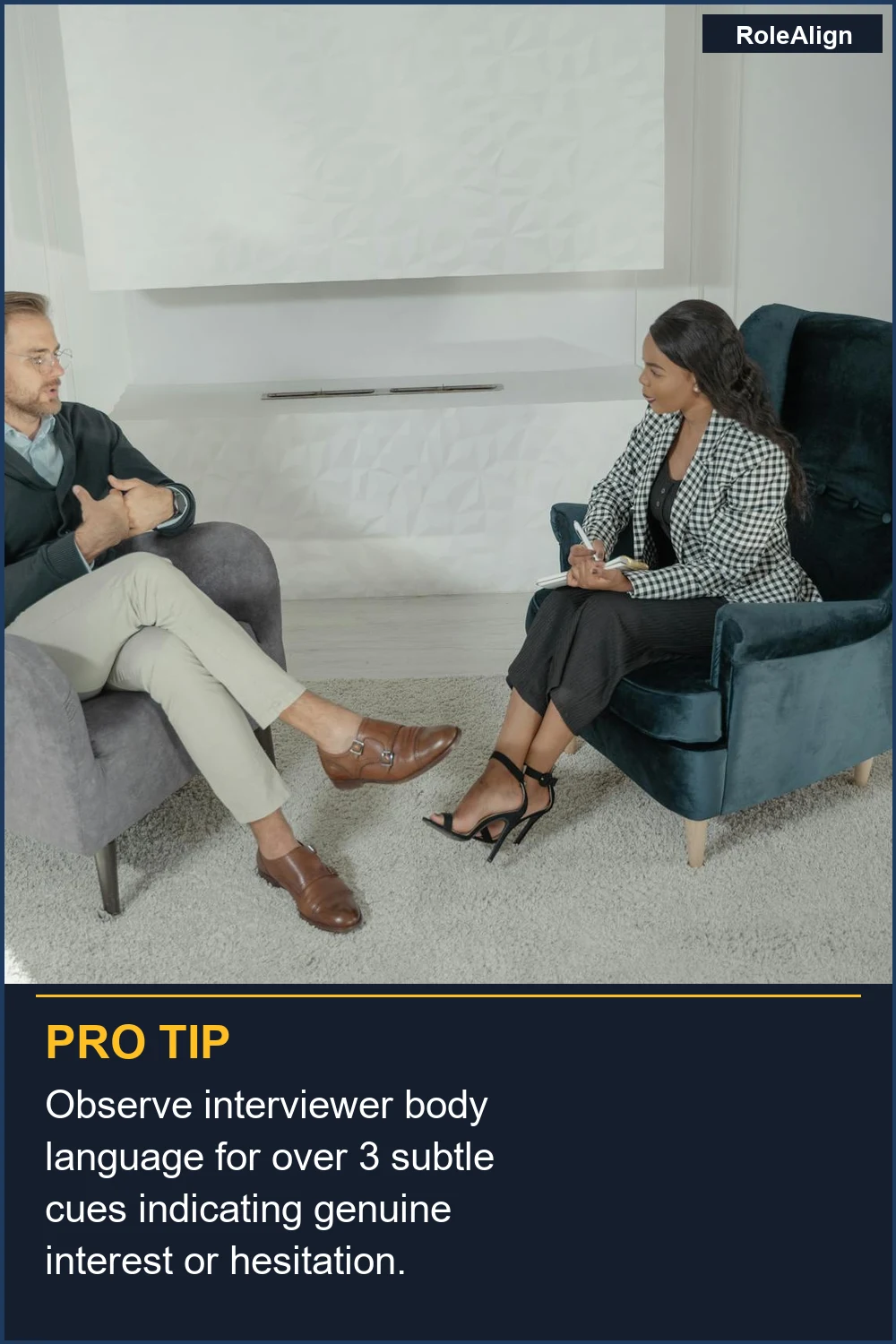
For instance, the engineering lead might be looking for confidence in problem-solving, so a candidate who maintains strong eye contact during a whiteboard session, even when struggling, signals resilience. The product manager might be looking for collaborative fit, so open gestures and genuine smiles when interacting with different panel members are key. Body language provides interviewers with valuable insights beyond the spoken words.
My mental model was always: "Is this person going to make my life harder or easier?" If your body language screamed 'nervous wreck' or 'overly aggressive,' it flagged you as a potential problem. It wasn't about being perfect; it was about projecting a baseline level of competence and composure that minimized perceived future headaches for the team.
The 'signal vs noise' filter in my head was constantly running. A candidate who fidgeted excessively or avoided eye contact created noise, distracting from their verbal answers. Conversely, someone who mirrored the panel's posture slightly or made direct eye contact with each person when answering their specific question generated positive signal. Observing overall demeanor is crucial.
This isn't about tricking anyone. It's about aligning your non-verbal communication with your verbal message. If you say you're a confident leader but hunch over and mumble, your body language is calling you a liar. The hiring committee picks up on that dissonance, even if unconsciously, and it's a huge red flag.
What's Actually Going On
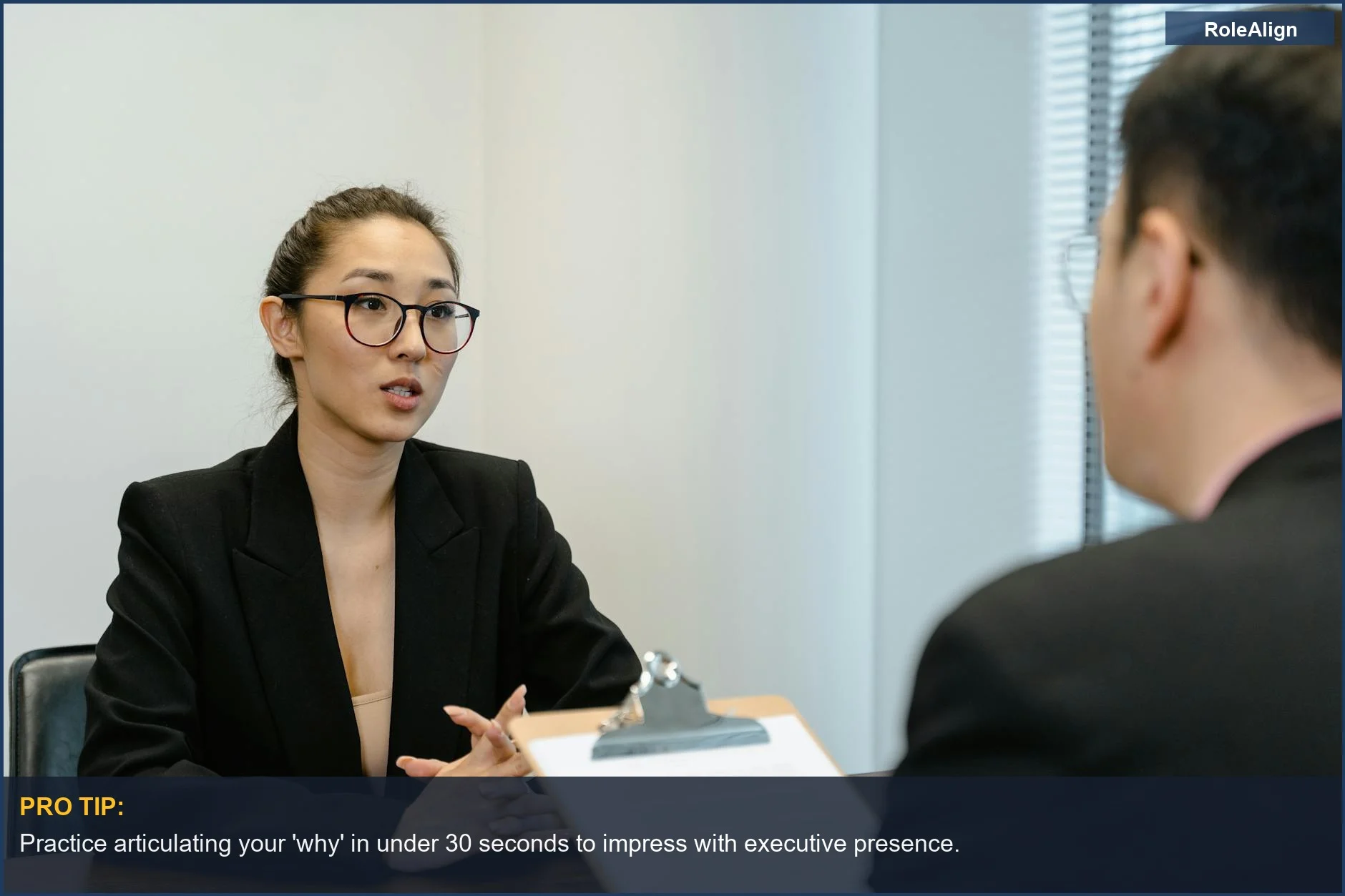
What's actually going on during a panel interview is a rapid-fire assessment of your 'cultural fit' and 'executive presence,' often before your technical skills are fully evaluated. Companies, especially larger ones like those using Workday or iCIMS, often have competency frameworks that include these 'soft skills.'
Hiring Manager's Agenda: The hiring manager is usually looking for someone who won't require constant hand-holding and who will integrate smoothly with the existing team. If you project confidence and approachability, you're immediately seen as less of a management burden. If the interview felt stiff or one-sided, it's a bad sign.
Team Member's Perspective: Your potential peers on the panel are often evaluating 'likeability' and 'collaboration potential.' They're asking themselves, "Do I want to spend 40 hours a week with this person?" Open body language, genuine smiles, and active listening cues are critical here. Think about it: no one wants to work with a stone-faced robot.
HR's Role: HR, especially when I was configuring Greenhouse or Lever, was often keen on diversity and inclusion. Non-verbal cues that demonstrate respect for all interviewers, regardless of their role or perceived seniority, are important. This means making eye contact with every panelist, not just the most senior person.
Company Size Variations: In smaller startups, the 'cultural fit' aspect is amplified. A bad fit can genuinely disrupt a small team. In larger enterprises, there might be more emphasis on 'professionalism' and 'gravitas.' A firm handshake (if in-person) and composed posture are often non-negotiables.
Regulatory and Legal Angle: While not directly tied to body language interpretation, HR policy often dictates that all candidates must be assessed against the same criteria. Unspoken signals, however, bypass these formal criteria, making them powerful and often unchecked influences. This is where unconscious bias can creep in, making your non-verbal communication even more critical to manage. Head nods and eyebrow raises can signal positive trends.
Ultimately, what's going on is a complex, often subconscious, evaluation where your non-verbal cues are weighed heavily, influencing the 'gut feeling' that often guides hiring decisions. It's the 'recruiter brain' doing its job, filtering signal vs noise.
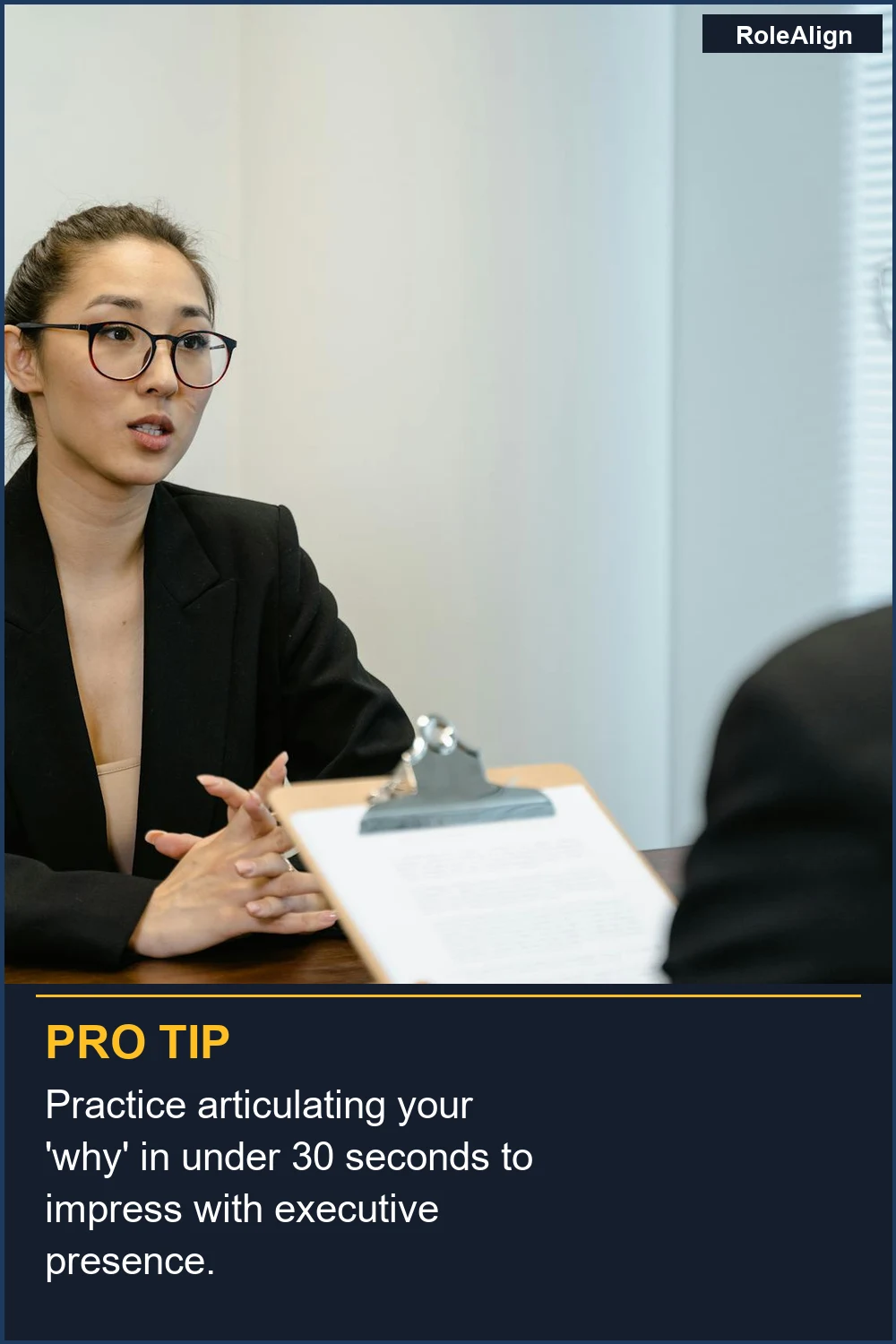
How to Handle This
Okay, so you're ready to stop being a prop in the hiring theater. Here's how to actually handle decoding these unspoken signals and turn them to your advantage. This isn't about being fake; it's about being intentional.
1. Pre-Interview Mirror Practice (15 minutes daily): Seriously. Stand in front of a mirror and practice your answers while paying attention to your posture, hand gestures, and facial expressions. Record yourself if you dare. Notice if you fidget, slouch, or avoid eye contact. Master posture, eye contact, and gestures to project confidence.
2. Panel Entry Strategy (First 60 seconds): When you enter the room (or join the call), make eye contact with each panelist, offering a brief, genuine smile. This establishes rapport immediately. Don't just greet the hiring manager. Acknowledge everyone. This signals respect and inclusiveness.
3. Active Listening Cues (Throughout the Interview): When a panelist is asking a question, nod slightly, maintain eye contact, and lean in subtly. These are universal signals of engagement. When another panelist speaks, briefly shift your gaze to them. Deciphering these signals is key to unlocking deeper insights.
4. 'Mirroring' (Subtle and Strategic): If an interviewer leans forward, you can subtly do the same. If they use open hand gestures, you can too. This creates subconscious connection. But don't overdo it; you don't want to look like a parrot.
5. Posture and Presence (Constant Awareness): Keep your shoulders back, chest open, and feet flat on the floor. Avoid crossing your arms; it can signal defensiveness. This projects an open, confident demeanor. Your body should scream, "I'm ready for this, and I'm easy to work with."
6. Eye Contact During Answers (Distribute Thoughtfully): When answering a question, start by looking at the person who asked it, then briefly scan the other panelists. This ensures everyone feels included in your response. It's a delicate dance, not a staring contest.
7. Exit and Follow-Up (Lasting Impression): Before leaving, make eye contact with each panelist again, thank them individually. In your follow-up email, you can even reference a specific point made by one of the less vocal panelists. This shows you were truly listening and engaged with everyone.
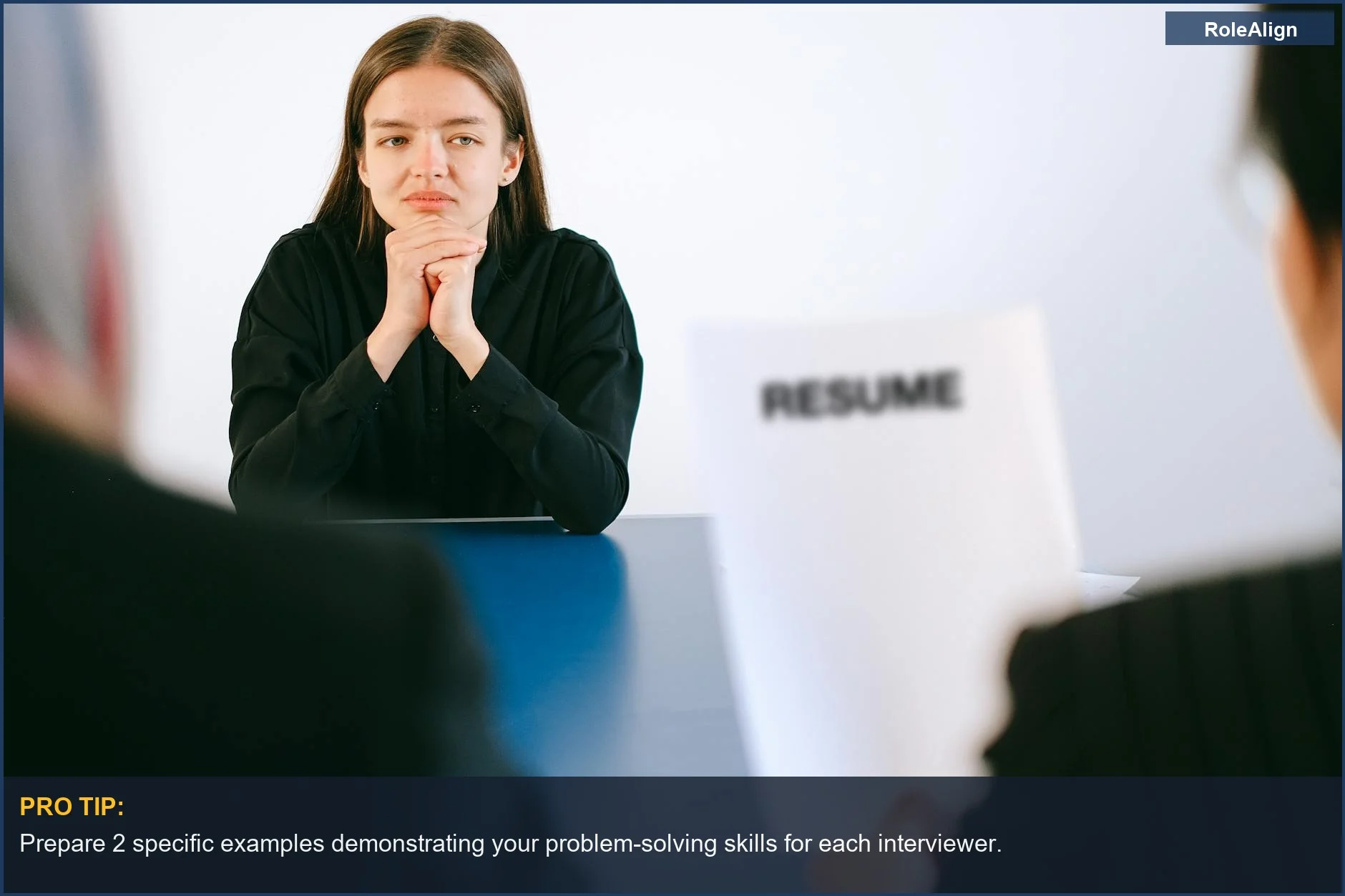
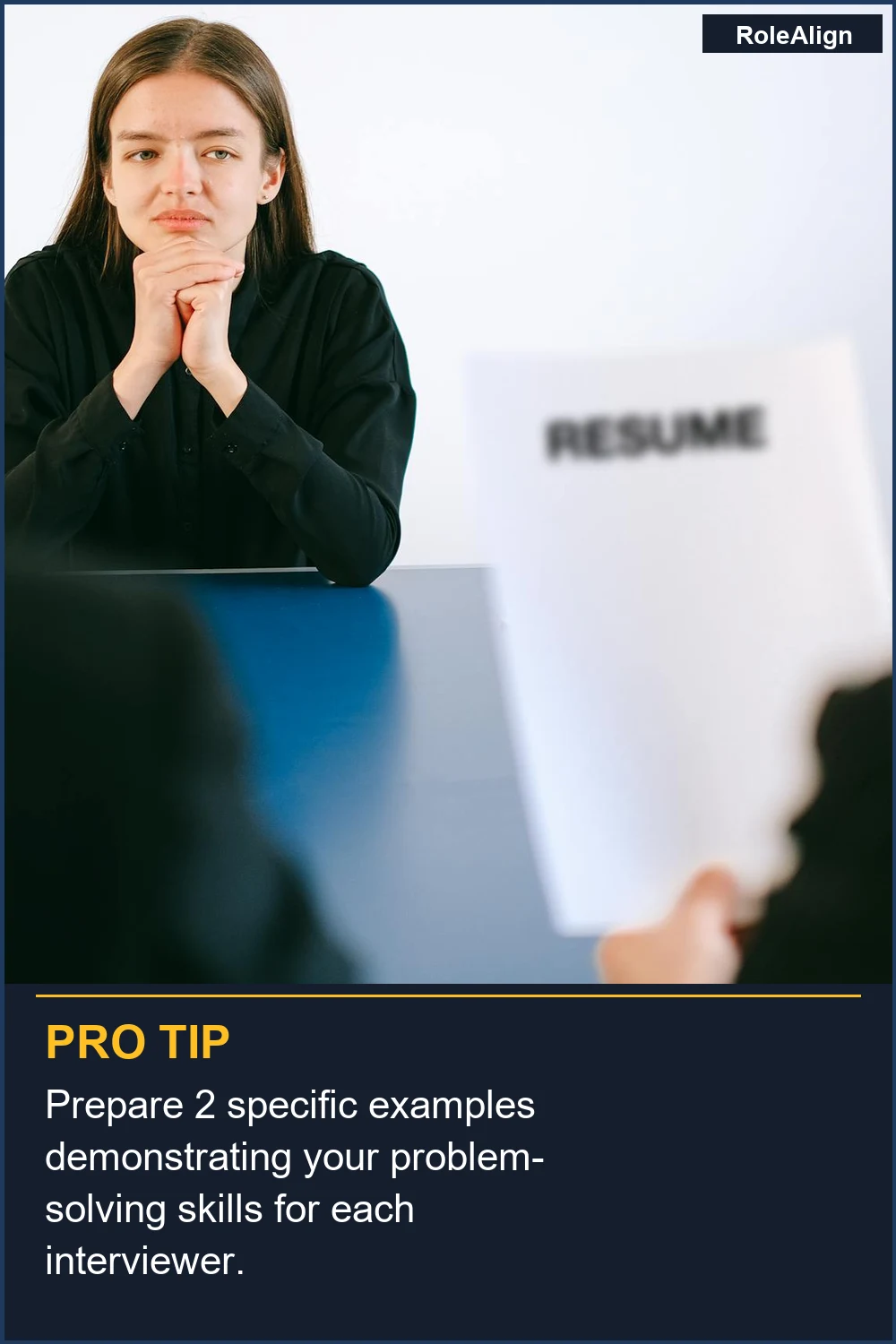
What This Looks Like in Practice
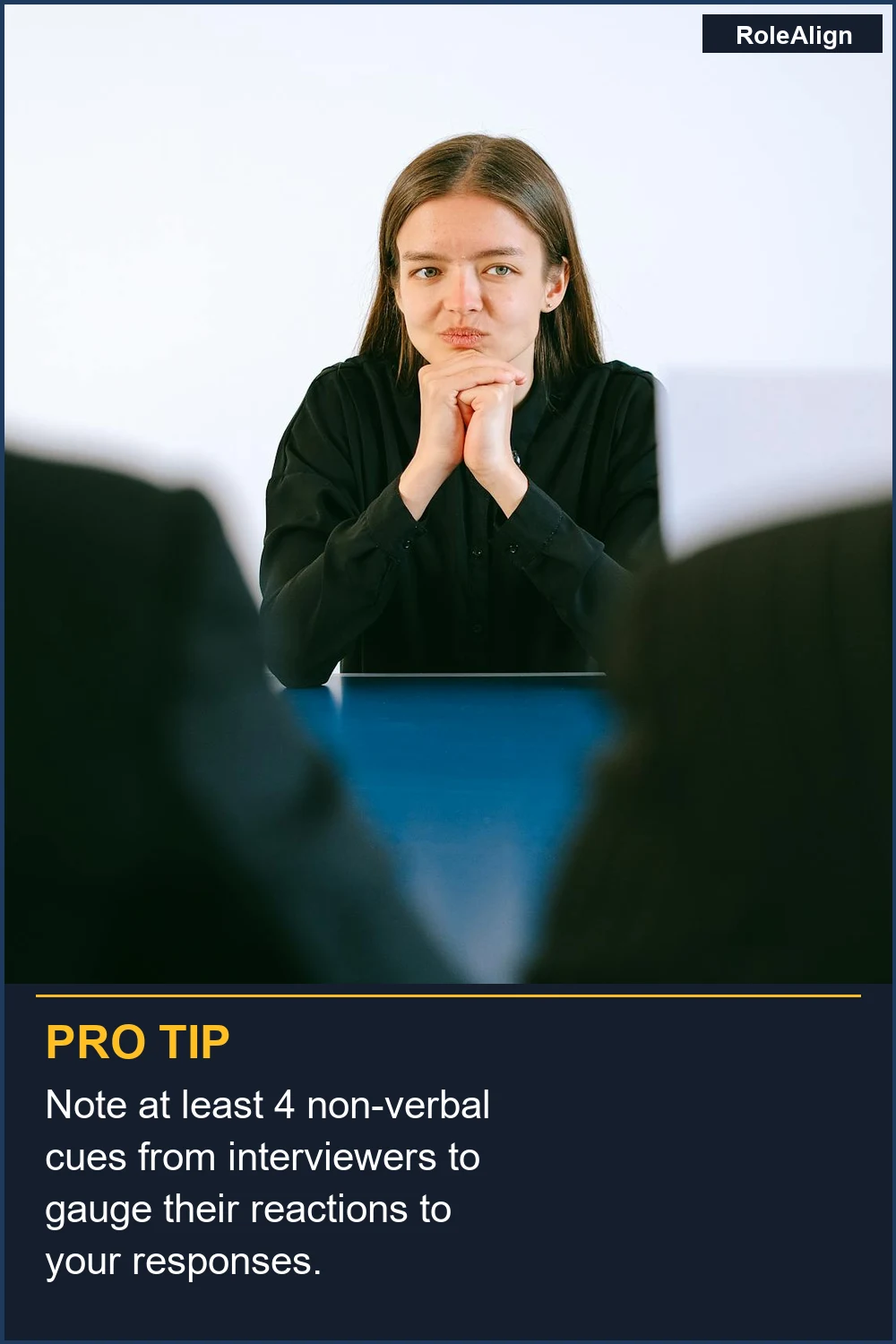
I've seen these unspoken signals play out in countless real scenarios, often with direct impact on hiring decisions. Here's a breakdown of what to look for and what it means from the recruiter side.
The 'Nod of Approval' (Positive Signal): I once saw a hiring manager at a Series B startup, known for his stoic demeanor, give a candidate three distinct head nods during an explanation of their project management methodology. This wasn't a casual nod; it was a clear signal of agreement and understanding. That candidate got the job. Non-verbal cues can drive user interviews to a deeper layer.
The 'Crossed Arms and Frown' (Negative Signal): During a panel interview for a Senior QA Engineer, one of the developers crossed his arms and frowned almost immediately after a candidate started explaining a technical challenge. He stayed that way for the rest of the interview. The candidate was technically strong, but that developer's body language was a huge red flag to the hiring committee; he perceived a lack of collaborative spirit.
The 'Engaged Lean-In' (Positive Signal): At a Big Tech company, a candidate was discussing a complex system architecture. I watched as two of the three architects on the panel subtly leaned forward, their eyes fixed, occasionally exchanging quick, positive glances. This indicated genuine interest and respect for the candidate's technical depth. They saw a kindred spirit.
The 'Constant Glancing at Watch/Clock' (Negative Signal): This one is brutal. If multiple interviewers are frequently checking the time, it's not because they're busy; it's because they're disengaged. Your 'recruiter brain' interprets this as, "This candidate is not holding attention, move them along." Watch your posture; slouching or folding arms broadcasts disinterest.
The 'Open Body Language and Shared Laughter' (Strong Positive Signal): When a candidate manages to elicit genuine laughter or open, relaxed body language from the panel, it's gold. It signals strong cultural fit and the ability to build rapport. This is often more impactful than any specific answer.
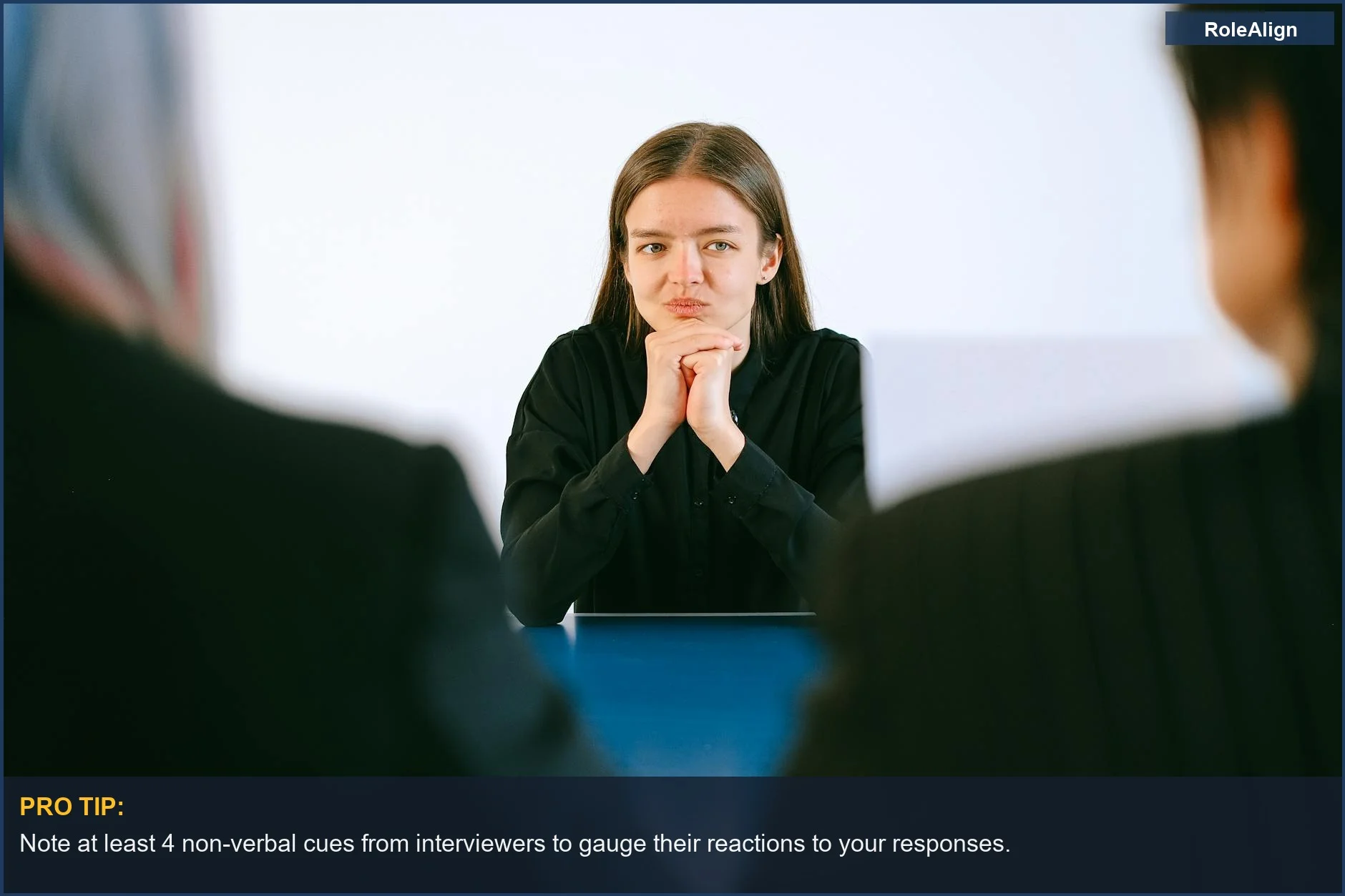
Mistakes That Kill Your Chances
Let's be real, most candidates make the same fundamental mistakes when it comes to non-verbal communication. Here's a diagnostic table of the common blunders that send you straight to the resume graveyard.
| Mistake | Recruiter Brain Interpretation | The Real Reason it Kills Your Chances |
|---|---|---|
| **Avoiding Eye Contact** | Lack of confidence, dishonesty, disinterest. | Signals you're either not confident in your answers or don't want to engage with the team. I've heard hiring managers say, "I couldn't get a read on them." |
| **Excessive Fidgeting** | Nervousness, anxiety, lack of composure. | Distracts from your message and suggests you can't handle pressure. I've had VPs dismiss candidates for "making me nervous just watching them." |
| **Crossed Arms/Closed Posture** | Defensiveness, unapproachable, rigid. | Creates a barrier, making you seem closed off to ideas or collaboration. Panel interviews are about collaboration, not interrogation. Panel interviews are an opportunity to impress multiple decision-makers at once. |
| **Ignoring Panelists (Focusing on One)** | Disrespectful, poor team player, lack of awareness. | Signals you don't value everyone's input. The recruiter's job is to find a team player, not a solo act. You're interviewing with a committee, not an individual. |
| **Slouching/Poor Posture** | Lack of energy, disinterest, unprofessional. | Projects a lack of enthusiasm and professionalism. Your body language screams, "I don't really want to be here," even if your words say otherwise. |
| **Lack of Facial Expression** | Unapproachable, robotic, disengaged. | Makes it hard to connect. Humans respond to emotion. A blank stare is unsettling. My 'recruiter brain' flags this as a potential cultural mismatch. |
| **Overly Aggressive Gestures** | Dominating, intimidating, poor listener. | Can be off-putting, especially in a panel setting where consensus is key. It's not about winning an argument; it's about joining a team. |
Key Takeaways
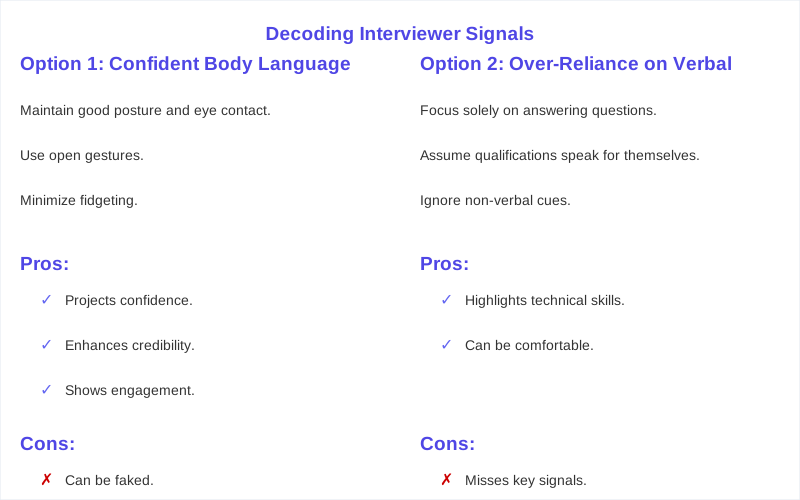
Decoding unspoken signals in a panel interview isn't about magic; it's about understanding the internal mechanics of the 'recruiter brain' and the hiring committee dynamics. They're not just listening to your words; they're reading your entire operating system.
- Body Language > Words: Your non-verbal cues carry significantly more weight than your verbal answers, often influencing the 'gut feeling' that drives hiring decisions. It's 55 percent of the communication pie, remember?
- Risk Mitigation: Interviewers use these signals to assess risk. Does your body language suggest you'll be a high-maintenance hire or a seamless team addition?
They're trying to make their lives easier. * Cultural Fit is Key: Especially in panel settings, interviewers are looking for how you'll integrate with the team. Openness, engagement, and respect for all panelists are crucial signals. * Intentional Practice: You can absolutely improve your non-verbal communication. Consistent mirror practice and active self-awareness can turn your body into an asset, not a liability. * **Signal vs.
Noise:** Every twitch, every glance, every posture shift is either adding positive signal or creating distracting noise. Your goal is to amplify the signal and eliminate the noise. Interviewers decode a multitude of cues, verbal and non-verbal.
Stop leaving your chances to chance. Control the narrative your body is telling, because it's often the loudest voice in the room.
Frequently Asked Questions
I've tried practicing in front of a mirror, but I still feel awkward and self-conscious. Should I just hire a body language coach, or is there a cheaper DIY option?
Do I really need to remember every interviewer's name and make eye contact with them individually? It feels like a lot to juggle, especially in a panel of five people.
What if I get a 'bad vibe' from one interviewer, like they're crossing their arms the whole time? Should I try to address it directly?
Can focusing too much on my body language make me seem inauthentic or robotic during the interview?
I heard that mirroring the interviewer's body language shows empathy. Is it really effective, or does it just make you look like a weirdo?
Sources
- Deconstructing interview psychology and how to leverage it
- Cracking the Code: Decoding Unspoken Interview Signals - YouTube
- Interviewing: Decoding Signals & Uncovering The Unspoken
- Decode Your Applicant's Body Language During the Interview
- decoding-user-emotions-understanding-the-hidden-signals-in-ux-research-interviews-5279a3d06481
- Reading Between the Lines After a Job Interview - Oreate AI Blog
- Body Language in an Interview: Master Confidence in Minutes
- waywithwords.net
- 7 Essential Interview Body Language Tips to Master in 2026 - Confetto
- Panel Interview Tips: Complete Guide (2026) - AiApply
- What are some non-verbal cues during an interview that made you ...
- How Do Your Nonverbal Cues Come Across in an Interview?