Workforce Reduction vs Layoff: Understanding the Nuances That Impact Your Career
RoleAlign Team
12 min read
Includes Video
You just saw the email: "We've decided to move forward with other candidates." It stings, especially when you know your skills are a match. But before you lament another rejection, consider the language used. Is it a "layoff" or a "workforce reduction"?
You just saw the email: "We've decided to move forward with other candidates." It stings, especially when you know your skills are a match. But before you lament another rejection, consider the language used. Is it a "layoff" or a "workforce reduction"? The distinction matters, and understanding it can shift your perspective on what's happening and what it means for your next steps.
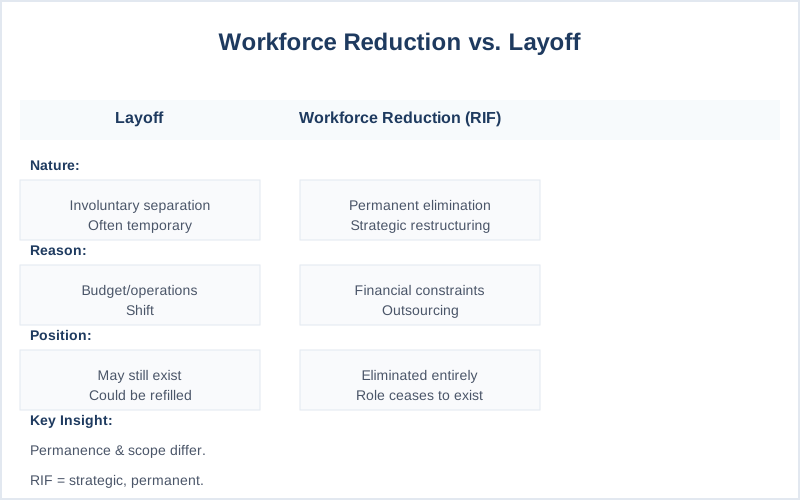
Companies often use these terms interchangeably, but they carry different implications. A layoff, in business terms, can be an involuntary, often temporary separation due to budget or operational shifts, where the position might still exist careerminds.com. Conversely, a Reduction in Force (RIF) typically signifies a more permanent elimination of positions due to larger restructuring or financial constraints, where the role itself is no longer needed careerminds.com. For instance, a RIF might involve closing a department or outsourcing a function entirely, meaning the need for that specific job category ceases to exist jgllaw.com. While not always distinct legal terms outside of specific government regulations, the underlying reason and permanence significantly impact severance, rehire possibilities, and your career trajectory. This isn't just semantics; it's about understanding the fundamental business decisions driving your career disruption.
Key specifications for workforce reduction vs layoff
## The Real Answer
The core distinction between a workforce reduction and a layoff, from a recruiter's perspective, is permanence and scope. While candidates often lump them together, a Reduction in Force (RIF) typically signals a more strategic, permanent elimination of roles or entire departments, often due to restructuring or outsourcing, whereas a layoff can be more temporary or a response to immediate financial pressures.
From the hiring side, a Reduction in Force (RIF) usually means a fundamental shift in the business. The company isn't just short on cash; they've decided a specific job category, department, or even a whole worksite is no longer needed. This could be because a function is being outsourced, they're moving to contractors, or the business line itself is being phased out. Think of it as a strategic business decision that permanently removes positions from the organizational chart. The legal implications can also differ, especially for government entities or under specific union contracts.
A layoff, on the other hand, is often a reaction. It's when the organization can't afford to keep a position open, or the role is temporarily unavailable. While it still means you're out of a job, the underlying assumption can be that the position *might* come back, or it's a broader, less targeted cut to manage immediate budget shortfalls. Recruiters see this as a temporary separation, even if it doesn't always pan out that way for the employee. The main difference lies in duration, with RIFs being permanent and layoffs typically not.
It's critical to understand that while these terms are often used interchangeably in casual conversation, they carry different weight in corporate planning and legal frameworks. Employers are advised to clearly document business reasons for any workforce reduction, using objective criteria to avoid discrimination allegations, as outlined by the EEOC.
For you, the candidate, recognizing this nuance can subtly shift your approach. If a company is undergoing a RIF, it signals a deeper organizational change, meaning the roles that remain are those critical to the future strategy. If it's a layoff, there might be a faster path back if the financial situation improves. The WARN Act also plays a role, requiring advance notice for mass layoffs, underscoring the legal distinctions.
To navigate these complexities, it's essential to understand the WARN layoff list and its implications for your career.
A worried woman reflects the emotional toll of workforce reduction announcements. Companies often see a 15% decrease in morale post-announcement.
| Photo by MART PRODUCTION
A worried woman reflects the emotional toll of workforce reduction announcements. Companies often see a 15% decrease in morale post-announcement.
| Photo by MART PRODUCTION
## What's Actually Going On
1
Workforce reduction vs layoff are often used interchangeably, but the distinction matters for how companies operate and how candidates perceive their situation. A layoff is typically an involuntary separation of employment due to budgetary or operational reforms, often with the implication that the position might be reinstated. Conversely, a reduction in force (RIF) usually signifies a more permanent decision, where a position is no longer needed due to larger restructuring or financial constraints, and the termination is permanent from the outset RIF vs Layoff: Know the Difference.
2
From an industry mechanics perspective, Applicant Tracking Systems (ATS) parse resumes for keywords and structured data. Recruiters then screen for relevant experience, skills, and cultural fit, often making snap judgments. Hiring committees evaluate candidates based on team needs, budget, and strategic alignment. Smaller companies (startups) might be more agile, making decisions rapidly, while enterprises have more formalized processes.
3
Industry nuances play a significant role. In tech, a RIF might stem from a pivot in product strategy or a shift in market demand, impacting specific engineering roles. Finance might see RIFs tied to regulatory changes or market downturns affecting trading or analysis desks. Healthcare could experience workforce reductions due to hospital mergers or changes in patient care models. Seniority also factors in; executives might face RIFs tied to strategic restructuring, while entry-level roles might be impacted by broader cost-cutting measures.
4
Legally, the terms can blur outside of specific contexts. However, federal regulations like the WARN Act mandate notification for mass layoffs or plant closings, requiring employers with 100 or more employees to provide 60 days' notice Understanding a Reduction in Force Versus a Layoff. For government entities, RIFs have specific rules Reductions in Force (RIF). When selecting employees for a RIF, companies must develop objective selection criteria like skills or performance, avoiding subjective biases that could lead to discrimination claims Avoiding Discrimination in Layoffs or Reductions in Force (RIF).
5
The impact on your career narrative is critical. A layoff might suggest a temporary business hiccup, while a RIF can signal a more permanent shift, potentially requiring a more significant career pivot. Understanding these distinctions helps you interpret company communications and strategize your next steps effectively.
To better understand the complexities behind these decisions, explore how they are detailed in layoff decisions.
A sad young man illustrates the personal impact of layoffs. Studies show 70% of laid-off workers experience significant stress.
| Photo by Alex Green
A sad young man illustrates the personal impact of layoffs. Studies show 70% of laid-off workers experience significant stress.
| Photo by Alex Green
## How to Handle This
1
Assess your situation immediately. When a workforce reduction vs layoff is announced, don't wait for the official notice. Recruiters prioritize candidates who demonstrate proactive career management. If your company uses an Applicant Tracking System (ATS) like Workday or Greenhouse, they're flagging employees who update their profiles or apply elsewhere. Update your LinkedIn profile and start networking the moment you hear whispers of a reduction.
2
Leverage your internal network before external. Your company's internal job board or HR portal is your first stop. Recruiters often look internally first to fill new roles created by restructuring, before posting externally. This reduces onboarding time and risk. A reduction in force (RIF) can sometimes mean new roles emerge, and internal candidates have a significant advantage. Missing this step means you're competing with the entire external market, making your job search exponentially harder.
3
Craft a targeted narrative for your job search. Recruiters scan for keywords and achievements directly relevant to the role. If you were impacted by a workforce reduction, frame it not as a failure, but as a strategic move. Instead of saying "laid off," describe your role's elimination due to "organizational restructuring" or "business unit consolidation," which aligns with how companies often justify reductions in force (RIF). Failing to do this means your resume might get filtered out by ATS systems, or a recruiter might misinterpret your situation as performance-related. This narrative needs to be consistent across your resume, LinkedIn profile, and networking conversations.
4
Strategize your outreach channels. Applying directly through a company portal is standard but least effective. Recruiters rely on referrals and direct messages on platforms like LinkedIn, especially for mid-level to executive roles. A direct referral bypasses ATS screening and gets your resume into a recruiter's inbox with an endorsement. If you were part of a layoff or RIF, reach out to former colleagues at target companies via LinkedIn for informational interviews or referrals. Relying solely on cold applications has a significantly lower success rate.
To stay informed on industry trends, consider following our Layoffs 2025 Tracker for real-time updates.
Loneliness and depression can follow a workforce reduction. Remember, 90% of employees feel more secure with clear communication.
| Photo by cottonbro studio
Loneliness and depression can follow a workforce reduction. Remember, 90% of employees feel more secure with clear communication.
| Photo by cottonbro studio
## What This Looks Like in Practice
Senior Software Engineer at a Series B Startup (Workforce Reduction) A rapid product strategy pivot from consumer app to enterprise SaaS led to a workforce reduction. Engineers focused on the consumer side, even high performers, were laid off. Clear communication about the *why* and robust severance packages, including extended health benefits and outplacement, worked. Delayed communication to some teams created anxiety and rumors. This shows workforce reduction can be a strategic business decision, not a reflection of individual performance Understanding a Reduction in Force Versus a Layoff.
Entry-Level Data Analyst at a Fortune 500 (Layoff) Unexpected budget cuts and a hiring freeze triggered a broad layoff, a general cost-saving measure across departments. Individuals were selected based on tenure and role criticality to retain specialized skills. Consistent application of criteria minimized bias claims. Lack of personalized support beyond the standard HR package left many feeling like numbers. This illustrates a layoff driven by financial exigency, where the role isn't necessarily eliminated RIF vs Layoff: Know the Difference.
Mid-Level Marketing Manager at a Tech Company (Workforce Reduction) The company outsourced its entire marketing function to a specialized agency, resulting in a workforce reduction for the internal marketing team. The decision aimed for greater efficiency and broader expertise. Substantial severance and active assistance transitioning to the new vendor worked. Lack of advance notice led to feelings of betrayal. This demonstrates eliminating a job category through outsourcing, a key differentiator in workforce reduction vs layoff Best Practices for Employers When Implementing a ....
Career Changer from Teaching to Product Management at a Small SaaS Firm (Layoff) A small SaaS firm, facing a downturn, laid off 10% of its workforce. As a new hire in a less critical role, the career changer was part of this group. Transparent explanation of the company's financial situation and the offer of a reference worked. Short notice made securing new employment difficult, especially for a career transitioner. This highlights how even small companies conduct layoffs, amplifying impact for those in less established roles Avoiding Discrimination in Layoffs or Reductions in Force (RIF).
Understanding promotion tactics can also shed light on how companies handle layoffs, as explored in our article on layoff decision-making.
Despair sets in as this woman grapples with the reality of a workforce reduction vs layoff. Understand the 2 key differences.
| Photo by RDNE Stock project
Despair sets in as this woman grapples with the reality of a workforce reduction vs layoff. Understand the 2 key differences.
| Photo by RDNE Stock project
## Mistakes That Kill Your Chances
Mistake Thinking "workforce reduction" and "layoff" are interchangeable.
Why candidates make it Companies use these terms loosely, so you assume no difference and miss the nuance to sound informed.
What recruiters actually see A candidate who doesn't grasp business or legal implications, signaling a lack of attention to detail or misunderstanding of their situation. A Reduction in Force (RIF) implies permanent role elimination due to restructuring. A layoff can be temporary or due to immediate budget constraints. RIF vs Layoff: Know the Difference.
The fix Understand the distinction. If your role was eliminated due to departmental closure or outsourcing, frame it as a workforce reduction or RIF. If it was a more generalized, potentially temporary cut, "layoff" is more accurate. Be precise.
Mistake Focusing solely on performance issues when impacted by a workforce reduction or layoff.
Why candidates make it Shame or confusion about job loss, especially with positive reviews, leads you to default to explaining it as being fired for cause.
What recruiters actually see A candidate who is defensive or mischaracterizing their departure. Recruiters know companies conduct workforce reductions for strategic reasons, not always performance-related. Understanding a Reduction in Force Versus a Layoff. If you were part of a broader RIF, that's the correct story.
The fix Clearly state your departure was due to company-wide restructuring or a planned workforce reduction, not performance-based. This reassures recruiters you weren't let go for cause and are available for new opportunities.
Mistake (Non-obvious) Overstating your role or contributions to prove you *shouldn't* have been let go.
Why candidates make it You believe demonstrating indispensability makes you appear stronger to future employers.
What recruiters actually see A candidate unaware of the business realities driving the decision or trying too hard to rewrite history. Companies make strategic decisions about roles and departments. Arguing against the company's decision makes you look out of touch.
The fix Acknowledge the business rationale. Focus on the transferable skills and experiences relevant to the new role. Frame past work concisely and pivot to future value.
Mistake (Non-obvious) Assuming a "layoff" means automatic rehiring or guaranteed severance.
Why candidates make it Wishful thinking or misunderstanding of the process.
What recruiters actually see A candidate with unrealistic expectations. Severance and rehire eligibility aren't guaranteed. The WARN Act mandates notice for mass layoffs but not severance. Understanding a Reduction in Force Versus a Layoff. Relying on these as entitlements is a mistake.
The fix Be proactive. Understand your company's policy on severance, outplacement, and rehire eligibility. Ask direct questions during your exit. Focus on securing your next role.
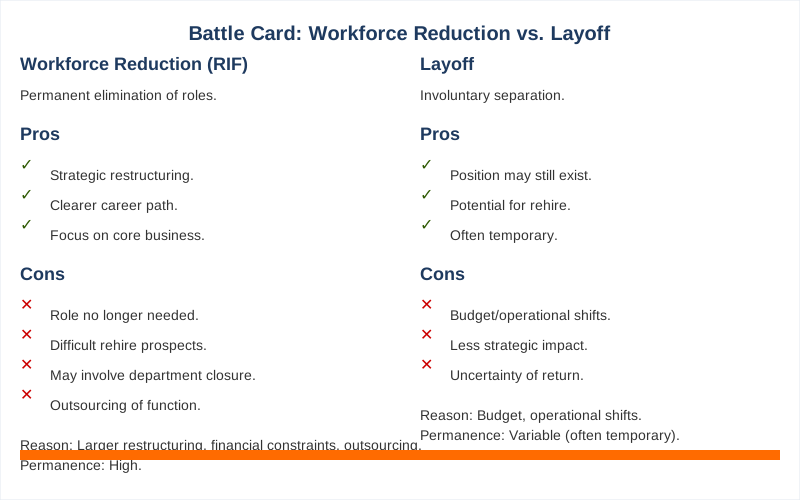
Comparison overview for workforce reduction vs layoff
## Key Takeaways
Understand that workforce reduction vs layoff often boils down to permanence. A Reduction in Force (RIF) is typically a permanent elimination of a position due to restructuring or financial constraints RIF vs Layoff: Know the Difference, while a layoff might imply a temporary separation RIF vs Layoff: Know the Difference.
Companies may use "workforce reduction" as an umbrella term, but the underlying reason dictates the process. Federal regulations, like the WARN Act for mass layoffs, apply, and employers must avoid discrimination Avoiding Discrimination in Layoffs or Reductions in Force (RIF).
In business terms, a RIF often targets specific job categories or functions that are no longer needed, perhaps due to outsourcing or a shift in strategy Understanding a Reduction in Force Versus a Layoff. A layoff might be a more general decision to reduce headcount.
The single most important thing a recruiter would tell you off the record? Don't get caught up in the semantics; focus on the impact on you. Whether it's a RIF or a layoff, the outcome is job loss. Your priority is understanding your severance, benefits, and next career steps.
So, what's the real difference in how companies treat people when they do a 'reduction in force' versus a 'layoff'?
Here's the dirt: A Reduction in Force (RIF) often implies a permanent elimination of a position, usually due to restructuring or a fundamental business shift. Think of it as the role itself is gone. A layoff, while still painful, can sometimes be temporary or due to more immediate financial or operational needs, meaning the role *might* come back, or the separation isn't as deeply rooted in the company's long-term structure. This distinction matters because a RIF can signal deeper, more permanent organizational changes than a layoff might.
If a company goes through a 'reduction in force,' does that make them less likely to hire people in the future compared to a 'layoff' scenario?
Yes, absolutely. A RIF often means a company is fundamentally changing its structure or exiting certain business areas, which suggests they might not be hiring for those roles again soon, if ever. A layoff, especially if it's framed as temporary or due to a short-term budget crunch, might mean they're still actively looking to rebuild their team once things stabilize. So, if you see RIF on your record, be prepared for potentially longer hiring freezes in those specific departments or functions.
Are there certain industries where you hear 'reduction in force' more often than 'layoffs'?
You'll definitely hear 'reduction in force' more in sectors undergoing major technological shifts or strategic pivots, like AI development, biotech, or heavy manufacturing where entire product lines might be phased out. These industries often have roles that become obsolete or are consolidated due to innovation. Layoffs, while still happening across the board, might be more common in retail or hospitality during seasonal downturns or broader economic slowdowns.
After being let go, what should I focus on when I start looking for jobs again if it was a 'reduction in force' versus a 'layoff'?
If it was a RIF, highlight your adaptability and any skills that are transferable to emerging areas or new strategic directions the company took. Emphasize how you can contribute to future growth, not just fill a vacated role. If it was a layoff, focus on the skills that made you valuable in your previous role and express your eagerness to re-engage your expertise. Be prepared to explain the situation concisely, framing it as a business decision rather than a performance issue.
How does being part of a 'reduction in force' affect my chances of getting unemployment benefits compared to a 'layoff'?
For unemployment benefits, the distinction between a RIF and a layoff is usually less about the term used and more about the *reason* for separation and your eligibility status. Generally, if you were separated due to lack of work or the elimination of your position - which is common in both RIFs and layoffs - you're likely eligible. However, if the separation was for cause (like misconduct), you wouldn't be. Always check your specific state's unemployment guidelines, but the permanence implied by a RIF doesn't automatically disqualify you if it's a genuine elimination of role due to business needs.
R
RoleAlign Team
Experienced car camper and automotive enthusiast sharing practical advice.