The Layoffs 2025 Tracker: Real-Time Insights into Workforce Changes
RoleAlign Team
11 min read
Includes Video
Your inbox just pinged with another rejection. You're staring at the Applicant Tracking System (ATS) screen, a sea of resumes blurring before your eyes. This isn't just about your job search; it's about navigating a volatile employment landscape. The 2025 layoffs tracker isn't for the theoretical job seeker; it's for you, right now.
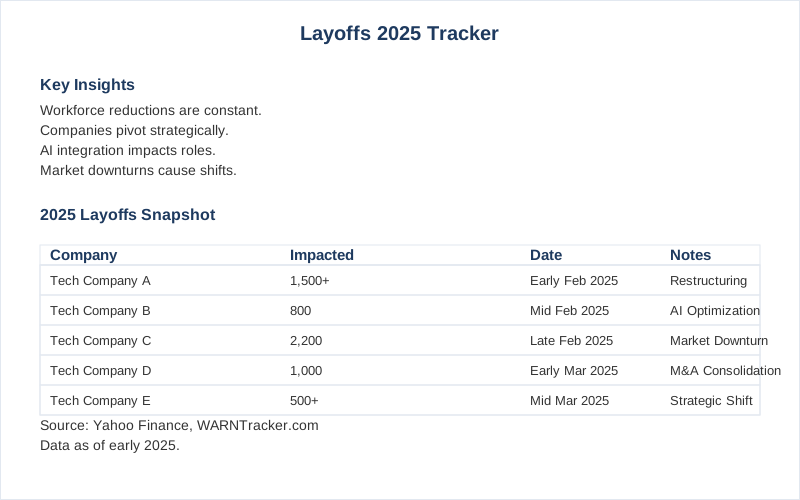
Your inbox just pinged with another rejection. You're staring at the Applicant Tracking System (ATS) screen, a sea of resumes blurring before your eyes. This isn't just about your job search; it's about navigating a volatile employment landscape. The 2025 layoffs tracker isn't for the theoretical job seeker; it's for you, right now. As of early 2025, tech companies alone have seen over 22,000 workers impacted by reductions, with a staggering 16,084 cuts in February aloneYahoo Finance. Beyond tech, WARN records show millions of employees laid off across thousands of companies since 1988WARNTracker.com. This isn't just data; it's the pulse of an industry constantly reshuffling its workforce. Understanding these shifts is critical, whether you're prepping for an interview tomorrow or contemplating a career pivot. The layoffs tracker provides real-time insights into these workforce changes, helping you make informed decisions in a market that demands agility.
Key specifications for Layoffs 2025 tracker
## The Real Answer
The 2025 layoffs tracker reveals a grim reality: workforce reductions are a constant, not a fleeting trend. Recruiters and hiring managers view these events through a lens of strategic realignment, often driven by economic shifts or AI integration, which is vastly different from the candidate's perspective of personal disruption.
From a recruiting standpoint, layoffs are often signals of a company pivoting. This might mean a shift towards AI-driven efficiencies, a restructuring after mergers and acquisitions, or a response to market downturns. For instance, companies are consolidating roles where AI can now perform tasks, impacting areas like software development and even recruiting itself. This isn't just about cutting costs; it's about optimizing for a future operating model.
Data from sources like TrueUp shows that in 2025, tech companies alone saw 783 layoffs impacting 245,953 people. These aren't random events; they're often part of broader strategic initiatives. While candidates experience these as personal setbacks, companies frame them as necessary adjustments to remain competitive. The WARNTracker.com, which monitors public WARN records across all industries, highlights a significant volume of these workforce changes, indicating that this is a systemic issue, not confined to a single sector.
The sheer scale of these events is staggering. Yahoo Finance reports that so far in 2025, over 22,000 workers have been affected in the tech industry, with a particularly high number, 16,084, in February alone. This data emphasizes that the layoffs 2025 tracker is essential for understanding the current job market dynamics, which are heavily influenced by these large-scale reductions.
It's crucial to understand that when a company announces layoffs, it's rarely a sudden, unconsidered decision. Behind the scenes, there's typically a period of analysis, often involving financial projections and strategic planning for future growth, which might include integrating new technologies like AI. This is why you'll see companies like Amazon cutting roles in areas like engineering and recruiting, as reported by Yahoo Finance, to streamline operations and adapt to evolving business needs.
Understanding the distinction between workforce reduction and layoff can significantly influence your career decisions, as detailed in this insightful article.
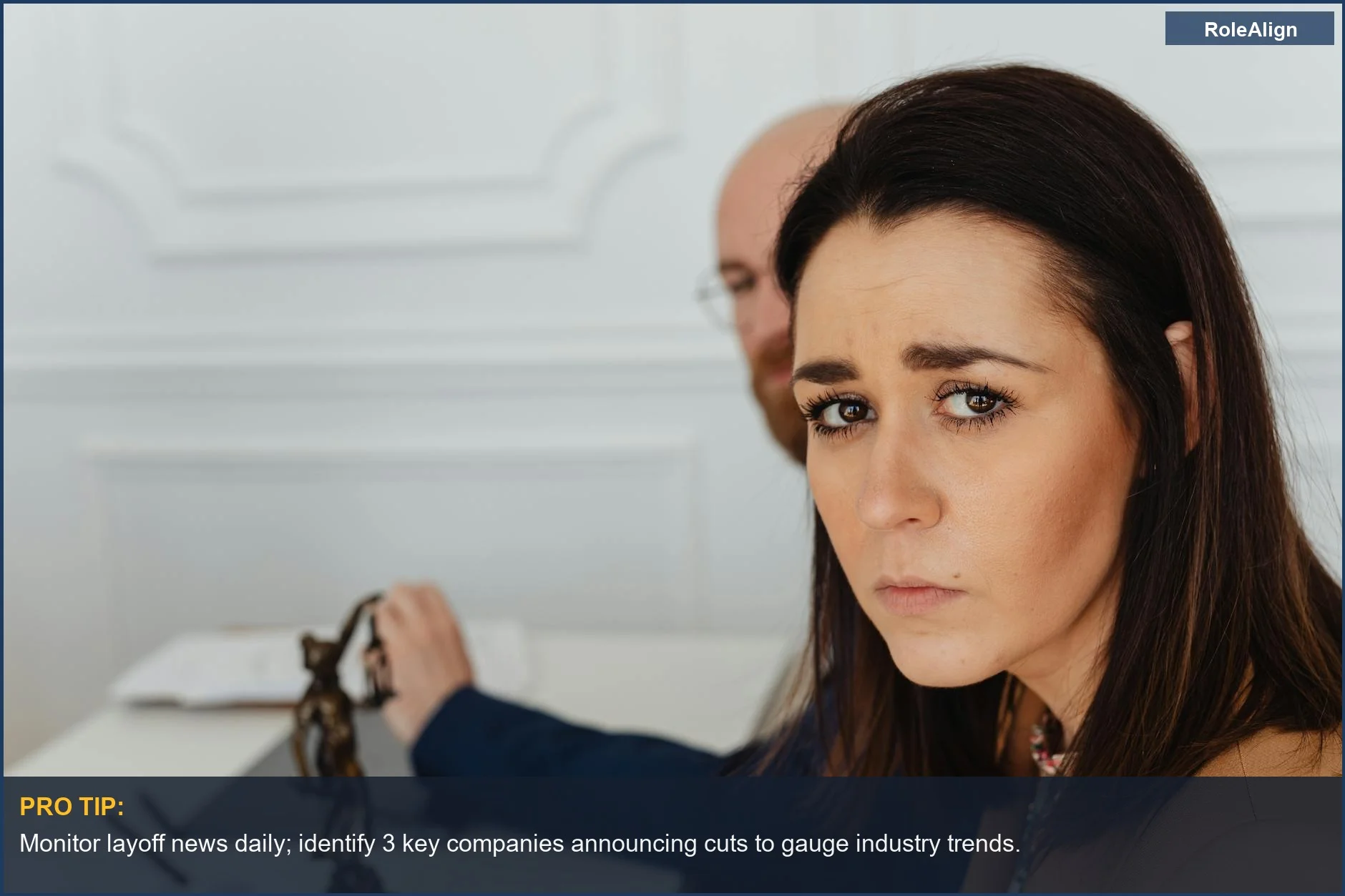
Remote work can amplify stress, especially with looming 2025 layoffs. Staying informed through layoff trackers helps understand market shifts.
| Photo by Anna Shvets
Remote work can amplify stress, especially with looming 2025 layoffs. Staying informed through layoff trackers helps understand market shifts.
| Photo by Anna Shvets
## What's Actually Going On
The Layoffs 2025 tracker dissects how companies shed talent and decide who stays. This is a brutal operational reality driven by market forces, investor pressure, and AI.
1
ATS Parsing & Recruiter Screening - Your resume first hits an Applicant Tracking System (ATS) like Greenhouse or Workday. It hunts for exact keyword matches to the job description. Recruiters then spend about 7 seconds per resume, scanning for those same keywords, relevant experience, and clear indicators of impact. They seek verifiable achievements, not prose. Fail the ATS or initial recruiter scan, and you're out, regardless of qualifications.
2
Hiring Committee Decisions - Past the gatekeepers, resumes reach hiring managers and stakeholders. Here, fit and potential impact matter. They assess if you'll thrive, contribute to team dynamics, and deliver results. Startups seek extreme adaptability. Enterprise companies prioritize proven experience in similar structures. The tech industry values cutting-edge skills and innovation passion, while finance leans towards analytical rigor and compliance. Healthcare emphasizes patient care and domain knowledge.
3
Company Size & Seniority Impact - Decisions vary. Startups may have founders making calls based on cash runway. Enterprise uses formalized, data-driven processes with management layers, though politics remain. At seniority levels, layoffs can stem from strategic shifts. Mid-level and junior roles are often cut based on performance or redundancy. In 2025, tech alone saw 783 layoffs impacting 245,953 people, averaging 674 daily according to TrueUp TrueUp. This highlights systemic workforce reductions.
4
Data-Driven vs. Gut Feel - While data is ideal, bias is unavoidable. Companies increasingly use performance metrics, project contributions, and strategic goal alignment. WARN notices detail mass layoffs, indicating a formal process WARNTracker.com, though not all states have full disclosure. The SHRM stresses transparent, fair processes, but reality is less structured in fast-moving environments. Recruiters spot keywords; hiring committees seek the story of impact your resume tells.
To better understand the complexities behind these decisions, explore how they are detailed in layoff decisions.
The emotional toll of layoffs is significant. Understanding how companies decide, as detailed in the Layoffs 2025 tracker, offers insight.
| Photo by www.kaboompics.com
The emotional toll of layoffs is significant. Understanding how companies decide, as detailed in the Layoffs 2025 tracker, offers insight.
| Photo by www.kaboompics.com
## How to Handle This
1
Scan Layoffs 2025 Tracker Daily - Recruiters use these trackers to monitor competitors and identify potential talent pools. When a company announces layoffs, recruiters immediately look for affected individuals. This data provides a real-time pulse of the market, indicating which companies are shedding talent and where those candidates might be headed.
What goes wrong if you skip it: You'll be blindsided. Not actively monitoring layoff announcements means missing critical windows to position yourself as a readily available candidate for companies looking to backfill roles quickly. This is especially true in fast-moving sectors like tech, where Layoffs.fyi Layoffs.fyi reports 27,470 tech employees laid off across 42 companies as of early 2025.
2
Analyze WARN Notices for Advance Warning - The WARN Act and its state variations require advance notice for mass layoffs. This is your earliest indicator of impending job losses. Recruiters use this data to proactively reach out to affected individuals before the official announcement, securing an edge. WARNTracker.com WARNTracker.com aggregates this data, showing that employers with 100+ employees must provide 60 days' notice.
What goes wrong if you skip it: You'll be reacting, not strategizing. By the time a layoff is widely known, many recruiters have already contacted top candidates. Understanding WARN notices allows you to see which companies are planning reductions weeks or months in advance, giving you a significant head start to polish your resume and network.
3
Target Companies Actively Hiring Post-Layoffs - Layoffs often create opportunities. Companies that recently conducted layoffs may be looking to backfill critical roles or may have opened up new positions due to restructuring. TrueUp's tracker TrueUp highlights that in 2025, 783 tech companies laid off 245,953 people. This means many companies are actively seeking talent. Look for announcements of new funding rounds or strategic pivots from companies that have recently downsized; they are often hiring to fill gaps.
What goes wrong if you skip it: You'll be applying to saturated markets. Many job seekers flood companies perceived as "safe" or actively hiring without understanding market dynamics. By targeting companies hiring to *replace* or *restructure* after layoffs, you enter a more targeted and potentially less competitive talent pool.
4
Leverage LinkedIn for Direct Outreach (Immediately Post-Announcement) - Once a layoff is announced, your primary channel should be LinkedIn. Recruiters scan profiles of affected employees. Send a concise, direct message referencing the layoff and expressing interest in their company, highlighting how your skills align with their needs. A personalized message is more effective than a generic application. For roles requiring deep technical expertise, such as AI/ML engineers or data scientists, directly connecting with hiring managers or engineering leads on LinkedIn is crucial.
What goes wrong if you skip it: You'll get lost in the applicant pile. Generic applications submitted through company career pages often go unnoticed, especially when a company is overwhelmed with responses post-layoff. Direct, timely outreach on LinkedIn is your best bet to get noticed by recruiters actively sourcing candidates from layoff lists.
Understanding the WARN Layoff List can provide crucial context as you navigate updates from the Layoffs 2025 Tracker.
Recruiters actively use layoff trackers to identify talent. Staying aware of the Layoffs 2025 tracker is crucial for job seekers.
| Photo by www.kaboompics.com
Recruiters actively use layoff trackers to identify talent. Staying aware of the Layoffs 2025 tracker is crucial for job seekers.
| Photo by www.kaboompics.com
## What This Looks Like in Practice
Senior Software Engineer at a Series B Startup Restructuring eliminated roles tied to deprecated features, a strategic pivot, not broad cost-cutting. Networking within professional circles and past industry events proved most effective. Startups prioritized immediate needs over long-term skill alignment. WARNTracker.com and TrueUp data indicate this trend.
Entry-Level Data Analyst at a Large Financial Institution Reductions streamlined operations and integrated AI. WARN notices provided advance notice, but intense competition for remaining roles followed. Specialized certifications (MLops, advanced data visualization) beyond core degrees improved competitiveness. Demonstrating practical application without prior experience was the hurdle. Dice.com provides context on the broader tech sector impact.
Product Manager at a Mid-Sized SaaS Company Strategic realignment reduced PM roles not aligned with core revenue-generating products. Highlighting a track record of successful product launches and quantifiable business impact was crucial. Targeting companies with similar SaaS models or those expanding into adjacent markets yielded success. Differentiating in a crowded applicant pool with experience in specific product-led growth strategies was key. Layoffs.fyi tracks these broader tech industry trends.
Research Scientist in Biotech R&D division restructuring followed shifting investment priorities and a focus on accelerating pipeline development. Experience with cutting-edge AI tools for drug discovery or a proven ability to secure grant funding improved positioning. The highly specialized nature of roles limited the breadth of opportunities. R&D World offers insight into R&D sector changes.
Understanding promotion tactics can also shed light on how companies handle layoffs, as explored in our article on layoff decision-making.
Job loss, symbolized by caution tape, affects many. The 2025 layoff tracker highlights how specific roles are impacted by restructuring.
| Photo by Ron Lach
Job loss, symbolized by caution tape, affects many. The 2025 layoff tracker highlights how specific roles are impacted by restructuring.
| Photo by Ron Lach
## Mistakes That Kill Your Chances
Mistake Applying to every job on a Layoffs 2025 tracker without understanding the company's situation.
Why candidates make it Desperation and a "spray and pray" mentality in a volatile market. You see a layoff announcement and apply, hoping for a quick fix.
What recruiters actually see A flood of applications from people who clearly haven't researched the company's specific challenges. We can tell you're looking for *any* job, not *this* job. This is critical for senior roles where strategic alignment matters.
The fix Prioritize companies *growing* or *restructuring strategically*, not just reacting to layoffs. Target roles in areas the company is investing in, not those impacted by cuts. If a company cuts marketing but hires aggressively in AI product development, focus your energy there.
Mistake Over-emphasizing past accomplishments without connecting them to the company's current needs, especially for new grads.
Why candidates make it New grads lack extensive experience and lean on academics or projects. Mid-career professionals assume past successes speak for themselves.
What recruiters actually see For new grads, a resume full of coursework and clubs without a job skills link is a red flag. For mid-career, it signals you're not adapting. We want to see how your past solves our *current* problems. The Layoffs 2025 tracker shows companies are pivoting; your experience needs to pivot too.
Fix New grads: Highlight transferable skills from projects, internships, or volunteer work, and articulate *how* they apply. Experienced hires: Reframe achievements with quantifiable results aligning with stated goals or recent challenges. Always ask: "What problem does this solve for *them*?"
Mistake Relying solely on generic online layoff trackers without digging into the *why*.
Why candidates make it It's easier to check a list than investigate company situations. You assume all layoffs are the same.
What recruiters actually see Candidates with a superficial market understanding. We know WARN records and TrueUp data are just the tip of the iceberg. Companies lay off for vastly different reasons: market shifts, strategic pivots, M&A fallout, or internal restructuring. Understanding this nuance shows superior critical thinking.
Fix Use trackers as a starting point, then research specific companies. Look for news, earnings call transcripts, and LinkedIn posts to understand the drivers. Did they over-hire? Is a new technology disrupting them? Is there M&A fallout? This deep dive informs your application and interview strategy.
Mistake Assuming a layoff automatically makes you a stronger candidate due to "market experience."
Why candidates make it A misplaced belief that layoff experience signals resilience or in-demand skills.
What recruiters actually see We see a candidate whose role was eliminated. While resilience is valued, we prioritize skills and experience driving future success. We want to know what you *learned* and how you've *adapted*, not just that you survived. For senior roles, we scrutinize if your previous company's downfall reflects on your strategic decision-making.
Fix Frame your layoff as a learning opportunity. Focus on skills acquired or honed since, and how you've addressed weaknesses. Highlight adaptability and a forward-looking approach. Instead of "I was laid off," say "I upskilled in X and Y, and I'm now focused on Z."
To avoid these pitfalls, consider our career change tips that can guide you through a successful transition.
## Key Takeaways
The 2025 layoffs tracker reveals a continued, widespread impact across industries, not just tech. While tech saw 245,953 people impacted across 783 layoffs TrueUp, broader WARN records show 7.7 million employees affected across 37,873 companies from 1988 to 2026 WARNTracker.com. This signifies a systemic adjustment, not isolated incidents.
Don't assume these are purely financial decisions; many are tied to rapid AI integration and automation, impacting R&D roles significantly R&D World. Companies are reallocating resources, often towards new growth areas rather than broad cost-cutting Yahoo Finance.
February 2025 saw 16,084 tech layoffs alone Yahoo Finance, a stark reminder that even established companies like Amazon are enacting significant job cuts Yahoo Finance.
The single most important thing a recruiter would tell you off the record? Your skills are a commodity; your adaptability and ability to learn new ones are your true currency. Focus on transferable skills and be ready to pivot.
As workforce changes continue into 2026, understanding why job hunting is challenging can provide valuable insights; explore the reasons in this article.
Frequently Asked Questions
How do layoff tracking sites categorize job cuts by industry?
Most layoff trackers, like those aggregating data from WARN notices or tech-specific reports, break down job cuts by industry. You'll often see clear distinctions for sectors like 'Technology,' 'AI/Machine Learning,' 'Biotech,' 'Energy,' and more general categories like 'Manufacturing' or 'Retail.' This categorization is crucial for understanding where the economic tremors are most concentrated, not just in the tech bubble.
What's the ripple effect of tech and AI layoffs on job seekers in other fields?
When big tech and AI companies shed jobs, it doesn't just impact engineers. The talent pool floods into adjacent sectors, increasing competition for roles in areas like project management, marketing, and even customer support. Companies in less volatile industries might see an influx of highly qualified candidates, potentially driving down salary expectations for certain positions.
Are there patterns in company size or revenue related to the recent job cuts?
Yes, the data consistently shows a trend. While startups and mid-sized tech firms are often hit hard due to funding challenges or rapid scaling corrections, even 'Big Tech' isn't immune, especially when restructuring or responding to market shifts. Larger, more established companies might implement cuts for efficiency or strategic pivots, whereas smaller ones might face existential threats.
How can I adjust my job search strategy based on the latest layoff trends?
Use layoff data to your advantage. If you see significant cuts in a specific tech niche, consider pivoting to roles or industries showing growth, even if it's a slight detour. For instance, AI roles might be consolidating, but demand for AI ethicists or implementation specialists in non-tech sectors could be rising. Focus on skills that are transferable and in demand across multiple industries.
Where can I find resources to understand how these job cuts might affect my long-term career path?
Look at reports from sources like WARNTracker.com for broad WARN Act data, or Layoffs.fyi and TrueUp for tech-specific trends. Also, check industry publications like Yahoo Finance or Crunchbase for analyses. These sites often provide context on industry shifts and potential future demand for skills.
R
RoleAlign Team
Experienced car camper and automotive enthusiast sharing practical advice.