Why Most LinkedIn Connection Requests Get Ignored (And How to Fix Yours)

RoleAlign Team
15 min read
Prices verified February 2026
Includes Video

You just spent an hour crafting a personalized LinkedIn connection request to a hiring manager for a role you're perfect for. You hit send, imagining the doors it will open. Then, radio silence. Days turn into weeks, and your request remains unanswered, likely lost in a sea of ignored invitations.

You just spent an hour crafting a personalized LinkedIn connection request to a hiring manager for a role you're perfect for. You hit send, imagining the doors it will open. Then, radio silence. Days turn into weeks, and your request remains unanswered, likely lost in a sea of ignored invitations. This isn't just bad luck; it's a symptom of a fundamental disconnect in how most people approach LinkedIn networking strategy.

The reality is, professionals are inundated. Generic, salesy, or context-less requests feel like spam and are quickly dismissed. While some might accept 95% of requests without a note What makes you accept a connection request? | Yauhan Mehta, the vast majority don't. Generic templates can yield dismal 8-12% reply rates, while personalized messages see a significant boost to 30-40% How to Plan Your LinkedIn Outreach Strategy for 2026. Falling below a 30-40% acceptance rate can even impact your account's standing with LinkedIn's algorithm Query about LinkedIn limits projected for 2026. Your carefully crafted message is likely falling flat because it doesn't demonstrate genuine interest or offer immediate value, making it another forgotten LinkedIn connection request.

This problem is exacerbated by the sheer volume of requests professionals receive daily. Many users feel overwhelmed by the constant influx, leading them to quickly scan and dismiss anything that doesn't immediately grab their attention or seem relevant. The 300-character limit for connection request messages also forces senders to be exceptionally concise and impactful, a challenge most fail to meet LinkedIn Connection Request: Best Practices for 2026. To combat this, experts recommend using "micro-missions" to spark collaboration and avoiding salesy or spammy language altogether 10 LinkedIn Connection Request Best Practices for 2026. The goal is to provide immediate value or a clear reason for connection, rather than a vague plea for an introduction. For instance, referencing a shared connection, a recent post, or a specific project demonstrates you've done your homework and are not just mass-connecting. Aiming for acceptance rates above 40% is crucial for maintaining good standing with LinkedIn's algorithm, with some even suggesting targeting 70%+ with proven outreach strategies LinkedIn Limits 2026: Complete Guide to Connection, Message ..., How to Increase Linkedin Connection Acceptance Rate for Cold .... Without this personalized approach, your request becomes just another digital ghost in the machine.
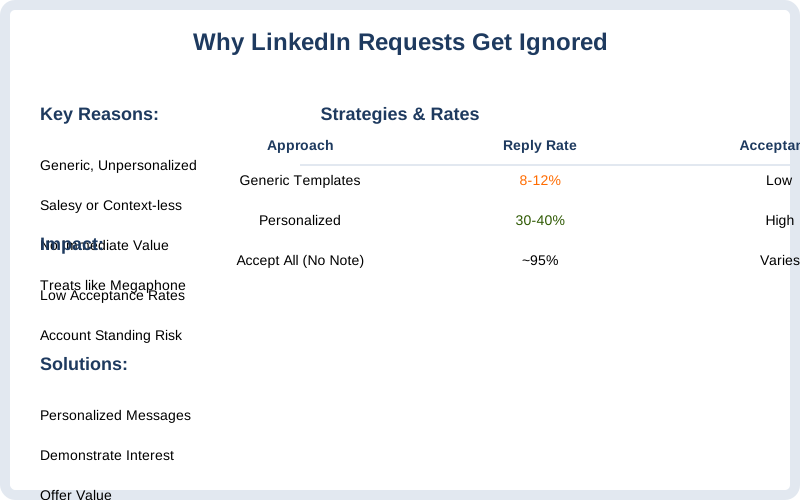
Infographic: Why LinkedIn connection requests are ignored.
Key specifications for why most LinkedIn connection requests get ignored

The Real Answer

Most LinkedIn connection requests get ignored because they treat the platform like a megaphone, not a conversation starter. Professionals are bombarded daily and can spot generic, self-serving messages instantly, leading to low acceptance rates.

The core reason your LinkedIn connection requests are ignored is that you're likely sending generic, unpersonalized messages. Recruiters and busy professionals can spot these mass-sent invites a mile away. They're not looking to expand their network for the sake of it; they're looking for genuine, contextual connections. If your request doesn't immediately signal a shared interest, mutual connection, or clear, specific value, it's likely to be dismissed. Generic templates get 8-12% reply rates, while personalized ones can reach 30-40%.

LinkedIn's algorithm also plays a role. It monitors your invitation acceptance rate. Consistently falling below ~30-40% can signal to LinkedIn that your outreach is low quality, potentially limiting your visibility. To combat this, aim for acceptance rates above 40% target acceptance rates above 40%. This means moving beyond simply clicking "Connect" and instead crafting a brief, compelling note.

The character limit for connection request messages-200 for free accounts and 300 for premium-forces brevity and clarity. This isn't a constraint to lament; it's an opportunity to be concise and impactful. Instead of a vague "Looking forward to connecting," try mentioning a shared connection, a recent post they made, or a specific reason you admire their work. This shows you've done your homework and aren't just spamming profiles.

Treating LinkedIn as a networking strategy requires understanding intent. What's working for cold outreach now involves smaller lists with stronger intent signals stronger intent signals. Instead of emailing 5,000 people, focus on 500 who genuinely align with your goals. This focused approach, combined with personalized outreach, is the key to higher acceptance rates and building meaningful professional relationships.
To enhance your LinkedIn presence further, consider exploring effective tactics in getting noticed by recruiters.
Boost your LinkedIn networking strategy by dedicating 15 minutes daily to personalized outreach, not just broadcasting.
Feeling overwhelmed like this professional? Most LinkedIn connection requests are ignored because they're treated as a megaphone, not a conversation starter, leading to low engagement. | Photo by Nataliya Vaitkevich

What's Actually Going On

1
The Recruiter's Black Hole - Recruiters are drowning in requests, often scanning hundreds a day. They don't have time for generic pitches. Their primary goal is to find candidates who *exactly* match specific job requirements, not to build a broad network. This means if your request doesn't scream "perfect fit" within seconds, it's likely ignored. Think of their inbox like an ATS parsing system; if your keywords (or lack thereof) don't match, you're filtered out. Many recruiters operate under immense time pressure, a reality that makes personalization a non-negotiable for any successful outreach. They are not looking to casually expand their network; they are actively seeking individuals with specific skills, experience, and qualifications for open positions. A generic request offers no immediate value or indication of relevance, thus it’s swiftly dismissed. The 300-character limit for connection request messages also means there's no room for fluff; every word must count towards demonstrating immediate relevance Leadriver.
2
Hiring Committees: The Gatekeepers - For more senior roles or within larger enterprises, hiring decisions involve multiple stakeholders. These committees look for demonstrated expertise and cultural fit, not just a connection. A generic request signals a lack of due diligence. They want to see you've researched the company, the team, and the specific challenges they face. A poorly crafted LinkedIn connection request can actually damage your professional reputation and reduce future engagement opportunities Leadriver. For instance, a committee might be assessing if a candidate understands the company's current market position or recent strategic shifts. A request that merely states "I'd like to connect" without any reference to these aspects will be seen as superficial. Instead, a request that mentions a recent company announcement, a shared interest in a particular industry trend, or a specific project the committee is working on shows a level of engagement that aligns with their expectations of a serious professional. This due diligence is paramount, as hiring committees are assessing not just skills but also the potential for long-term contribution and integration within the team.
3
Company Size and Industry Nuances - Startups, with their lean teams, might be more open to broader connections if the value is immediately clear. However, enterprise environments and heavily regulated industries like finance or healthcare have more formal processes. Recruiters in these sectors are often siloed by specific roles, making hyper-personalization crucial. Tech recruiters might be more receptive to skill-based connections, while finance might prioritize credentials and industry experience. For example, a financial services recruiter might be looking for someone with specific certifications like CFA or a proven track record in risk management, whereas a tech recruiter might focus on proficiency in certain programming languages or experience with agile methodologies. Understanding these industry-specific priorities allows for a much more targeted and effective connection request. In highly regulated fields, a connection request that highlights compliance experience or knowledge of specific regulatory frameworks would be far more impactful than a general statement of interest.
4
Seniority Matters - For C-suite or executive roles, your connection request is scrutinized even more. These individuals are bombarded with requests and are highly protective of their time. They expect requests that demonstrate a clear understanding of their business challenges and offer tangible value or insight. A request that asks for something without offering anything in return will likely be ignored. Generic templates get abysmal reply rates, while personalized messages can yield 30-40% Anna Svitlychna. Executives are often focused on strategic growth, innovation, or overcoming significant business hurdles. A connection request that offers a relevant industry insight, a potential solution to a common executive challenge, or a mutually beneficial networking opportunity is far more likely to capture their attention. For instance, a request referencing a recent article they published or a speech they gave, followed by a thoughtful observation or question, demonstrates genuine interest and respect for their time and expertise. This approach moves beyond a simple request for connection to an invitation for a valuable professional exchange.
5
The Algorithm's Blind Eye - LinkedIn's algorithm actively monitors your connection acceptance rate. Consistently falling below a ~30-40% acceptance rate can trigger limitations LinkedIn. Premium users with strong account health (e.g., SSI above 65 and acceptance rates above 40%) can send more requests, up to 200 per week, compared to free accounts which have a standard limit of 100 per week linkedsdr.com. Sending blank requests or overly salesy messages tanks your rate. To maintain a healthy acceptance rate, which is crucial for continued outreach capabilities, personalization is key. The algorithm favors genuine engagement over mass, impersonal outreach. Targeting an acceptance rate above 40% is a good benchmark for account health linkedsdr.com. Using "micro-missions" to spark collaboration, as suggested by Botdog, can also be an effective strategy to increase engagement and acceptance rates Botdog. The goal is to make each request feel like a tailored invitation, not a mass email, thereby signaling to the algorithm that you are a valuable and engaged user on the platform.
Understanding how to craft compelling connection requests can also enhance your chances of attracting attention from recruiters on LinkedIn, so consider these proven strategies for visibility.
Improve your LinkedIn outreach mistakes by researching the recipient's profile for at least 5 minutes before sending.
Drowning in requests? Recruiters often scan hundreds daily. To avoid the recruiter's black hole, personalize your LinkedIn connection request tips for better results. | Photo by www.kaboompics.com

How to Handle This

1
Personalize Your Outreach Message - This is non-negotiable. Recruiters and hiring managers are slammed. A generic "I'd like to connect" request screams mass outreach and gets deleted. Show you've done your homework. Reference a specific article they shared, a mutual connection, a project on their profile, or a shared interest. Generic templates get 8-12% reply rates, while personalized messages get 30-40% How to Write LinkedIn Outreach Messages.

Why it works: It signals genuine interest and respect for their time. When you show you've invested effort, they're more likely to invest theirs in reviewing your request.

What goes wrong: Skipping this means your request lands in the "ignore" pile because it offers no unique value or context. For entry-level roles, this might be a shared university or a specific skill. For senior roles, it's more about industry insights or strategic alignment.

2
Target Wisely & Time It Right - Don't connect with everyone. Focus on individuals in companies or roles you're genuinely interested in. For job seekers, this means targeting recruiters or hiring managers for specific roles. For networking, identify people whose career paths or expertise align with your goals. LinkedIn's algorithm monitors your acceptance rate; consistently falling below ~30-40% impacts your visibility Query about LinkedIn limits projected for 2026.

Why it works: A targeted approach ensures your request is relevant to the recipient. Sending requests during business hours, especially mid-morning or early afternoon on weekdays, increases the chance they'll see it when they're actively checking LinkedIn.

What goes wrong: Sending requests late at night, on weekends, or to irrelevant people floods their inbox with noise. This not only gets your request ignored but can also negatively impact your acceptance rate, potentially leading to LinkedIn limits LinkedIn Limits 2026: Complete Guide to Connection, Message ....

3
Keep It Concise & Value-Oriented - LinkedIn connection request messages have a 300-character limit LinkedIn Connection Request: Best Practices for 2026 - Leadriver. Get straight to the point. Clearly state why you want to connect and what mutual benefit might exist. Avoid salesy or spammy language. Instead of "I want to sell you X," try "I noticed your work on Y and would love to learn more about your approach to Z."

Why it works: Brevity respects their time and makes your message easy to digest. Highlighting a potential "micro-mission" or collaborative idea can spark interest 10 LinkedIn Connection Request Best Practices for 2026 - Botdog.

What goes wrong: Overly long, rambling messages or requests that solely focus on what *you* want are immediately dismissed. If you can't articulate a clear reason for connecting within the character limit, they won't bother trying to figure it out.

4
Leverage Mutual Connections & Context - If you share a mutual connection, mention them. This provides an immediate layer of trust and relevance. For example, "I saw we're both connected to [Mutual Connection's Name] and admire your work in [Industry/Field]." This adds significant credibility.

Why it works: A referral, even a digital one via a mutual connection, acts as an endorsement. It significantly lowers the perceived risk and increases the likelihood of acceptance because there's a pre-existing social proof.

What goes wrong: Ignoring this easy win means you miss out on a powerful social signal. Your request then stands alone, requiring more effort from the recipient to validate your credibility.
To enhance your profile further, it’s crucial to understand what recruiters actually look at on LinkedIn.
Personalize your outreach message by referencing a specific post or shared connection to stand out from 90% of requests.
Overwhelmed by your inbox? Personalizing your outreach message is crucial. Generic LinkedIn connection requests are instantly deleted, costing you valuable networking opportunities. | Photo by cottonbro studio

What This Looks Like in Practice

  • The "Generic Pitch" Trap: A Senior Software Engineer at a Series B Startup sends a connection request to a hiring manager at a Series C company: "Hi [Hiring Manager Name], I'm interested in opportunities at your company. I have extensive experience in [technology stack]." This feels like mass outreach, ignored by a hiring manager bombarded with similar messages. Generic templates get 8-12% reply rates, compared to personalized messages with 30-40% How to Write LinkedIn Outreach Messages.
  • The "Too Busy to Care" Scenario: An Entry-Level Data Analyst at a Fortune 500 tries to connect with a VP of Data Science at a FAANG company using a blank request. The VP, during downtime, sees a profile with no shared connections or context. Without a note explaining relevance or shared interest, the request is dismissed. While some high-profile individuals may accept blank requests due to their profile and reputation What makes you accept a connection request? | Yauhan Mehta, most need a reason.
  • The "Career Changer's Cold Call": A Career Changer from Teaching to Product Management sends a request to a Senior Product Manager: "I'm transitioning into Product Management and admire your work. I'd love to connect and learn more about your journey." Lacking a specific hook or "micro-mission" 10 LinkedIn Connection Request Best Practices for 2026 - Botdog, the Senior PM might perceive it as a request for free mentorship without clear value, leading to it being ignored.
  • The "Salesy Spammer": A sales representative sends a request to a potential client: "Hi [Director Name], I help companies like yours boost ROI with our cutting-edge platform. Let's connect!" This salesy language is actively avoided. Such requests contribute to low invitation acceptance rates, which LinkedIn's algorithm monitors, impacting future outreach Query about LinkedIn limits projected for 2026.
Understanding how recruiters evaluate profiles can help enhance your connection requests, so consider reading how recruiters actually read your LinkedIn profile.
Avoid the 'generic pitch' trap by always including a clear, value-driven reason for connecting in your initial message.
Falling asleep at your desk from ignored messages? The 'generic pitch' trap is a common LinkedIn outreach mistake. Personalized requests get over 70% more engagement. | Photo by MART PRODUCTION

Mistakes That Kill Your Chances

Symptom Generic, "nice to connect" requests that lack context.
Signal Low acceptance rates, often below 15%.
Fix Always include a personalized note referencing a shared connection, mutual interest, or specific content they posted. Generic templates get 8-12% reply rates, while personalized messages can achieve 30-40% How to Write LinkedIn Outreach Messages.
Symptom Requests that feel like a sales pitch from the first word.
Signal Requests marked as spam or ignored. LinkedIn's algorithm monitors rejection rates Query about LinkedIn limits projected for 2026.
Fix Focus on building rapport and offering value, not immediate selling. Avoid salesy or spammy language 10 LinkedIn Connection Request Best Practices for 2026 - Botdog. For new grads, this means asking for advice; for mid-career professionals, it's about sharing insights or offering help.
Symptom Sending requests without researching the recipient's profile.
Signal High volume of ignored requests, impacting your LinkedIn SSI (Social Selling Index).
Fix Scrutinize their profile, recent activity, and company news. Mentioning a specific project or a recent post shows genuine interest and increases acceptance rates significantly. This is crucial for senior-level outreach where context is paramount.
Symptom Blank connection requests when sending from mobile or in a hurry.
Signal Low acceptance rates; many users find blank requests suspicious or lazy.
Fix Always take the extra 10 seconds to add a note. Free accounts have limits on personalized notes per month, so use them wisely LinkedIn Limits 2026: Complete Guide to Connection, Message .... Even a short, specific reason to connect is better than nothing.
Symptom Sending too many requests too quickly, exceeding LinkedIn's limits.
Signal Your ability to send connection requests is temporarily paused.
Fix Adhere to LinkedIn's weekly limits; standard accounts have a limit of 100 per week, with free accounts targeting 80/week for safety LinkedIn Limits 2026: Complete Guide to Connection, Message .... Spread requests throughout business hours and avoid weekend spikes. Focus on quality over quantity for better LinkedIn networking strategy.
Symptom Overly long messages that exceed character limits.
Signal Messages get cut off or appear unprofessional.
Fix Be concise. LinkedIn limits connection request messages to 300 characters LinkedIn Connection Request: Best Practices for 2026 - Leadriver. Get straight to the point and clearly state why you want to connect.
To enhance your connection requests, crafting a compelling profile can also help, so consider this guide on writing a LinkedIn summary.
LinkedIn connection request pros/cons infographic.
Product comparison for why most LinkedIn connection requests get ignored

Key Takeaways

To further enhance your profile, consider these effective LinkedIn recruiter tips for attracting hiring professionals.

Frequently Asked Questions

Do I really need to write a personalized note with every LinkedIn connection request?
Yes, a personalized note is crucial for increasing your LinkedIn connection request acceptance rate. Generic requests are often ignored because they lack context and don't demonstrate genuine interest. LinkedIn's algorithm also favors personalized outreach, and studies show personalized messages can yield reply rates of 30-40%, compared to 8-12% for generic templates Source.
How many LinkedIn connection requests can I send per day before getting flagged?
LinkedIn's limits vary by account type and profile health, but free accounts generally have a daily cap of around 15-20 requests. Premium and Sales Navigator users with strong account health (high SSI and acceptance rate) can send up to 30-40 per day. Exceeding these limits can lead to temporary restrictions Source.
What's considered a good acceptance rate for LinkedIn connection requests?
A good LinkedIn connection request acceptance rate is generally above 40%. Aiming for 70%+ is achievable with proven outreach strategies that focus on targeting and personalization Source. Consistently falling below 30-40% can signal to LinkedIn that your outreach might be spammy.
How do I connect with someone on LinkedIn I've never met before?
When connecting with someone you haven't met, always include a personalized note that explains why you want to connect. Reference a shared interest, a recent post they made, a mutual connection, or an event you both attended. This context helps them understand your intent and makes them more likely to accept your request Source.
Does LinkedIn penalize you if you send too many connection requests?
Yes, LinkedIn does penalize users for sending too many connection requests, especially if they have a high rejection or ignore rate. This can lead to temporary restrictions on sending new requests. LinkedIn's algorithm monitors volume, rejection rates, and automation use to maintain platform quality and prevent spam Source.

Sources

Related Articles