How Recruiters Actually Read Your LinkedIn Profile (From Someone Who Recruits)

RoleAlign Team
13 min read
Includes Video

You just submitted your application for that dream Senior AI Engineer role. You're staring at your LinkedIn profile, wondering what a recruiter will actually see when they search for candidates like you. Here's the blunt truth: they're not reading your entire life story.

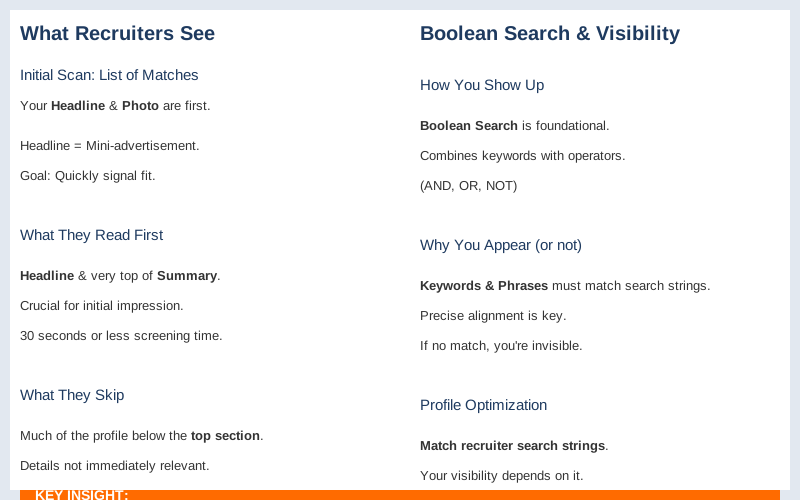
You just submitted your application for that dream Senior AI Engineer role. You're staring at your LinkedIn profile, wondering what a recruiter will actually see when they search for candidates like you. Here's the blunt truth: they're not reading your entire life story. Recruiters, especially those using LinkedIn Recruiter, are on a mission. They're not leisurely browsing; they're aggressively filtering. Recent LinkedIn data shows that 86% of recruiters spend 30 seconds or less on initial profile screenings LinkedIn Study Shows 86% of Recruiters Screen Profiles .... This means they're scanning for immediate signals that you're a match. Your headline and the very top of your summary are critical. What's below that? Much of it might be skipped entirely. The foundational element of how recruiters search LinkedIn profiles is Boolean search. This powerful technique allows them to combine keywords with operators like AND, OR, and NOT to precisely pinpoint candidates LinkedIn Boolean Search for Recruiters (2026) - Leonar. If your profile doesn't contain the exact keywords and phrases they're looking for, you simply won't show up in their initial results. Forget hoping for a lucky find; if you're not optimized for their search strings, you're invisible.

When a recruiter initiates a search, they're not just typing in "AI Engineer." Instead, they're constructing sophisticated Boolean strings, utilizing operators like quotation marks for exact phrases, parentheses for grouping, and commands such as AND, OR, and NOT to narrow down the vast pool of professionals. For instance, a recruiter might search for "Senior AI Engineer" AND (Python OR Java) NOT (Intern OR Junior) to find experienced candidates proficient in specific programming languages, while excluding less relevant profiles Boolean Search Cheat Sheet for Recruiters [2026] - Juicebox. This meticulous approach ensures they efficiently sift through thousands of profiles. Consequently, the very first elements a recruiter's eye will land on are your headline and the initial lines of your "About" section. These are prime real estate, designed to convey your core value proposition at a glance. If these sections don't immediately signal a strong alignment with the recruiter's search criteria, the rest of your profile might remain unread, no matter how impressive your accomplishments are further down. This is why optimizing your profile with relevant keywords and phrases that recruiters are likely to use in their Boolean searches is not just beneficial, it's essential for visibility. Without this strategic optimization, you risk being overlooked entirely in the initial screening process A simple Boolean Guide for Job Seekers and Networkers. - LinkedIn.

The Real Answer

Recruiters don't read your LinkedIn profile; they scan it, and Boolean search is the primary tool that determines if you even appear in their results. Your profile's visibility hinges on how well your keywords and phrases align with a recruiter's precisely crafted search strings.

When a recruiter searches LinkedIn Recruiter, your entire profile isn't immediately scrutinized. Instead, they see a list of potential matches, and your headline and profile photo are the first visual cues. Think of your headline as a mini-advertisement. If it doesn't scream "I solve X problem for companies like yours," it's likely ignored. Similarly, a professional headshot is non-negotiable; profiles with them get 14 times more profile views, a stark statistic from LinkedIn's own research. LinkedIn Study Shows 86% of Recruiters Screen Profiles.

The first few seconds are critical. Eye-tracking studies reveal recruiters spend about 7 seconds on a CV, and the same rapid scanning applies to LinkedIn. They're looking for immediate signals of a match to their search criteria. This means your most relevant skills and experience need to be front and center in your headline and the first few lines of your summary. Anything buried deep or requiring extensive reading is skipped entirely. Time spent in your Experience section actually predicts interview likelihood, showing that while scanning is fast, deeper engagement happens if the initial scan is successful. How Recruiters Evaluate Remote Job Applications in 2025.

Boolean search is the engine that drives recruiter discovery. It's how they move beyond generic searches like "software engineer" to pinpoint candidates with specific skill sets. Operators like AND, OR, and NOT are used to build precise queries, ensuring they find exactly what they need and exclude what they don't. For example, a recruiter might search for "(Java OR Python) AND (Cloud OR AWS) NOT (Junior OR Intern)". LinkedIn Boolean Search for Recruiters (2026) - Leonar. If your profile doesn't contain the keywords recruiters are actively searching for using these logic operators, you simply won't appear in their results, no matter how qualified you are.
To enhance your profile's effectiveness, it’s vital to understand what recruiters prioritize, as detailed in our article on what recruiters look at.
Boost your visibility by incorporating 5-7 relevant keywords naturally into your profile's key sections.
Discover how recruiters meticulously scan your LinkedIn profile. Boolean search is the engine that drives their initial results, making keyword alignment crucial for job seekers. | Photo by SHVETS production

What's Actually Going On

1
Recruiter Search Mechanics - When recruiters search LinkedIn, they aren't browsing; they're executing precise queries. This is where Boolean search becomes your invisible gatekeeper. Recruiters use operators like AND, OR, NOT, and quotation marks to build strings that filter through millions of profiles. A poorly constructed search string means your profile simply won't appear in their results, regardless of how qualified you are. Think of it as a digital bouncer deciding if you even get to the door.
2
The First Glance: What They Read - Recruiters scan, they don't read. Eye-tracking studies show they spend mere seconds on a profile during initial screenings. The absolute first things they look at are your headline, your photo, and your current/recent role and company. This is your 3-second elevator pitch. A professional photo receives 14 times more profile views. Your headline needs to scream "I do X for Y company" or "I am a Z expert" in a way that matches their search.
3
What Gets Skipped Entirely - After that initial scan, recruiters are looking for specific keywords and quantifiable achievements that directly map to the job description. They will skip over generic summaries, lengthy paragraphs that don't contain critical keywords, and vague descriptions of responsibilities. If your experience section is a wall of text without clear impact statements, they'll move on. Time spent on your Experience section predicts interview likelihood; long dwell times mean they're actually reading and finding matches.
4
Boolean Search: The Gatekeeper - Boolean search is the engine behind recruiter searches. It allows them to combine terms with precision. For example, a recruiter might search for `("Software Engineer" OR "Backend Developer") AND (Python OR Java) NOT Intern`. This means your profile *must* contain "Software Engineer" or "Backend Developer", *and* it must also contain "Python" or "Java", while *excluding* anyone labeled "Intern". If your profile lacks these exact keywords or contains exclusionary terms, you simply won't surface. Mastering how recruiters search LinkedIn profiles means understanding this logic.
5
Company Size and Industry Nuances - Startups might scan for broader skill sets and cultural fit, while enterprise companies rely more heavily on ATS parsing and strict keyword matching. Tech recruiters will be looking for specific languages and frameworks, finance for regulatory knowledge and analytical tools, and healthcare for specific certifications and patient care experience. For senior roles, recruiters look for strategic impact and leadership keywords, not just technical skills.
Understanding how recruiters use Boolean search strings can also help you optimize your resume for what they notice in the first 10 seconds, like in this article about resume essentials.
Refine your search terms with at least 3 Boolean operators to filter candidates effectively.
Precision is key when recruiters use tools like LinkedIn Recruiter. Mastering Boolean search ensures you're found for the roles you want. | Photo by Clement Nivesse

How to Handle This

1
Optimize your headline and summary for Boolean search. Recruiters scan results, and your headline/summary dictates whether they click through. Using LinkedIn Recruiter, they combine keywords like job titles, specific technologies, and industry terms. If your profile lacks these exact terms, you won't appear. For example, if a recruiter searches for `("Senior Software Engineer" OR "Staff Engineer") AND (Python OR Java) AND AWS`, and your profile only says "Tech Lead," you're invisible. You'll be missed by recruiters actively searching for your skills, regardless of your qualifications. This is crucial for all roles, especially niche tech or specialized positions demanding precise keyword matching.
2
Ensure your experience section details quantifiable achievements and uses relevant keywords. Recruiters scan profiles rapidly; eye-tracking studies show they spend just 7 seconds looking for fast signals you're a match. They seek specific skills and accomplishments, not vague descriptions. A wall of text without clear metrics or keywords gets skipped. They need to see evidence of impact. For mid-level to senior roles, highlight projects led, revenue influenced, or efficiencies created. For entry-level, focus on relevant coursework, internships, and volunteer work demonstrating foundational skills. Recruiters will move on, assuming a lack of relevant experience or impact if your skills aren't highlighted effectively.
3
Maintain a professional and recent profile photo. LinkedIn research shows profiles with professional photos receive 14 times more profile views than those without photos. Recruiters process hundreds of profiles daily; a professional headshot signals seriousness and professionalism. A blurry selfie or an outdated photo raises questions about your attention to detail. This is universally important, especially for client-facing roles or traditional industries where presentation matters. You'll get fewer profile views, outreach messages, and interview requests, sabotaging your visibility.
4
Use explicit keywords and phrases for your core skills and technologies. Recruiters use Boolean search for precise candidate filtering with terms like `AND`, `OR`, `NOT`, and quotation marks to narrow searches. For example, a recruiter looking for a data scientist might search for `("Data Scientist" OR "Machine Learning Engineer") AND (Python OR R) AND (TensorFlow OR PyTorch)`. If your profile mentions "statistical analysis" but not "Python" or "TensorFlow," you won't show up. You'll miss opportunities where recruiters use specific, technical search strings, effectively hiding yourself. This is particularly true for highly technical roles where specific tools and frameworks are standard search terms.
To further enhance your profile, discover what recruiters want to see on LinkedIn in our article about profile success tips.
Ensure your headline and summary highlight your top 2-3 skills for immediate recruiter attention.
Recruiters focus intently on specific elements when reviewing profiles. Your headline and summary are your first impression, guiding their next steps. | Photo by Andrea Piacquadio

What This Looks Like in Practice

  • Senior Software Engineer at a Series B Startup Recruiters scan for "Senior Software Engineer | Python, AWS, Kubernetes" and projects detailing these technologies. A headline like "Tech Enthusiast" or buzzwords without proof won't cut it. Recruiters spend 7 seconds on a CV, looking for fast signals you're a match How Recruiters Evaluate Remote Job Applications in 2025.
  • Entry-Level Data Analyst at a Fortune 500 Broad searches for "Data Analyst," "SQL," and "Excel" are common, often with "OR" for tools like Tableau. They check for a recent graduation date and internships. A headline like "Entry-Level Data Analyst | SQL, Excel, Tableau" and a detailed "Education" section with projects works. An outdated headline or an "Experience" section that doesn't articulate data analysis tasks won't. Recruiters scan profiles, they don't read How Recruiters Evaluate Remote Job Applications in 2025.
  • Career Changer from Teaching to Product Management Searches use terms like "Product Management," "Agile," and "Stakeholder Management," often excluding "Teacher." They seek transferable skills and evidence of a deliberate transition. A headline like "Aspiring Product Manager | Leveraging 5+ Years of Project Leadership in Education" and a summary explaining the pivot with PM competencies is effective. A profile still heavily focused on teaching without a clear career change narrative is ignored. Boolean search allows recruiters to combine keywords with logical operators LinkedIn Boolean Search for Recruiters (2026) - Leonar.
  • Mid-Level UX Designer at a Fintech Company Recruiters use precise searches like `("UX Designer" OR "Product Designer") AND (Fintech OR Finance) AND (NOT Junior)`. They scan headlines and early experience bullets for relevant tools (Figma, Sketch) and industry keywords. A headline like "UX Designer | Fintech | Figma, User Research" and experience designing for financial products works. A generic UX profile without fintech or specific software mention won't. Profiles with professional photos receive 14 times more profile views LinkedIn Study Shows 86% of Recruiters Screen Profiles ....
To enhance your profile's visibility, consider these proven strategies for attracting recruiters effectively.
Craft a compelling headline using 15-20 words that clearly states your expertise and value.
In just 7 seconds, recruiters assess your potential. A strong LinkedIn headline for job seekers, packed with relevant terms, is vital for profile optimization. | Photo by Pavel Danilyuk

Mistakes That Kill Your Chances

Mistakes That Kill Your Chances

Mistake Vague or missing headline.
Why candidates make it They think their job title is enough or don't realize the headline's importance.
What recruiters actually see A blank space or a generic title that tells them nothing about your specialization. Recruiters scan for keywords that match their search strings. Without them, you're invisible. Boolean search is how they filter, and your headline is prime real estate for those terms.
The fix Optimize your headline with relevant keywords and a clear value proposition. Think "Senior AI Engineer | NLP Specialist | Building Scalable ML Solutions" instead of just "Engineer."
Mistake Generic summary/about section.
Why candidates make it They treat it like a resume summary or don't know what to write.
What recruiters actually see Recruiters spend seconds, not minutes, on profiles. They scan for signals. A generic summary is a missed opportunity to showcase your unique skills and achievements. If it doesn't quickly convey what you do and why you're valuable, they move on.
Mistake Poorly optimized experience descriptions.
Why candidates make it They list job duties instead of accomplishments, or use jargon that doesn't align with search terms.
What recruiters actually see Recruiters are looking for impact and quantifiable results. Vague descriptions of responsibilities don't tell them *how well* you performed or what you delivered. LinkedIn data suggests time spent on your Experience section predicts interview likelihood ; make that time count.
Mistake Unprofessional or missing profile photo.
Why candidates make it They underestimate the impact of visuals or can't afford professional photos.
What recruiters actually see A profile with a professional photo gets 14 times more profile views than one without. It signals professionalism and seriousness. A blurry selfie or no photo at all can raise immediate red flags about attention to detail and understanding professional norms, especially for mid-career and senior candidates.
Mistake Over-reliance on soft skills in descriptions.
Why candidates make it They think "team player" and "good communicator" are universally valued.
What recruiters actually see Recruiters are searching for hard skills and technical proficiencies. While soft skills are important, they are secondary when a recruiter is using Boolean search to find specific expertise. If your profile is full of buzzwords and lacks concrete skills like Python, ML, or specific cloud platforms, you'll be skipped. This is especially true for new grads who need to prove foundational technical abilities.
Mistake Not using keywords strategically across the profile.
Why candidates make it They assume their job title or a single mention of a skill is enough.
What recruiters actually see Recruiters build precise search strings using keywords and operators like AND, OR, NOT. If a critical keyword isn't present in your headline, summary, or experience, you simply won't appear in their results. Think about every possible synonym and related term a recruiter might use.
To enhance your profile's visibility, consider implementing proven strategies outlined in getting attention from recruiters.
LinkedIn recruiter search: what they see, read, skip & boolean impact.
Comparison overview for What recruiters see when they find your LinkedIn profile through Recruiter search, what they read first, what they skip entirely, and how boolean search determines whether you show up at all.

Key Takeaways

  • Boolean search is the engine that drives LinkedIn Recruiter, determining whether you show up in the first place. Recruiters use complex strings with AND, OR, and NOT operators to pinpoint candidates with specific skills and experience LinkedIn Boolean Search for Recruiters (2026) - Leonar. If your profile lacks the exact keywords they're targeting, you're effectively invisible.
  • Recruiters scan, they don't read. Eye-tracking studies show they spend just 7 seconds on a profile during initial screenings How Recruiters Evaluate Remote Job Applications in 2025. Your headline and summary are the first things they see. Make them count by clearly stating your value proposition and relevant keywords.
  • The Experience section is where recruiters spend more dwell time, as it predicts interview likelihood How to boost your resume's interview chances with dwell .... Detail your accomplishments using action verbs and quantifiable results. Anything that looks like a wall of text or generic duties gets skipped.
  • A professional headshot is non-negotiable. Profiles with professional photos receive 14 times more profile views LinkedIn Study Shows 86% of Recruiters Screen Profiles .... It signals professionalism and that you take your career seriously.
The single most important thing a recruiter would tell you off the record? Your profile isn't for you; it's for them. Optimize it for searchability and scannability, not for your personal narrative.

Understanding job descriptions can help you tailor your application, so it's essential to know what recruiters look for in a resume.

Frequently Asked Questions

When a recruiter searches for me on LinkedIn Recruiter, what part of my profile do they actually see first?
When recruiters search on LinkedIn Recruiter, they're not reading your entire profile initially. They see a concise summary card that includes your name, headline, current role, and location. This is designed for a quick scan, and studies show recruiters spend only about 7 seconds on an initial profile review; your professional photo and headline are critical here, with profiles featuring professional photos getting 14 times more views [LinkedIn Study Shows 86% of Recruiters Screen Profiles ...]. Think of it as your profile's 'elevator pitch' - it needs to grab attention immediately.
What information on my LinkedIn profile do recruiters completely skip over when they're doing a quick search?
Recruiters often skip over lengthy 'About' sections or detailed descriptions of past projects in their initial search phase. They're looking for keywords and quantifiable achievements that directly match the job requirements. Anything that requires deep reading to understand your relevance is likely to be overlooked unless the initial summary or headline has already piqued their interest. Focus on making your key skills and accomplishments immediately apparent in your headline and experience summaries.
How does the way recruiters type into LinkedIn Recruiter search affect whether my profile even shows up?
Recruiters use Boolean search operators like AND, OR, NOT, and quotation marks to build precise search strings. For example, a recruiter might search for `( 'Senior Software Engineer' OR 'Lead Developer' ) AND ( Java OR Python ) NOT ( Intern OR Junior )` to find specific candidates [LinkedIn Boolean Search for Recruiters (2026) - Leonar]. If your profile lacks the exact keywords or combinations they're looking for, or if you have terms they've excluded (like 'intern'), your profile simply won't appear in their search results.
What's the single most important thing recruiters look at on my LinkedIn profile when they first find me?
The recruiter's eyes immediately go to your headline and your current role. Your headline is your 220-character billboard; it needs to clearly state your expertise and the value you bring, incorporating relevant keywords. Recruiters are scanning for a match to the role they're hiring for, so if your headline doesn't scream 'relevant,' they'll move on. Eye-tracking studies confirm that recruiters scan rapidly, and the top of your profile is where they make their initial judgment call [What Catches a Recruiter's Eye? Eye-Tracking Insights ...].
If I'm trying to get found by recruiters on LinkedIn, what should my headline actually say?
Your LinkedIn headline should be a concise, keyword-rich summary of your professional identity and the value you offer, not just your job title. Think about what a recruiter would search for when looking for someone with your skills. For instance, instead of just 'Marketing Manager,' try 'Senior Marketing Manager | Demand Generation | SEO | Content Strategy | Driving 20% YoY Growth'. This immediately tells them your level, key skills, and impact.

Sources

Related Articles