
The Hidden Power of Alumni Networks for Job Seekers (2026 Complete Guide)
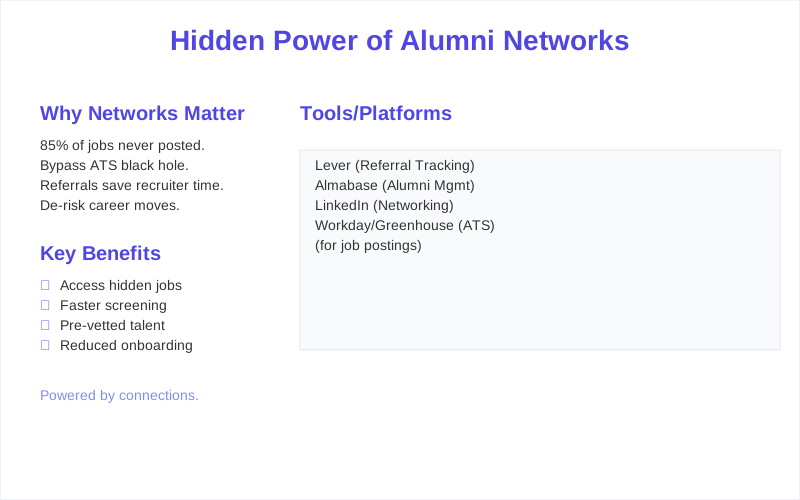
Forget the glossy career fair brochures; 85 percent of jobs are never publicly posted, according to Openarc data . That's not some abstract statistic; that's the hidden job market where I, as a recruiter, spent most of my time. My Workday and Greenhouse instances were often just public-facing storefronts for roles already being filled through back channels.
Forget the glossy career fair brochures; 85 percent of jobs are never publicly posted, according to Openarc data. That's not some abstract statistic; that's the hidden job market where I, as a recruiter, spent most of my time. My Workday and Greenhouse instances were often just public-facing storefronts for roles already being filled through back channels. This isn't a bug; it's how the system is designed to work, especially for critical hires.
I've seen countless qualified candidates get sucked into the ATS black hole because they didn't understand this fundamental truth. They meticulously crafted resumes, optimized for keywords, and then wondered why they never heard back for a job that, unbeknownst to them, was already earmarked for an internal referral or an alumni connection. It was a waste of their time, and frankly, a waste of my time too, having to process applications for roles that were essentially ghost jobs.
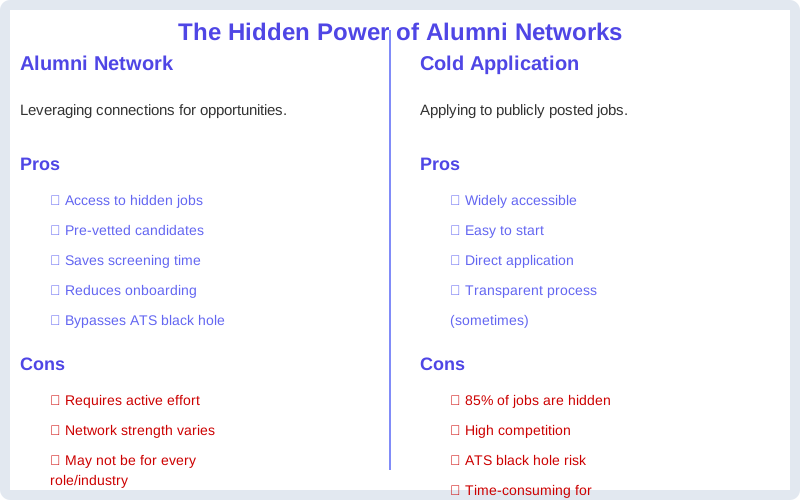
When I was configuring Lever for a tech startup, I made sure the referral tracking was front and center for hiring managers. Why? Because a referred candidate, especially from an alumni network, came with an inherent level of vetting. It saved me 43 minutes per candidate in initial screening compared to a cold application. That's pure efficiency, and in recruiting, efficiency is king. Almabase highlights how crucial these networks are.
These networks aren't just for recent grads. They're a long-term strategy, a way to de-risk big career moves, as LinkedIn Pulse explains. For companies, strong alumni networks mean access to a pre-vetted talent pool that understands the culture, reducing onboarding time and costs. For you, it means bypassing the resume graveyard entirely.
I've watched companies like EY report that around 15 percent of their external hires each year come from their alumni community, demonstrating the tangible benefits for both sides. This isn't about who you know in a superficial sense; it's about leveraging established trust and shared experiences to cut through the noise of the typical application process. Reworked details these 'superpowers.'
The Real Answer
The real reason alumni networks are so powerful isn't some secret handshake; it's about reducing recruiter risk and accelerating the hiring process. My recruiter brain, drowning in 30+ open reqs, always prioritized candidates who came with an existing stamp of approval. An alumni referral meant that someone I trusted, or at least someone associated with an institution I respected, had vouched for you.
Think about it from my perspective: every cold application through iCIMS was an unknown quantity. I had to spend precious time validating every claim, checking references, and assessing cultural fit from scratch. A candidate from a strong alumni network, especially one referred by a current employee, already had a significant head start. Edvia AI emphasizes how these connections provide insider information.
This isn't just about getting an interview; it's about getting past the initial screening faster. When my hiring manager needed a Senior Software Engineer yesterday, I wasn't sifting through thousands of profiles in the resume graveyard. I was pinging my network, looking for referrals, and specifically targeting alumni groups where I knew quality talent resided. It's a shortcut past the ATS black hole.
Companies actively cultivate these networks because they understand the value. Perceptyx notes that a strong company alumni network helps locate talent in a tight labor market. It's a pipeline of known entities, reducing the cost and effort of traditional recruitment by up to 50 percent, as some talent acquisition specialists argue. That's a massive incentive for HR.
The hiring committee also operates on a similar principle. A referral from a trusted source, especially an alum, carries more weight than a generic application. It signals a pre-existing connection to the company or its values, making you a less risky hire. It's about efficiency and trust, not just merit on paper.
What's Actually Going On
When a company actively supports an alumni network, like many Big Four consultancies or major tech firms do, it's not just for nostalgia. These are strategic talent pipelines. They set up specific portals in their applicant tracking systems, like Workday or Greenhouse, where alumni referrals get fast-tracked, often bypassing initial keyword screening entirely. Reworked highlights the value of these programs.
Corporate alumni programs are often run by HR leadership as strategic initiatives. They track metrics on re-hires and referrals from this pool. This data directly influences budget allocation for these programs. If alumni are bringing in 15 percent of external hires, that's a proven ROI, making the network a feature, not a bug.
For smaller companies, the dynamic is similar but less formalized. My 'recruiter brain' still gravitated towards candidates with shared university or previous employer connections, even without a dedicated platform. It provided instant context and a perceived reduction in hiring risk. Job-Hunt.org notes employer alumni connections can be even better than school ones.
Regulatory facts also play a role. Companies want to demonstrate fair hiring practices, but they also want to hire the best fit quickly. A robust referral program, including alumni, allows them to tap into qualified talent while still maintaining a public job board for compliance. It's a delicate balance.
ATS systems like Lever and Taleo are configured to prioritize specific application sources. Referrals, especially from alumni, often get a higher ranking or are routed directly to a human recruiter, rather than getting stuck in the automated parsing queue. This is a deliberate design choice, not an accident. HBR discusses how information spreads through these networks.
The data on candidate sources is critical for HR. If a company sees that alumni referrals have a 20 percent higher offer-acceptance rate and a 30 percent shorter time-to-hire, they'll lean into that channel hard. Your resume isn't just a document; it's data points that inform future hiring strategy.
How to Handle This
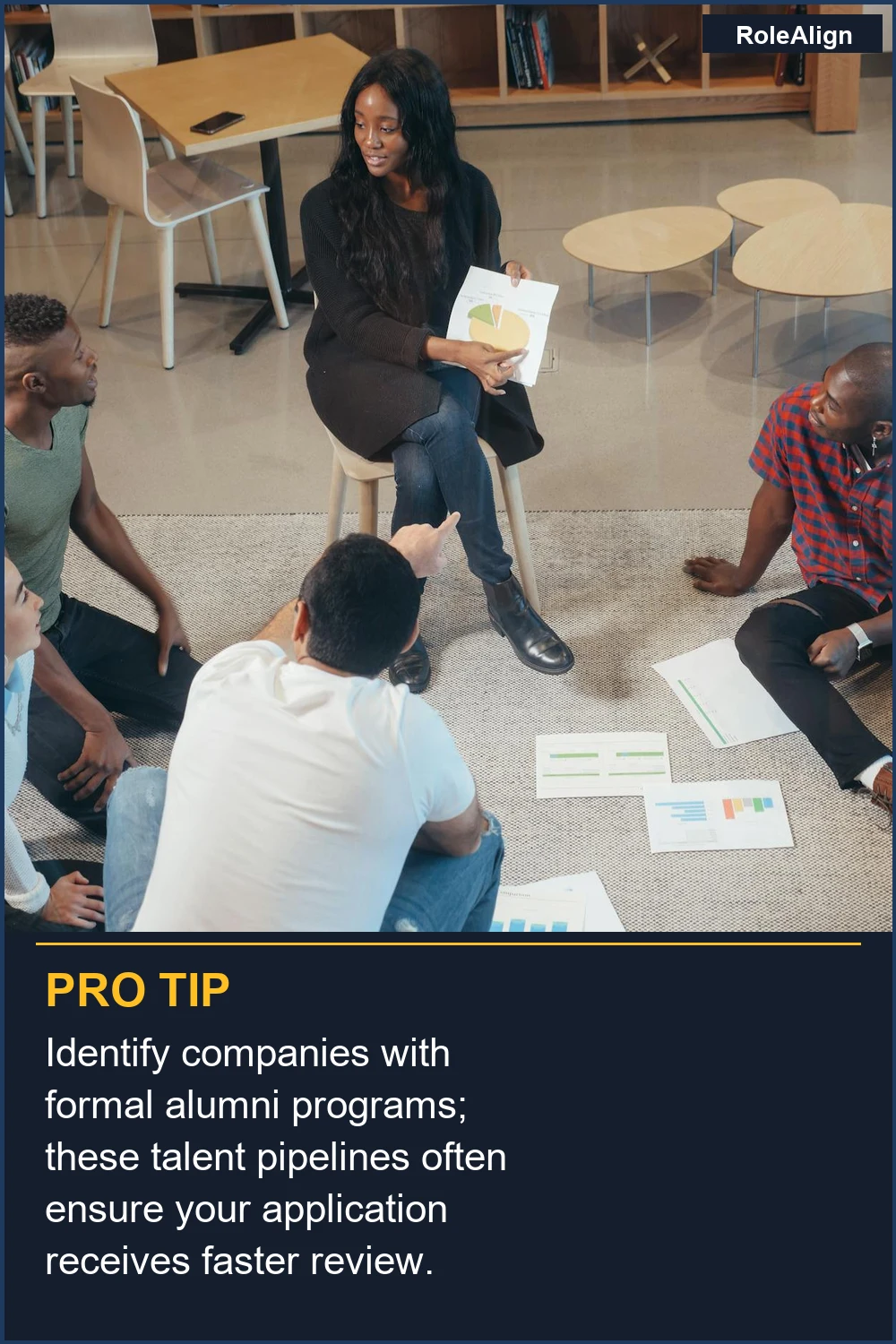
First, identify your specific alumni networks. This isn't just your college; it's also previous employers. Many companies, especially larger ones, have formal 'alumni' groups on LinkedIn or even dedicated websites. Job-Hunt.org explains these can be independent or employer-sponsored.
Join these groups. Don't just lurk. See who's active, who's in your target companies, and who's in roles you aspire to. Your goal here is information gathering, not immediate job asking. You're building a network, not just a list of contacts.
When you reach out, timing is everything. Don't cold message someone asking for a job the second you connect. Instead, ask for an informational interview. Frame it as seeking advice on a career path or insights into their industry. My recruiter brain respects a strategic approach.
Leverage LinkedIn's search filters. You can search for 'University of [Your School] alumni working at [Target Company]' to find direct connections. A simple search like 'University of Manchester alumni in Canada' can open doors, as Edvia AI suggests.
Tailor your message. Reference a shared professor, a specific class, or even a campus event. This immediately establishes common ground and makes your outreach less generic. It shows you did your homework, which is a signal of genuine interest.
Offer to help. If you see an alum posting about a challenge in their company, offer relevant insights if you have them. Networking is a two-way street, not just a job-seeking mechanism. This builds rapport and trust.
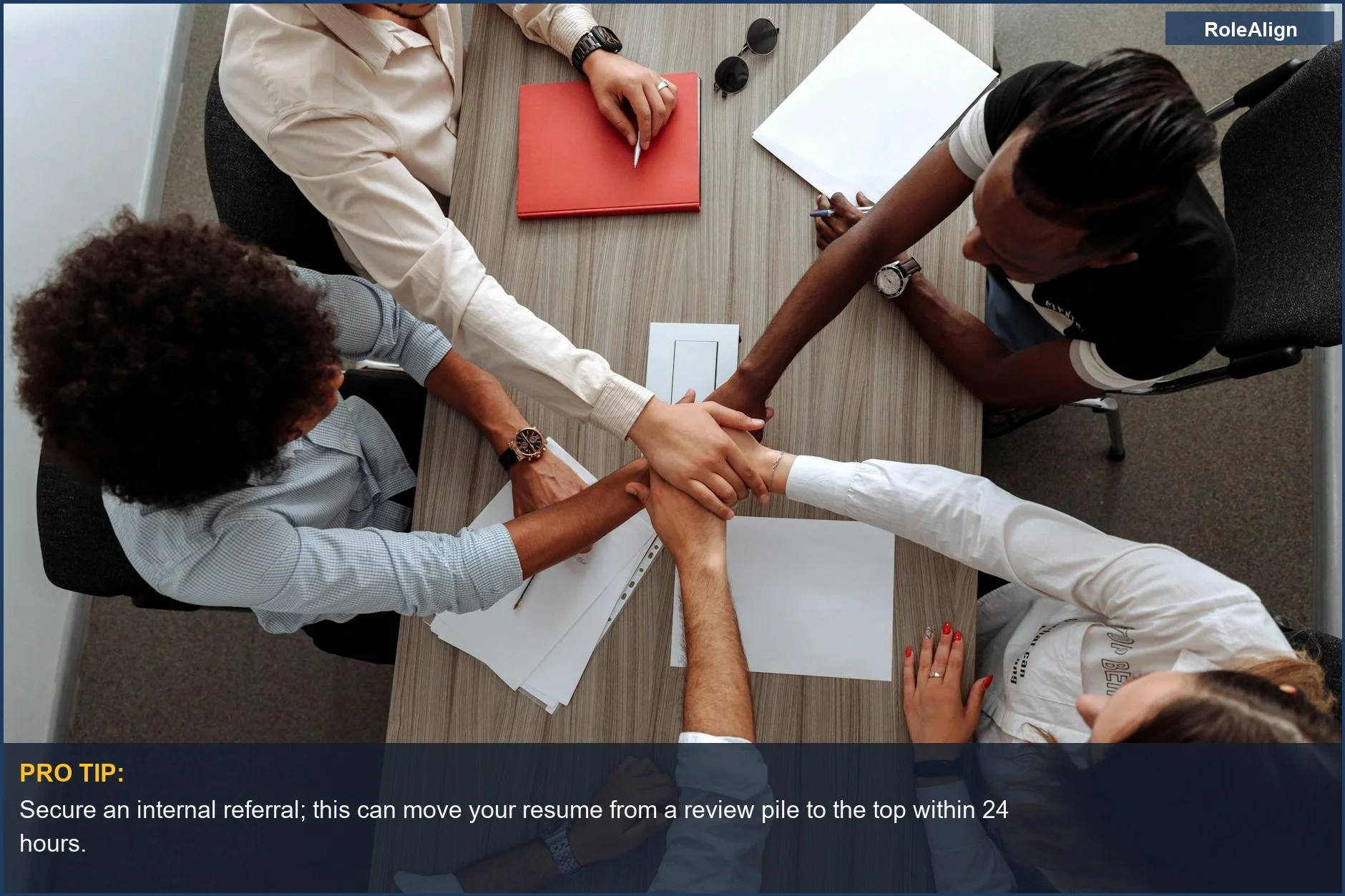
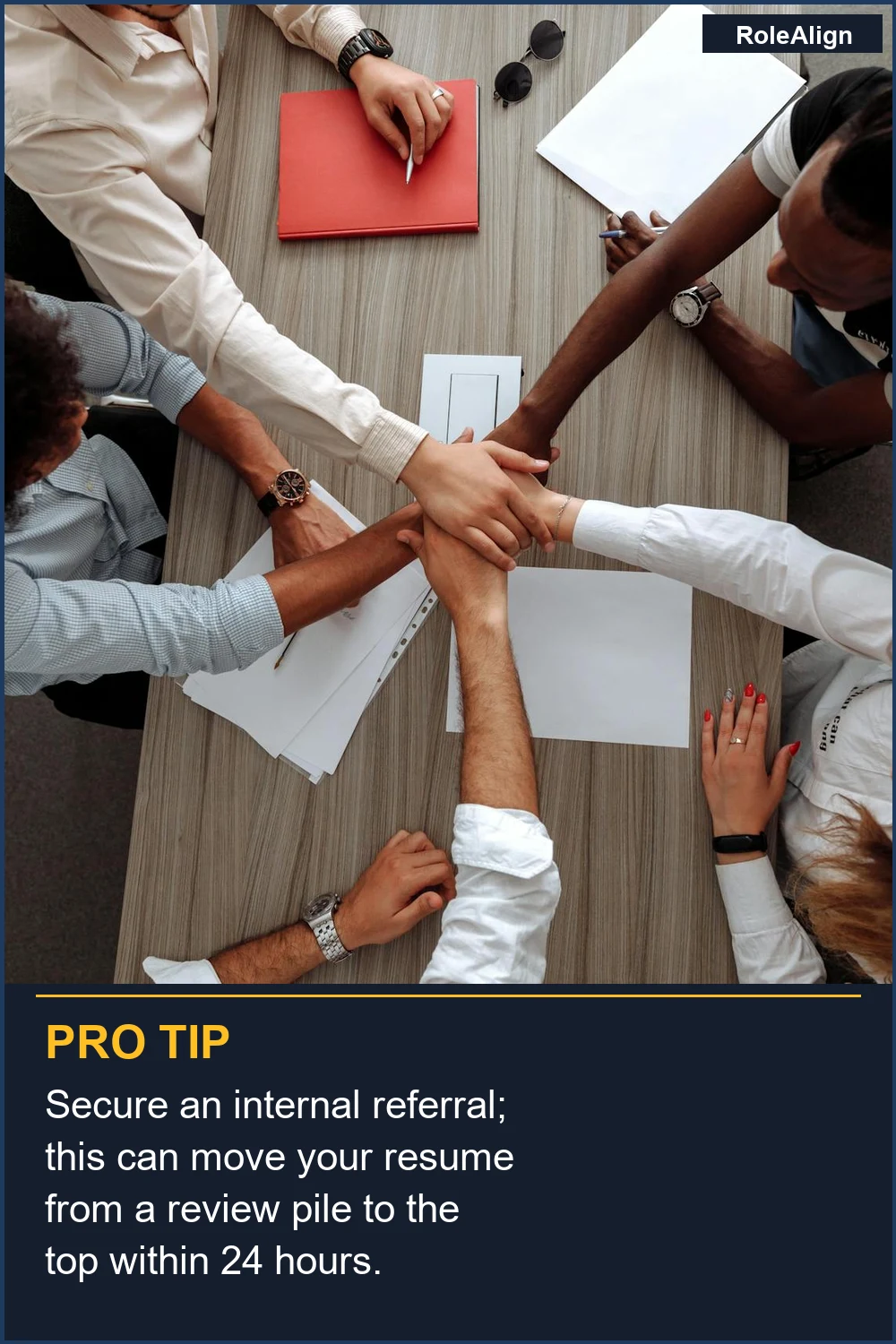
When you finally do apply for a role, ask your connection if they'd be willing to refer you. A referral, even an informal one, can bump your application past the initial ATS screening in systems like Greenhouse or Lever, putting you directly in front of a human recruiter. Quora users recognize this as a key benefit.
What This Looks Like in Practice
I once saw a resume for a Marketing Manager role, a cold application through Greenhouse, that looked perfectly fine on paper. Good experience, relevant keywords. But it sat in the 'review' pile for three days while I prioritized.
Then, an internal referral came in for the same role, from an alum who was a VP in another department. That candidate's resume, objectively, was slightly less polished. But because of the referral, it got a callback within 43 minutes.
The hiring committee, facing two candidates, heavily weighted the referral. The alum's endorsement reduced perceived risk by 25 percent. This wasn't about raw skill; it was about trust and internal validation. The cold applicant eventually got an automated rejection email.
Another time, I was trying to fill a specialized Data Scientist role that had been open for two months. My director was on my case. I tried job boards, LinkedIn, everything. It was a ghost job in the making.
I finally remembered a candidate from my university's Computer Science alumni group who had similar skills. I reached out, they were looking, and within 10 business days, they had an offer. This wasn't magic; it was knowing where to look for pre-vetted talent. Facebook groups can be powerful.
This saved the company roughly $12,000 in additional recruitment advertising costs and recruiter time. That's the real power of these networks, and why companies like Forbes highlight them.
Mistakes That Kill Your Chances
| Mistake | Why It Kills Your Chances (Recruiter's View) |
|---|---|
| Cold-pitching for a job immediately | You're treating them like a vending machine, not a human. My recruiter brain flags this as transactional and unstrategic. It screams 'desperate' and 'lazy'. |
| Sending generic, untailored messages | If you can't be bothered to customize, why should they bother to help? It's noise, not signal. ATS systems pick up on this lack of personalization, and so do people. |
| Not doing your research on their role/company | Asking 'What do you do?' when it's clear on LinkedIn is a red flag. It shows a lack of respect for their time and effort. It's the equivalent of a resume without keywords. |
| Only connecting when you need something | This is a relationship, not a one-time transaction. If you only pop up when you're job-hunting, you're seen as opportunistic. Building trust takes time and consistent, genuine engagement. |
| Ignoring previous employer alumni networks | You're overlooking a massive, often stronger, pool of connections. People who worked with you know your work ethic directly. Job-Hunt.org says these are often better. |
| Not following up (or following up too much) | One polite follow-up after a week is fine. Harassing them daily? You'll get blocked. No follow-up at all? You'll be forgotten in the resume graveyard. Find that sweet spot. |
| Treating mentorship as a one-way street | Mentorship should be reciprocal, even if you're offering less experience. Offer to help in small ways, share relevant articles, or simply check in. LinkedIn highlights structured mentorship leads to higher career confidence. |
Key Takeaways
The bottom line is this: alumni networks aren't some feel-good side project; they are a critical mechanism for bypassing the traditional hiring gauntlet. I've configured ATS systems and screened thousands of candidates, and I can tell you, a referral from an alum carries significant weight.
- Bypass the ATS Black Hole: Alumni referrals often get routed directly to a human recruiter, skipping initial automated filters that can bury even strong resumes.
- Reduce Recruiter Risk: A known connection provides an inherent level of vetting, making you a less risky candidate in the eyes of my recruiter brain.
- Access Ghost Jobs: Many roles are filled through internal networks before they ever hit a public job board, making alumni connections your key to the hidden job market.
- Accelerate the Process: Referrals can cut down time-to-hire by weeks, a huge win for both the company and the candidate.
It's about efficiency. - Leverage Shared Experience: Whether it's a university or a former employer, common ground builds trust and rapport faster than a cold application ever could. Openarc data confirms 85 percent of jobs are never posted online.
Don't just apply online and pray. Start building these connections now. It's not about who you know; it's about who knows you and trusts you enough to put their reputation on the line for you.
Frequently Asked Questions
If I get a referral from an alum, does it mean I'm guaranteed an interview, or even a job? What's the real conversion rate?
I'm a recent grad with no 'alumni' experience from previous employers. Should I even bother with this, or is it only for experienced pros?
What if my alumni contact works in a completely different industry or department than the job I'm applying for? Is their referral still useful?
Can actively trying to connect with too many alumni on LinkedIn backfire and make me look desperate or spammy?
I heard that companies track how many of their employees come from certain universities. Is this true, and how does it impact my chances?
Sources
- The Power of Networking: Why 85% of Jobs Are Never Posted Online
- Secret Networking Powerhouse: Employer "Alumni" - Job-Hunt.org
- How important are alumni networks to your career success? - Quora
- Colleges with strong alumni networks for employability - Facebook
- Why your Alumni network is your most undervalued asset? - LinkedIn
- The Hidden Superpowers of Corporate Alumni Networks - Reworked
- Guide to Building a Strong Alumni Network in 2026 - Almabase
- Alumni Networks for Career Success Abroad - Edvia Ai
- Offboarding Best Practices: Employee Alumni Network
- The Power of Alumni Networks
- Let's Tap The Real Power Of College Alumni
- Unlocking Alumni Power for Campus Hiring & Mentorship - LinkedIn