Researching New Career Paths: Practical Steps to Find Your Next Move
RoleAlign Team
12 min read
Includes Video
You just got the automated rejection email, or maybe you're staring at an Applicant Tracking System (ATS) and wondering if your meticulously crafted resume even has a chance. This isn't the time for fluff; it's time for serious research into new career paths.
You just got the automated rejection email, or maybe you're staring at an Applicant Tracking System (ATS) and wondering if your meticulously crafted resume even has a chance. This isn't the time for fluff; it's time for serious research into new career paths. For many, the idea of a career change feels overwhelming, like being stuck without a map Careershifters. But the truth is, your career is a significant part of your life - you have 80,000 hours in it, a substantial chunk of time that could be spent more fulfilling 80000hours.org. The first step isn't to randomly apply to jobs; it's a deliberate process of self-assessment and deep dives into potential roles. You need to understand what genuinely matters to you and then investigate the realities of different professions. This research phase is crucial for identifying careers that align with your values and skills, rather than just chasing titles or perceived prestige BigFuture.
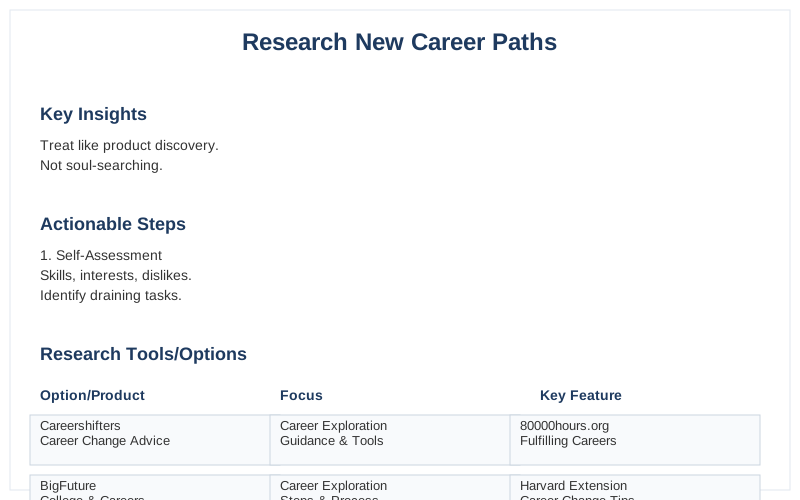
Key specifications for researching new career paths
## The Real Answer
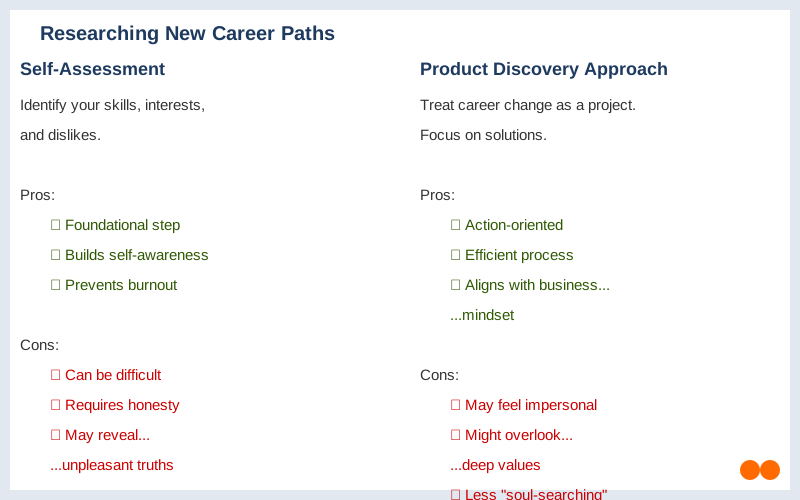
Recruiters don't have time for your existential crisis; they have a problem to solve. Researching new career paths effectively means treating it like a product discovery project, not a soul-searching expedition.
Stop waiting for inspiration to strike. The most effective approach to researching new career paths starts with a brutally honest self-assessment of your skills, interests, and what you truly dislike about your current situation 5 Tips for Changing Careers - Harvard Extension School. Don't just list what you're good at; identify the tasks that drain you. This forms the bedrock for identifying roles that won't just pay the bills but also won't make you dread Monday mornings.
Once you have a clearer picture of your internal landscape, the next step is to aggressively research external options. Think like a product manager: what are the market needs, and which roles fulfill them? Dive deep into industries and specific job functions. Talk to people already doing the work. Informational interviews are gold; they offer unfiltered insights into the day-to-day realities, unlike glossy company websites. Leverage resources like O*NET or industry-specific professional associations to understand job descriptions, required skills, and potential career trajectories 5 Tips for Changing Careers - Harvard Extension School.
Many people get stuck here, overwhelmed by data. The key is to prioritize and validate. Not every job description is accurate, and not every role is what it seems. Look for patterns: are multiple people in similar roles expressing dissatisfaction with the same aspects? Does the career path offer realistic growth opportunities and align with your long-term goals?
Remember, you have approximately 80,000 hours in your career Research-backed guide to a fulfilling career that does good. Don't waste them on unfocused exploration. Treat your career research like a business case: define the problem (your current dissatisfaction), identify potential solutions (new career paths), and rigorously test your hypotheses through real-world research and conversations. This focused approach cuts through the noise and dramatically increases your chances of finding a role that is not only satisfying but also impactful.
A clean, contemporary workspace with analytics displayed on a desktop, illustrating a structured approach to researching new career paths and identifying key insights.
| Photo by Serpstat
A clean, contemporary workspace with analytics displayed on a desktop, illustrating a structured approach to researching new career paths and identifying key insights.
| Photo by Serpstat
## What's Actually Going On
1
ATS parsing basics. Forget keywords stuffed into your resume like a Thanksgiving turkey. Applicant Tracking Systems (ATS) like Taleo or Workday are designed to parse your resume for specific information, not to be tricked. They look for standard resume sections (experience, education, skills) and extract data. If your resume is a PDF with fancy formatting or unusual fonts, the ATS might struggle. Recruiters often set up Boolean searches within these systems based on specific required skills or experience years, so generic terms won't land you in the right bucket.
2
Recruiter screen reality. A recruiter might spend 6-10 seconds on your resume initially. They are scanning for immediate red flags or alignment with the job description. This means clear, concise bullet points detailing accomplishments, not just responsibilities, are crucial. They are looking for impact, not just tasks. This is where identifying what you dislike about your current role becomes a powerful filter for what you should seek next.
3
Hiring committee decisions. Once past the initial screen, your application might land with a hiring manager or a committee. This stage is less about ATS parsing and more about narrative fit and potential. They assess how your experience translates to solving their specific problems. For startups, this often means looking for adaptability and a willingness to wear multiple hats. Enterprise companies, especially in sectors like finance or healthcare, might prioritize a more traditional career trajectory and specific domain expertise, as outlined by Harvard Extension School.
4
Seniority and industry nuances. At junior levels, companies often look for potential and a willingness to learn, making personality assessments and transferable skills more important. For senior roles, deep, proven experience and leadership capabilities are paramount. Tech roles might value specific technical stacks and project portfolios, while finance demands regulatory knowledge and analytical rigor. Healthcare often prioritizes certifications and patient care experience. 80,000 Hours' research highlights that a fulfilling career involves doing something you're good at that makes the world a better place, a principle that guides both individual choices and how organizations assess candidates.
5
Beyond the resume. Remember, hiring isn't just about paper. Recruiters and hiring managers are also looking at your LinkedIn profile to validate your experience and gauge your professional brand. They might use tools like Mergent Market Atlas to understand company structures and industry trends, which informs their hiring needs. Understanding these mechanics is key to effectively researching new career paths.
To further enhance your transition, explore these strategic moves for reinventing your professional path.
Close-up of hands on a laptop with a blank screen, representing the initial steps in researching new career paths and preparing your resume for ATS systems.
| Photo by Lukas Blazek
Close-up of hands on a laptop with a blank screen, representing the initial steps in researching new career paths and preparing your resume for ATS systems.
| Photo by Lukas Blazek
## How to Handle This
1
Self-Assess Your Core Drivers - Before you even look at job boards, map out your non-negotiables and what truly energizes you. Recruiters see this as the bedrock; without it, your applications will feel random. Skipping this means you'll chase roles that look good on paper but drain you, leading to quick burnout and another job search. Think about what you liked and disliked in past roles. The Harvard Extension School highlights assessing your values, interests, personality, and skills (VIPS) as a crucial first step.
2
Conduct Deep Industry & Role Research - Once you have a sense of direction, dive into specific industries and roles. Recruiters are looking for candidates who demonstrate genuine curiosity and understanding of their business and the role's challenges. If you skip this, your resume and cover letter will lack the specific keywords and context that an Applicant Tracking System (ATS) or a busy recruiter will flag. For entry-level or mid-career roles, this means understanding the basic day-to-day. For senior roles, it means grasping the strategic implications and market trends. Use resources like Mergent Market Atlas for corporate data.
3
Network for Informational Interviews - This is where you get the real dirt. Recruiters value candidates who have already spoken to people in the field; it shows initiative and reduces their perceived risk. If you skip this, you're relying solely on job descriptions, which are often aspirational or incomplete. This is particularly vital for niche or emerging fields where job descriptions are still evolving. Aim for 3-5 informational interviews per week, reaching out via LinkedIn first. This proactive approach can also surface unadvertised roles.
4
Test the Waters with Low-Risk Experiments - Before committing to a full career pivot, find ways to try out new skills or industries. Recruiters are more likely to consider candidates with some practical exposure, even if it's volunteer work or freelance projects. If you skip this, you risk making a massive, potentially costly, leap based on theory alone. For technical roles, this might mean contributing to open-source projects or taking on small freelance gigs. For management roles, it could involve leading a volunteer committee. The 80,000 Hours career guide emphasizes finding work you're good at and that makes a difference, which often requires experimentation.
A modern workspace with dual monitors displaying web design projects, highlighting the importance of technology and self-assessment when researching new career paths.
| Photo by Tranmautritam
A modern workspace with dual monitors displaying web design projects, highlighting the importance of technology and self-assessment when researching new career paths.
| Photo by Tranmautritam
## What This Looks Like in Practice
Senior Software Engineer to Product Management Frustrated by a lack of strategic impact, this engineer analyzed PM job descriptions at similar-stage companies, noting a recurring need for user empathy and market understanding. Informational interviews with three admired PMs provided invaluable insights into daily responsibilities and required skills Harvard Extension School. Relying solely on online course certifications didn't work; hiring managers prioritize demonstrated experience and transferable skills.
Entry-Level Data Analyst to FinTech Feeling limited by repetitive projects, this analyst sought higher stakes and faster innovation. Researching FinTech companies with robust data science teams, they found success volunteering for a cross-functional financial modeling project, gaining hands-on experience and a tangible accomplishment Careershifters.org. Spending too much time on generic online aptitude tests was a misstep; direct industry engagement was more effective.
Teacher to UX Design Seeking a more creative, problem-solving career, this individual explored UX design principles through online resources and personal projects. Applying learnings to mock case studies, like redesigning an app's user flow, was effective for portfolio building BigFuture. Initial lack of industry connections was a challenge; networking events and online communities proved more fruitful than passive job board applications.
Marketing Manager to Non-Profit Program Management Wanting to align work with social impact, this manager researched non-profits and analyzed program management skill requirements. Volunteering for a local non-profit's fundraising campaign demonstrated leadership and project management capabilities in a new context 80000hours.org. Transferable marketing skills were evident, but understanding non-profit funding models and stakeholder management required dedicated research.
As you consider these signs, effective networking strategies can significantly enhance your career pivot process.
A detective meticulously examining an evidence board, akin to thoroughly researching new career paths by analyzing job descriptions and gathering crucial information.
| Photo by cottonbro studio
A detective meticulously examining an evidence board, akin to thoroughly researching new career paths by analyzing job descriptions and gathering crucial information.
| Photo by cottonbro studio
## Mistakes That Kill Your Chances
Mistake Focusing solely on job titles and descriptions without understanding the underlying work.
Why candidates make it It's the easiest way to start researching new career paths; job titles appear to be clear markers of what someone does. Candidates think if they can find a title that sounds appealing, they've found a good fit.
What recruiters actually see Recruiters see a candidate who likely hasn't dug deep enough. They might be chasing a prestige title without understanding the day-to-day realities, leading to a mismatch later. This often happens with new grads who haven't experienced different work environments.
The fix Prioritize understanding the tasks, challenges, and impact of a role over its title. Use informational interviews to ask, "What does a typical day look like for you?" and "What's the most challenging part of your job?" This approach reveals the true nature of the work, not just its label.
Mistake Over-reliance on personality tests and generic self-assessments.
Why candidates make it These tools are widely promoted and seem like a quick way to get objective insights into your "type" and suitable careers. They offer a sense of direction when feeling lost.
What recruiters actually see Recruiters see someone who might be conflating personal preferences with professional capabilities. While self-awareness is crucial, a Myers-Briggs result doesn't tell a recruiter you can code, analyze data, or manage a project. This is especially true for mid-career professionals who should have more concrete skills to highlight.
The fix Use self-assessments as a starting point for exploration, not an endpoint. Cross-reference their suggestions with real-world job data and discussions. For example, if O*NET Interest Profile suggests a field, immediately look up specific roles within it and talk to people doing them to validate if your skills and interests align with actual demands.
Mistake Researching new career paths in a vacuum, avoiding direct contact with professionals.
Why candidates make it Many are uncomfortable with networking or fear bothering busy people. They think online research is sufficient and less intimidating.
What recruiters actually see Recruiters see candidates who lack the ground-level insights that only direct experience can provide. They might be applying for roles based on outdated or incomplete information, missing crucial nuances about industry trends and company cultures. Senior candidates, in particular, are expected to have a robust professional network.
The fixActively seek informational interviews. Reach out to professionals on LinkedIn, alumni networks, or through mutual connections. Ask about their career trajectory, challenges, and advice. This provides invaluable, up-to-date information that no website can replicate and builds connections.
Mistake Focusing only on current job market demand without considering long-term trends or personal evolution.
Why candidates make it The allure of high demand and good pay in immediate opportunities is powerful, especially when feeling financial pressure. It seems like the most practical, risk-averse choice.
What recruiters actually see Recruiters see candidates who might be chasing fads or settling for roles that won't sustain their interest or career growth. For mid-career individuals, this can signal a lack of strategic foresight.
The fix Balance immediate demand with future viability and personal sustainability. Research industries and roles with projected growth and consider how they might evolve. Think about your 80,000 hoursand how a path can offer fulfillment over decades, not just the next few years.
Understanding these mistakes can also enhance your approach to job searching, as detailed in our article on finding jobs effectively.
Comparison overview for researching new career paths
## Key Takeaways
Self-assessment is non-negotiable. Before you research any new career paths, take stock of your values, interests, personality, and skills. Harvard Extension School suggests tools like MBTI or O*NET Interest Profile to start.
Focus on impact and fulfillment. Don't just chase salary. Research shows a fulfilling career aligns with what you're good at and makes a positive difference 80000hours.org points out.
Action trumps analysis paralysis. You have 80,000 hours in your career; don't spend them all researching. Careershifters.org emphasizes that action, even small steps like volunteering or freelancing, is key to finding what works.
The single most important thing a recruiter would tell you off the record? Don't just research; validate. Everyone *thinks* they know what a job entails. Unless you've spoken to at least three people doing the job and ideally tried a small piece of it (shadowing, a freelance gig, a short course), your research is just theory.
To better align your skills with career opportunities, consider exploring how to map your current skills.
Frequently Asked Questions
What are the best places to look for info on new career paths in tech?
When you're diving into tech, don't just rely on generic job boards. I'd point you towards resources like BigFuture's career exploration section for structured thinking, and industry-specific communities on Reddit or Discord where people are actually discussing emerging roles. LinkedIn is also essential for tracking trends and seeing who's hiring for what, but filter heavily.
How much should I change how I look for jobs if I've been doing this for a while versus just starting out?
If you have years of experience, your approach needs to shift from just finding *a* job to finding the *right* job. Instead of broad searches, focus on transferable skills and how they map to new industries, using tools like Harvard Extension School's self-assessment tips. For those new to the workforce, it's more about understanding the landscape and identifying entry points, so exploring broad occupational databases like O*NET is a good start.
What are the biggest blunders people make when they're trying out different careers?
The most common mistake I see is treating it like a passive exercise. People often don't do enough deep dives into the day-to-day realities of a role, leading to disappointment later. Another trap is not talking to enough people in the field; relying solely on online research, like what's on Careershifters, is a huge missed opportunity.
How do I actually network for a different industry without feeling like I'm bothering people?
Forget vague 'coffee chats.' Be specific: 'I'm exploring X role in Y industry and noticed your work on Z project. Could I ask you a few questions about your experience?' Use LinkedIn to find people whose career paths genuinely intrigue you, and reference specific projects or accomplishments. The key is showing you've done your homework and aren't just looking for a handout, which is what recruiters like me see through instantly.
Does the size of a company really matter for the kinds of jobs available when I'm switching fields?
Absolutely. Smaller companies often offer broader roles where you can wear multiple hats, which can be great for gaining diverse experience quickly, even if the initial salary might be lower. Larger corporations, on the other hand, usually have more defined career ladders and specialized positions, which can provide deeper expertise but might require more patience to move into a new area. Think about what kind of growth you're after.
R
RoleAlign Team
Experienced car camper and automotive enthusiast sharing practical advice.