Applications Networking

How to Write a Cover Letter That Actually Gets Read (2026 Complete Guide)

RoleAlign Team
17 min read
Prices verified February 2026
Includes Video

You've poured hours into your resume, meticulously detailing every accomplishment. Then, you hit submit on that dream job application, only to be met with the dreaded "cover letter required" prompt. The quick, cynical thought: "Does anyone even read these anymore?" The reality is, they do.

You've poured hours into your resume, meticulously detailing every accomplishment. Then, you hit submit on that dream job application, only to be met with the dreaded "cover letter required" prompt. The quick, cynical thought: "Does anyone even read these anymore?" The reality is, they do. A staggering 83% of hiring managers read the majority of cover letters they receive, and 77% of recruiters prefer candidates who submit one, even if it's optional. Ignoring this crucial document is a missed opportunity to bridge the gap between your resume's facts and the hiring manager's needs. This isn't about rewriting your CV in paragraph form; it's about crafting a compelling narrative that directly answers why you are the right fit for this specific role. A strong cover letter is your chance to go beyond the bullet points and demonstrate genuine interest and understanding. It's your most direct path to making a memorable impression and actually getting your application read. This guide will equip you with the essential cover letter tips to make that happen.

Think of your cover letter as a concise, targeted conversation. It's not a place for generic platitudes; instead, it's an opportunity to connect your unique skills and experiences directly to the employer's specific needs. As one expert notes, a good cover letter is "just a clear, honest conversation between you and the hiring manager. No gimmicks, no jargon." Source. The initial moments of your cover letter are critical for capturing attention. A persuasive first sentence, as recommended by Duke Career Hub, "tells the reader that you are serious and keeps them..." engaged, making a strong first impression right from the start. Source. This means you need to be direct and impactful from the outset, clearly stating the position you're applying for and how you discovered the opening, as outlined in guides from UC. Source. Ultimately, the goal is to create a document that supports your resume and, more importantly, showcases your unique value proposition for that particular job. Source.
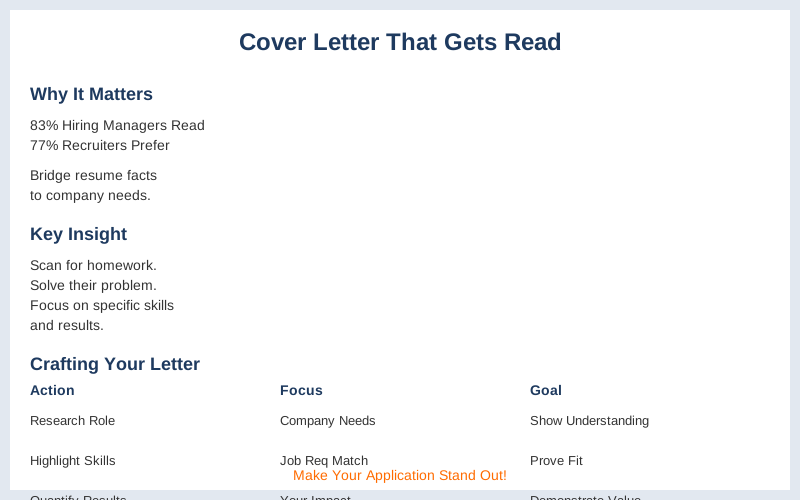
Cover letter infographic: key specs for getting read.
Key specifications for How to Write a Cover Letter That Actually Gets Read

The Real Answer

TOPIC: How to Write a Cover Letter That Actually Gets Read SECTION: direct_answer — ## The Real Answer

Recruiters don't read cover letters for fluff; they scan for proof you've done your homework and can solve their specific problem. Your cover letter is your chance to bridge the gap between your resume's facts and the company's needs.

Forget generic praise or simply rehashing your resume. A recruiter's first thought is: "Why should I talk to *this* person for *this* role?" They spend mere seconds on each letter, so you need to grab their attention immediately by showing you understand their challenges and how you're the solution. This means focusing on specific skills and results that directly correlate to the job description, not just listing your accomplishments. For instance, instead of saying "experienced in project management," you could state "Successfully managed cross-functional teams to deliver X project 15% under budget and two weeks ahead of schedule, directly addressing the company's stated need for efficient resource allocation."

Research is non-negotiable. Generic statements like "I'm a hard worker" are useless. Instead, pinpoint what makes you a standout candidate for *this specific company*. Show you've researched their mission, recent projects, or values and can articulate why you're a perfect fit. For example, if a company emphasizes sustainability, and you have experience implementing eco-friendly initiatives, highlight that connection. This personalization is key to demonstrating genuine interest and a clear understanding of the role. It’s about showing you’ve gone beyond the surface-level job posting and understand their unique context Slingshot Connections.

Aim for brevity: keep it under 250 words, typically 3-4 short paragraphs. A strong first sentence is crucial; it should state your purpose and offer a compelling reason to continue reading Duke Career Hub. This isn't the place for lengthy anecdotes; use it to highlight a key achievement or a pattern of success that directly addresses a job requirement Duke Career Hub. A good opening might be: "Having followed [Company Name]'s innovative approach to [specific industry challenge] for some time, I was excited to see the opening for a [Job Title], as my experience in [relevant skill/achievement] directly aligns with your stated goals for this role." University of Cincinnati.

While AI tools like ChatGPT can help brainstorm, never send an AI-generated letter without significant human editing. An AI response is inherently average; your cover letter needs to feel personal and authentic. The goal is a clear, honest conversation, not a marketing gimmick Reddit. Consider the AI as a starting point for ideas, but always infuse your own voice and specific examples. Sending a cover letter, even when optional, gives you a significant edge, with 77% of recruiters preferring candidates who submit one Kickresume. This preference underscores its importance as a tool for differentiation and demonstrating your commitment to the application process LinkedIn.
To enhance your chances of success, consider these tips in our guide on writing effective cold emails.
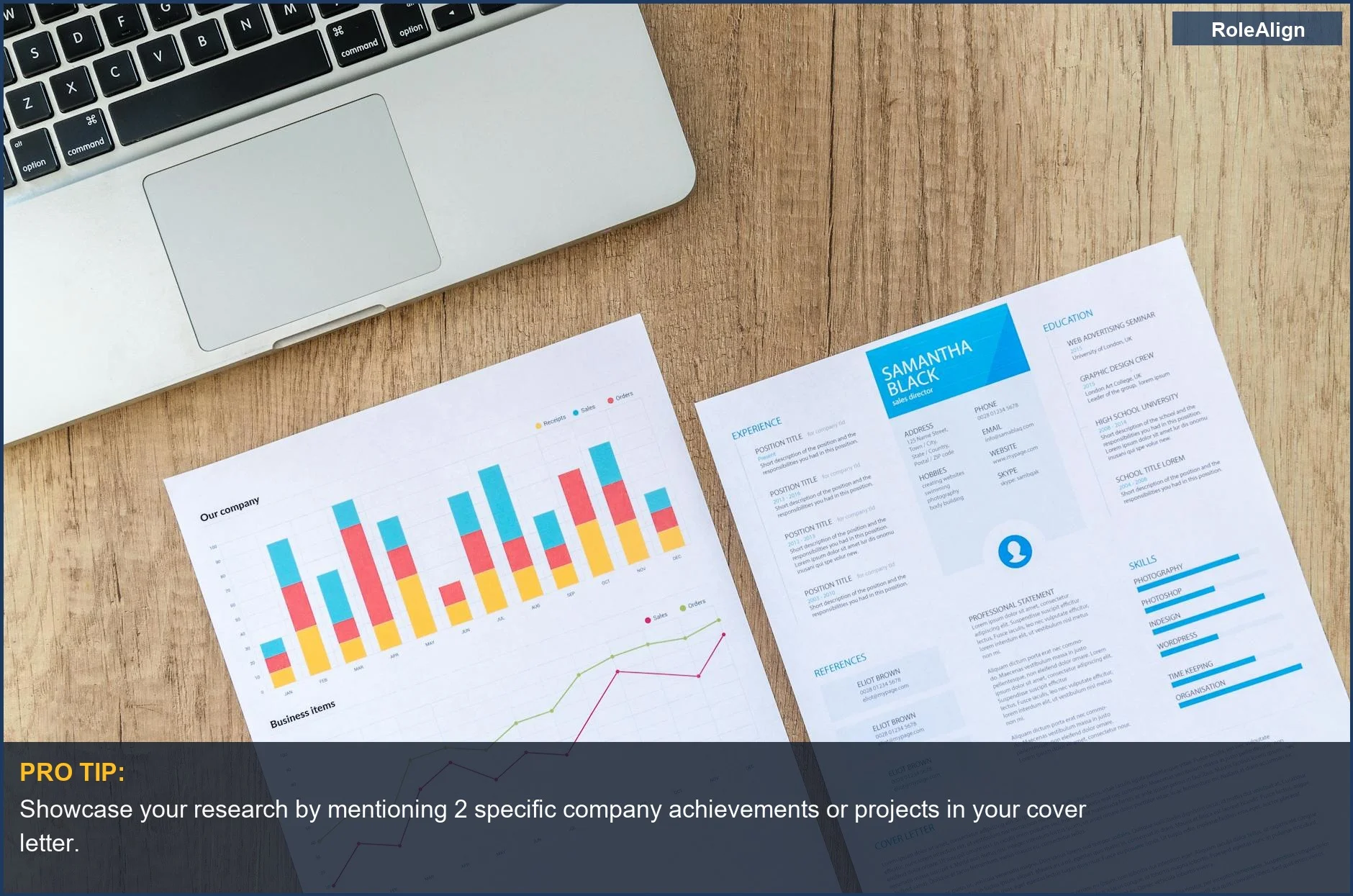
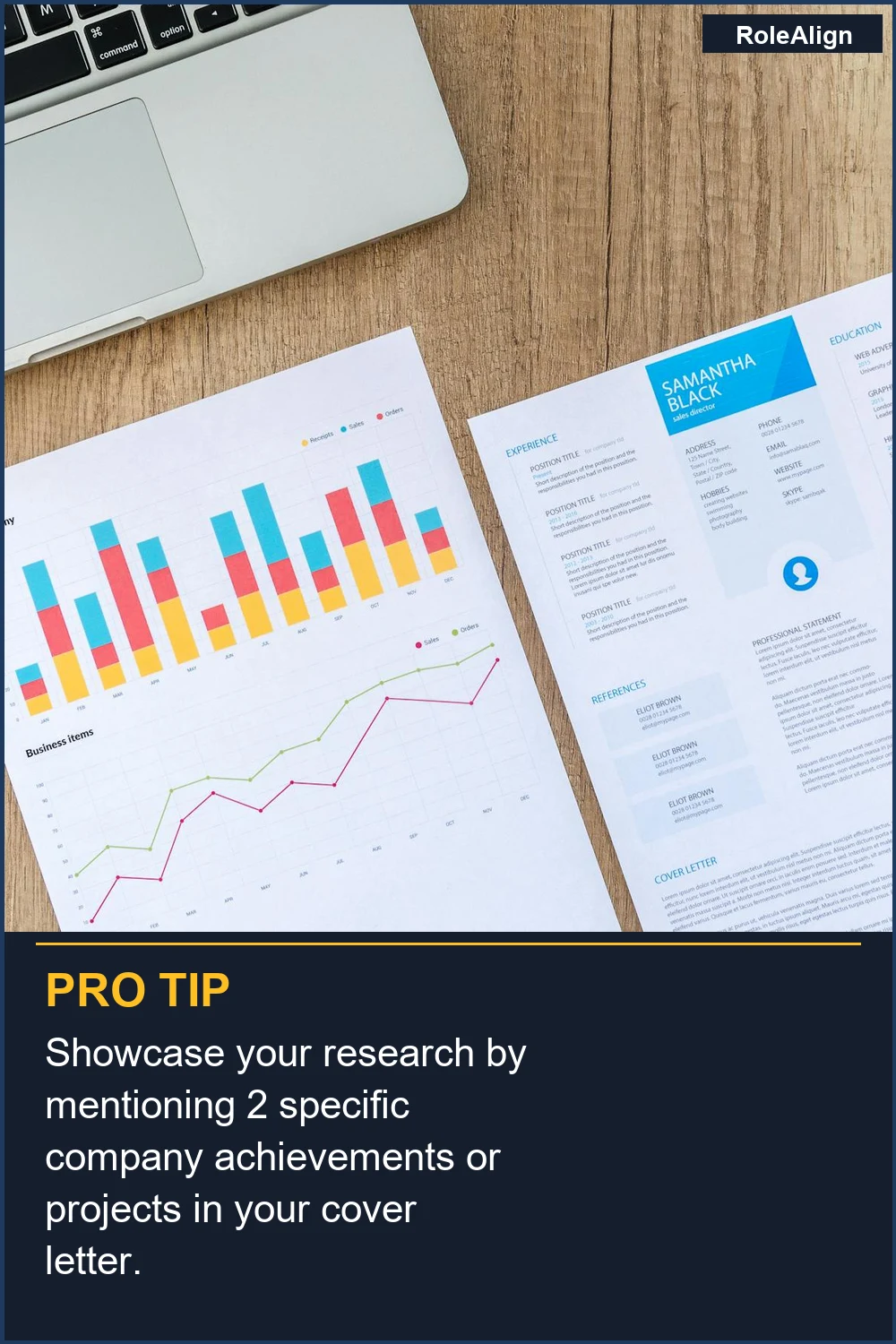
Showcase your research by mentioning 2 specific company achievements or projects in your cover letter.
Analyze your resume and company needs on your desk to craft a compelling cover letter that works, demonstrating you've done your homework. | Photo by Lukas Blazek

What's Actually Going On

The hiring process is a gauntlet, and your cover letter is often the first hurdle. Understand the mechanics, and you'll dramatically increase your chances of getting read.

1
ATS Parsing and Initial Screening - Most companies, especially larger ones, use Applicant Tracking Systems (ATS) to filter applications. These systems scan for keywords directly matching the job description. A poorly optimized cover letter, or one that merely rehashes your resume, will likely be flagged or ignored by the ATS. Recruiters then perform a quick scan, often spending only 10-30 seconds per letter.
2
Recruiter and Hiring Manager Focus - Recruiters look for clear signals of fit and enthusiasm. They want to see that you understand the role and the company, and that you've done your homework. Hiring managers are more interested in specific achievements and how your past success translates to their current needs. They're not looking for a resume summary; they want to know *why you* and *why them*. A cover letter explains why you want the role and what strengths you bring, going beyond the resume's factual list.
3
3
Company Size and Industry Nuances - Startups may value boldness and a direct pitch of how you'll solve their immediate problems. Enterprise companies often have more structured processes where adherence to keywords and clear demonstrations of experience are paramount. In tech, demonstrating technical aptitude and passion is key. In finance, precision, attention to detail, and understanding of market dynamics are crucial. Healthcare roles demand a clear articulation of patient care focus and regulatory understanding.
4
Seniority Level Expectations - For entry-level roles, cover letters should highlight potential, eagerness to learn, and relevant academic or project experience. For senior positions, the emphasis shifts to strategic impact, leadership, and a proven track record of driving results. A senior candidate's cover letter should demonstrate a deep understanding of business challenges and how they've successfully navigated them. Providing specific skills and results that most correlate to the role is essential at all levels, but the *nature* of those results changes.
5
Data Supports the Cover Letter's Value - Despite the skepticism, data shows cover letters are still highly valued. 77% of recruiters will give preference to candidates who did send a cover letter, even if optional. Furthermore, 83% of hiring managers read the majority of cover letters they receive. Only 6% of hiring managers think they are unnecessary. A well-written cover letter is your chance to make a compelling argument beyond bullet points, answering "Why should we bring this person in?" It supports your resume and showcases you.
To increase your chances of getting a response, consider techniques from our article on writing cold emails.
Tailor your cover letter for each application; generic letters get ignored by 80% of hiring managers.
Use this clipboard setup as a visual reminder of key cover letter tips, ensuring your application stands out from the start. | Photo by Markus Winkler

How to Handle This

1
Research the Company and Role - Understand the company's mission, recent news, and pain points. Dissect the job description for keywords and required skills. Recruiters want to see you've done your homework, not just sent a generic blast. Skipping this means your letter will feel impersonal and uninspired, failing to connect your experience to their specific needs. This is your first impression Duke Career Hub. Dive deep into their "About Us" page, recent press releases, and even their social media to grasp their current initiatives and challenges. If they recently launched a new product, mention your excitement about it. If they're facing a known industry hurdle, subtly hint at how your skills can provide a solution. For instance, if a tech company is emphasizing a push towards AI integration, and you have experience in machine learning, this is a crucial piece of information to highlight. Understanding their values and recent achievements allows you to align your own experience with what truly matters to them. This foundational research is not just about finding keywords; it's about understanding their world and demonstrating that you're a thoughtful candidate who can contribute meaningfully.
2
Tailor Your Opening Hook - Your first sentence is critical. Forget bland introductions like "I am writing to apply for..." Grab attention by stating the specific role and immediately highlighting a key qualification or your strongest, most relevant achievement. This shows you're serious and have read the posting carefully Duke Career Hub. A weak opening makes recruiters question your engagement. Instead of a generic opener, try something like: "With a proven track record of increasing user engagement by 25% in my previous role at [Previous Company], I was immediately drawn to the Marketing Manager position at [Company Name] advertised on [Platform]." Or, "Having successfully led the development of a critical software module that reduced bug reports by 40%, I am eager to apply my expertise to the Senior Software Engineer role at [Company Name]." This immediately signals your value and relevance, making the reader want to learn more about how you achieved these results.
3
Show, Don't Just Tell, Your Value - Provide concrete examples of how you've applied skills to achieve results. Quantify successes. For example, instead of "strong project management skills," say "Managed a cross-functional team of 5 to deliver Project X 2 weeks ahead of schedule, resulting in a 15% cost saving." Recruiters are looking for proof of your capabilities. This is where you prove you're the right fit for their specific needs LinkedIn. Use the STAR method (Situation, Task, Action, Result) implicitly to structure your examples. For instance, "In a challenging situation where our client's project timeline was at risk (Situation), I was tasked with re-allocating resources to prevent delays (Task). I proactively identified bottlenecks, restructured workflows, and implemented a new communication protocol with stakeholders (Action), ultimately delivering the project 10% under budget and two weeks early (Result)." This level of detail provides irrefutable evidence of your competence.
4
Articulate Your "Why" for This Specific Company - Explain why you are drawn to *this* particular company and role. Reference something specific you admire about their work, culture, or mission. This shows genuine interest and that you're not just sending out mass applications. Recruiters want to hire people who are motivated and aligned with their organization. 77% of recruiters prefer candidates who send a cover letter Kickresume. Did their recent sustainability initiative resonate with your personal values? Are you impressed by their innovative approach to customer service, as highlighted in a recent industry award? Perhaps their commitment to employee development, as evidenced by their robust training programs, aligns with your career growth aspirations. For example, "I've been following [Company Name]'s groundbreaking work in renewable energy for years, particularly your recent advancements in solar panel efficiency, and I am deeply inspired by your commitment to a sustainable future. My own passion for environmental solutions, coupled with my engineering expertise, makes this role a perfect alignment." This personal connection makes your application stand out from the crowd.
5
Keep It Concise and Scannable - Aim for under 250 words, or about 3-4 short paragraphs LinkedIn. Hiring managers often skim. Use clear, direct language and avoid jargon. Your goal is to make it easy for them to grasp your key selling points quickly. Think of it as an executive summary of your qualifications and enthusiasm. Break up text with bullet points if appropriate for listing specific skills or achievements, but ensure the overall flow remains professional and narrative. A well-structured, brief letter respects the hiring manager's time and ensures your most impactful points are easily digestible. Avoid overly complex sentences or lengthy anecdotes. Get straight to the point, providing just enough detail to pique their interest and encourage them to review your resume for more.
Mastering your cover letter can be a stepping stone to confidently discussing your value when you seek a raise, as outlined in our article on asking for a raise.
Dedicate at least 15 minutes to researching the company before writing your cover letter.
Focus on the details when filling out your application, just as you should when learning how to write a cover letter that grabs attention. | Photo by Kampus Production

What This Looks Like in Practice

  • Senior Software Engineer at a Series B Startup A candidate for a Senior Software Engineer role at a Series B startup sent a generic cover letter, detailing general experience but failing to highlight specific projects or achievements relevant to the startup's tech stack (e.g., scaling microservices, optimizing database performance). The hiring manager, swamped with applications, skimmed it and moved on. A successful approach opened with a strong, quantified achievement related to the startup's known challenges, followed by a concise explanation of how their experience with specific technologies (like Kubernetes or Go) directly addressed those needs. This demonstrated immediate value and understanding of the company's context.
  • Entry-Level Data Analyst at a Fortune 500 An entry-level candidate for a Data Analyst position at a large corporation wrote a cover letter that directly regurgitated their resume, listing coursework and academic projects without connecting them to business impact or specific analytical tools mentioned in the job description. It was too long and lacked a clear narrative. A successful approach started with the exact position and where they saw the posting, followed by a brief mention of a relevant academic project where they used SQL and Python to derive actionable insights, explicitly stating the outcome. This showed initiative and an understanding of how their skills translate to business needs, a key factor for standout cover letters.
  • Career Changer from Teaching to Product Management Someone transitioning from teaching to Product Management focused heavily on transferable skills like curriculum development and student assessment. The letter didn't sufficiently bridge the gap to product management responsibilities, failing to articulate *why* product management and *how* teaching experience prepared them for product strategy or user research. A successful letter started by directly addressing the career change, stating their passion for product, and providing 1-2 specific examples of applying product-like thinking in their teaching role (e.g., designing an educational tool, optimizing a learning process), demonstrating a proactive approach to problem-solving. This approach aligns with advice that hiring managers look for conciseness and relevance.
  • Mid-Level Marketing Specialist at a Tech Company A candidate for a Marketing Specialist role at a tech firm submitted an overly general cover letter, discussing their passion for marketing without specific examples tied to the company's products or campaigns. It also exceeded the recommended 250-word limit. A more effective letter would have referenced a specific marketing campaign or product the company launched and concisely explained how their experience in social media campaign management, content creation, or SEO strategy directly contributed to similar successes for previous employers, showing they'd done their homework.
To enhance your job application strategy, consider how to effectively cold email a hiring manager directly.
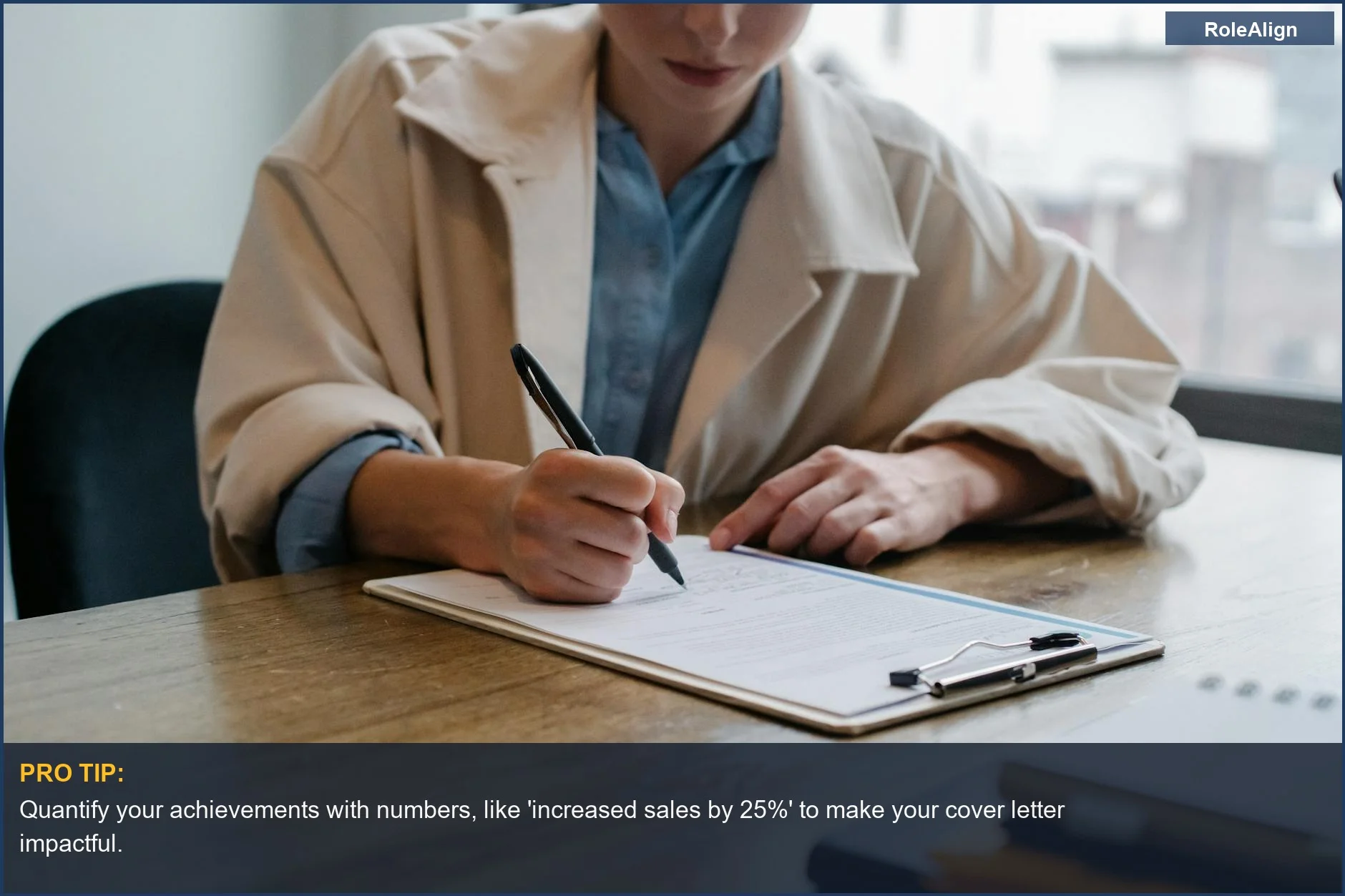
Quantify your achievements with numbers, like 'increased sales by 25%' to make your cover letter impactful.
Completing paperwork with care is like writing a cover letter; ensure you highlight relevant skills and experience for maximum impact. | Photo by Sora Shimazaki

Mistakes That Kill Your Chances

Mistake Rewriting your resume in paragraph form.
Why candidates make it They think the cover letter is just a place to expand on bullet points, or they're short on time and see it as a redundant task.
What recruiters actually see A lazy, uninspired application. Recruiters want to know *why* you want *this* job, not just *what* you've done. This misses the opportunity to stand out.
The fix Treat your cover letter as a narrative. Use it to connect your past achievements to the specific needs of the role and company. Focus on *impact* and *motivation*, not just duties.
Mistake Generic, "To Whom It May Concern" greetings.
Why candidates make it They can't find a specific contact or believe it's a standard professional practice.
What recruiters actually see A candidate who didn't do their homework. Finding a name shows initiative and makes the letter feel more personal. A generic greeting signals a lack of genuine interest.
The fix Always try to find the hiring manager's name. Check LinkedIn, the company website, or even call the reception desk. If all else fails, use a title like "Hiring Manager for [Job Title]" or "Dear [Department Name] Team."
Mistake Being too humble or vague about accomplishments.
Why candidates make it Cultural norms, fear of appearing boastful, or simply not knowing how to quantify results. New grads often struggle here.
What recruiters actually see Uncertainty and a lack of proven impact. Recruiters are looking for evidence of success. Vague claims don't build credibility.
The fix Use the STAR method (Situation, Task, Action, Result) to frame your achievements. Quantify whenever possible with numbers, percentages, or dollar figures. For senior roles, focus on strategic impact and leadership.
Mistake Overly long, rambling cover letters.
Why candidates make it They have a lot to say and believe more is better, or they haven't learned to be concise.
What recruiters actually see A lack of respect for their time. Hiring managers are busy and often skim. Anything over 250-400 words or more than 3-4 short paragraphs is likely to be ignored.
The fix Keep it concise and focused. Aim for 3-4 short paragraphs, ideally under 250 words. Get straight to the point and highlight your most relevant qualifications and motivations.
Mistake Relying solely on AI-generated content without personalization.
Why candidates make it The ease and speed of AI tools like ChatGPT. They assume AI can perfectly capture their voice and tailor it effectively.
What recruiters actually see A bland, generic letter that lacks personality and specific insight. AI can produce average responses, but it struggles with genuine enthusiasm and deep company-specific understanding. An AI-generated letter feels less human and less you.
The fix Use AI as a brainstorming partner, not a replacement writer. Edit heavily, inject your unique voice, and ensure it directly addresses the job description and company values. Focus on adding personal anecdotes and specific reasons for your interest.
Mistake Focusing only on what the *candidate* wants.
Why candidates make it They view the cover letter as a place to explain their career goals or why they need a job.
What recruiters actually see A self-centered applicant. Recruiters want to know how you will solve *their* problems and benefit *their* company. "What you're willing to bring to the table" is key.
The fix Frame your skills and experience in terms of the employer's needs. Show how you can contribute to their success, solve their challenges, and align with their mission.
Understanding common mistakes can help you evaluate your next opportunity, so consider what makes a job offer actually good.

Key Takeaways

To complement your cover letter, crafting a compelling LinkedIn summary can further enhance your professional image.

Frequently Asked Questions

What's the best way to make sure my cover letter actually gets read by a hiring manager?
To ensure your cover letter gets read, keep it concise, ideally under 250 words and limited to 3-4 short paragraphs LinkedIn. Focus on clearly stating your interest and highlighting specific skills and results that directly align with the job description to grab their attention LinkedIn.
How do I start a cover letter strong enough to make someone want to keep reading?
Make a strong first impression by crafting a persuasive opening sentence that clearly states your purpose and introduces yourself professionally Duke Career Hub. This initial sentence should immediately convey your seriousness and entice the reader to learn more about your qualifications Duke Career Hub.
Should I just rehash my resume in my cover letter?
Absolutely not; avoid simply rewriting your resume in paragraph form, as this is a common mistake that makes cover letters boring and misses an opportunity to stand out Slingshot Connections. Instead, use your cover letter to explain why you want the job, why you're interested in that specific company, and what unique value you'll bring to the role Slingshot Connections.
How can I make my cover letter sound more personal and less generic?
A good cover letter should feel like a clear, honest conversation with the hiring manager, free of gimmicks or jargon Reddit. While AI tools can help brainstorm, it's crucial to edit their output to infuse your own voice and make the letter feel genuinely human Slingshot Connections.
What's the most important thing to include in my cover letter to show I'm a good fit?
Focus on providing specific skills and quantifiable results you've achieved that most closely correlate with the requirements of the role you're applying for LinkedIn. This evidence-based approach builds credibility and demonstrates your ability to succeed in the position Duke Career Hub.

Sources

Related Articles