How to Translate Skills: Making Your Experience Relevant in New Roles
RoleAlign Team
13 min read
Includes Video
You just got rejected. Again. Staring at the polite but firm "we've decided to move forward with other candidates" email, you feel that familiar sting. You know you have the skills, but the job descriptions for that new role seem to speak a different language.
You just got rejected. Again. Staring at the polite but firm "we've decided to move forward with other candidates" email, you feel that familiar sting. You know you have the skills, but the job descriptions for that new role seem to speak a different language. It's like trying to explain complex AI concepts to someone who only speaks Python when you're fluent in Lisp. You're not alone; countless professionals, from PhDs to seasoned project managers, grapple with how to translate skills when making a career pivot. The reality is, your resume isn't just a list of past duties; it's your prime marketing tool. And if those skills aren't clearly communicating your value to a new industry, you're leaving opportunities on the table. Employers are actively seeking candidates who can demonstrate how their existing abilities, like communication or problem-solving, can directly benefit their business objectives How to Translate Academic Skills for Industry Job Applications. In fact, 92% of employers value these transferable skills as much as technical ones Ultimate Guide to Transferable Skills for Resumes - Upskillist. Understanding how to articulate your experience in industry-relevant terms is the first, crucial step to making your qualifications clear and eye-catching.
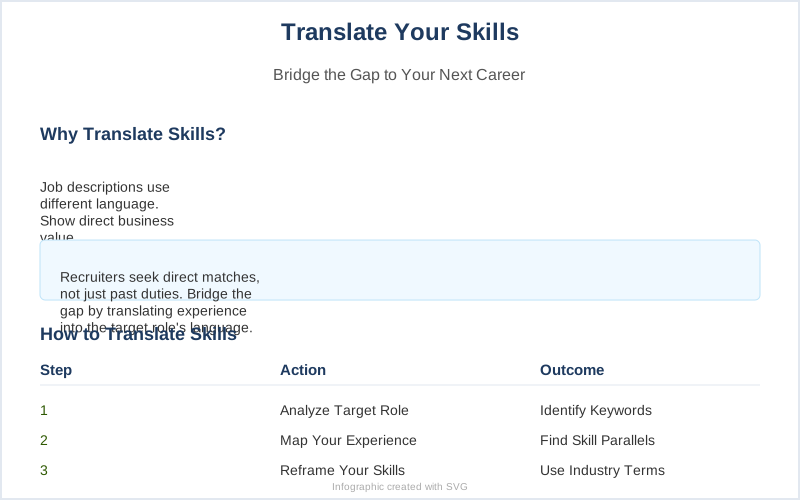
Key specifications for how to translate skills
## The Real Answer
Recruiters scan resumes for direct matches to job requirements, not a laundry list of past duties. Your job is to bridge the gap by translating your experience into the language of the role you want.
Forget generic skill descriptions. When you're looking to translate your skills into a new career, recruiters and hiring managers need to see an immediate connection to the job they're trying to fill. They're not going to do the heavy lifting of figuring out how your decade as a project manager in construction translates to leading a software development team. You have to do that for them. Think about it from their perspective: they have a problem, and they need someone with a specific set of skills to solve it. Your resume needs to scream, "I have those skills, and here's the proof."
Start by dissecting the job description. Identify the core competencies and keywords they're using. Then, audit your own experience. What did you actually *do* that demonstrates those exact competencies? For example, instead of listing "Managed projects," reframe it to align with the target role. If the job emphasizes "stakeholder communication," highlight instances where you successfully managed diverse stakeholder expectations. Employers value skills like communication, problem-solving, and leadership because they are applicable across many roles, with 92% of employers valuing them as much as technical skills Upskillist.
Companies are looking for impact. They want to know how your past actions drove business objectives. When you translate academic skills for industry, for instance, focus on how your research led to tangible outcomes or insights that could benefit a business, rather than just detailing the research process Alma.me. Quantify your achievements whenever possible, using metrics that resonate with the industry you're targeting. This shows you understand their priorities and can deliver results.
Don't be afraid to use industry-specific language. If you're moving from academia to industry, for example, research the common terminology and integrate it naturally into your resume's skill descriptions and experience bullet points. This demonstrates that you've done your homework and understand the professional landscape you're entering. You already possess many of the qualifications needed; the key is framing them effectively. There are often 10 common examples of transferable skills that work across industries Indeed.com.
To effectively highlight your skills, understanding how AI evaluates resumes can provide valuable insights, as explored in this guide.
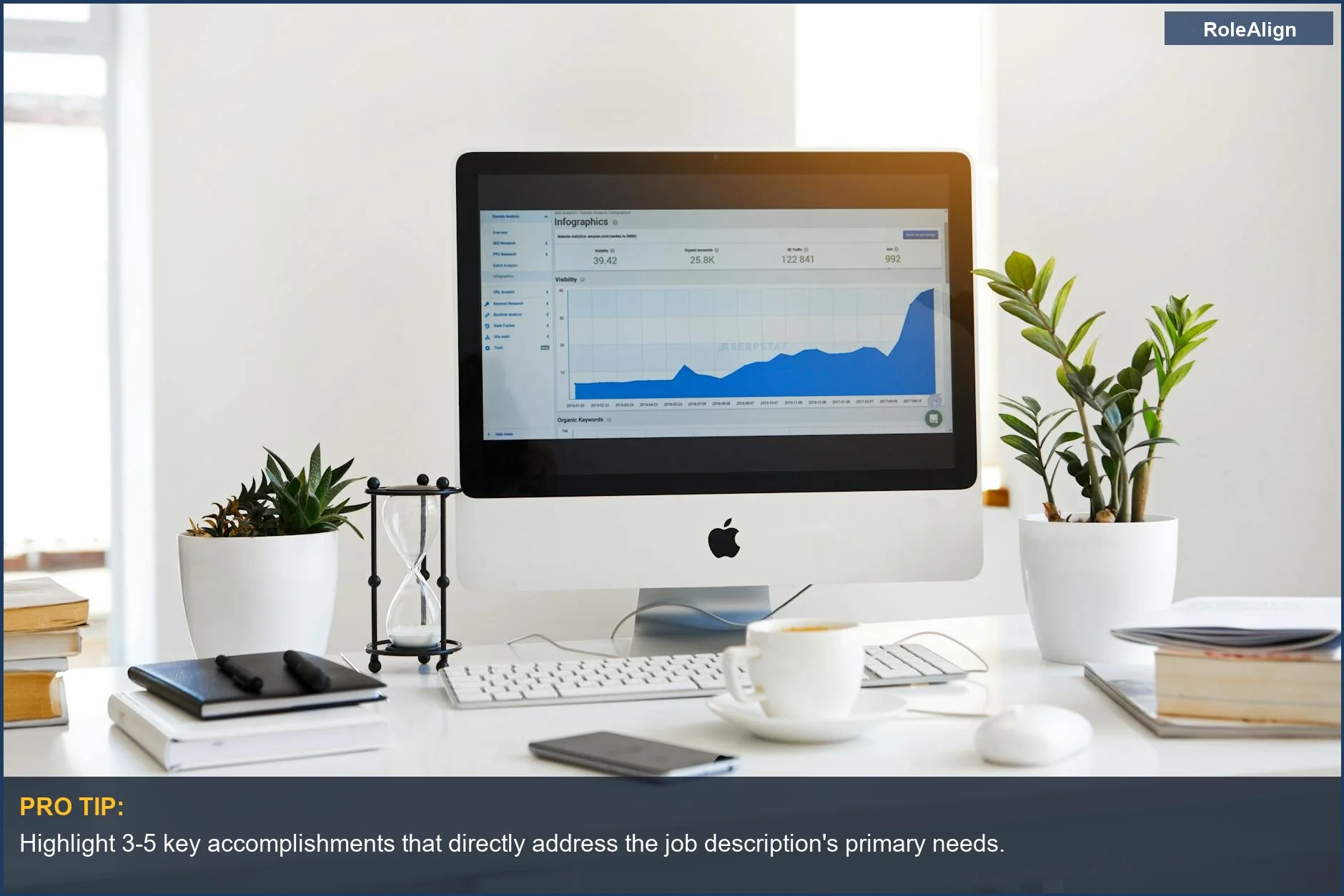
A contemporary workspace with analytics on screen sets the stage for understanding how to translate your skills. Focus on quantifiable results, like improving efficiency by 15%.
| Photo by Serpstat
A contemporary workspace with analytics on screen sets the stage for understanding how to translate your skills. Focus on quantifiable results, like improving efficiency by 15%.
| Photo by Serpstat
## What's Actually Going On
1
The ATS Black Hole - Most resumes never even see a human eye. They first hit an Applicant Tracking System (ATS), essentially a glorified database. These systems parse your resume for keywords and phrases that match the job description. If your resume is a wall of text without clear keywords, it might as well be in the trash. Companies like Taleo, Workday, and Greenhouse are common. Recruiters configure these to flag candidates. If you don't speak the ATS's language, you're sunk before you even start. Upskillist notes that 92% of employers value transferable skills as much as technical ones, but if the ATS can't find them, they don't exist.
2
Recruiter Speed-Read Reality - If your resume makes it past the ATS, it lands with a recruiter or hiring manager who spends maybe 6-10 seconds on it initially. They're not reading every word. They're scanning for specific accomplishments and keywords that signal you can do the job. They want to see evidence of impact, not just a list of duties. This is where translating your skills becomes critical. You need to frame your past experience in terms of the *results* you achieved, not just the tasks you performed. Alma.me emphasizes understanding the industry perspective and using industry-related keywords.
3
Hiring Committee Decisions - Once you pass the initial screens, you might face a hiring committee. These are typically people from your potential team and leadership. They're looking for a blend of technical competence, cultural fit, and evidence that you can solve *their* problems. They've seen countless resumes and heard endless pitches. They want to know: "Can this person deliver value to *our* business?" This means translating your past successes into future contributions for *their* company. The Muse stresses identifying qualifications you meet without question and emphasizing results.
4
Company Size and Industry Nuances - The game changes based on where you're applying. Startups want scrappy, adaptable problem-solvers; your ability to wear multiple hats and translate skills quickly is paramount. Enterprises have more structured roles and often more rigid ATS configurations, demanding precise keyword matching. Tech might value agile methodologies and rapid prototyping skills, while finance will scrutinize analytical rigor and regulatory compliance experience. Healthcare, with its patient-centric focus, will weigh communication and empathy heavily. Seniority also matters; a junior role needs foundational skills, while a senior role demands strategic impact and leadership translated from previous roles. Coursera highlights that transferable skills reduce training time and cost for organizations.
Understanding how AI tools adapt to different backgrounds can be crucial, especially when considering non-traditional experience.
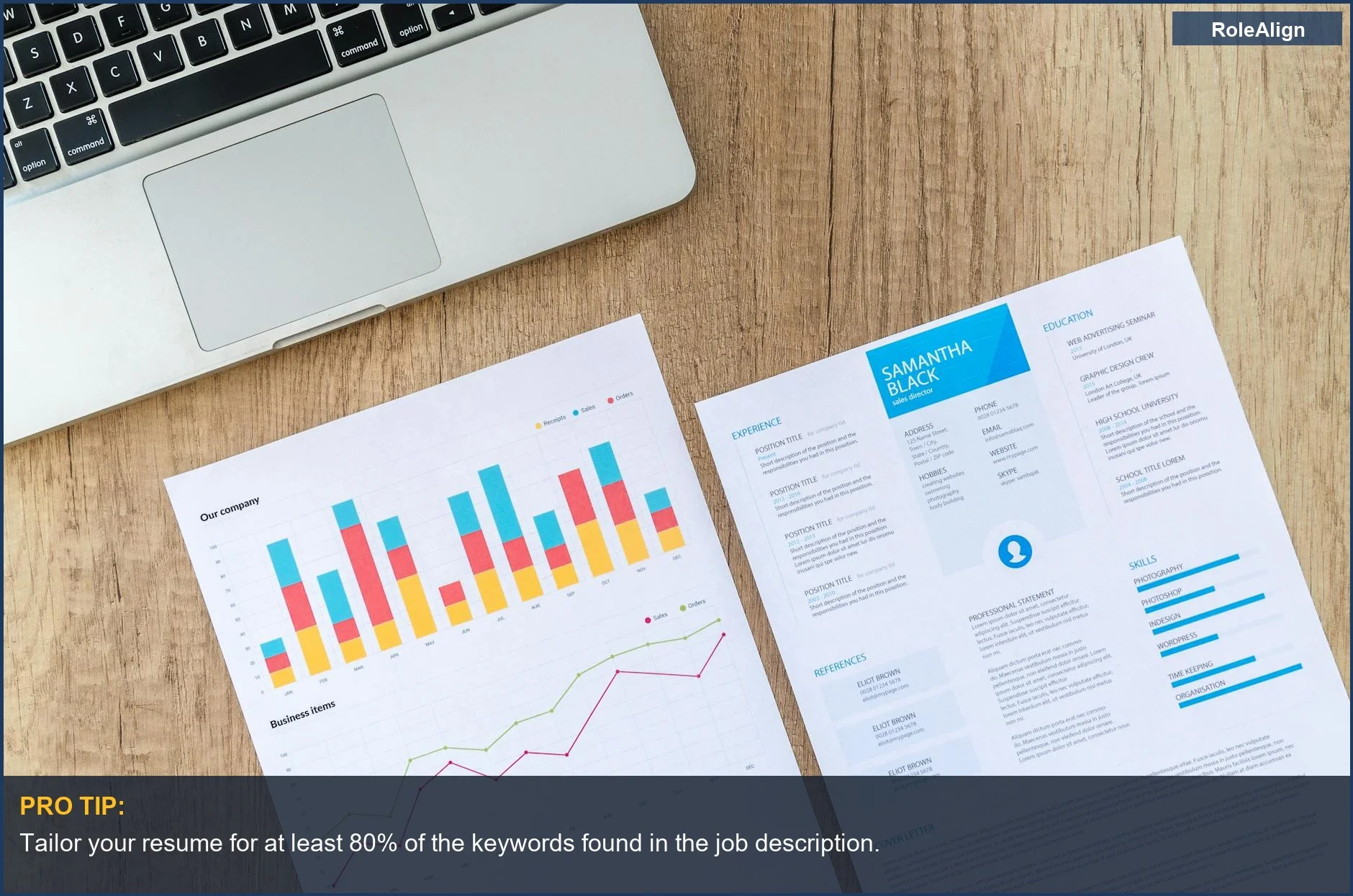
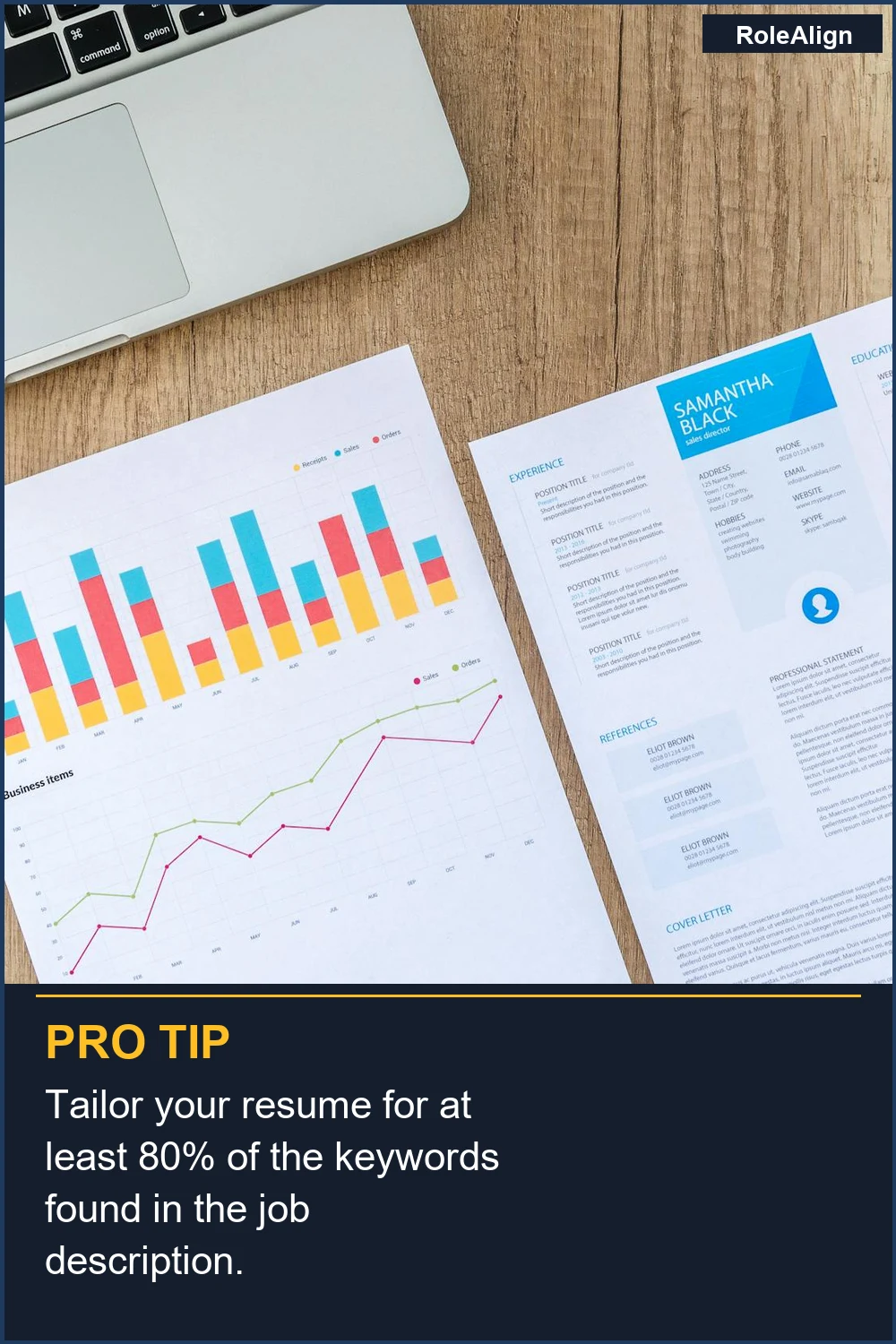
Examining charts and a resume on a wooden desk shows how to translate skills for job applications. Ensure your resume passes ATS scans by matching at least 8 keywords.
| Photo by Lukas Blazek
Examining charts and a resume on a wooden desk shows how to translate skills for job applications. Ensure your resume passes ATS scans by matching at least 8 keywords.
| Photo by Lukas Blazek
## How to Handle This
1
Deconstruct the Job Description - Before you even think about your resume, dissect the target role. Recruiters and hiring managers look for keywords and direct matches to their needs. Identify every requirement, responsibility, and desired qualification listed. What problems does this role solve for the company? What outcomes are they seeking? This is where you find the translation points. Skipping this means you're guessing what they want, and most guesses are wrong. You'll end up presenting skills that are technically true but irrelevant to their immediate business objectives, like a researcher focusing on abstract findings rather than practical applications as discussed by Alma.me. This is crucial for both entry-level and senior roles; even experienced hires need to prove they understand the specific context of the new industry.
2
Map Your Experience to Their Needs - Now, take your identified skills and experiences and directly map them to the job description's requirements. Think about your past projects, accomplishments, and responsibilities. For each point in the job description, ask: "Where have I demonstrated this?" If they need "project management," and you managed a complex research project, that's a direct translation. If they need "stakeholder communication," and you regularly presented findings to diverse audiences, that's your bridge. Upskillist emphasizes that 92% of employers value transferable skills as much as technical ones, so focus on the *impact* of your actions, not just the task itself. If you skip this, your resume will be a generic list of your past duties, not a tailored solution to their current problems. This applies across industries; a teacher who managed classroom behavior and parent communication has transferable skills for roles requiring conflict resolution and client relations.
3
Rewrite with Industry Language - This is where the actual translation happens. Replace jargon from your previous field with terms common in the new industry. For example, if you're moving from academia to tech, "literature review" might become "market research" or "competitive analysis." Use the exact keywords you identified in step one. Recruiters often use Applicant Tracking Systems (ATS) that scan for these specific terms. If your resume lacks them, it might never reach a human eye. The Muse highlights focusing on qualifications you meet "without a doubt." If you skip this, you're presenting yourself as an outsider, even if your skills are a perfect fit. This is especially critical when moving between very different sectors like healthcare to finance, where the language and priorities are distinct.
4
Quantify Your Impact - Numbers speak louder than words, especially to busy recruiters. Instead of saying "Improved process efficiency," say "Streamlined the reporting process, reducing completion time by 20%." Quantifiable achievements demonstrate tangible value and make your translated skills concrete. This is non-negotiable for any role level, but particularly for mid-to-senior positions where leaders expect you to understand ROI. If you don't quantify, your translated skills remain abstract possibilities rather than proven successes. You'll look like you *think* you can do the job, not that you *have* done similar work with measurable results.
To enhance your narrative, consider how to effectively showcase your skills with our tips on resume tips for career change.
A programmer focused on coding on a laptop highlights how to translate technical skills. Showcase specific languages or frameworks used in at least 2 projects.
| Photo by cottonbro studio
A programmer focused on coding on a laptop highlights how to translate technical skills. Showcase specific languages or frameworks used in at least 2 projects.
| Photo by cottonbro studio
## What This Looks Like in Practice
Entry-Level Data Analyst at a Large Tech Company: A recent graduate with a strong academic record in statistics listed coursework projects detailing data cleaning and visualization using Python libraries like Pandas and Matplotlib. The hiring manager, reviewing numerous applications, appreciated the concrete examples of applying analytical skills to real-world problems, even if they weren't from industry projects. This demonstrated the candidate's ability to hit the ground running with minimal ramp-up time How to Translate Academic Skills for Industry Job Applications.
Career Changer from Teaching to Product Management: A former high school teacher transitioned by framing their experience in curriculum development as product roadmap planning and their classroom management as stakeholder alignment. They highlighted their success in adapting lesson plans based on student feedback, directly translating this to iterating on product features based on user input Here's How to Translate Your Skills From One Industry to Another. This approach emphasized transferable skills like strategic planning and communication, which are valued across industries.
Senior Software Engineer at a Series B Startup: An experienced engineer moving from a large enterprise to a fast-paced startup emphasized their ability to build scalable solutions and manage project lifecycles under tight deadlines. They translated their experience with complex system architecture into how they could contribute to rapid feature development and maintain system stability in a growth environment. This showcased how their technical depth was applicable to a different operational context Transferable Skills: Why They Matter & How to Frame Them in Your ....
Mid-Level Marketing Specialist to UX Researcher: A marketing specialist focused on campaign analysis transitioned by highlighting their skills in understanding customer behavior and market trends. They reframed their experience in A/B testing ad copy and analyzing campaign ROI as user research and data interpretation for product design. This emphasized how their analytical mindset and understanding of user motivation were directly relevant to UX research objectives.
To successfully transition, it's crucial to identify your unique transferable skills that apply across industries.
Business professionals exchanging resumes during a meeting illustrates translating experience for career advancement. Share how you contributed to a project that saw a 10% growth.
| Photo by cottonbro studio
Business professionals exchanging resumes during a meeting illustrates translating experience for career advancement. Share how you contributed to a project that saw a 10% growth.
| Photo by cottonbro studio
Mistakes That Kill Your Chances
Mistake Listing generic, buzzword-laden skills without context.
Why candidates make it You think stuffing a resume with popular keywords like "strategic thinking" or "synergy" will impress recruiters and pass Applicant Tracking Systems (ATS). This is common for new grads or those shifting industries who aren't sure what else to put.
What recruiters actually see A lack of concrete experience. Recruiters, and the ATS, need to see *how* you used those skills. Simply stating you have "leadership skills" is meaningless without examples. It suggests you haven't translated your experience.
The fix Replace generic terms with specific, action-oriented descriptions tied to your accomplishments. Instead of "Leadership," say "Led a team of 5 engineers to deliver Project X 2 weeks ahead of schedule." This shows you can translate your capabilities.
Mistake Over-emphasizing academic achievements or niche technical skills with no clear industry application.
Why candidates make it Common for PhDs or those with extensive academic backgrounds, you assume your deep subject matter expertise is universally understood and valued by hiring managers outside your field. You fail to bridge the gap between academic jargon and business value.
What recruiters actually see A candidate who doesn't understand the business needs of the role or industry. Recruiters scan for how your past work directly solves their current problems. If your resume reads like a research paper, it signals you're not a good fit for a business environment. As Alma.me points out, industry employers care about impact and how you applied skills to create business value, not just what you did.
The fix Translate academic concepts into industry-relevant language. For instance, "analyzing complex datasets" can become "driving data-informed strategic decisions" or "identifying key performance indicators (KPIs) from large data sets." Focus on the *outcome* and *impact* of your research.
Mistake Assuming transferable skills are obvious and don't need explicit mention or explanation.
Why candidates make it Experienced professionals believe their years of experience inherently communicate transferable skills. You might think, "Anyone can see I'm a good communicator because I've been in client-facing roles for 10 years."
What recruiters actually see A missed opportunity to highlight critical competencies. While experience is present, it's often buried. Recruiters look for explicit evidence of skills like problem-solving, time management, or adaptability. Upskillist notes that 92% of employers value transferable skills as much as technical skills, making their explicit showcasing crucial.
The fix Dedicate a "Key Skills" or "Core Competencies" section and weave transferable skills into your work experience bullet points with concrete examples. Show, don't just tell, how you've applied them.
Mistake Using the exact same resume and skill descriptions for every job application.
Why candidates make it This is a time-saving tactic for applying to many roles. You often don't realize the subtle but significant differences in required skills between positions.
What recruiters actually see A lack of genuine interest or understanding of the specific role. Recruiters and ATS look for keywords from the job description. A generic application signals you're not a thoughtful candidate. The Muse emphasizes identifying specific qualifications you already meet for the desired role.
The fix Identify the core skills and keywords in the job description and strategically integrate them into your summary, skills section, and experience bullet points. This demonstrates you've done your homework and are a strong candidate for *that specific* role.
Understanding how ATS evaluates your experience can further enhance your resume strategy; explore more in how ATS parses experience.
## Key Takeaways
Translate your skills by focusing on the *impact* you made, not just the tasks you performed. Employers want to know how you can contribute to their business objectives, not just a list of your past duties How to Translate Academic Skills for Industry Job Applications.
Identify transferable skills by reflecting on accomplishments across all your experiences, professional and personal. Skills like communication, problem-solving, and leadership are highly valued, with 92% of employers seeing them as equal to technical skills Ultimate Guide to Transferable Skills for Resumes - Upskillist.
Use industry-specific keywords found in job descriptions to frame your abilities. Don't just dump a list of terms; weave them into how you describe your accomplishments to show you understand the role and its requirements How to Translate Academic Skills for Industry Job Applications.
The single most important thing a recruiter would tell you off the record: Your resume is a marketing document, not a historical record. Every bullet point must answer the question, "Why should I care?" for the specific role you are targeting.
I'm trying to switch industries. What are the best strategies for translating my existing skills so employers in the new field get it?
Forget just listing your old job duties. You need to reframe everything through the lens of the new industry's problems and goals. For example, if you managed projects in retail, don't just say 'project management'; say 'delivered complex projects on time and under budget, increasing customer satisfaction by 15%,' and then figure out what that looks like in your target industry. Focus on the *impact* and *results* you achieved, not just the tasks you performed. A recent LinkedIn report (LinkedIn Talent Solutions) shows employers prioritize candidates who can demonstrate value, so quantify your achievements whenever possible.
How can I effectively showcase my transferable skills on my resume for tech roles when my background isn't strictly technical?
Tech hiring managers and ATS systems like Taleo or Workday scan for keywords and quantifiable achievements. Instead of 'good communicator,' try 'translated complex technical requirements into actionable user stories for cross-functional teams,' or 'streamlined communication between engineering and marketing, reducing project delays by 20%.' Focus on the problem-solving, analytical, and project management aspects of your previous roles. Remember, even in tech, 92% of employers value workplace skills as much as technical ones, according to Upskillist (Upskillist), so highlight how you've driven efficiency or solved problems.
What language should I use to describe my skills on my resume to make sure Applicant Tracking Systems (ATS) pick them up, especially when I'm changing careers?
You absolutely need to mirror the language of the job description. If the posting for a marketing role mentions 'campaign optimization' and 'customer segmentation,' use those exact phrases if they apply to your experience, rather than generic terms like 'marketing strategy.' I've configured ATS systems myself, and they're literal; they look for matches. Don't just stuff keywords in a section; weave them naturally into your experience bullet points, describing *how* you used those skills to achieve results. A study by SHRM (SHRM) found that ATS can filter out up to 75% of qualified candidates, so precision is key.
How does my seniority level change how I should translate my skills when applying for different roles?
If you're senior, focus on strategic impact, leadership, and mentoring. Instead of saying 'managed a team,' you'd say 'led a department of 25 engineers, fostering a culture of innovation that resulted in two patent filings,' demonstrating your ability to drive organizational growth. For more junior roles, emphasize your hands-on execution, problem-solving capabilities, and eagerness to learn and contribute directly. Recruiters at this level are looking for someone who can hit the ground running, not just delegate.
Can I translate soft skills into technical roles, and if so, how do I make that convincing?
Absolutely, and you *must*. Technical roles aren't just about coding; they're about collaboration, problem-solving, and communication. Frame your soft skills with concrete examples of their technical application. For instance, instead of 'team player,' say 'collaborated effectively with a team of 5 developers using Agile methodologies to deliver a critical feature ahead of schedule.' Quantify the impact of your communication or problem-solving skills on technical projects. Even a Coursera article (Coursera) highlights that employers value these workplace skills alongside technical ones, as they reduce training time and improve team dynamics.
R
RoleAlign Team
Experienced car camper and automotive enthusiast sharing practical advice.