
How to Negotiate Remote Work in a Job Offer (Tactics That Work)
You just received the offer for your dream job. The salary is decent, the role exciting, but there's one glaring issue: it's an in-office position, and you were hoping for a remote work arrangement. You can't let this opportunity slip away, but you also know a daily commute isn't sustainable.
You just received the offer for your dream job. The salary is decent, the role exciting, but there's one glaring issue: it's an in-office position, and you were hoping for a remote work arrangement. You can't let this opportunity slip away, but you also know a daily commute isn't sustainable. The good news? You don't have to accept it as is. Negotiating remote work in a job offer is a calculated approach, not a plea. While remote roles made up only 8.5% of job postings in the US in July 2025, demand far outstrips supply, making this a crucial conversation AiApply. Many employers build flexibility into their offers, and over 70% of hiring managers expect candidates to negotiate Synectics Inc.. This isn't about demanding; it's about presenting a professional case for a working model that benefits everyone.
Successfully navigating this conversation requires preparation and a strategic mindset. It's about demonstrating how a remote or hybrid arrangement can be advantageous for both you and the company, rather than simply stating your preference. Many candidates fear that asking for remote work could jeopardize the offer, but research indicates that employers are increasingly open to flexible arrangements. In fact, over 70% of hiring managers anticipate candidates will negotiate terms, and a proactive approach can lead to more favorable outcomes, potentially even impacting compensation as strategies for negotiating salary after a job offer show AiApply. The key is to frame your request not as a personal convenience, but as a way to enhance your productivity, commitment, and overall contribution to the team. This involves understanding the employer's needs and presenting a compelling argument that addresses any potential concerns they might have about remote work. You are essentially proposing a solution that aligns with your career goals while also supporting the company's objectives EduAvenues. Remember, this is a negotiation, a collaborative discussion aimed at finding common ground and a mutually beneficial working arrangement Indeed.
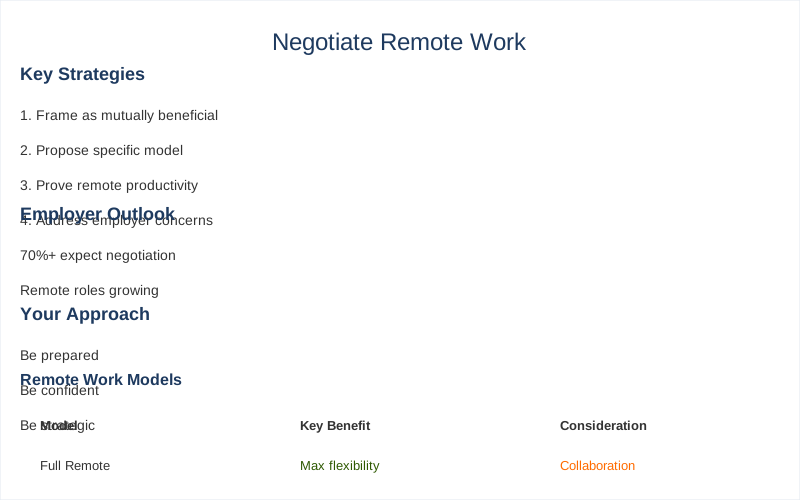
When negotiating remote work in a job offer, frame it as a mutually beneficial arrangement, not just a personal convenience. Employers see it as a negotiation about a working model, not solely a location preference.
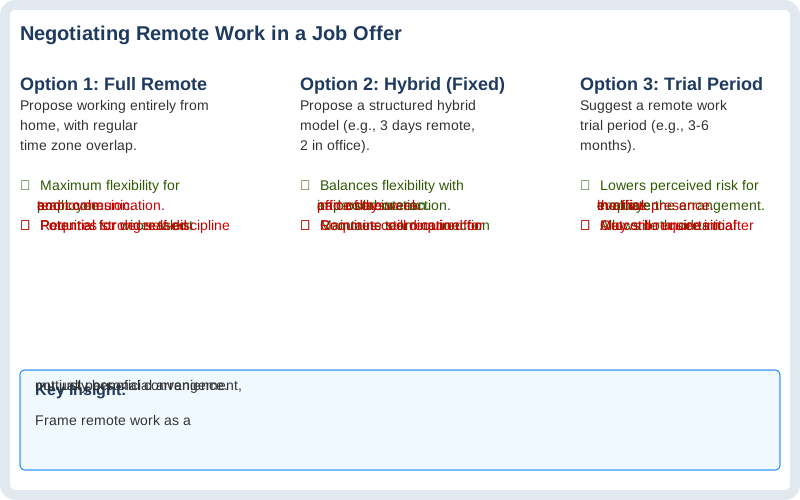
Demonstrate that your proposed remote model will benefit the company by addressing potential concerns like collaboration, training, performance measurement, and team fairness. Instead of asking "Can I work remotely?", propose a specific working model, such as full remote with time zone overlap or a hybrid schedule with a fixed cadence. As Medium notes, remote work negotiations require preparation, confidence, and strategic thinking. This preparation should involve researching the company's existing remote work policies, if any, and understanding industry trends. For instance, understanding that in July 2025, remote roles constituted only 8.5% of job postings in the US, with significantly higher application rates, as highlighted by AiApply, underscores the need for a compelling proposal in a competitive market.
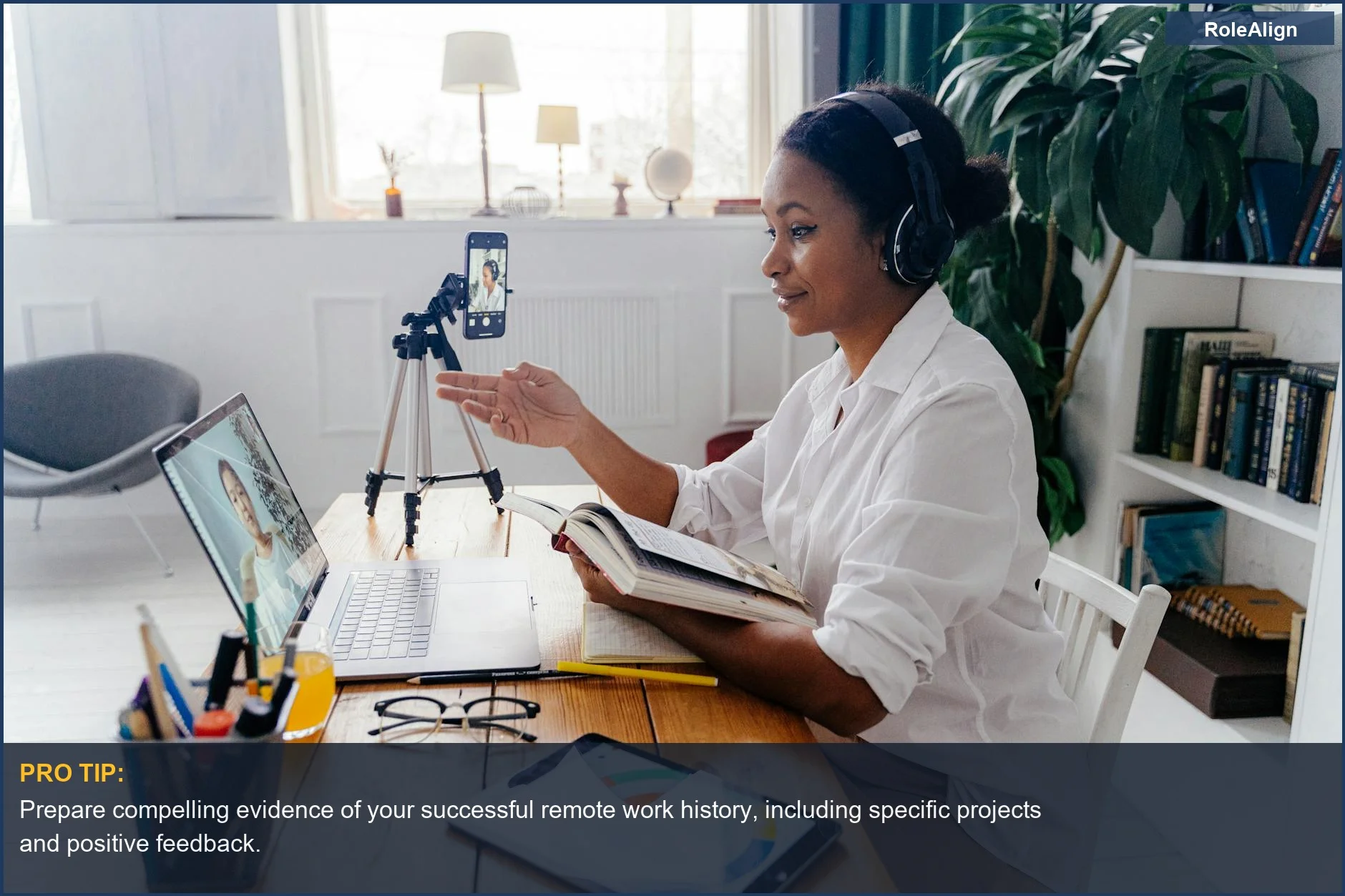
Prove your productivity. Highlight accomplishments and data demonstrating your effectiveness working remotely. Present information on how your previous company tracked productivity during remote periods to counter concerns about performance measurement. For example, if you consistently met or exceeded KPIs while working from home, have those metrics ready. GDH suggests proving productivity is key to convincing a company telecommuting will be beneficial. This could involve sharing testimonials from previous managers or colleagues who can attest to your ability to remain focused and deliver results independently.
Propose a trial period. Suggest a trial period of three to six months for performance evaluation. This reduces perceived risk and shows confidence in your ability to succeed remotely or in a hybrid setup. During this trial, you can proactively schedule regular check-ins with your manager to discuss progress and address any emerging challenges, further solidifying your commitment and reliability.
Negotiate beyond just location. Remote work can be part of a larger negotiation. Explore options like a hybrid schedule, increased salary to offset commuting costs, or additional professional development opportunities. Harvard's Program on Negotiation emphasizes that discussing multiple issues creates room for value generation through tradeoffs. For example, if a fully remote setup isn't feasible, you might negotiate for a certain number of remote days per month, flexible start and end times, or even a stipend for home office equipment. This approach treats the job offer as a holistic package where various elements can be adjusted to meet both your needs and the company's objectives.
Understand the market. In July 2025, remote roles constituted only 8.5% of job postings in the US, with significantly higher application rates. AiApply notes this competitive market makes a well-prepared, mutually beneficial proposal crucial for a successful remote work job offer negotiation. Being prepared means understanding not just the market but also the specific company's culture and its stance on flexible work arrangements. A proactive approach, as suggested by Indeed, involves asking for a conversation to discuss the possibility of remote work early in the process, rather than springing it as a surprise at the offer stage.

Recruiter reasoning: Shows you've done your homework and understand their operational model.
What goes wrong if you skip it: You'll sound uninformed and might ask for something outside their established practices.
Recruiter reasoning: Your leverage is highest when they've decided you're the best fit.
What goes wrong if you skip it: Asking too early can lead them to prematurely disqualify you.
Recruiter reasoning: Shows you've thought through the practical implications and are proposing a structured solution.
What goes wrong if you skip it: Vague requests can trigger unspoken concerns about your commitment or ability to integrate.
Recruiter reasoning: Mitigates their risk and allows them to assess the impact without a long-term commitment.
What goes wrong if you skip it: You might miss out on the opportunity if the company has rigid policies, whereas a trial period could have been a successful compromise.
- The Senior Software Engineer at a Series B Startup A candidate received an offer for a senior role at a fast-growing tech company, initially designed as in-office. They had proven remote delivery of high-quality code. Negotiation focused on presenting this track record, highlighting how remote work would maintain productivity without commuting overhead, benefiting the startup by retaining a key hire. The company agreed to a fully remote arrangement, recognizing the candidate's demonstrable self-sufficiency and the competitive market for senior engineers. This approach aligns with the understanding that remote work negotiations require preparation and confidence Remote Work in 2026: How to Negotiate Better Conditions - Medium.
- The Entry-Level Data Analyst at a Fortune 500 This candidate was offered a position in a large, traditional corporation pushing for a return to office. The offer was for a hybrid model, but personal circumstances made fully remote a necessity. They framed their request as a way to ensure consistent productivity and focus, citing research on dedicated work environments. They proposed a trial period to demonstrate virtual collaboration effectiveness, a tactic recommended for convincing employers How to Properly Negotiate Remote Working Conditions - GDH. The company agreed to a 6-month remote trial with clear performance metrics.
- The Career Changer from Teaching to Product Management Transitioning from teaching to product management at a mid-sized SaaS company, this individual knew their experience in structured lesson planning and remote instruction could translate to effective remote work. They negotiated for a hybrid schedule (3 days remote, 2 in-office), positioning it as a way to balance focused product development work with essential in-person team collaboration. They offered to take on specific projects suited for remote execution, demonstrating proactive value. The company accepted, accommodating a promising new hire while maintaining team cohesion.
- The Experienced Marketing Manager at a Remote-First Company This individual received an offer from a remote-first company with a cost of living (COL) salary adjustment policy. The proposed salary was significantly lower due to COL. They countered by presenting market data for their experience level in similar remote roles across broader regions, not just their specific COL area. They highlighted their proven ability to manage remote teams and deliver campaigns with minimal supervision, arguing their value wasn't solely tied to physical location. The company adjusted the offer, recognizing experience as a greater driver of value than local COL.


- Negotiating remote work in a job offer is less about asking permission and more about presenting a well-researched proposal. Employers often build flexibility into offers, and over 70% of hiring managers expect candidates to negotiate salary, job offer discussions. Don't ask if an offer is negotiable; simply make your counteroffer . This proactive approach demonstrates your understanding of the hiring process and your value to the company.
- Focus on a working model, not just "remote." Frame your request around productivity, collaboration, and how you'll measure success. Highlight your proven ability to deliver results while working independently, perhaps referencing past remote project successes . Detail how you'll maintain communication, utilize collaboration tools effectively, and meet all performance expectations, turning a potential concern into a testament to your self-management skills.
- Understand the market and your value. While remote roles made up only 8.5% of job postings in the US in July 2025, demand remains high. Be prepared to discuss hybrid options or a trial period to demonstrate your commitment and capability . Researching industry standards for remote work and understanding the specific needs of the role will empower you to make a compelling case.
- The single most important thing a recruiter would tell you off the record? Treat every offer as a starting point for a conversation. They expect you to negotiate, and a confident, prepared approach can significantly improve your terms, including securing that remote work arrangement . This sentiment underscores that negotiation is a standard part of the process, and approaching it professionally can lead to better outcomes for both parties. Remember to be flexible and open to compromise, such as agreeing to in-office days or a probationary remote period.
Frequently Asked Questions
When's the best time to bring up wanting to work remotely during the hiring process?
How do I ask about remote work if the job posting specifically says 'in-office only'?
Could asking for remote work cause me to lose a job offer?
Roughly what percentage of companies are open to discussing remote work in 2025?
How do you negotiate working from home if the rest of the team is in the office?
Sources
- How to Negotiate a Job Offer for Best Salary, Benefits - LinkedIn
- gdhinc.com
- Remote Work in 2026: How to Negotiate Better Conditions - Medium
- Remote Hiring Challenges in 2026: Hybrid Workforce Execution Guide
- How to Negotiate a Higher Salary after a Job Offer - PON
- How to Properly Negotiate Remote Working Conditions - GDH
- Job Offer Salary Negotiation Tips That Work in 2026 - Synectics Inc.
- Negotiating Remote Work in Job Offers - EduAvenues
- 02.13.2026 | 27% of Companies Are Going Fully In-Office by End of ...
- How To Negotiate Remote Work In Job Offers (2026) - AiApply
- aiapply.co